


Surety Bond and Insurance: Top 5 Key Differences 2025
Surety bond and insurance are two essential tools for managing financial risks and ensuring contractual obligations in today’s business world. While they may seem similar at first glance, they serve different purposes and protect different parties:
-
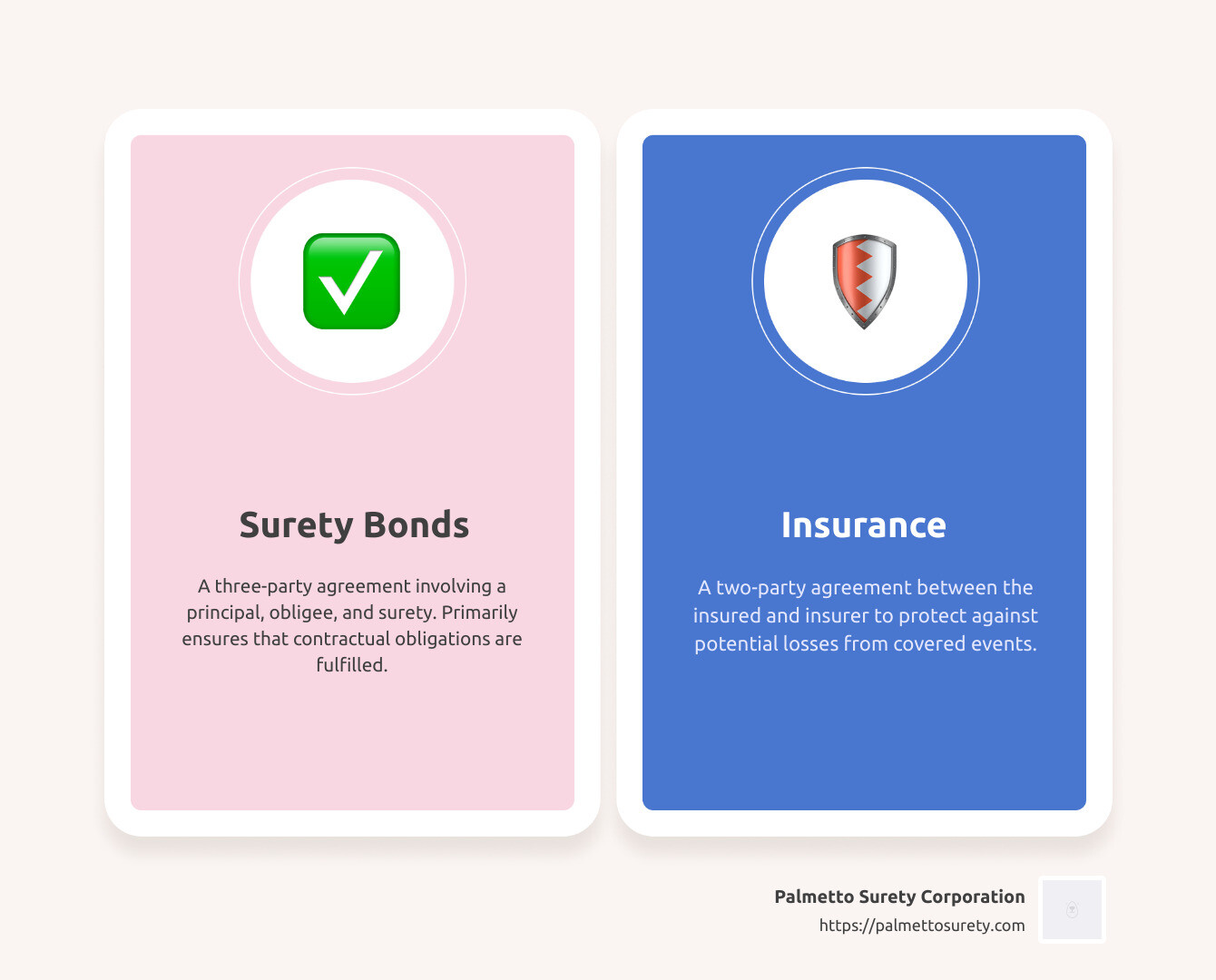
Surety Bonds: Involve a three-party agreement (principal, obligee, surety) ensuring the principal fulfills their contractual obligations. They primarily safeguard the obligee.
-
Insurance: Offers a two-party agreement between the insured and insurer to protect the insured against potential losses from covered events.
-
Financial Guarantees: Both surety bonds and insurance provide financial assurances, but through distinct mechanisms custom to unique needs.
In the evolving landscape of construction, manufacturing, and other industries, understanding the nuances between these two is crucial. I’m Haiko de Poel Jr, a marketing leader with experience in rebranding and digital change, particularly in helping companies like Palmetto Surety Corporation steer the complexities of surety bond and insurance. This article will dig deeper, offering insights and clarifying distinctions.
Surety bond and insurance terminology:
– bonded insurance
– bond insurance cost
– how to get bonded and insured
Understanding Surety Bonds
Surety bonds are a three-party agreement designed to ensure that contractual obligations are met. Let’s break it down:
-
Principal: This is the party who needs to fulfill a specific obligation. Think of a contractor who promises to complete a building project.

-
Obligee: This party benefits from the bond. They are typically the project owner or a government agency that needs assurance the project will be completed as promised.
-
Surety: The insurance company that provides the bond. They guarantee the principal will meet their obligations. If not, the surety steps in to make things right.
Types of Surety Bonds
Surety bonds come in various forms, each serving a unique purpose:
-
Bid Bonds: These ensure that the bidder on a project will enter into the contract and provide the necessary performance and payment bonds if awarded the job. It’s like a promise that the contractor is serious about their bid.
-
Performance Bonds: These guarantee that the contractor will complete the project according to the terms of the contract. If they fail, the surety covers the cost to complete the project.
-
Payment Bonds: These ensure subcontractors and suppliers are paid for their work and materials. It protects against liens and unpaid bills.
How Surety Bonds Work
Surety bonds act as risk mitigation tools. They assure the obligee that the principal will fulfill their duties. The process involves:
-
Issuance: The principal applies for a bond. The surety evaluates the principal’s ability to fulfill the obligation.
-
Contractual Obligations: The principal must adhere to the contract terms. If they default, the obligee can file a claim.
-
Reimbursement: If a claim is valid, the surety pays the obligee. However, the principal is responsible for reimbursing the surety for the claim amount. This makes surety bonds more like a line of credit than traditional insurance.

Understanding these elements is key to utilizing surety bonds effectively. They provide a safety net for the obligee while holding the principal accountable, ensuring projects are completed as agreed.
Surety Bonds and Insurance Explained
Surety bonds and insurance are both essential tools for managing risk, but they serve different purposes and involve different parties. Here’s how they work:
-
Principal: This is you or your business, the party that needs the bond to guarantee performance or compliance.
-
Obligee: This is the party that requires the bond, often a government entity or a project owner.
-
Surety: This is the company that provides the bond, guaranteeing that the principal will fulfill their obligations.
Types of Surety Bonds
Surety bonds come in various forms to suit different needs:
-
Contract Bonds: These bonds guarantee the performance and completion of a construction project according to the contract terms. They protect the obligee from financial loss if the principal fails to meet their obligations.
-
Commercial Bonds: These bonds ensure compliance with laws and regulations. They are often required for businesses to obtain licenses or permits.
-
Court Bonds: These bonds are used in legal proceedings to ensure that parties fulfill their obligations, such as fiduciary duties or appeal requirements.
How Surety Bonds Work
Surety bonds involve premium payments, a claim process, and risk management:
-
Premium Payments: You pay a fee to the surety company, which is a percentage of the bond amount. This fee is based on the level of risk and the bond’s requirements.
-
Claim Process: If the principal fails to meet their obligations, the obligee can make a claim on the bond. The surety investigates the claim and, if valid, compensates the obligee.
-
Risk Management: Surety bonds transfer the risk of non-performance from the obligee to the surety. The surety ensures that the principal fulfills their obligations, providing financial protection to the obligee.
Surety bonds are a vital tool for risk management. They provide peace of mind, knowing that financial help is available if obligations are not met. With the right bond, businesses can focus on growth, knowing they’re protected from unexpected setbacks.
Surety Bond and Insurance: Key Differences
When comparing surety bonds and insurance, understand their core differences. At their heart, these financial tools serve distinct purposes and involve different parties.
Claims and Reimbursements
Surety bonds involve a three-party agreement: the principal (the party required to perform an obligation), the obligee (the party requiring the obligation), and the surety (the entity providing the bond). If the principal fails to meet their obligations, the obligee can file a claim against the bond.
- Bond Claims: When a claim is made, the surety investigates its legitimacy. If valid, the surety pays the obligee. However, unlike insurance, the principal must reimburse the surety for the claim amount, as stipulated in an indemnity agreement.
Insurance, on the other hand, is a two-party agreement between the insured and the insurer. It acts as a risk transfer mechanism, where the insurer takes on the risk of potential losses.
- Insurance Claims: When a claim is made, the insurance company assesses its validity. If covered, they pay the insured without expecting reimbursement. This is because insurers factor in potential losses when calculating premiums.
Premiums and Costs
The way premiums are handled in surety bonds and insurance also highlights their differences.
-
Upfront Premiums for Surety Bonds: Surety bonds require a one-time premium payment, typically calculated as a percentage of the bond amount. This fee covers the underwriting process and the risk assumed by the surety. The principal’s financial strength and credit history play a significant role in determining the premium rate.
-
Monthly Premiums for Insurance: Insurance policies usually involve regular premium payments, whether monthly or annually. These are determined based on the risk level, coverage amount, and claims history. Insurers pool premium funds from many policyholders to cover future claims.
The underwriting process for surety bonds involves a thorough assessment of the principal’s ability to meet their obligations, while insurance underwriting focuses on evaluating the risk of potential claims.
Understanding these differences ensures that businesses choose the right financial tool for their needs, whether it’s guaranteeing contractual obligations with a surety bond or protecting against unforeseen events with insurance.
Frequently Asked Questions about Surety Bonds and Insurance
What is the primary purpose of a surety bond?
The primary purpose of a surety bond is to provide a financial guarantee that a principal will fulfill their contractual obligations. It’s a promise that the principal will do what they’ve said they will do. If they don’t, the obligee can file a claim against the bond to recover any losses. This makes surety bonds crucial in industries like construction, where meeting contract terms is essential.
How much does a $5000 surety bond cost?
The cost of a surety bond is typically a percentage of the total bond amount. For a $5000 bond, you can expect to pay anywhere between 0.5% and 10% of that amount. This means the cost could range from $25 to $500. The exact rate depends on several factors, including the principal’s credit score, financial history, and the type of bond. A stronger financial profile generally results in a lower premium.
What are the risks of a surety bond?
While surety bonds serve as a safeguard for the obligee, they do come with risks for the principal. One main risk is financial loss if a claim is filed against the bond. If the surety pays out on a claim, the principal must reimburse the surety for the full amount, including any legal fees. This is why avoiding claims is crucial.
The underwriting process for surety bonds is rigorous. It involves a detailed assessment of the principal’s ability to meet their obligations, ensuring they are financially stable and capable of fulfilling the contract terms. This process helps mitigate risks, but it also means that not all applicants will qualify for a bond.
Conclusion
Choosing between a surety bond and insurance can be a complex decision, but understanding their differences is crucial for businesses. At Palmetto Surety Corporation, we specialize in providing custom surety bonds that meet the specific needs of various industries, including construction, manufacturing, and healthcare.
Our quick service sets us apart. We understand that time is of the essence, especially when it comes to securing contracts or meeting regulatory requirements. That’s why we strive to approve most applications within hours, helping our clients move forward with confidence.
With over 20 years of industry expertise, we have honed our processes to ensure efficiency and reliability. Our team is well-versed in the intricacies of both commercial and court surety bonds, offering guidance and support every step of the way.
For businesses in the southeastern United States, Palmetto Surety Corporation is a trusted partner in navigating the complexities of bonds and insurance. We invite you to explore our services and find how we can assist you in securing the financial guarantees needed for your projects.


