


Broker Bond Cost: Top 5 Factors Revealed 2025
The broker bond cost is a fundamental piece of the puzzle for anyone dealing with freight and logistics. Whether you’re just starting in the business or you’re a seasoned professional, understanding the costs associated with freight broker bonds, also known as BMC-84 or ICC broker bonds, is crucial. Here’s what you need to know:
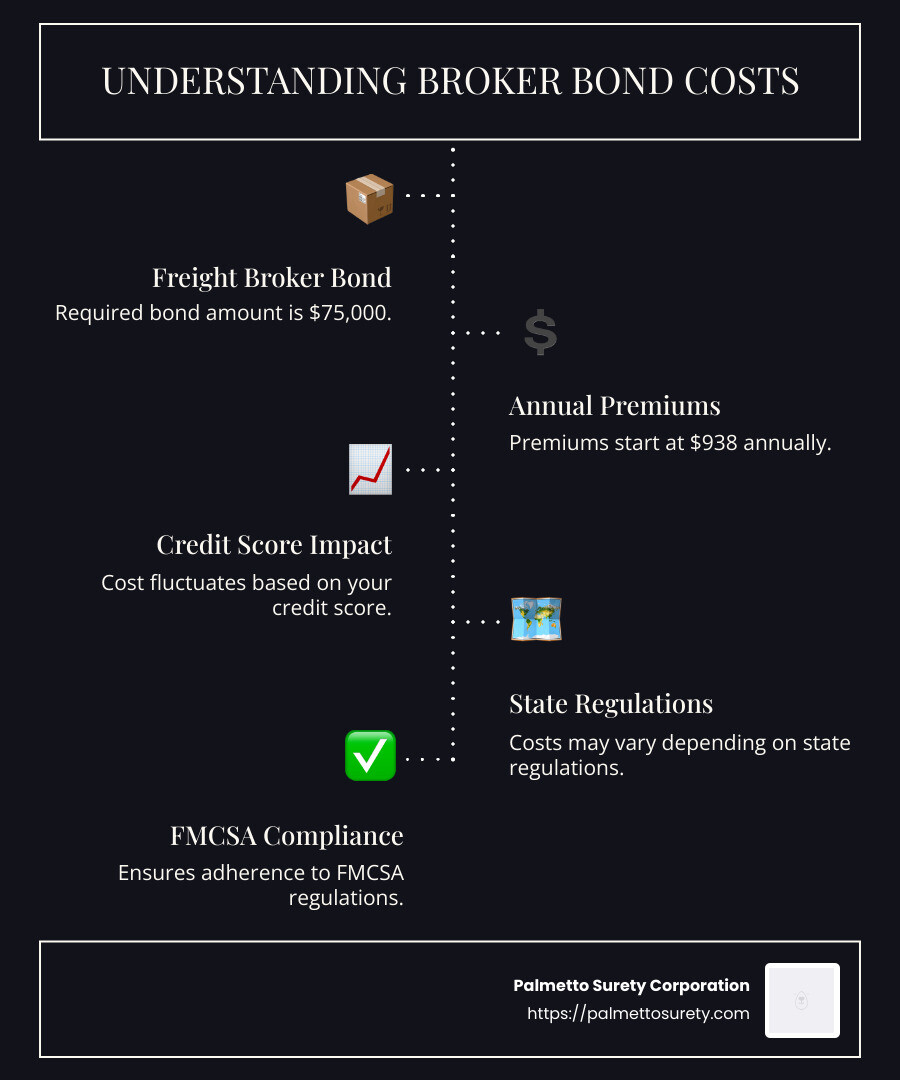
- Freight Broker Bond Amount: The bond amount required is $75,000.
- Annual Premiums Begin At: Premiums typically start at $938.
- Payment Factors: Costs can fluctuate based on credit score and state.
These surety bonds are essential for compliance with the Federal Motor Carrier Safety Administration (FMCSA). They guarantee payment and adherence to regulations, protecting service providers and clients alike.
Hello! My name is Haiko de Poel Jr. I’ve played a significant role in steering some of the fastest-growing US Surety Bond companies towards success. My expertise in marketing and branding has been instrumental in simplifying the broker bond cost processes and making them more accessible to businesses. Let’s dive deeper into the nuances of broker bond costs and how they impact your industry.
Common broker bond cost vocab:
– freight broker authority cost
– freight broker insurance cost
What is a Broker Bond?
A broker bond is a type of surety bond required for freight brokers and forwarders in the U.S. This bond is crucial for maintaining compliance with the Federal Motor Carrier Safety Administration (FMCSA). It ensures that brokers adhere to regulations and pay for services rendered, safeguarding both providers and clients in the logistics chain.
Freight Broker Bond (BMC-84 Bond)
The freight broker bond, often referred to as the BMC-84 bond, is a specific type of surety bond mandated by the FMCSA. This bond is essential for freight brokers and forwarders who wish to operate legally in the United States. It acts as a financial guarantee that the broker will fulfill their contractual obligations and adhere to industry regulations.
- Bond Amount: The FMCSA requires a bond amount of $75,000.
- Purpose: It guarantees that brokers will pay freight carriers and shippers in a timely manner.
ICC Broker Bond
The ICC broker bond is another name for the BMC-84 bond. It stems from the historical regulation by the Interstate Commerce Commission (ICC), which was later replaced by the FMCSA. Despite the change in regulatory bodies, the term ICC broker bond is still commonly used interchangeably with the BMC-84 bond.
Key Benefits
Having a broker bond provides several advantages:

- Regulatory Compliance: Ensures brokers meet FMCSA requirements.
- Financial Protection: Offers a safety net for clients and service providers if the broker fails to meet obligations.
- Improved Trust: Builds credibility and trust with carriers and clients.

In summary, a broker bond is not just a regulatory requirement; it’s a crucial component for building trust and ensuring smooth operations in the freight and logistics industry. By understanding and securing a freight broker bond, businesses can confidently steer the complexities of the logistics world.
Broker Bond Cost: Key Factors
When considering the broker bond cost, there are three main factors to keep in mind: bond value, credit history, and annual premium. Each plays a vital role in determining what you’ll pay for your bond.
Bond Value
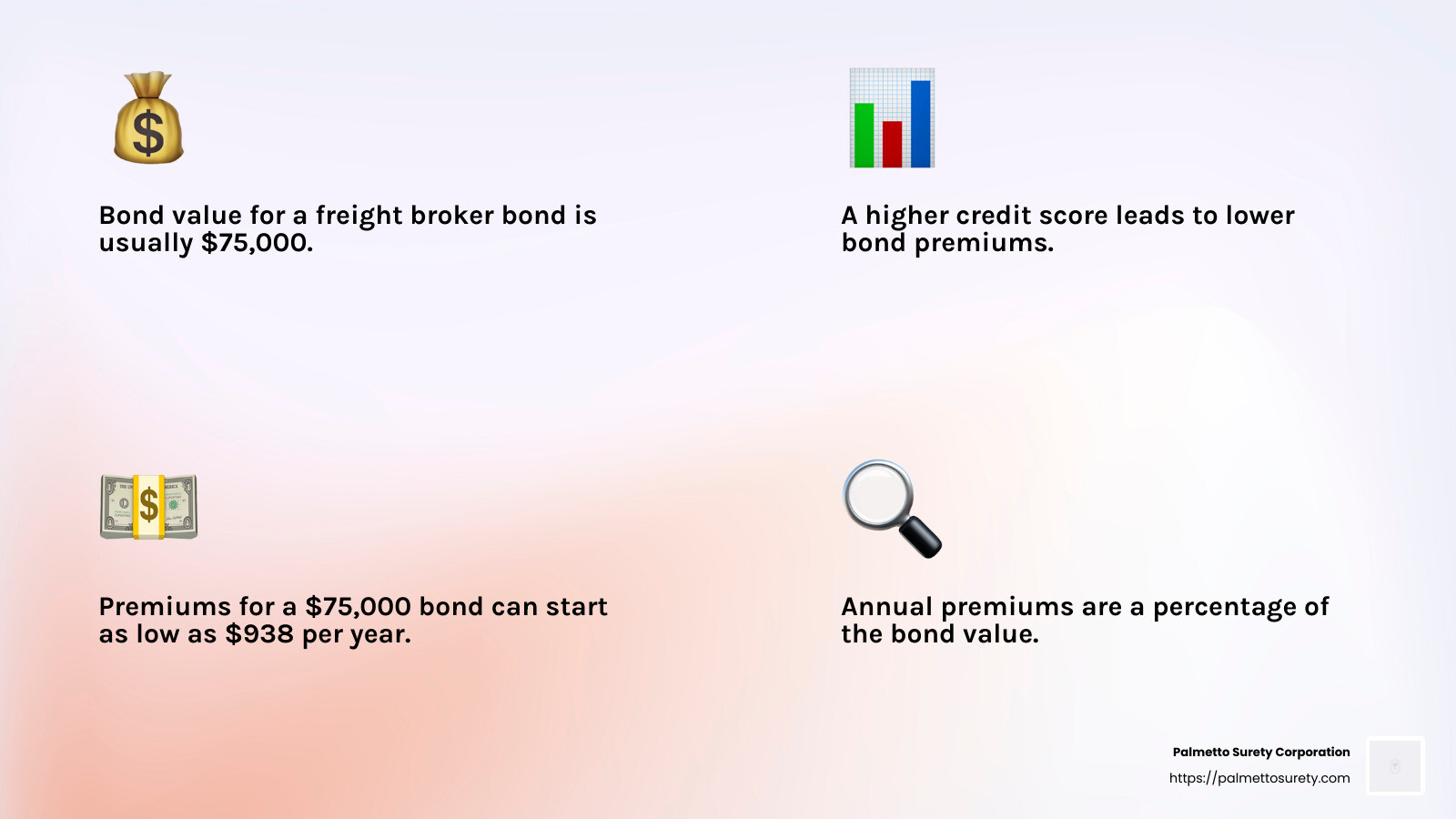
The bond value, or bond amount, is the total coverage the bond provides. For a freight broker bond like the BMC-84, the required bond value is $75,000. This amount is set by the FMCSA to ensure brokers have enough coverage to protect clients and carriers if they fail to meet their obligations.
Credit History
Your credit history is a major factor in calculating the bond premium. Surety companies view your credit score as an indicator of financial responsibility. A higher credit score typically results in a lower premium, while a lower score might increase costs. This is because surety companies view those with lower credit scores as higher risk.
Annual Premium
The annual premium is the cost you pay each year to maintain your bond. This premium is a percentage of the total bond value, and it varies based on your credit history and other underwriting factors. For a $75,000 freight broker bond, premiums can start as low as $938 per year. However, your exact rate will depend on your specific circumstances.
In summary, understanding these key factors can help you better anticipate and manage your broker bond cost. By maintaining a good credit history and understanding the bond value requirements, you can ensure you’re prepared for the financial obligations of securing a broker bond.
How to Calculate Broker Bond Cost
Calculating the broker bond cost involves understanding a few key elements: the bond value percentage, cost basis, and broker fees. Let’s break these down into simple steps.
Bond Value Percentage
The bond value percentage refers to the portion of the total bond value that you must pay as your annual premium. For example, if you need a $75,000 freight broker bond, your premium might start at $938 per year. This amount is a small percentage of the total bond value, reflecting the risk the surety company takes on your behalf.
Cost Basis
The cost basis is essentially the amount you initially paid for the bond, including any extra costs like broker fees. This is crucial for determining any capital gains or losses if you decide to cancel or replace your bond. For bonds purchased at a premium or discount, adjustments to the cost basis may be necessary over time.
- Premium Bonds: If you buy a bond at a premium, you’ll amortize the premium over the bond’s life, reducing your cost basis gradually.
- Discount Bonds: If bought at a discount, you’ll accrete the discount, increasing your cost basis until it reaches the par value at maturity.
Broker Fees
Broker fees are additional costs charged for executing transactions or providing specialized services. These fees can be a flat rate or a percentage of the transaction. In the context of broker bonds, these fees are part of the overall cost and should be factored into your budget.
By understanding these components, you can better manage your broker bond cost and ensure you’re making informed financial decisions. This knowledge helps in anticipating expenses and planning for the financial commitments of holding a broker bond.
Next, we’ll explore the different types of broker bonds and their costs.
Types of Broker Bonds and Their Costs
When it comes to broker bonds, there are several types to consider, each with its own cost structure. Understanding these can help you choose the right bond for your needs and budget. Let’s explore the main types: freight broker bonds, surety bonds, and the BMC-85 trust fund.
Freight Broker Bonds
A freight broker bond, also known as a BMC-84 bond, is essential for freight brokers and forwarders in the U.S. This bond ensures that brokers adhere to regulations and fulfill their payment obligations. The Federal Motor Carrier Safety Administration (FMCSA) mandates a bond amount of $75,000.
The cost of a freight broker bond starts at around $938 annually. However, the actual premium can vary based on factors like your credit score and business history. Brokers with a strong credit profile may qualify for lower rates, making it crucial to maintain good credit.
Surety Bonds
Surety bonds cover a wide range of obligations beyond freight brokering. They serve as a financial guarantee that a business will meet its contractual obligations. Surety bonds are used across various industries, from construction to auto dealerships.
The cost of a surety bond typically depends on the bond amount and the applicant’s creditworthiness. For example, a $5,000 surety bond might cost a few hundred dollars annually, but this can vary. The better your credit, the lower your premium is likely to be.
BMC-85 Trust Fund
The BMC-85 trust fund is an alternative to the freight broker bond. Instead of purchasing a bond, brokers can place $75,000 in a trust fund. This option might appeal to those who prefer to use cash rather than pay an annual premium.
While the BMC-85 removes the need for a premium, it requires tying up a significant amount of capital. This can be a drawback for businesses that need liquidity. Choosing between a BMC-84 bond and a BMC-85 trust fund often depends on your financial strategy and cash flow needs.
Understanding these types of broker bonds and their costs will help you make informed decisions about your business’s financial protections. Each option has its benefits and considerations, so weigh them carefully based on your circumstances.
Next, we’ll address some frequently asked questions about broker bond costs.
Frequently Asked Questions about Broker Bond Cost
How much is a bond brokerage fee?
Bond brokerage fees can vary widely based on the type of bond and the broker’s role in the transaction. Brokerage fees are typically a percentage of the bond’s value or a flat fee. When brokers act as agents, they charge a commission, which can range from 1% to 5% of the bond’s market price. It’s crucial to ask your broker about these fees upfront to avoid surprises.
How much does a $75,000 freight broker bond cost?
A freight broker bond, or BMC-84 bond, is required by the FMCSA for freight brokers in the U.S. The bond amount is $75,000, but broker bond cost doesn’t mean you pay $75,000 upfront. Instead, you pay an annual premium, which starts at around $938. The exact cost depends on factors like your credit score and business history. Brokers with excellent credit may qualify for lower premiums, making it essential to maintain a good credit profile.
How much does a $5,000 surety bond cost?
The cost of a $5,000 surety bond varies based on the applicant’s credit history and the bond’s purpose. Generally, the premium for a $5,000 bond could range from $100 to $500 annually. Your credit score plays a significant role; better credit can lead to lower premiums. For those with less-than-perfect credit, the cost might be higher, reflecting the increased risk to the surety company.
Understanding these costs can help you plan your expenses and ensure compliance with required regulations. In the next section, we’ll conclude by highlighting how Palmetto Surety Corporation can assist you with quick approval and efficient service.
Conclusion
When it comes to securing a broker bond, Palmetto Surety Corporation stands out with its commitment to quick approval and efficient service. As a licensed insurance company with over 20 years of experience, we specialize in providing commercial surety bonds custom to meet the needs of various industries, including transportation, construction, and healthcare.
Our expertise allows us to approve most applications within hours, ensuring that you can focus on your business without unnecessary delays. We understand that time is money, especially in industries where compliance is crucial. That’s why we strive to offer a hassle-free bonding process, so you can get back to doing what you do best.
By choosing Palmetto Surety Corporation, you benefit from our vast network of agents and our dedication to customer satisfaction. Whether you’re in Georgia, Florida, Louisiana, Mississippi, South Carolina, Tennessee, or Texas, we’re here to support you with reliable and transparent services.
Ready to streamline your bonding process? Contact us today to experience the Palmetto Surety Corporation advantage.


