


Freight Broker Authority Cost: 5 Simple Tips in 2025
Freight broker authority cost is a crucial consideration for anyone stepping into the dynamic world of freight brokerage. As the essential link between shippers and carriers, freight brokers ensure the seamless movement of goods across great distances, fueling the economy and driving growth. Whether you’re looking to start a new business or expand an existing one, understanding the key expenses associated with this role can save you time and money. Here’s a quick overview:
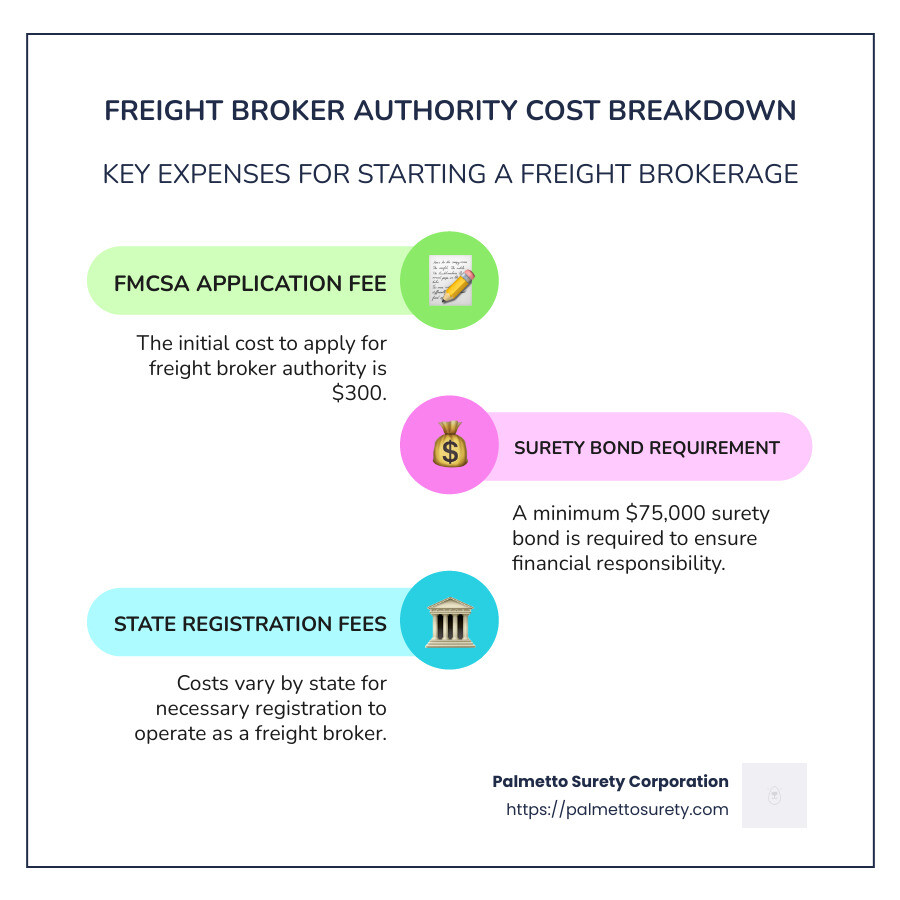
- Initial FMCSA Application Fee: $300
- Surety Bond Requirement: Minimum $75,000
- State Registration Fees: Varies by state
Freight brokers play a vital role in the economy by connecting suppliers with businesses demanding their goods. They handle logistics to ensure timely deliveries, paving the way for businesses to thrive. With average earnings reaching over $60,000 annually, freight brokering can also be financially rewarding.
I’m Haiko de Poel Jr, an expert in freight broker authority cost, with years of experience guiding businesses towards smart financial management in this industry. Through strategic marketing and business development, I’ve helped companies steer these costs efficiently. Now, let’s dive deeper into understanding the intricacies of freight broker authority expenses.
Understanding Freight Broker Authority Cost
To become a freight broker, understanding the freight broker authority cost is essential. This authority is what allows you to legally operate as a broker in the United States. It’s a requirement set by the Federal Motor Carrier Safety Administration (FMCSA) and involves several key expenses.
FMCSA Application
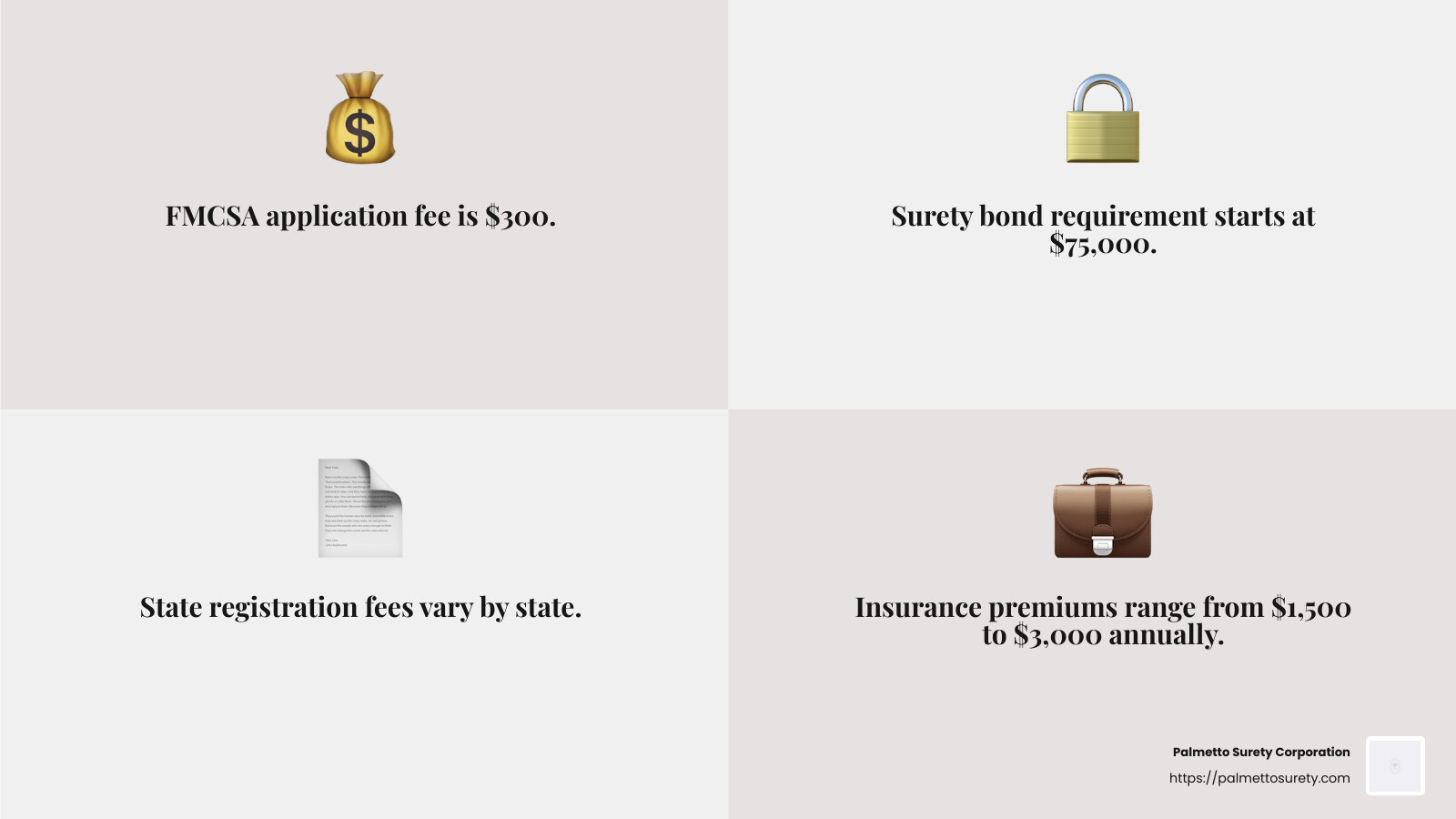
The first step in obtaining your freight broker authority is submitting an application to the FMCSA. This process involves a $300 fee. While this might seem straightforward, it’s just one part of the puzzle.
Surety Bond Requirement
In addition to the FMCSA application fee, you need a surety bond or trust fund agreement. This acts as a financial guarantee that you will comply with industry regulations. The minimum amount for this bond is $75,000.
Many brokers choose to work with companies like Palmetto Surety Corporation to secure their bonds. These companies can often help you find the best rates and ensure your bond is accepted by the FMCSA.
State Registration Fees
Depending on where you plan to operate, there may be additional state registration fees. These can vary significantly, so research the specific requirements for each state where you intend to do business.

Additional Considerations
-
Insurance Premiums: While not always mandatory, having insurance can protect your business from unforeseen liabilities. Premiums typically range from $1,500 to $3,000 annually.
-
Process Agent Fees: Expect to pay between $50 and $150 for process agent services, which are required to handle legal documents on your behalf.
Understanding these costs and planning for them is crucial for anyone looking to enter the freight brokerage industry. By managing these expenses wisely, you can set your business up for success from the start.
Essential Costs for Starting a Freight Brokerage
Starting a freight brokerage involves several key expenses. These essential costs not only ensure compliance with federal regulations but also lay the foundation for a successful business.
Business Registration
Registering your business is the first step. If you opt for a sole proprietorship, be aware that your social security number will be publicly available on the FMCSA website. To avoid this and limit liability, consider forming a business entity like an LLC or corporation.
The costs for registration vary:
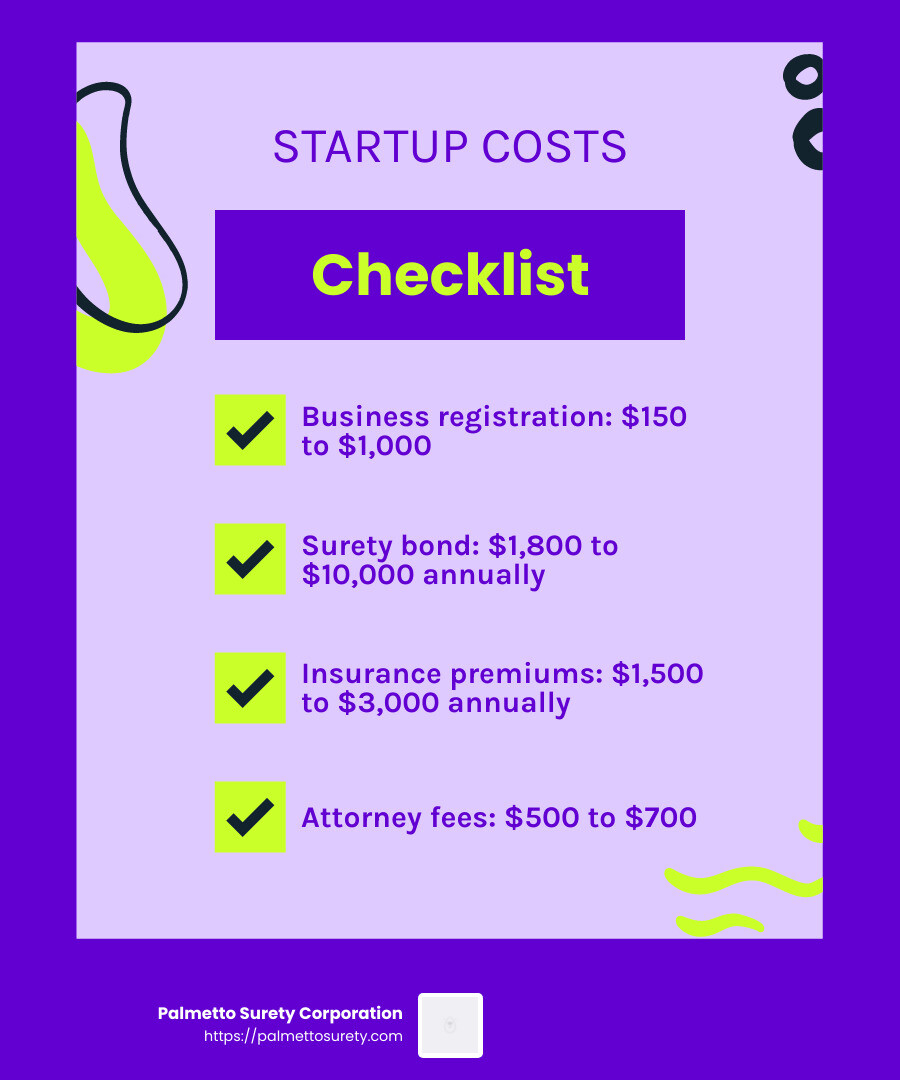
- Filing Fees: Typically range from $100 to $300, depending on the state.
- Additional Government Fees: These can add another $50 to $200.
- Attorney Fees: If you use legal assistance, expect fees between $500 and $700, though services like Legal Zoom offer packages from $79 to $350 plus filing fees.
Surety Bond
A surety bond is a non-negotiable requirement. It acts as a safety net, ensuring you comply with industry standards and regulations. The FMCSA mandates a minimum bond amount of $75,000.
The cost of obtaining this bond can vary widely, often ranging from $1,800 to $10,000 annually. Companies like Palmetto Surety Corporation can help you secure competitive rates, which is crucial for managing your freight broker authority cost.
Insurance Premiums
While not always legally required, insurance is a wise investment for protecting your business. Here’s what you need to know:
- Public Liability Insurance: Required for freight forwarders operating motor carriers, with coverage ranging from $750,000 to $5 million. Non-hazardous freight moved in lighter vehicles requires $300,000 in coverage.
- Cargo Insurance: Mandatory for household goods motor carriers and freight forwarders, though not for brokers.
Insurance premiums typically fall between $1,500 and $3,000 annually. Having the right coverage can safeguard against unexpected liabilities and help maintain your business’s reputation.
By understanding and planning for these essential costs, you can ensure a smooth start to your freight brokerage. Proper financial planning and strategic partnerships, like those with surety bond providers, can help you manage these expenses effectively.
Next, we’ll explore the steps to obtain freight broker authority, including training, securing a USDOT number, and filing a BOC-3 form.
Steps to Obtain Freight Broker Authority
Gaining freight broker authority is a crucial step in setting up your freight brokerage. Here’s a straightforward guide to help you steer the process:
Training
While there are no formal education requirements to become a freight broker, training is invaluable. Understanding the industry, market dynamics, and regulations can set you apart. Consider these options:
- Online Courses: Affordable options start at around $97.
- Community College or Trade School Programs: These can cost between $400 and $3,000.
- On-the-Job Training: Working with an established broker offers real-world experience and insights.
Training equips you with the skills needed to manage operations effectively and comply with regulations, ultimately reducing your overall freight broker authority cost.
USDOT Number
A USDOT number is mandatory for operating legally. Here’s how to get one:
- Visit the FMCSA Website: Start your application online.
- Complete the MCS-150 Form: This form gathers essential information about your business.
- Pay the Fee: A one-time fee of $300 is required during the application process.
Obtaining a USDOT number is a straightforward but essential step in establishing your brokerage.
BOC-3 Filing
The BOC-3 form, or “Designation of Agents for Service of Process,” is another critical requirement. It designates process agents in each state where you operate, ensuring legal documents are properly served.
- Choose a Process Agent: You can select an agent for each state or hire a blanket company to cover all states.
- Submit the BOC-3 Form: File it with the FMCSA. This filing is necessary to activate your authority.
Filing the BOC-3 ensures compliance with federal regulations and protects your business from legal complications.
By following these steps, you can efficiently obtain your freight broker authority. Proper training, securing a USDOT number, and filing the BOC-3 form are foundational tasks that set the stage for a successful brokerage.
Next, we’ll dive into managing ongoing operational costs, including office setup and software solutions.
Managing Ongoing Operational Costs
Once you’ve obtained your freight broker authority, it’s time to focus on managing the day-to-day expenses that keep your business running smoothly. Here’s how to handle the key operational costs:
Office Setup
Setting up a physical office is optional, but having a dedicated workspace can boost productivity and professionalism. If you decide to have an office, consider these essentials:
- Basic Equipment: Invest in a computer, printer, and phone system. These are crucial for daily operations.
- Internet Connection: Reliable internet is a must for communication and accessing online load boards.
- Office Supplies: Stock up on necessary items like paper, pens, and folders.
The cost of setting up an office varies, but it’s important to budget for these initial expenses to ensure you’re ready to hit the ground running.
Software
Software is a vital tool for managing your freight brokerage efficiently. Here’s what you need to know:
- Freight Broker TMS: A Transportation Management System (TMS) helps you organize shipments, track loads, and manage payments. Basic systems range from $50 to $100 per month.
- Contact Management: Use tools like Google Sheets for free or opt for specialized software to handle contacts and leads. Costs can range from $600 to $1,600 annually.
Investing in the right software will streamline your operations and help you stay competitive.
Load Boards
Load boards are online platforms where brokers and carriers connect. They are essential for finding loads and keeping your business moving:
- Subscription Costs: Access to load boards typically costs between $50 and $150 per month.
- Benefits: These platforms allow you to post available loads and find carriers quickly, ensuring a steady flow of business.
Using load boards effectively can lead to more opportunities and increased revenue.
By carefully managing these operational costs, you can keep your freight brokerage running smoothly and efficiently. Now, let’s address some common questions about freight broker authority costs.
Frequently Asked Questions about Freight Broker Authority Cost
What is the minimum cost to start a freight brokerage?
Starting a freight brokerage involves several initial costs, with the surety bond being one of the most significant. The Federal Motor Carrier Safety Administration (FMCSA) requires brokers to secure a $75,000 surety bond. However, you won’t need to pay the full amount upfront. Instead, you’ll pay a small percentage based on your credit score and financial history. Premiums can be as low as 1.25%, or $938, for well-qualified applicants.
How much does a freight broker license cost?
To operate legally, you must obtain a freight broker license from the FMCSA. The application fee for this license is a non-refundable $300. While some sources mention a $750 fee, this typically includes additional costs like business registration and other setup expenses. It’s crucial to budget for these costs to ensure you’re fully compliant with regulations.
What are the recurring costs for a freight broker?
Once your brokerage is up and running, you’ll encounter several ongoing expenses:
-
Insurance: While not mandatory, general liability, cargo, and property insurance are advisable to protect your business. General liability insurance can range from $300 to $1,000 annually, while cargo and property insurance may cost $100 to $400 per month.
-
Software: A Transportation Management System (TMS) is essential for efficient operations. Basic TMS software costs between $50 and $100 per month. Investing in the right software will help streamline your business processes.
-
Load Boards: These platforms are vital for connecting with carriers and finding loads. Subscription fees typically range from $50 to $150 per month. Utilizing load boards effectively ensures a steady flow of business and revenue.
By understanding and managing these costs, you can maintain a successful freight brokerage.
Conclusion
Navigating the freight broker industry can be challenging, especially when you’re concerned about the freight broker authority cost. At Palmetto Surety Corporation, we understand the importance of getting your business up and running quickly and efficiently. Our expertise in providing commercial surety bonds means we can help you secure the necessary bonds with ease.
Our quick approval process ensures you won’t be left waiting. We specialize in reviewing and approving applications within hours, allowing you to focus on building your brokerage. With over 20 years of experience, our team is equipped to guide you through the complexities of securing surety bonds and meeting regulatory requirements.
We offer efficient service custom to your needs, whether you’re in construction, manufacturing, transportation, or healthcare. Our network spans across several states, including Georgia, Florida, Louisiana, Mississippi, South Carolina, Tennessee, and Texas. This broad reach ensures that we can meet your surety bond needs wherever you are.
For more information on how we can help you manage your freight broker costs and secure the bonds you need, visit our website. Let us be your partner in ensuring your freight brokerage is both compliant and successful.


