


Types of Bonding in Building: Top 7 Essential Insights
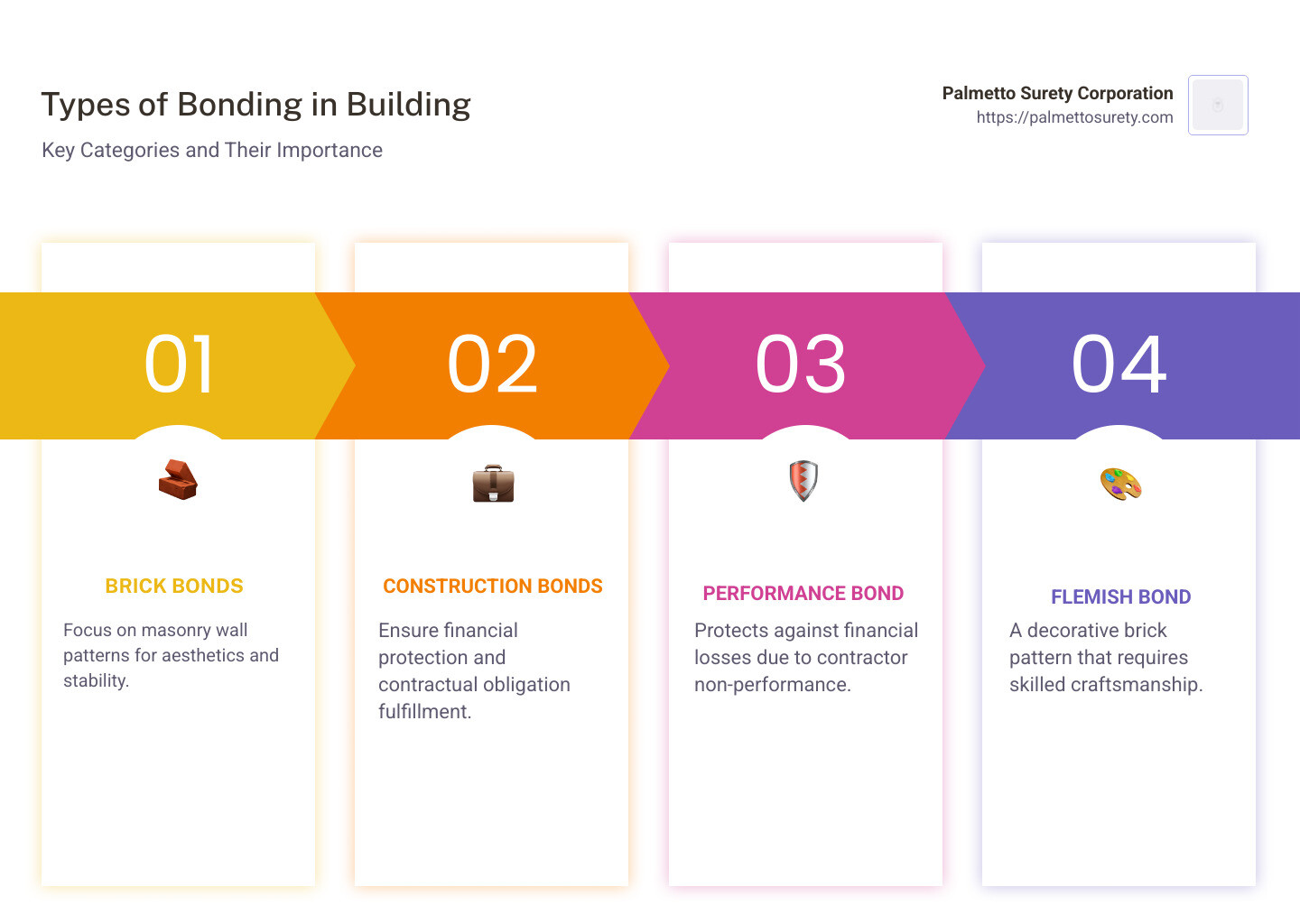
Types of bonding in building are essential for ensuring structural integrity and the successful completion of construction projects. In the construction industry, two main categories of bonds are prevalent:
-
Construction Bonds: These include bid bonds, performance bonds, maintenance bonds, and labor and material payment bonds. They are designed to protect project owners and ensure that contractors meet their contractual obligations.
-
Brick Bonds: These pertain to the arrangement and bonding style in masonry walls, such as stretcher bond, header bond, English bond, and Flemish bond, which enhance both aesthetics and stability.
Understanding these types of bonds is crucial, whether you’re managing a large public works project or creating a beautiful brick facade.
I’m Haiko de Poel Jr, a leading expert in marketing and digital change. My experience in rebranding companies like Palmetto Surety Corporation has provided me with a deep understanding of both construction bonds and brick bonds. As we explore the various types of bonding in building, let’s delve into how these elements contribute to successful projects.
Basic types of bonding in building glossary:
– bonding construction work
– how does bonding work in construction
– how much does a construction performance bond cost
Types of Bonding in Building
In the construction industry, understanding the types of bonding in building is crucial for ensuring both safety and aesthetics. Let’s delve into two primary categories: bricklaying bonds and construction bonds.
Brick Bonding Patterns
Bricklaying bonds focus on the arrangement of bricks to form walls or paths. The chosen pattern impacts not only the appearance but also the structural integrity of the building.

-
Stretcher Bond: Also known as a running bond, this is the simplest pattern. Bricks are laid with their long sides facing out, overlapping halfway with the bricks below. It’s ideal for half-brick-thick walls, such as garden walls.
-
Header Bond: In this pattern, bricks are laid with their short ends facing out. It is used for full-brick-thick walls and provides a strong connection.
-
English Bond: Renowned for its strength, this pattern alternates rows of stretchers and headers. It’s perfect for load-bearing walls.
-
Flemish Bond: This decorative pattern alternates headers and stretchers in each row. It requires more skill but offers a balanced look.
-
Stack Bond: All bricks are aligned vertically, making it visually appealing but not as strong due to the lack of overlap. It’s often used for non-load-bearing walls.
Construction Bonds
Construction bonds are financial instruments that protect project owners and ensure contractors meet their obligations. They are vital for maintaining project integrity and financial security.
-
Performance Bond: This bond ensures that the contractor fulfills the terms of the contract. If the work is subpar, it protects the owner from financial loss.
-
Bid Bond: Used in the bidding process, this bond assures the project owner that the winning contractor will honor their bid and secure a performance bond.
-
Maintenance Bond: After project completion, this bond protects the owner from defects and warranty issues, ensuring any problems are fixed.
-
Labor and Material Payment Bond: This bond guarantees that subcontractors and suppliers get paid, protecting against liens on the project.

Both bricklaying bonds and construction bonds are essential in their own right. They ensure that buildings are not only beautiful and structurally sound but also financially secure and legally compliant. Understanding these bonds can significantly impact the success of any construction project.
Brick Bonding Patterns Explained
Understanding brick bonding patterns is crucial for both the strength and appearance of a building. Let’s dig into some of the most common patterns and their benefits.
Stretcher Bond
The stretcher bond, also known as the running bond, is the simplest of brick bonding patterns. This pattern involves laying bricks with their long sides (stretchers) facing out and overlapping halfway with the bricks below. It’s ideal for half-brick-thick walls, commonly used in garden walls or veneers.
Aesthetic Benefits: The stretcher bond offers a clean and uniform look, making it a popular choice for modern designs.
Structural Benefits: While it provides basic strength for non-load-bearing walls, its main advantage is in its simplicity and ease of installation.
Regional Variations: This pattern is widely used across the United States for its straightforward installation and cost-effectiveness.
Header Bond
In a header bond, bricks are laid with their short ends (headers) facing out. This pattern is used for full-brick-thick walls.
Aesthetic Benefits: The header bond creates a solid and traditional appearance, often seen in historic buildings.
Structural Benefits: It provides a strong connection and is suitable for walls that require more thickness and strength.
Regional Variations: Common in areas where thicker walls are necessary due to climate or architectural style.
English Bond
The English bond is known for its strength, alternating rows of stretchers and headers.
Aesthetic Benefits: This pattern offers a balanced and classic look, suitable for both contemporary and traditional designs.
Structural Benefits: It’s ideal for load-bearing walls, providing excellent stability and durability.
Regional Variations: In regions like the Northeast, where harsh weather demands robust construction, the English bond is highly favored.
Flemish Bond
The Flemish bond alternates headers and stretchers in each row, creating a decorative pattern.
Aesthetic Benefits: This pattern is visually appealing, offering a more intricate and decorative look.
Structural Benefits: While it requires more skill to lay, it provides a balanced strength that combines both aesthetics and function.
Regional Variations: In the Southern United States, where architectural details are prized, the Flemish bond is often used to improve the visual appeal of buildings.
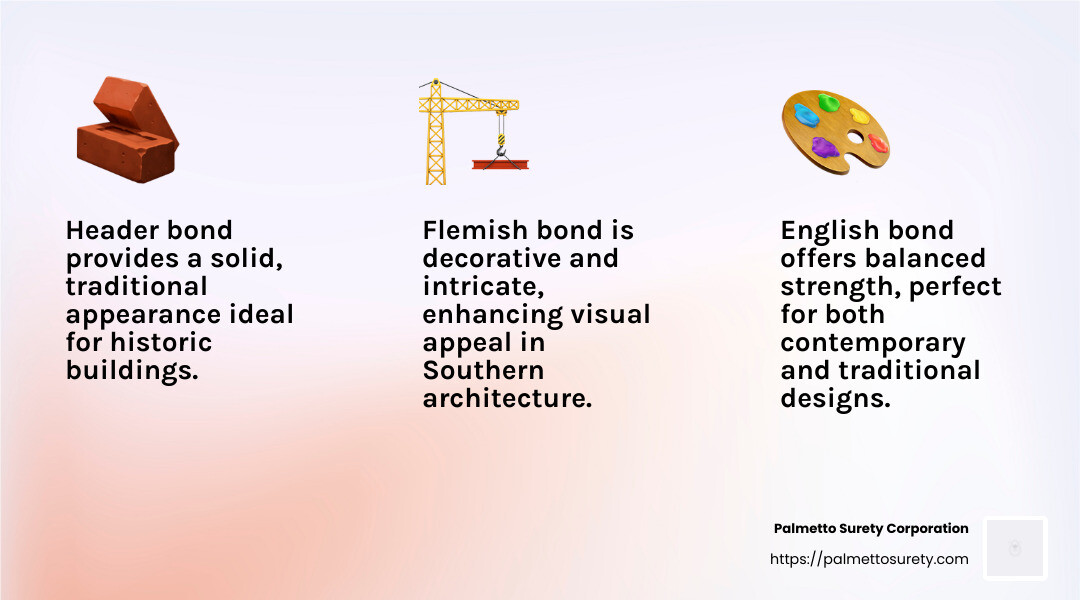
Each of these brick bonding patterns offers unique aesthetic and structural benefits. Choosing the right one depends on the specific needs of the project, including the desired look, required strength, and regional building practices.
Construction Bonds in Detail
Construction bonds are essential for ensuring project success and financial protection. They provide a safety net for project owners, ensuring that contractors fulfill their obligations. Let’s explore these bonds in detail.
Performance Bond
A performance bond guarantees that the contractor will complete the project according to the contract terms. It acts as a financial shield for the project owner, protecting against financial loss if the contractor fails to deliver.
Contract Fulfillment: When a contractor cannot meet their contractual obligations, the surety company steps in to either complete the project or find a new contractor.
Financial Loss Protection: This bond ensures that the project owner does not suffer financial setbacks due to the contractor’s default.
Bid Bond
A bid bond provides assurance to the project owner that the contractor will honor their bid and enter into a contract. This bond is crucial during the tendering process.
Tender Assurance: By submitting a bid bond, contractors show they are serious about their bids and have the capability to undertake the project.
Project Commitment: If a contractor withdraws after winning a bid, the bond covers the cost difference between their bid and the next lowest bid.
Maintenance Bond
A maintenance bond, also known as a warranty bond, ensures that the contractor will address any defects or issues after project completion.
Defect Protection: This bond covers repairs or replacements needed due to defects in workmanship or materials.
Warranty Issues: It acts as a warranty for a specified period, providing peace of mind to the project owner regarding the quality of work.
Labor and Material Payment Bond
The labor and material payment bond guarantees that subcontractors and suppliers will be paid for their work and materials.
Subcontractor Payment: This bond ensures that all parties involved in the construction are compensated, preventing payment disputes.
Lien Protection: It protects the property from liens, ensuring that subcontractors and suppliers are paid even if the contractor fails to do so.
These construction bonds are vital for project assurance and financial security. They provide a framework of trust between project owners, contractors, and surety companies, ensuring smooth project execution and completion.
Frequently Asked Questions about Types of Bonding in Building
What are the main types of brick bonds?
Brick bonds are patterns used in bricklaying to improve the strength and appearance of walls. Here are the main types:
-
Stretcher Bond: This is the simplest pattern, with bricks laid with their longer face (stretcher) visible. It’s ideal for half-brick walls.
-
Header Bond: Bricks are laid with their shorter face (header) showing. This bond is used for full-brick walls, providing a strong connection.
-
English Bond: Alternates between courses of headers and stretchers. It is one of the strongest bonds, often used in load-bearing walls.
-
Flemish Bond: A decorative pattern with alternating headers and stretchers in each course. It requires more skill but offers an appealing look.
How do construction bonds protect project owners?
Construction bonds are crucial for safeguarding project owners from potential risks. Here’s how they offer protection:
-
Financial Loss Protection: Bonds like the performance bond shield project owners from financial losses if a contractor defaults or fails to fulfill contract terms.
-
Contract Fulfillment Assurance: Bonds ensure that contractors complete their work as agreed. If they don’t, the surety company will step in to complete the project or cover the costs.
What is the difference between a performance bond and a bid bond?
Understanding the distinction between these two bonds is key:
-
Performance Bond: This bond ensures contract performance. It guarantees that the contractor will complete the project according to the terms. If they fail, the bond covers financial losses and helps find a replacement contractor.
-
Bid Bond: Used during the bidding process, this bond provides tender assurance. It ensures that if a contractor wins the bid, they will enter into the contract. If they back out, the bond covers the cost difference to hire the next lowest bidder.
These bonds are essential tools in construction, providing both financial security and project assurance. They ensure that projects proceed smoothly and are completed to the expected standards.
Conclusion
At Palmetto Surety Corporation, we understand the complexities of the construction industry and the essential role that construction bonds play in ensuring project success. Our headquarters in Charleston, SC, is where we have honed our expertise over more than 20 years, providing custom surety solutions to meet the diverse needs of contractors and project owners across the southeastern United States.
One of our standout features is our ability to offer quick approval for most bond applications. This means you can swiftly secure the necessary bonds for your projects without unnecessary delays. Our streamlined processes and expert team ensure that you receive efficient service, allowing you to focus on what you do best—building.
Whether you need a performance bond to guarantee contract fulfillment, a bid bond for tender assurance, or any other type of construction bond, we have you covered. Our commitment to excellence and customer satisfaction is best, and we are proud to be a trusted partner in the construction industry.
For more information on how we can assist you with your bonding needs, visit our Palmetto Surety Corporation service page. Let us help you build with confidence and security.


