


How to File a Claim Against a Notary Bond: 3 Key Steps
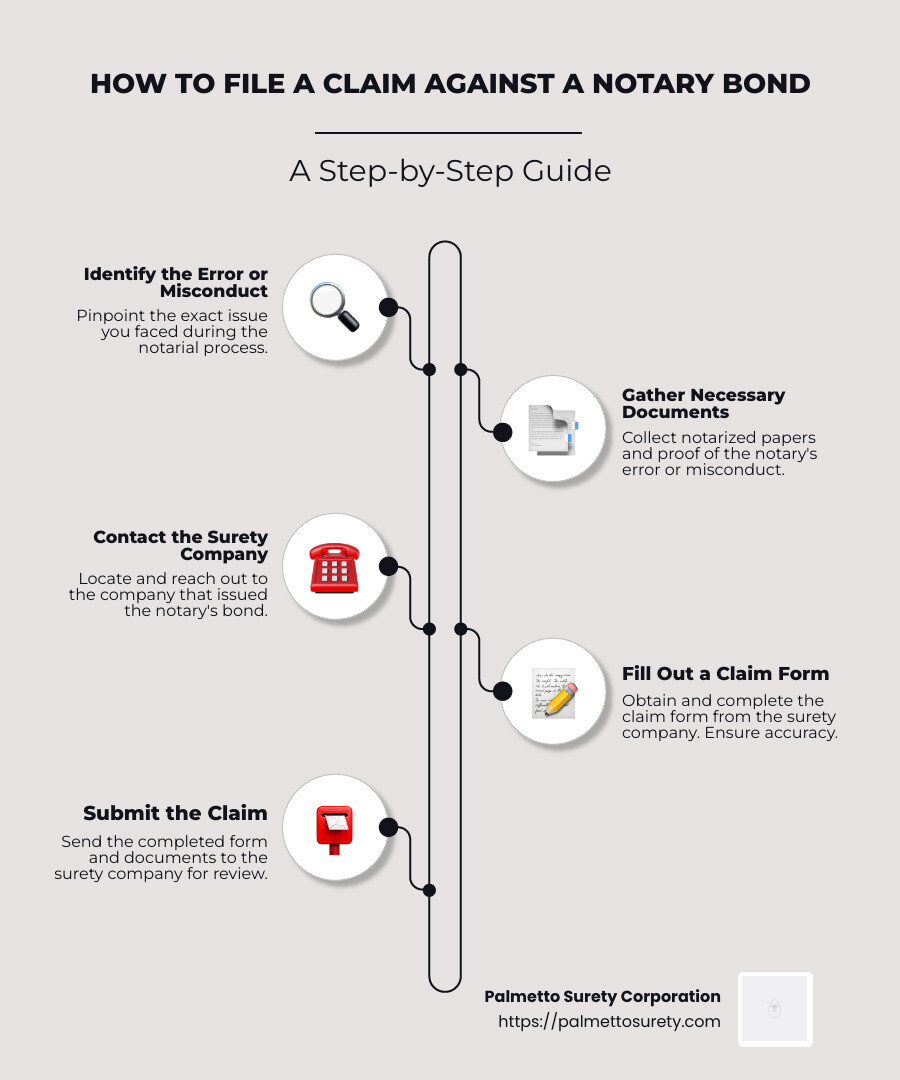
How to file a claim against a notary bond can seem overwhelming, but breaking it down into a few clear steps makes it manageable. Here’s a quick overview to help you get started:
- Identify the Error or Misconduct: Pinpoint the exact issue you faced during the notarial process.
- Gather Necessary Documents: Collect any relevant documents, like notarized papers and proof of the notary’s error or misconduct.
- Contact the Surety Company: Reach out directly to the surety company that issued the bond to the notary. You can find this information on the notary’s records.
- Fill Out a Claim Form: Obtain and complete the claim form from the surety company. Ensure all information is accurate.
- Submit the Claim: Send your finished form and gathered documents to the surety company for review.
Notary bonds are vital for safeguarding financial interests and ensuring public trust when documents are notarized. They provide a safety net against notarial errors or misconduct, offering protection to those impacted. By understanding the process to file a claim against a notary bond, you can take decisive action if issues arise.
I’m Haiko de Poel Jr., an expert in helping people understand the complexities of filing notary bond claims. With extensive experience at Palmetto Surety Corporation, I’ve guided businesses and individuals through the intricate steps of securing and claiming against surety bonds. Now, let’s dig into the ins and outs of notary bonds and the crucial role they play in financial protection.
Similar topics to how to file a claim against a notary bond:
Understanding Notary Bonds
Notary bonds are a type of surety bond that notaries must possess to operate legally. These bonds act as a financial safety net, protecting the public from any financial losses due to a notary’s errors or misconduct.
What Is a Surety Bond?
A surety bond is a three-party agreement among:
- The Principal: The notary who purchases the bond.
- The Obligee: The state or public that requires the bond.
- The Surety: The company that issues the bond, guaranteeing the principal’s obligations.
In the case of notary bonds, the surety assures that the notary will perform their duties according to the law. If the notary fails, the surety covers the financial losses up to the bond amount.
Financial Guarantee
Notary bonds provide a financial guarantee for the public. If a notary commits an error, like notarizing a fraudulent signature, those affected can file a claim against the bond. The surety company will investigate, and if the claim is valid, they will compensate the affected party. However, the notary must repay the surety for any amounts paid out.

This ensures that notaries remain accountable, maintaining high standards in their professional duties.
Legal Requirement
In many states, obtaining a notary bond is a legal requirement before one can perform notarial acts. This requirement varies by state, with bond amounts ranging from $500 to $25,000. For instance, in Alabama, notaries need a $25,000 bond, while in Wyoming, the requirement is just $500.
Notary bonds are essential for maintaining trust in the notarial process. They ensure that notaries act responsibly, knowing there’s a financial consequence for misconduct or negligence.
By understanding notary bonds, you can appreciate their role in protecting the public and ensuring professional accountability. This knowledge is crucial if you ever need to file a claim against a notary bond.
How to File a Claim Against a Notary Bond
Filing a claim against a notary bond can seem challenging, but by breaking it down into clear steps, the process becomes more manageable. Below, we’ll guide you through the claim process, focusing on gathering the necessary documentation and accurately completing the claim form.
Gather Necessary Documentation
The first step in filing a claim is to collect all relevant documentation. This ensures you have a solid foundation for your claim.
-
Proof of Loss: Gather evidence showing the financial loss incurred due to the notary’s error or misconduct. This could include financial statements or transaction records.
-
Notarized Documents: Secure copies of the notarized documents involved in the incident. These documents are crucial as they directly relate to the notarial act in question.
-
Witness Statements: If applicable, obtain statements from any witnesses who can corroborate your claims. Witnesses can provide additional context and support your case.
-
Correspondence: Keep any communications with the notary or other involved parties. Emails, letters, or messages can offer insights into the situation and demonstrate your attempts to resolve the issue.
Complete and Submit the Claim Form
With your documentation in hand, the next step is to complete the claim form. Accuracy is key here to avoid delays or complications.
-
Access the Claim Form: Obtain the claim form from the surety company that issued the notary’s bond. This might be available on their website or through direct contact.
-
Provide Accurate Information: Fill out the form with precise details. This includes your personal information, a description of the incident, and the documentation you’ve gathered.
-
Describe the Claim Clearly: Clearly explain the nature of the notary’s error or misconduct. Be concise but thorough in detailing how it led to your financial loss.
-
Attach Documentation: Include all the relevant documents you’ve collected. This supports your claim and provides the surety company with the necessary context.
-
Submission Deadlines: Pay attention to any deadlines for submitting the claim. Missing these can result in delays or even denial of your claim.
-
Submit the Form: Send the completed form and all attachments to the surety company. Depending on their requirements, this can be done online, by mail, or in person.

Once you submit your claim, the surety company will begin an investigation. They may contact you for further information or clarification during this process. Ensuring your claim is detailed and complete from the start will help facilitate a smoother review and increase the chances of a favorable outcome.
Common Reasons for Notary Bond Claims
When it comes to filing a claim against a notary bond, understanding the common reasons behind these claims can help you steer the process more effectively. Here are some typical causes:
Errors and Omissions
Notary bond claims often arise from errors and omissions. These are honest mistakes or oversights made by the notary during the notarization process. Common examples include:
- Not verifying the signer’s identity: A notary may fail to properly check identification, leading to fraudulent signings.
- Incorrectly completing documents: Mistakes like missing signatures or wrong dates can invalidate documents.
- Failing to record the notarization: Not keeping an accurate log of notarizations can lead to disputes.
When such errors occur, individuals who suffer financial losses may file a claim against the notary bond to seek compensation.
Fraudulent Activity
Unfortunately, not all claims are due to honest mistakes. Fraudulent activity by a notary is another significant reason for claims. This involves intentional acts of deceit, such as:
- Forging signatures: A notary might fake signatures on documents, causing serious legal and financial repercussions for the affected parties.
- Notarizing false documents: Intentionally certifying documents known to be false is a grave misconduct.
- Ignoring state regulations: Deliberately bypassing legal requirements to notarize documents can lead to substantial harm.
Victims of such fraudulent actions can file claims by providing clear evidence of the misconduct, such as notarized documents and related communications.
Negligence
Negligence involves a notary’s failure to exercise reasonable care in their duties, which can lead to claims. Examples include:
- Overlooking important details: Missing critical information or failing to ask necessary questions can result in invalid documents.
- Inadequate training or knowledge: A notary not being well-versed in state laws or procedures might inadvertently cause harm.
In cases of negligence, claimants must demonstrate how the notary’s lack of care directly resulted in their losses. This often requires detailed documentation and evidence.
Understanding these common reasons for notary bond claims can help you identify the basis of your claim and gather the necessary documentation. This knowledge is crucial for pursuing a successful claim and securing the compensation you deserve.
What to Expect After Filing a Claim
Once you’ve filed a claim against a notary bond, it’s important to know what happens next. This part of the process involves several steps, from investigation to resolution. Here’s what you can expect:
Investigation Process
After you submit your claim, the surety company or state authority will begin an investigation. They will assess the validity of your claim by reviewing all submitted documentation, including any proof of loss and witness statements.
The investigation aims to determine whether the notary’s actions, such as errors, omissions, or fraudulent activity, justify a claim against the bond. During this time, the surety company may contact you for additional information or clarification.
Tip: Stay responsive and provide any requested details promptly to avoid delays.
Compensation Decision
Once the investigation is complete, the surety company will make a compensation decision. This decision hinges on the evidence you provided and the results of their investigation.
If your claim is approved, the surety company will compensate you for the documented financial losses caused by the notary’s actions. That the compensation amount is typically limited to the bond’s value.
Note: If your claim is denied, you should receive an explanation. You may have the option to appeal the decision or seek legal advice for further action.
Resolution Timeline
The resolution timeline for notary bond claims can vary. Factors influencing the timeline include the complexity of the claim, the responsiveness of involved parties, and the workload of the surety company.
In general, you can expect the process to take anywhere from a few weeks to several months. Regularly following up with the surety company can help keep your claim on track.
Remember: Patience is key, but don’t hesitate to reach out for updates if you feel the process is taking too long.
Understanding what to expect after filing a claim can help you steer the process with confidence. By being prepared and staying informed, you increase your chances of a timely and favorable resolution.
Frequently Asked Questions about Notary Bond Claims
What is a notary bond?
A notary bond is a type of surety bond that notaries are required to obtain in many states. It acts as a financial guarantee to protect the public from any errors or misconduct by the notary during their official duties. If a notary makes a mistake or acts dishonestly, the bond ensures that the affected parties can be compensated for their losses, up to the bond’s limit.
How do notary bond claims work?
When someone experiences a loss due to a notary’s error or misconduct, they can file a claim against the notary bond. Here’s a simplified overview of how the process works:
-
Identify the Notary: Determine which notary was responsible for the error or misconduct.
-
Contact the Surety Company: Notify the company that issued the bond. They will provide guidance on how to proceed with the claim.
-
Submit Required Documentation: Gather all necessary documents, including proof of loss, witness statements, and notarized documents, and submit them along with a completed claim form.
-
Await Investigation: The surety company will investigate the claim to assess its validity. They will review the provided evidence and may contact you for additional information.
-
Receive a Decision: After the investigation, the surety company will decide whether to approve or deny the claim. If approved, compensation will be provided up to the bond’s value.
What documentation is required to file a claim?
When filing a claim against a notary bond, having the right documentation is crucial. Typically, you will need:
-
Completed Claim Form: Fill out the form provided by the surety company with accurate details about the incident.
-
Proof of Loss: Documentation showing the financial loss incurred, such as invoices or receipts.
-
Notary’s Certificate: A copy of the notary’s certificate or commission to verify their credentials.
-
Witness Statements: Any statements from witnesses that can support your claim.
-
Notarized Documents: Copies of the documents in question that demonstrate the notary’s error or misconduct.
Providing thorough and accurate documentation can expedite the claim process and improve your chances of a successful outcome.
Conclusion
Filing a claim against a notary bond is a crucial step in holding notaries accountable for their actions. These bonds serve as a financial safety net, ensuring that individuals are protected from errors or misconduct by notaries. At Palmetto Surety Corporation, we understand the importance of maintaining high professional standards in the notary industry.
Our commitment is to provide you with the tools and support you need to steer the claims process smoothly. With over 20 years of experience in the surety bond industry, we offer quick and efficient service to help you resolve your claim with minimal hassle. Our team is dedicated to upholding ethical business practices, ensuring that all parties involved are treated fairly and with respect.
By choosing Palmetto Surety Corporation, you are partnering with a company that values accountability and integrity. We strive to foster trust in the notarial process by ensuring that notaries fulfill their duties responsibly. This commitment not only protects consumers but also strengthens the overall reliability of notarial services.
If you need assistance with filing a claim or have any questions about notary bonds, don’t hesitate to reach out to us. Our dedicated support team is here to help you every step of the way. For more information on our services, visit our Palmetto Surety Corporation service page.


