


Bail Bond Business Start-Up Cost: 5 Proven Success Tips
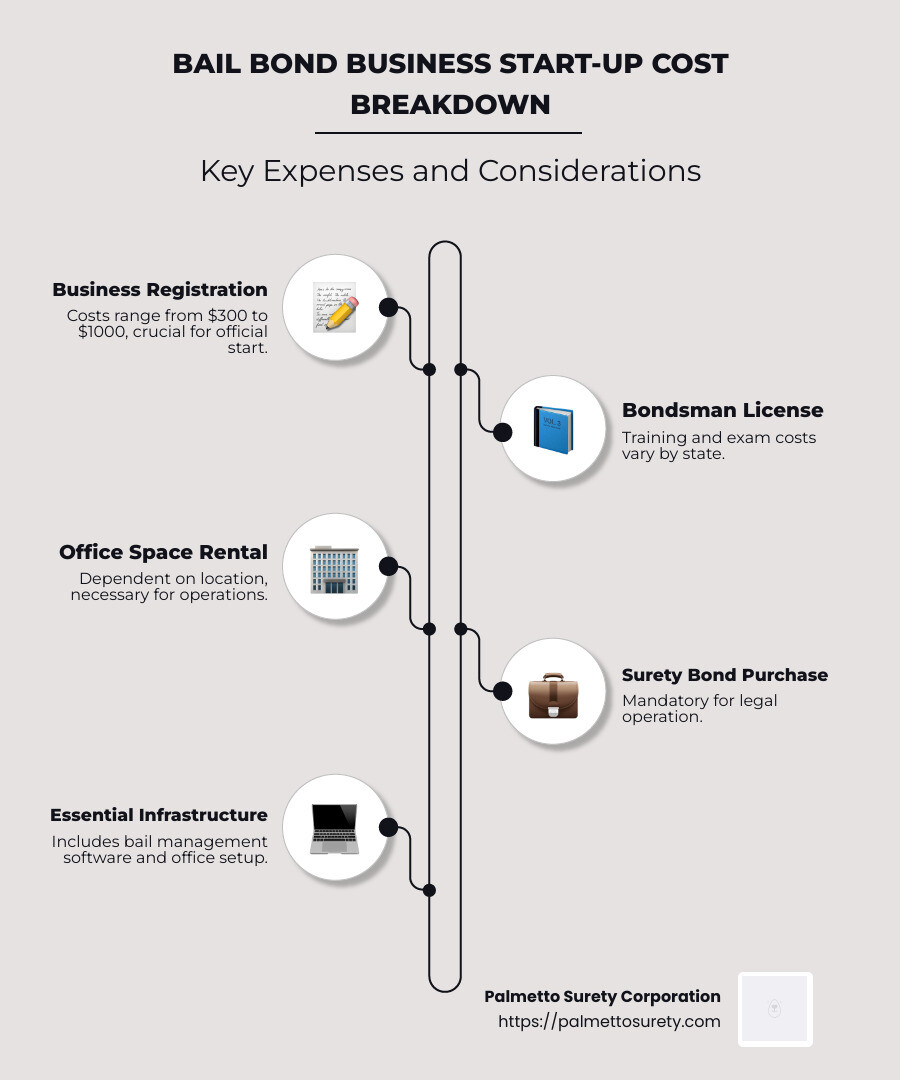
Bail bond business start-up cost is a vital factor for anyone interested in entering the $2.3 billion bail bonds industry. Starting a bail bonds business involves several complexities, but understanding the initial costs is crucial for aspiring bail bond agents. Here are some key expenses you should anticipate:
- Business Registration: $300 – $1000
- Bondsman License Training and Exam: Variable costs
- Office Space Rental: Location-dependent
- Surety Bond Purchase: Required for operation
A career as a bail bondsman provides an opportunity to assist families in bringing their loved ones home to prepare for court dates. However, navigating legal requirements and budget limitations is essential for success.
I’m Haiko de Poel Jr, an expert in guiding businesses through branding and developmental challenges, including the bail bond business start-up cost. My expertise with Palmetto Surety Corporation ensures that understanding and managing these initial costs is as seamless as possible.
Learn more about bail bond business start-up cost:
– how does a bail bond business work
– how to start a bail bonds business in florida
– how to start a bail bonds business in texas
Bail Bond Business Start-Up Cost
Licensing and Registration
Starting a bail bonds business begins with understanding the licensing fees and registration requirements. Each state has its own rules, so it’s crucial to research the specifics for your location. For example, in California, the cost for a bail bond company license is $622, and this fee is non-refundable. You must also ensure that your business name includes the word “bail,” as required by California law, to clearly identify your services.
To operate legally, you need a bondsman license. This involves training and passing an exam, with costs varying based on the state and the provider of the training. It’s wise to complete this process before registering your business to avoid any delays.
Office and Operational Costs
Setting up an office is another significant part of the bail bond business start-up cost. The cost of office space varies depending on the location and size, but having a dedicated space can help separate work from personal life and improve professionalism. Even if local laws allow you to work from home, renting an office might be a better long-term strategy.
When it comes to managing your operations, investing in bail management software is essential. Tools like Captira can streamline processes such as tracking defendants, court dates, and payments. At $99 per month, Captira offers a range of features without long-term contracts, making it a flexible choice for new businesses.

Insurance is another critical expense. You’ll need liability insurance to protect your business and ensure compliance with state regulations. The cost can vary, but it’s a necessary investment to safeguard against potential risks.
Understanding these costs is key to launching a successful bail bonds business. In the next section, we’ll explore different ways to fund your new venture, ensuring you’re prepared to cover these initial expenses.
Funding Your Bail Bond Business
Starting a bail bond business involves significant costs, but there are several ways to secure the necessary funding. Whether you choose small business loans, seek angel investors, or use personal finances, each option has its unique benefits and challenges.
Small Business Loans
Applying for a small business loan is a popular way to fund your bail bond business. Banks and licensed lenders provide these loans, but they require a thorough review of your business plan and financial background. You’ll need a strong business plan that clearly outlines how your company will generate revenue. If approved, you’ll enter a repayment plan with interest rates. This method allows you to secure capital quickly, but remember, lenders will perform credit checks and may require collateral.
Angel Investors
Angel investors can be an appealing option as they provide capital without expecting repayment. Instead, they typically ask for a share of your profits. This means you won’t have loan repayments hanging over your head, but you might have less control over your business decisions. Angel investors often seek some level of involvement in the company, so be prepared for potential shifts in business direction. If you’re open to collaboration, this could be a beneficial partnership.
Personal Finances
Using your personal savings to fund your bail bond business is another route. This option gives you full control and eliminates the need to repay loans or share profits. However, it requires substantial upfront capital and involves personal financial risk. If your business faces challenges, your personal finances could be impacted. It’s crucial to assess your financial situation carefully and consider whether you can afford to take this risk.
Legal and Regulatory Requirements
Starting a bail bond business means navigating a maze of state laws and regulations. Each state has its own set of rules, so it’s crucial to understand and comply with them to ensure your business runs smoothly.
State Laws and Compliance
Compliance is key. In California, for instance, you must submit a Business Entity Application through the California Department of Insurance to obtain the right license. Your business name must include the word “bail” to clearly indicate your services. The licensing fee is $622, and it’s non-refundable. Each employee must also have their own bail agent license.
Different states have varying requirements, but generally, a clean criminal record, a high school diploma or GED, and U.S. citizenship or legal residency are needed. Some states might require you to attend a pre-licensing course and pass an exam.
Surety Company Partnerships
Partnering with a surety company is a crucial step. A surety acts as a financial backer, covering the bail amount if a defendant skips court and you can’t recover the money. This partnership can protect your business from significant financial loss.
Without a surety, you’ll need substantial personal wealth to cover potential losses, often around $15,000 minimum. Choosing the right surety partner involves considering their willingness to back your agency, the rates they offer, and if they operate in your state.
Important Considerations
-
Bounty Hunters: If allowed in your state, hiring a bounty hunter to track down defendants who skip court can be beneficial. However, ensure they operate professionally to avoid damaging your agency’s reputation.
-
Continuous Learning: Stay up-to-date with changes in state laws and regulations. Regular training and courses can help keep your business compliant and competitive.
Navigating the legal landscape is essential for a successful bail bond business. Next, we’ll explore how to effectively market and grow your business to attract more clients.
Marketing and Growing Your Bail Bond Business
Building a successful bail bond business isn’t just about having the right licenses and partners. It’s also about getting the word out and attracting clients. Here’s how you can effectively market and grow your business.
Online Presence
Having a strong online presence is crucial. Create a professional website that clearly outlines your services and makes it easy for clients to contact you. Your website should be optimized for search engines, especially for terms related to bail bonds in your area. This means using keywords like “bail bond business start-up cost” and ensuring your site is mobile-friendly.
Consider hiring an SEO agency to help your site rank higher in search results. Most people look for bail bond services online, so if you’re not visible, you’re missing out on potential clients.
Local Advertising
While online marketing is important, don’t overlook the power of local advertising. Placing ads on billboards, bus stops, and near correctional facilities can be highly effective. These are locations where potential clients or their families are likely to see your ads.
You can also explore advertising in local newspapers, magazines, or on radio stations. These traditional methods can help you reach people who might not be as active online.
Partnerships
Forming strong local partnerships can significantly boost your business. Collaborate with local attorneys and law firms. They often deal with clients who need bail services and can refer them to you. Building trust with these professionals can lead to a steady stream of referrals.
Additionally, consider partnering with community organizations and nonprofits that focus on legal aid. These partnerships can improve your reputation and expand your client base.
Leveraging Social Media
Don’t underestimate the power of social media. Platforms like Facebook and Instagram can help you connect with your community and build a loyal following. Share helpful content, such as tips on navigating the legal system or understanding bail bond processes. Engaging with your audience can build trust and establish your authority in the field.
Google My Business
Optimize your Google My Business profile. Encourage satisfied clients to leave positive reviews. High ratings can improve your visibility in local searches and make your business more appealing to potential clients.
By combining these strategies, you can effectively market your bail bond business and attract more clients. Next, let’s dive into some frequently asked questions about the costs associated with starting a bail bond business.
Frequently Asked Questions about Bail Bond Business Start-Up Cost
How much does a bail bond business make?
The revenue streams in a bail bond business primarily come from the premiums charged to clients. Typically, this is about 10% of the total bail amount set by the court. For instance, if a court sets a $10,000 bail, you would charge $1,000 as the premium. This fee is non-refundable, providing a steady income stream.
In major cities, where crime rates and bail amounts can be higher, bail bond businesses can see substantial earnings. However, this can vary significantly based on location, competition, and the efficiency of your operations.
Is being a bail bondsman profitable?
Being a bail bondsman can indeed be profitable, especially in densely populated areas with higher crime rates. The average income for a bail bondsman can range from $25,000 to $100,000 annually, depending on the market size and your ability to attract clients.
Profitability also depends on how well you manage risks. Ensuring clients show up for their court dates is crucial because if they don’t, you may need to pay the full bail amount to the court. This is why many bail bond companies require collateral, such as property or cash, to secure the bond.
Do bail bondsmen put up their own money?
Bail bondsmen typically do not put up their own money for the full bail amount. Instead, they act as a surety, providing a promise to the court that the defendant will appear. If the defendant fails to appear, the bondsman is responsible for covering the full bail.
To mitigate this risk, bondsmen often work with insurance companies that provide surety bonds. These companies back the bondsmen, allowing them to cover large bail amounts without needing extensive personal funds. Collateral from clients also plays a critical role in securing these bonds and managing the financial risk involved.
Understanding these aspects can help you gauge the potential profitability and financial requirements of starting a bail bond business.
Conclusion
Starting a bail bond business can be both rewarding and challenging. It’s crucial to steer the startup costs and legal requirements effectively. This is where Palmetto Surety Corporation shines. With over 20 years of experience in the industry, we offer a wealth of expertise and a commitment to quick service, making us a trusted partner for your bail bond business journey.
Our ability to approve most applications within hours means you can start operating faster and focus on growing your business. We understand the intricacies of the bail bond industry and are here to support you with streamlined processes and efficient solutions.
Whether you’re just starting or looking to expand, Palmetto Surety Corporation provides the tools and support to help your bail bond business thrive. From understanding state regulations to managing operational costs, our team is ready to assist you every step of the way.
For more information on how we can help your bail bond business succeed, visit our service page and find the Palmetto Surety advantage today.


