


Surety Bond South Carolina: 2025 Essential Guide
If you’re looking to understand a surety bond South Carolina, here’s a quick answer:
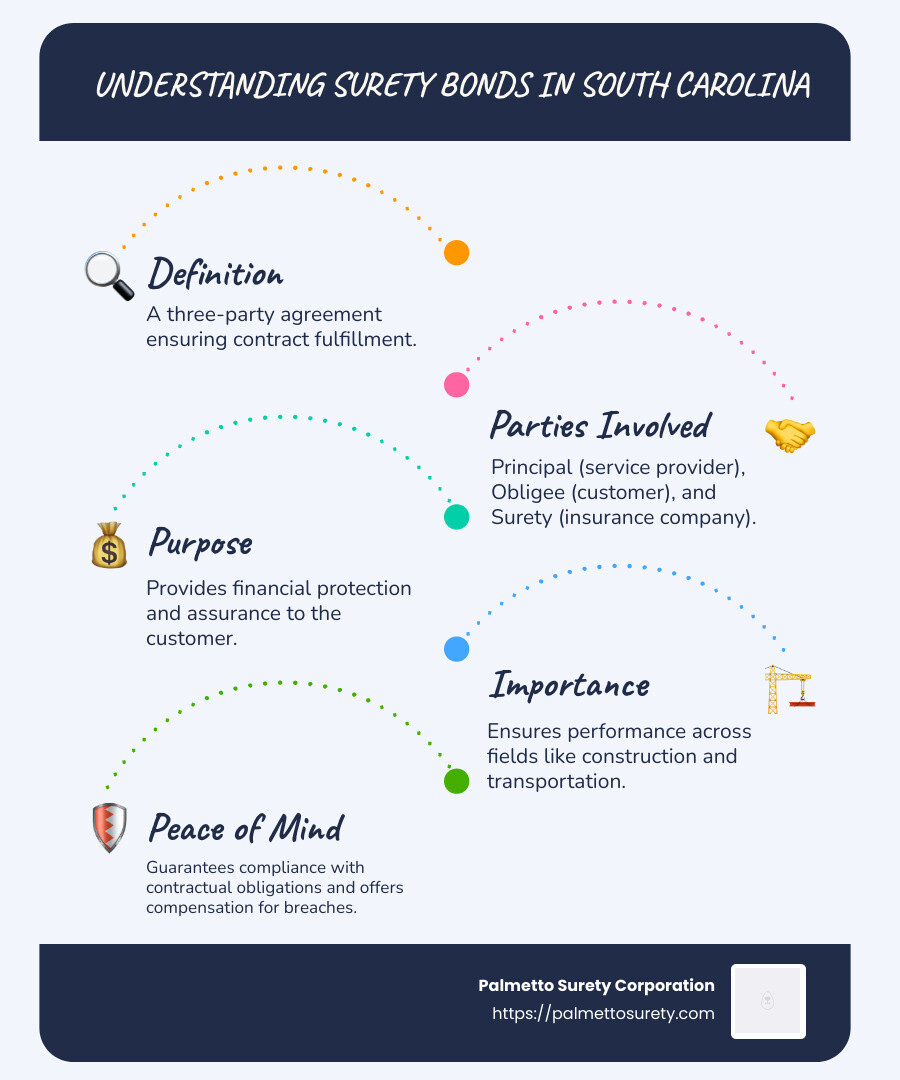
- Definition: It’s a three-party agreement ensuring fulfillment of a contract.
- Parties Involved: Principal (service provider), Obligee (customer), and Surety (insurance company).
- Purpose: Provides financial protection and assurance to the customer.
A surety bond South Carolina is an essential tool for businesses and individuals who need guaranteed performance or compliance with contractual obligations. These bonds are crucial across various sectors, from construction to transportation, ensuring that clients have a safeguard against negligence and non-performance. Surety bonds provide both the obligee and principal with peace of mind, ensuring that contractual agreements are honored and offering financial compensation if they are not.
I’m Haiko de Poel Jr, a specialist in digital change and marketing with experience enhancing operations at Palmetto Surety Corporation. My expertise includes the rebranding and relaunching of surety bond solutions, ensuring businesses meet their obligations swiftly and effectively.
Surety bond south carolina vocab to learn:
- how much does a surety bond cost in south carolina
- south carolina auto dealer bond
- surety bond companies in south carolina
What is a Surety Bond?
A surety bond is essentially a promise. It’s a three-party contract that protects one party from the failure of another to meet contractual obligations. This might sound complex, but let’s break it down into simple terms.
Three Parties Involved
-
Principal: This is the person or business that needs the bond. They’re the ones providing a service or fulfilling a contract. For example, a construction company building a new office complex.
-
Obligee: This is the party that requires the bond. They want assurance that the principal will perform their duties as agreed. In our construction example, this could be the company hiring the contractor.
-
Surety: This is the insurance company backing the bond. They promise to pay the obligee if the principal fails to meet their obligations. Essentially, the surety acts as a safety net.

How It Works
When a principal fails to meet their contractual obligations, the obligee can make a claim on the bond. The surety then investigates the claim. If it’s valid, the surety pays the obligee up to the bond’s amount. Later, the principal must repay the surety. This ensures that the obligee is protected financially, while the principal is held accountable.
Example: Imagine a contractor in South Carolina doesn’t finish a project on time. The client (obligee) can file a claim. The surety company pays the client, and the contractor must reimburse the surety.
Importance of Surety Bonds
Surety bonds are vital in many industries. They provide financial protection and ensure trust in business transactions. Whether you’re a motor vehicle dealer or need a residential builder bond, having a surety bond South Carolina can be crucial for compliance and peace of mind.
These bonds are not just a formality. They play a critical role in safeguarding interests and promoting accountability in business relationships.
Types of Surety Bonds in South Carolina
In South Carolina, surety bonds are essential across various sectors, ensuring that businesses and professionals comply with regulations and fulfill their obligations. Here are three common types of surety bonds South Carolina residents and businesses might encounter.
Motor Vehicle Dealer Bond
If you’re planning to sell cars in South Carolina, you’ll need a Motor Vehicle Dealer Bond. This bond is mandated by the South Carolina Department of Motor Vehicles (SCDMV) to protect consumers from fraud or breaches of contract by car dealers.
- Purpose: Safeguards buyers from fraudulent activities by dealers.
- Required Amount: Varies, but must meet state law requirements.
- Process: Submit the original bond with your dealer license application (SCDMV Form DLA-1).

Residential Builders Bond
Residential builders in South Carolina must maintain a Residential Builders Bond. This bond is crucial for anyone involved in construction projects exceeding $5,000.
- Purpose: Ensures builders complete projects to agreed standards and pay subcontractors.
- Required Amount: Builders must have a $15,000 bond on file.
- Documentation: Upload bond or continuation certificate electronically to the SC Residential Builders Commission.

Public Official Bond
Public officials in South Carolina are required to have a Public Official Bond before they are sworn into office. This bond holds officials accountable for their actions and ensures they perform duties ethically and lawfully.
- Purpose: Protects the public from misconduct or negligence by officials.
- Filing: Submit the bond to the Secretary of State before taking office.
- Common Positions: Governor, mayor, attorney general, and more.

These bonds not only protect consumers and the public but also help maintain trust and accountability in various industries. Whether you’re a car dealer, builder, or public official, having the right surety bond is essential for operating within South Carolina’s legal framework.
Surety Bond South Carolina: Requirements and Costs
When diving into surety bonds in South Carolina, understanding the requirements and costs is crucial. Let’s break down what you need to know about bond amounts, cost calculations, credit checks, and the application process.
Bond Amounts
In South Carolina, the bond amount varies depending on the type of bond and the industry. Here are some examples:
- Motor Vehicle Dealer Bond: The bond amount is determined by state law and must be submitted with the dealer license application.
- Residential Builders Bond: A $15,000 bond is required for builders working on projects over $5,000.
- Public Official Bond: The bond amount varies, often set by the state governor, ensuring officials perform their duties ethically.
These amounts are set to protect the public and ensure compliance with state regulations.
Cost Calculation
The cost of a surety bond is typically a small percentage of the bond amount. This percentage is known as the bond premium. Factors affecting the premium include:
- Credit Score: A higher credit score often results in a lower premium.
- Financial History: A stable financial background can lead to better rates.
- Bond Type and Amount: Larger bond amounts may have higher premiums.
For example, if you’re required to have a $10,000 bond and the premium rate is 1%, your annual cost would be $100.
Credit Check
A credit check is usually part of the bonding process. For bonds under $50,000, like the Public Official Bond, a credit check may not be necessary due to the lower risk involved. However, for larger bonds or those with higher risk, a credit check helps determine the premium rate.
Application Process
Obtaining a surety bond in South Carolina involves a straightforward application process:
-
Choose a Surety Company: Work with a reputable company like Palmetto Surety Corporation to guide you through the process.
-
Fill Out the Application: Provide details about your business, the type of bond needed, and your financial history.
-
Submit Required Documentation: This may include financial statements, credit reports, and any specific forms required by the state.
-
Approval and Issuance: Once approved, you’ll receive the bond, which you can then submit to the relevant state authority.
Advancements in technology have streamlined this process, allowing for quick approvals and electronic submissions.
Understanding these components helps ensure you meet all surety bond South Carolina requirements efficiently, allowing you to focus on your business or public service duties.
How to Obtain a Surety Bond in South Carolina
Getting a surety bond in South Carolina is easier than you might think. Here’s a step-by-step guide to help you through the application process, understand the necessary documentation, and know what to expect for approval time.
Application Process
-
Select a Surety Company: Start by choosing a reputable surety company like Palmetto Surety Corporation. A good surety company will guide you through the entire process and help you understand specific requirements for your bond type.
-
Complete the Application: Fill out an application form with details about your business or personal information, the type of bond you need, and your financial background. The form is straightforward and typically available online, making it convenient to complete.
-
Submit Required Documentation: Along with your application, you’ll need to provide some key documents. These might include:
- Financial Statements: To show your financial stability.
- Credit Reports: These help assess your credit health, which can affect your bond cost.
- Specific State Forms: Depending on the bond type, South Carolina may require additional forms.
Approval Time
The approval time for a surety bond can vary, but thanks to modern technology, it’s often quite fast. Here’s what to expect:
- Quick Turnaround: Many surety companies, including Palmetto Surety Corporation, offer quick approvals, sometimes within 24 to 48 hours.
- Electronic Processing: With online applications and electronic submissions, the process is streamlined, reducing wait times significantly.
Once your application is approved, you’ll receive your surety bond, which you can then submit to the necessary state authority to fulfill your legal obligations.
By following these steps, you can efficiently steer the process of obtaining a surety bond South Carolina, ensuring compliance and peace of mind as you carry out your business or official duties.
Frequently Asked Questions about Surety Bonds in South Carolina
What is a surety bond in South Carolina?
A surety bond in South Carolina is a financial agreement involving three parties: the principal (the business or individual required to obtain the bond), the obligee (the entity requiring the bond, often a government agency), and the surety (the company providing the bond).
The purpose of a surety bond is to protect the obligee and the public from potential negligence or damages caused by the principal. If the principal fails to fulfill their contractual obligations, the obligee can make a claim against the bond to recover losses. This setup provides a layer of security and assurance that the principal will perform their duties as promised.
How does a surety bond work?
Surety bonds function as a performance guarantee. When a principal enters into a contract, the bond ensures they will meet all terms and conditions. If they fail to do so, the obligee can file a claim to cover any resulting damages.
The surety company initially covers the claim, protecting the obligee from financial loss. However, the principal is ultimately responsible for reimbursing the surety. This means that while the surety provides immediate financial relief to the obligee, the principal must repay the surety for any claims paid out.
How much does a surety bond cost?
The cost of a surety bond in South Carolina depends on several factors, primarily the bond amount and the principal’s credit health. Typically, the premium for a bond is a small percentage of the total bond amount, ranging from 1% to 10%.
-
Bond Amount: This is the total coverage the bond provides. Higher bond amounts generally mean higher premiums.
-
Credit Health: A principal’s credit score and financial stability play a significant role in determining the bond’s cost. Those with strong credit can expect lower rates, while those with weaker credit might pay higher premiums.
For example, a bond with a $10,000 amount might cost a principal with good credit around $100 annually, while someone with less favorable credit could pay more.
Understanding these factors can help businesses and individuals budget for their surety bond needs, ensuring they meet all regulatory requirements without unnecessary financial strain.
Conclusion
At Palmetto Surety Corporation, we pride ourselves on delivering quick and reliable service for all your surety bond needs in South Carolina. With over 20 years of experience in the industry, we understand the unique requirements across various sectors, including construction, transportation, and healthcare.
Our expertise allows us to approve most applications within hours, ensuring that businesses can continue their operations without delay. This efficiency is a testament to our commitment to providing exceptional service and support to our clients.
We offer a wide range of surety bonds custom to meet the specific needs of each industry. Whether you’re a motor vehicle dealer, a residential builder, or a public official, we have the right bonding solutions to help you comply with South Carolina’s regulations.
Our dedicated team is here to guide you through the entire process, from application to approval, making it as smooth and stress-free as possible. With Palmetto Surety Corporation, you can trust that you’re in capable hands, backed by a company that values integrity, reliability, and customer satisfaction.
For more information or to get started on obtaining your surety bond in South Carolina, contact us today. Let us help you secure your business with the best bonding solutions available.


