


Court Surety Bonds: Top 3 Essential Facts in 2024
Court surety bonds serve as a crucial financial safeguard in legal proceedings, ensuring that all court-ordered responsibilities are faithfully executed. Whether you’re dealing with estate management or facing a legal appeal, these bonds guarantee compliance, minimizing financial risks for both parties involved.
Key Points:
– Protects financial interests: Secures the interests of all parties in court cases.
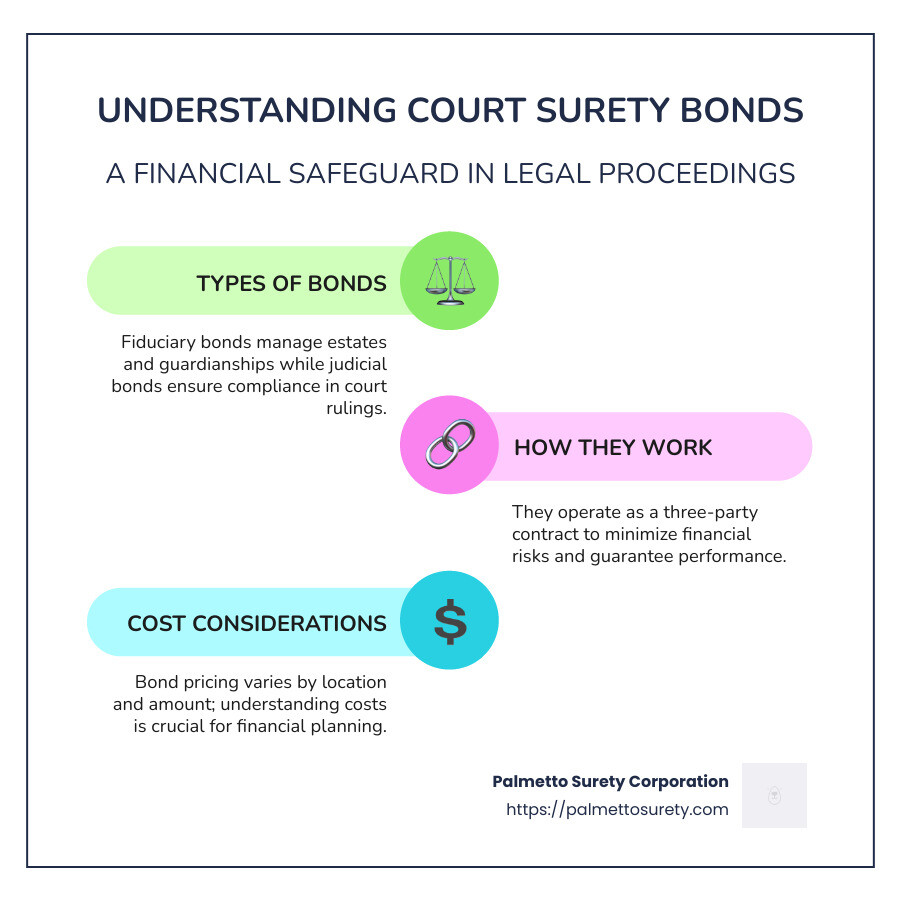
– Types include fiduciary and judicial bonds: Guarantees proper estate management or compliance with court rulings.
– Important for businesses and individuals: Especially those involved in construction, transportation, and other sectors requiring compliance with legal obligations.
I am Haiko de Poel Jr. As an expert in court surety bonds, I’ve led strategic initiatives to streamline bond processes in companies like Palmetto Surety Corporation, ensuring efficient support and seamless service transitions for businesses and individuals alike.
Court surety bonds terms to learn:
– what does surety bond mean in court
– what is a surety bond in probate court
– how much a percentage is a surety bond for court
What Are Court Surety Bonds?
Court surety bonds are essential tools in the legal world, acting as a safety net during court proceedings. They ensure that obligations imposed by the court are met, reducing financial risks for everyone involved.
Understanding Surety Bonds
At their core, surety bonds are agreements involving three parties:
- Principal: The party required to fulfill an obligation.
- Obligee: The party protected by the bond.
- Surety: The company guaranteeing the obligation will be met.
This setup ensures that if the principal fails to meet their obligations, the surety will step in to cover the costs.
Fiduciary Bonds
Fiduciary bonds are a type of court surety bond used when someone is appointed to manage another’s assets, like an estate. These bonds protect the interests of those who rely on the fiduciary to act ethically and responsibly.

- Estate Management: Ensures that estates are handled correctly after someone passes away.
- Bankruptcy Trustee Bonds: Protects creditors by ensuring trustees manage debtor assets properly.
- Guardianship Bonds: Safeguards minors or incapacitated individuals by ensuring guardians manage their affairs responsibly.
Judiciary Bonds
Judiciary bonds are used in court cases to mitigate financial loss from court rulings. These are especially crucial when outcomes are uncertain.
- Appeal Bonds: Allow a party to delay payment of a judgment while they appeal, ensuring funds are available if the appeal fails.
- Replevin Bonds: Required when someone seeks to reclaim property held by another party until the court decides.
- Injunctions: Used when a court order prevents a party from doing something, ensuring compliance with the order.
By understanding these bonds, individuals and businesses can better steer legal challenges, ensuring they meet court obligations while protecting their financial interests.
Types of Court Surety Bonds
Court surety bonds are divided into two main categories: Fiduciary or Probate Bonds and Judicial Bonds. Each serves a distinct purpose in legal proceedings, providing essential guarantees and protections.
Fiduciary or Probate Bonds
Fiduciary bonds are vital when someone is appointed to manage another’s assets. They ensure that the appointed individual—often referred to as a fiduciary—acts responsibly and ethically in their duties.
-
Estate Management: These bonds are crucial in managing the estates of deceased individuals. They ensure executors or administrators handle the estate according to the deceased’s wishes or legal requirements.
-
Bankruptcy Trustee Bonds: In bankruptcy cases, trustees are appointed to manage the debtor’s assets. These bonds ensure trustees act in the best interests of creditors, safeguarding the proper distribution and management of assets.
-
Guardianship Bonds: When a guardian is appointed for a minor or an incapacitated person, these bonds protect the individual’s assets. They ensure that guardians manage finances and property responsibly and in the ward’s best interests.
Judicial Bonds
Judicial bonds come into play during court proceedings, particularly when decisions are being contested or when temporary actions need enforcement.
-
Appeal Bonds: These bonds are essential when a party wishes to appeal a court judgment. They allow the appealing party to delay payment until the appeal is resolved, ensuring that funds are available if the appeal is unsuccessful.
-
Replevin Bonds: Used when a party seeks to reclaim property held by another, these bonds guarantee that the property will be returned if the court rules in favor of the defendant. They protect the defendant from wrongful property seizure.
-
Injunctions: These bonds are required when a court issues an order to prevent a party from taking certain actions. They ensure compliance with the court’s order and protect the opposing party from potential losses if the injunction is later found to be unwarranted.
Understanding these different types of court surety bonds helps individuals and businesses effectively steer legal proceedings, ensuring compliance with court mandates while minimizing financial risks.
How Court Surety Bonds Work
Court surety bonds function as a vital protective tool in legal settings, involving a three-party contract that ensures performance and reduces financial risks.
Three-Party Contract
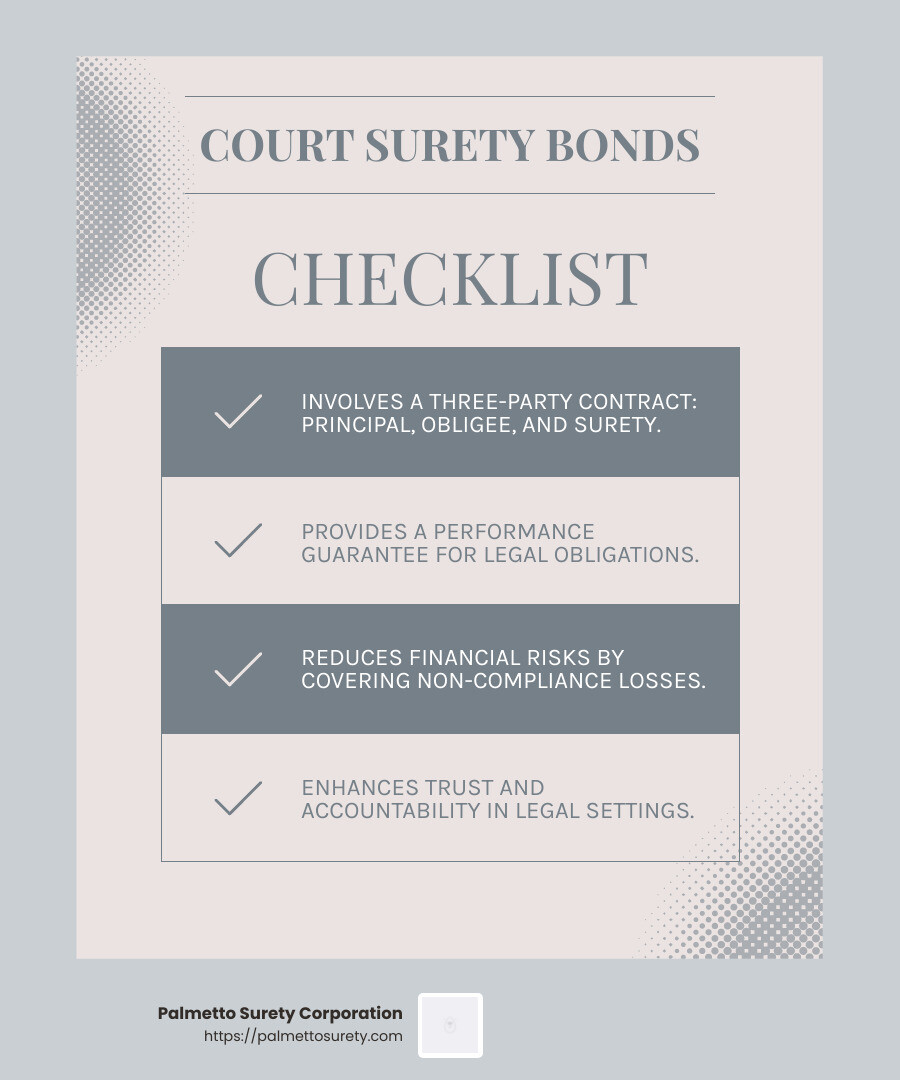
At the heart of every court surety bond is a tripartite agreement. This involves:
-
Principal: The party required to obtain the bond, such as an executor or guardian.
-
Obligee: The party protected by the bond, often a court or a beneficiary.
-
Surety: The company that issues the bond, assuring the obligee that the principal will fulfill their obligations.
This structure ensures that if the principal fails to meet their responsibilities, the surety steps in to cover any resulting financial losses, up to the bond’s value.
Performance Guarantee
A key feature of court surety bonds is the performance guarantee. This means that the surety guarantees the principal will perform their duties as required by the court. For instance, in the case of a guardianship bond, the guardian must manage the ward’s assets faithfully. If they fail, the surety compensates the ward for any financial harm caused.
Financial Risk Reduction
Court surety bonds significantly reduce financial risks for all parties involved. They provide a safety net, ensuring that:
-
Obligees are protected from potential losses due to the principal’s non-compliance or misconduct.
-
Principals have a clear incentive to perform their duties diligently, knowing that failure could result in financial penalties.
These bonds foster trust and accountability in legal proceedings, offering peace of mind that obligations will be met and financial risks minimized.
By understanding how court surety bonds work, individuals and businesses can better steer legal processes, ensuring compliance and protecting their financial interests.
Costs and Requirements of Court Surety Bonds
When considering court surety bonds, it’s important to understand both the costs involved and the prerequisites for obtaining them. Here’s a straightforward breakdown:
Bond Costs
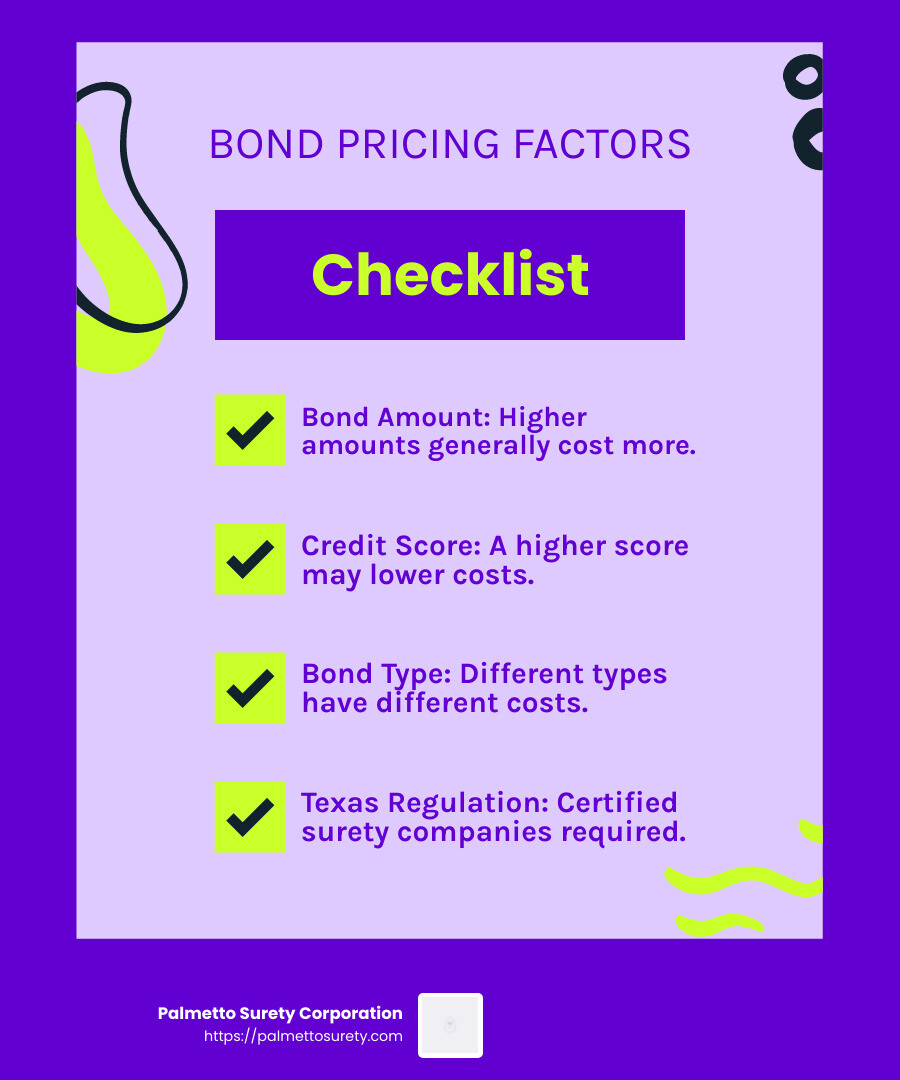
The cost of a court surety bond isn’t a fixed figure. Instead, it depends on several factors:
-
Bond Amount: This is the total coverage the bond provides. For example, a $10,000 bond will generally cost less than a $100,000 bond.
-
Credit Score: Your personal or business credit score can affect the premium. A higher credit score often results in a lower cost.
-
Bond Type: Different types of bonds, like fiduciary or judicial, may have different pricing structures.
Most bonds cost between 0.5% to 15% of the total bond amount. So, for a $10,000 bond, you might pay anywhere from $50 to $1,500, depending on your specific circumstances.
Texas Bond Pricing
In Texas, bond pricing can vary based on state regulations and the specific bond type. Here are some key points:
-
Competitive Rates: Texas often offers competitive rates for court surety bonds, making it an attractive state for obtaining these bonds.
-
Regulatory Requirements: Texas requires that all surety companies be certified and meet state standards, ensuring that bonds are backed by reputable insurers.
Corporate Sureties Prerequisites
To be accepted as a corporate surety, certain conditions must be met:
-
Certification: The surety company must be certified by the state’s Insurance Commissioner to operate as a surety insurer.
-
Documentation: A certified copy of the corporation’s authority to act as a surety must be filed with the court.
-
Execution Under Penalty: The bond must be executed under penalty of perjury, ensuring authenticity and legality.
Additionally, it’s crucial to note that officers of the court or members of the State Bar cannot act as sureties. This rule helps maintain impartiality and trust in the bonding process.
Understanding these costs and requirements can help you steer the process of obtaining a court surety bond with confidence, ensuring you meet all necessary obligations and secure the financial protection you need.
Frequently Asked Questions about Court Surety Bonds
What is a surety bond in court?
A surety bond in court is a financial agreement that provides a safety net during legal proceedings. It involves three parties: the principal (usually the person required to post the bond), the obligee (often the court), and the surety (the company that issues the bond). There are two main types of court surety bonds:
-
Fiduciary Bonds: These are required when someone is appointed by the court to manage another’s assets. For example, a guardian managing a minor’s estate would need a fiduciary bond to ensure they act ethically and responsibly.
-
Judiciary Bonds: These bonds come into play during litigation to protect against potential financial losses from court rulings. For instance, an appeal bond is a type of judiciary bond that allows a losing party to delay payment while appealing a decision.
What is the purpose of a surety bond?
The primary purpose of a surety bond is to serve as a performance guarantee and a financial safeguard. It ensures that the principal fulfills their obligations under the law or a court order. If they fail to do so, the surety compensates the obligee up to the bond’s value. This arrangement reduces financial risk and builds trust in legal and financial transactions.
How much does a $10,000 surety bond cost in Texas?
In Texas, the cost of a $10,000 surety bond can vary based on several factors, but it typically falls within a specific range:
-
Bond Pricing: Most surety bonds cost between 0.5% and 15% of the bond amount. This means a $10,000 bond might cost anywhere from $50 to $1,500.
-
Cost Range Factors: Your credit score, the type of bond, and specific underwriting criteria can influence the final premium. A higher credit score often results in a lower cost, while more complex bond types might be priced higher.
Understanding these basics can help you steer court surety bonds effectively, ensuring you secure the necessary financial protections for your legal obligations.
Conclusion
At Palmetto Surety Corporation, we understand that navigating court surety bonds can be challenging. That’s why we’re dedicated to providing quick approval and efficient service to our clients.
With over 20 years of experience, our expertise spans across various industries, including construction, manufacturing, transportation, and healthcare. We pride ourselves on our ability to approve most applications within hours, ensuring that you can focus on what truly matters—your business and legal obligations.
Our team of professionals is here to guide you through the process, offering personalized support and a seamless experience. Whether you need a fiduciary bond for estate management or a judiciary bond for litigation, we’ve got you covered.
By choosing Palmetto Surety Corporation, you’re not just getting a bond; you’re gaining a partner committed to your success. We invite you to experience the peace of mind that comes with working with a trusted leader in the surety bond industry.
Let us help you secure the financial safeguards you need, quickly and efficiently.


