


What Does Surety Bond Mean in Court? Top 3 Benefits!
What does surety bond mean in court? In a courtroom setting, a surety bond is a financial agreement involving a third party that ensures a person or company will fulfill their legal obligations. This bond provides financial protection to the court or involved parties if the bonded party fails to meet their commitments, such as appearing for court dates or complying with court orders.
- Surety Bonds: A tripartite agreement ensuring obligations.
- Court: Legal safeguard protecting financial interests.
- Obligations: Commitments that must be honored, backed by the surety.
Understanding these aspects is crucial, especially when facing legal responsibilities. Court surety bonds help manage risks by ensuring compliance and offering financial security in legal processes. They are a key part of the judicial system, providing both individuals and institutions peace of mind.
My name is Haiko de Poel Jr, and with years of expertise in branding and digital change, I’ve aided in the rebranding efforts of Palmetto Surety Corporation. Here, I apply my insights to explain what a surety bond means in court, emphasizing its importance and nuances.
What does surety bond mean in court terms to know:
– how much a percentage is a surety bond for court
– what is a court surety bond
– what is a surety bond in probate court
Understanding Court Surety Bonds
What Does Surety Bond Mean in Court?
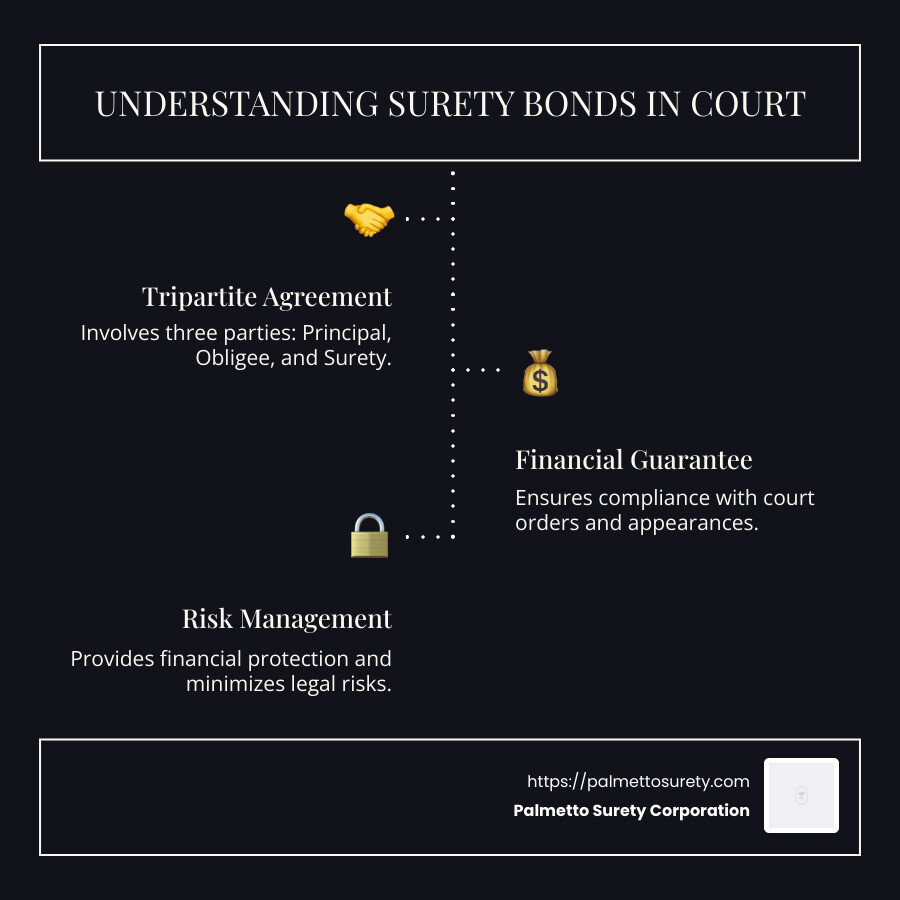
Surety bonds in court act as a financial safety net. They ensure that legal obligations are met. These bonds are a three-party contract involving the principal, the obligee, and the surety.
- Principal: The party who needs the bond. They are responsible for fulfilling the obligations.
- Obligee: The party requiring the bond. This is often the court or a government entity.
- Surety: The guarantor. They provide the financial backing and ensure the principal meets their obligations.
In the legal world, surety bonds provide a financial guarantee. They help ensure compliance with court orders and can cover potential losses if the principal fails to meet their commitments.

Legal proceedings often require surety bonds to protect financial interests. For example, if someone is appealing a court decision, they might need an appeal bond. This bond ensures that, if the appeal fails, the original judgment will be honored.

Court surety bonds are crucial for compliance. They hold the principal accountable and protect the obligee from financial loss. By having this security, courts can ensure that all parties involved in legal proceedings are committed to fulfilling their obligations.
In summary, court surety bonds are a vital part of the legal landscape. They offer protection and assurance, making sure that legal obligations are met and financial interests are safeguarded.
Types of Court Surety Bonds
Court surety bonds come in various types, each designed to address specific legal needs. Let’s explore three main types: appeal bonds, injunction bonds, and fiduciary bonds.
Appeal Bonds
An appeal bond, also known as a supersedeas bond, is required when a party decides to appeal a court decision. This bond ensures that the appellant will pay the original judgment plus any additional costs if the appeal is unsuccessful. It acts as a deterrent against frivolous appeals, ensuring that only serious cases move forward. By requiring an appeal bond, courts can protect the winning party from financial loss during the appeal process.
Injunction Bonds
Injunction bonds come into play when a court issues an injunction, which is an order to do or stop doing something. Typically, the plaintiff must obtain this bond to cover potential losses the defendant might incur if the court later decides the injunction was unnecessary. This bond protects the defendant by guaranteeing payment for damages if the injunction is overturned. It’s a financial safeguard ensuring that plaintiffs are serious about their claims and willing to back them financially.
Fiduciary Bonds
Fiduciary bonds, often referred to as probate bonds, are used when individuals are appointed by the court to manage someone else’s assets. These bonds ensure that fiduciaries act ethically and responsibly. If a fiduciary fails in their duties, the bond protects those financially harmed by their actions. Common examples include executor bonds for managing estates and guardianship bonds for overseeing the care of minors or incapacitated individuals.
In conclusion, these types of court surety bonds play vital roles in legal proceedings. They ensure financial protection and compliance, safeguarding the interests of all parties involved.
How Court Surety Bonds Work
When it comes to court surety bonds, understanding how they work is crucial. These bonds ensure that the principal—often a defendant or fiduciary—fulfills their obligations in legal proceedings. But how exactly do they operate?
At the heart of a court surety bond is a three-party agreement involving the principal, the obligee (usually the court or another party seeking protection), and the surety company. The surety company, like Palmetto Surety Corporation, plays a pivotal role in this arrangement.
The Role of the Surety Company
Financial Backing and Risk Management
The surety company provides the financial backing necessary to support the bond. This means they are essentially vouching for the principal’s ability to meet their obligations. If the principal fails to do so, the surety company steps in to cover any claims made by the obligee. This financial backing is crucial, as it reduces risk for all parties involved.
Obligations and Claims
When a principal is required to post a surety bond, they are agreeing to meet certain obligations. If they fail, the obligee can file a claim against the bond. The surety company then investigates the claim to determine its validity. If the claim is valid, the surety company will pay the obligee up to the bond amount.
Reimbursement
After a claim is paid, the principal is responsible for reimbursing the surety company. This reimbursement ensures that the surety company is not ultimately out of pocket, maintaining the balance of risk and responsibility.
Palmetto Surety Corporation excels in managing these processes efficiently. With their expertise, they ensure that obligations are met and claims are handled swiftly, providing peace of mind to obligees. Their role in risk management is vital, as they help mitigate potential financial losses for all parties.
Court surety bonds are a form of financial guarantee. They assure compliance with legal obligations, protect the interests of the obligee, and manage risk effectively. Palmetto Surety Corporation stands out in this field, offering reliable support and expertise to steer the complexities of court surety bonds.
Benefits of Court Surety Bonds
Court surety bonds offer several significant advantages that make them an essential tool in legal proceedings. Let’s explore these benefits: risk reduction, financial protection, and compliance assurance.
Risk Reduction
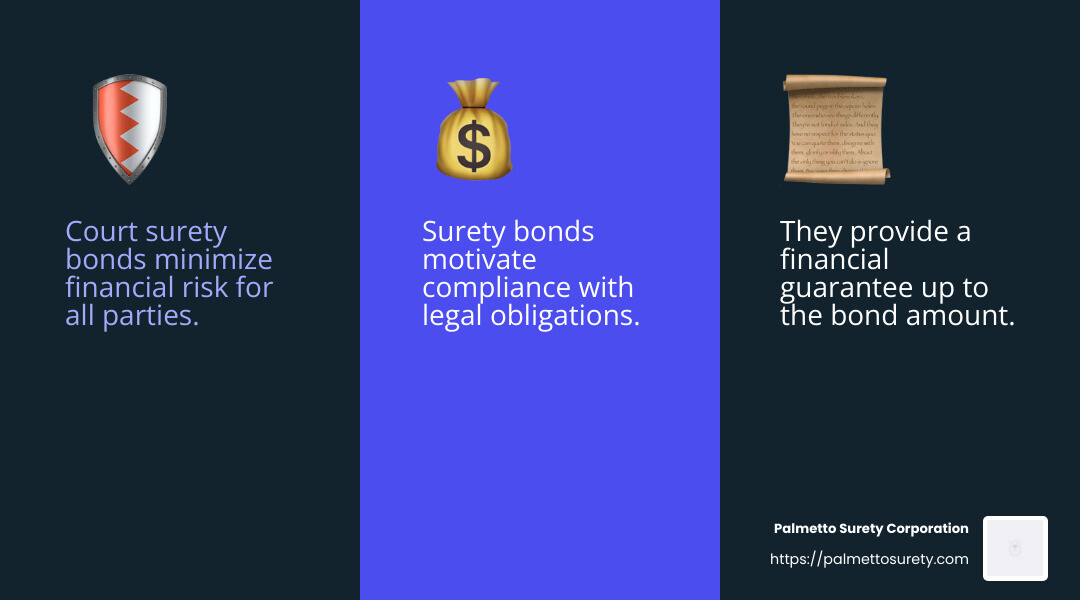
One of the primary benefits of court surety bonds is their ability to reduce risk for all parties involved. By involving a surety company like Palmetto Surety Corporation, the risk of financial loss is minimized. The surety company acts as a safety net, ensuring that if the principal fails to meet their obligations, the obligee is not left to bear the financial burden alone. This risk mitigation is crucial, especially in legal settings where financial stakes can be high.
Financial Protection
Court surety bonds provide a layer of financial protection for the obligee. In the event that the principal defaults, the surety company is obligated to cover the costs up to the bond amount. This financial guarantee is particularly important in scenarios like appeal bonds, where delaying payment of a judgment could otherwise leave the obligee vulnerable.
Compliance Assurance
Ensuring compliance with legal obligations is another key benefit of court surety bonds. These bonds serve as a motivator for principals to fulfill their duties, knowing that any failure to do so could result in financial consequences. This assurance of compliance is vital in maintaining the integrity of legal proceedings and protecting the interests of all parties involved.
In summary, court surety bonds play a critical role in risk reduction, financial protection, and compliance assurance. They provide a structured and reliable way to manage the uncertainties of legal obligations, making them an indispensable part of the judicial process.
Frequently Asked Questions about Court Surety Bonds
What is the difference between a surety bond and a cash bond?
A surety bond and a cash bond both serve to ensure a defendant’s return to court, but they operate differently. A cash bond involves two parties: the defendant and the court. The defendant pays the full bail amount upfront, which is returned after fulfilling all court appearances. This can be financially challenging since it requires having the entire amount in cash.
On the other hand, a surety bond involves three parties: the principal (defendant), the obligee (court), and the surety (bond issuer). Instead of paying the full amount, the defendant pays a non-refundable premium to a bail bond agent, who secures the bond from a surety company. This setup is more affordable and flexible, as it doesn’t require the full bail amount up front.
How does a surety bond protect the obligee?
A surety bond protects the obligee by providing a financial guarantee that the principal will fulfill their obligations. If the principal fails to meet these obligations, such as not appearing in court, the surety company steps in to cover the financial loss up to the bond amount. This protection ensures that the obligee is not left financially vulnerable if the principal defaults.
Are court surety bonds mandatory?
Court surety bonds are not always mandatory, but they are often required in certain legal situations. For example, an appeal bond is typically needed when a defendant wants to delay payment of a judgment during an appeal. The court may require a surety bond to ensure that the judgment will be paid if the appeal is unsuccessful. This requirement helps prevent frivolous appeals and ensures that the winning party is protected financially.
In other cases, such as when a fiduciary is appointed to manage an estate, a fiduciary bond might be required to protect the estate from potential mismanagement. Whether mandatory or not, court surety bonds offer valuable protection and assurance in legal proceedings.
Conclusion
At Palmetto Surety Corporation, we understand the importance of navigating the legal system with confidence and assurance. That’s why we specialize in providing quick approval and efficient service for court surety bonds.
Our expertise in the industry, alongside our commitment to excellence, ensures that you receive the necessary financial backing and risk management support required in legal proceedings. Whether it’s an appeal bond, an injunction bond, or a fiduciary bond, our team is dedicated to helping you meet your obligations with ease.
Our streamlined process allows most applications to be approved within hours, offering you peace of mind and allowing you to focus on what truly matters—your case. With over 20 years of experience, Palmetto Surety Corporation is your trusted partner for all your surety bond needs.
For more information on how we can assist you, visit our services page to get started today.
We are here to make surety bonding as straightforward and stress-free as possible.


