


How much a percentage is a surety bond for court 2024
Understanding Court Surety Bonds: Percentage Breakdown
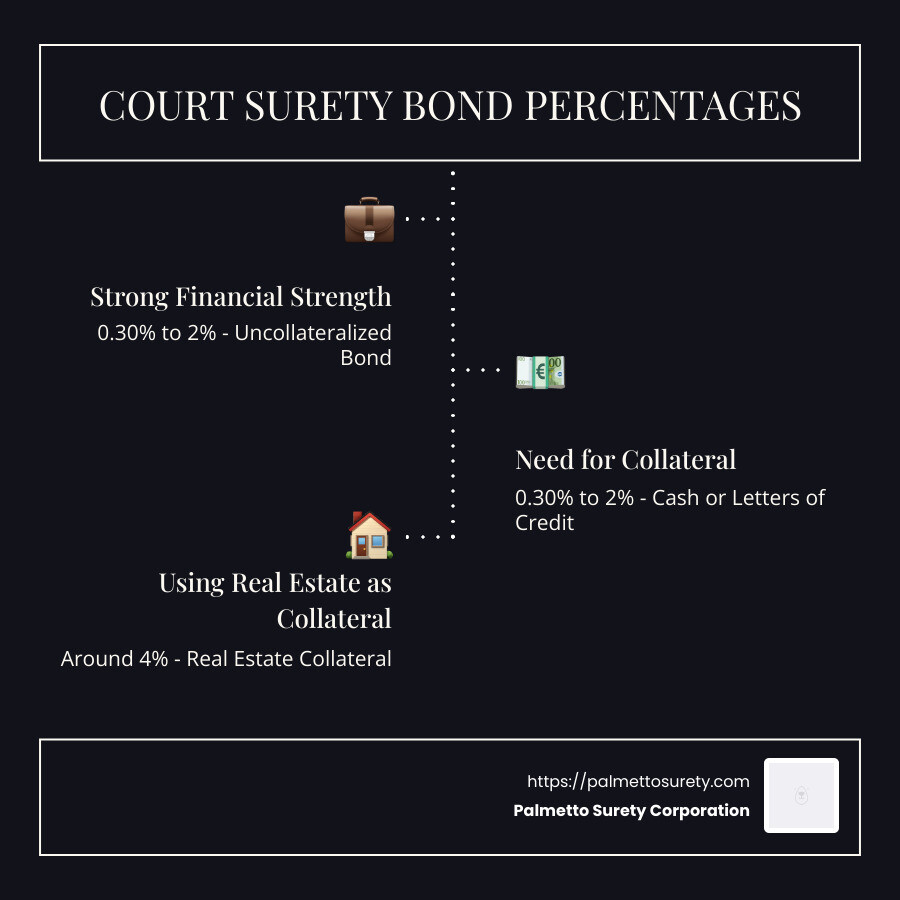
When determining how much a percentage is a surety bond for court, several factors play a role. The percentage typically ranges from 0.30% to 4% of the bond amount, depending on financial strength, collateral, and the specifics of the court case.
- Strong Financial Strength (Uncollateralized Bond): 0.30% to 2%
- Need for Collateral (Cash or Letters of Credit): 0.30% to 2%
- Using Real Estate as Collateral: Around 4%
Surety bonds are a pillar of trust in legal proceedings. These bonds guarantee that an appeal will honor the court’s decision, covering the original judgment and any interest. Securing the right percentage for your court surety bond hinges on your financial position, the type of collateral you might provide, and the particularities of your legal case.
I’m Haiko de Poel Jr, your guide through this intricate landscape. My journey includes reshaping surety bond companies for efficiency and innovation, steering businesses toward perfecting their understanding of how much a percentage is a surety bond for court. Now, let’s dive into this insightful topic together.
What is a Surety Bond?
A surety bond is a special kind of agreement. It involves three parties: the principal, the obligee, and the surety. This bond is like a promise that the principal will meet certain obligations to the obligee. If the principal doesn’t meet these obligations, the surety steps in to cover any losses.
Definition
In simpler terms, a surety bond is a financial guarantee. It’s a legal contract that ensures one party, the principal, fulfills their obligations to another party, the obligee. If the principal fails, the surety provides compensation to the obligee, up to the bond’s limit.
Financial Obligations
Surety bonds are often used in situations where there’s a risk of financial loss. For example, in construction, a contractor might need a surety bond to guarantee they will complete a project. If they don’t, the surety pays the client to cover any losses. This makes surety bonds crucial in protecting the financial interests of the obligee.
Legal Contract
A surety bond is not just a handshake agreement. It’s a legal contract. This means it is enforceable by law. The principal must fulfill their duties, or the surety will have to pay. This legal backing gives the obligee peace of mind that they will be protected financially.

Surety bonds are used across various industries, including construction, healthcare, and government contracting. They help build trust and ensure that projects are completed as agreed. Understanding how surety bonds work can help businesses and individuals make informed decisions and protect their interests.
How Much a Percentage is a Surety Bond for Court?
When it comes to court surety bonds, the percentage you pay as a premium is influenced by several factors. Let’s break it down in simple terms.
Factors Influencing Surety Bond Percentages
1. Financial Strength and Credit Score
Your financial strength plays a big role in determining the premium rate for a court surety bond. Sureties assess your credit score to gauge the risk of issuing the bond. A higher credit score usually means a lower premium because it indicates a lower risk of default. Conversely, a lower credit score can lead to higher premiums.
2. Business Experience and Financial Statements
If you’re a business, your experience in the industry can impact the premium rate. Established businesses with a solid track record might receive more favorable rates. Additionally, financial statements provide insight into the financial health of your business. Strong financials can help reduce the percentage you pay for the bond.
Typical Percentage Ranges for Court Surety Bonds
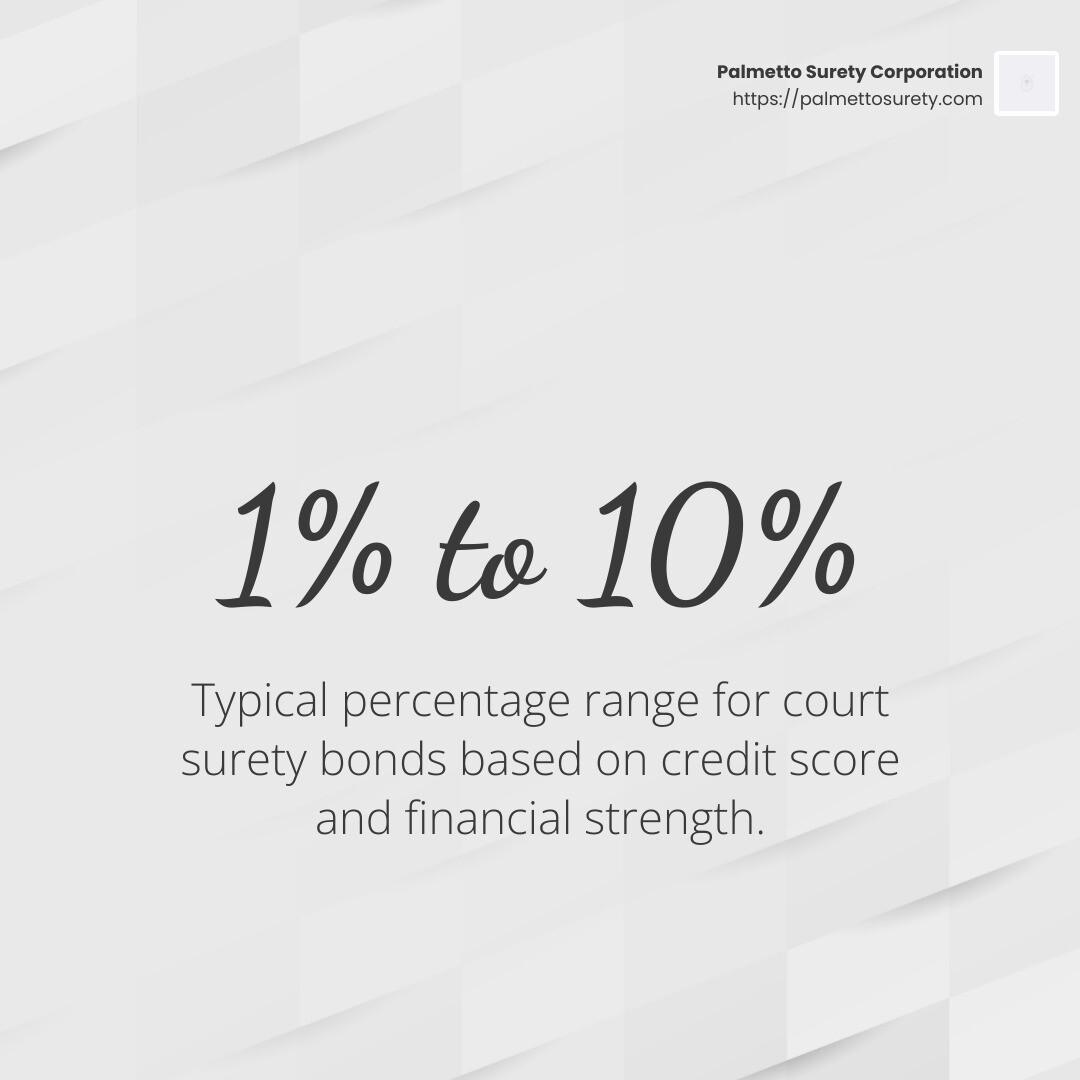
The cost of court surety bonds is typically expressed as a percentage of the bond amount. Most commonly, these percentages range from 1% to 10%. Here’s how it works:
-
1% to 3%: Generally, this range applies to those with excellent credit scores and strong financials. If you have a solid financial background, you might fall into this category.
-
3% to 7%: If your credit score is average or your business is newer, you might see premiums in this range. It’s a middle ground for those with decent financial standing.
-
7% to 10%: This higher range is usually for those with poor credit or financial challenges. The higher risk of default results in a higher premium percentage.
In summary, the percentage you pay for a court surety bond depends on your financial situation. Factors like credit score, business experience, and financial statements all play a role. Understanding these factors can help you better steer the process and potentially reduce your costs.
Types of Collateral for Surety Bonds
When securing a surety bond, collateral is often required to back the bond. The type of collateral you choose can affect the premium rate and overall cost of the bond. Here’s a look at the various options:
Cash Collateral
Cash is the simplest form of collateral. It offers high liquidity, which means it can be quickly converted to cash if needed. Using cash as collateral might result in lower premium rates because it’s less risky for the surety company. However, tying up cash can impact your business’s cash flow, so it’s essential to consider the bond size and how much cash you can afford to set aside.
Letters of Credit
A letter of credit is a bank guarantee that promises payment if the principal fails to meet their obligations. While letters of credit offer liquidity similar to cash, they come with additional fees charged by the bank. This option can be a good choice if you prefer not to tie up cash directly, but it’s important to weigh the cost of these fees against potential benefits.
Real Estate
Real estate as collateral involves using property to back the bond. Surety companies will consider both residential and commercial properties. Due to the illiquid nature of real estate, the premium cost is typically higher, often around 4% of the bond amount. Additionally, there are extra costs for appraisals and title insurance. However, using real estate allows you to avoid selling property to secure the bond, which can be a significant advantage.
Marketable Securities
Marketable securities include non-retirement accounts holding stocks and bonds. This option allows you to use your investments as collateral without liquidating them. The premium range for marketable securities varies based on the risk associated with the asset types. Generally, lower-risk securities like short-term treasury bills have a lower premium rate, ranging from 1% to 3%. This approach is beneficial as it allows you to continue earning returns on your investments while securing the bond.
Choosing the right type of collateral can significantly impact the cost and feasibility of securing a surety bond. Each option has its pros and cons, so consider your financial situation and long-term goals when making a decision.
Frequently Asked Questions about Surety Bonds
How is a Surety Bond Calculated?
When it comes to calculating a surety bond, the process involves a few key factors. Bonding credit plays a major role. This refers to your creditworthiness, which surety companies assess to determine the risk of issuing a bond. A good credit score often means a lower premium, while bad credit can increase costs.
The 10% rule is a guideline used to estimate the premium. Typically, surety bond premiums range from 1% to 10% of the total bond amount. For instance, if you need a $50,000 bond, your premium could be anywhere from $500 to $5,000, depending on your financial situation and the surety company’s assessment.
What is the Bonding Rate?
The bonding rate is the percentage of the bond amount that you pay as the premium. This rate reflects the risk the surety company takes on by issuing the bond.
For consumers, a lower bonding rate can mean significant savings. It allows businesses to allocate funds elsewhere, enhancing their ability to grow and invest. For businesses, a competitive bonding rate can offer advantages like improved cash flow and increased financial flexibility. This can be crucial in competitive industries where managing costs is essential.
How Does Financial Strength Affect Bond Cost?
Your financial strength directly impacts the cost of a surety bond. Creditworthiness is the primary factor. If you have a strong credit history, you’re seen as less risky, which can lower your premium. On the other hand, poor credit can lead to higher costs, as surety companies may require more collateral to offset the risk.
Collateral requirements vary based on your financial standing. Strong financials might mean less collateral is needed, while weaker financials could require more substantial backing. This ensures the surety company is protected in case of a claim.
Understanding these factors can help you better steer the process of securing a surety bond. By improving your financial health and exploring different types of collateral, you can potentially lower your bonding costs and make more informed decisions.
Conclusion
At Palmetto Surety Corporation, we understand that securing a surety bond can seem daunting. That’s why we are committed to making the process as quick and efficient as possible for our clients. With over 20 years of experience in the industry, we specialize in providing court surety bonds and commercial surety bonds custom to meet the unique needs of our clients across various industries.
Our headquarters in Charleston, South Carolina, serves as the hub for our operations throughout the southeastern United States. We pride ourselves on our ability to approve most applications within hours, ensuring that our clients can focus on their business operations without unnecessary delays.
Whether you’re in construction, healthcare, or any other industry requiring surety bonds, our expert team is here to help. We offer personalized service and support, guiding you through every step of the bonding process.
If you’re looking for a reliable partner for your surety bond needs, look no further than Palmetto Surety Corporation. Our dedication to excellence and customer satisfaction sets us apart.
Learn more about our services and how we can assist you today.


