


Introduction
What is a bond bailsman? A bond bailsman, or bail bondsman, is a professional who provides bail bonds to ensure a defendant’s appearance in court. This individual, agency, or corporation acts as a surety, pledging money or property as bail for the defendant.
When someone is accused of a crime, getting out of jail before the trial revolves around bail—a predetermined amount of money that acts as insurance between the court and the defendant. However, not everyone can afford to pay bail. This is where bail bondsmen play a crucial role. They offer to pay the bail on behalf of the defendant, allowing them to be released from jail while awaiting trial. In return, bail bondsmen charge a fee, usually a percentage of the bail amount.
Understanding how this process works and the responsibilities it entails can be vital for those navigating the judicial system. This guide will explore the crucial role of bail bondsmen and the fundamental operations of bail bonds. Our focus will help individuals and businesses comprehend how bail impacts legal proceedings and the options available.
What is a Bail Bond?
Understanding the Basics
A bail bond is essentially a financial guarantee made by a defendant or a third party, usually a bail bondsman, to the court. This guarantee ensures that the defendant appears for their trial after being released from custody. If the defendant fails to appear, the bond amount becomes payable to the court.
The Role of Surety Bonds
In the context of bail, a surety bond involves three parties:
– The principal (defendant),
– The obligee (court),
– The surety (bail bondsman or bond agency).
The bail bondsman, or the surety, promises to pay the full bail amount if the defendant does not fulfill their promise to appear in court. This is often backed by some form of collateral provided by the defendant or their family.

Navigating the Court System
When a defendant is arrested, the court will set a bail amount during a bail hearing. This amount varies depending on factors like the severity of the crime, the defendant’s criminal history, and the risk of fleeing.
In the United States, the commercial bail bond system allows defendants to secure their release through bail bondsmen, who typically charge a fee — usually about 10% of the total bail amount. This fee is non-refundable, even if the charges are later dropped or the defendant is found not guilty.
Why a Bail Bond?
The main purpose of a bail bond is to ensure that the defendant returns to court without the need to remain in custody. This system is intended to balance the judicial system’s need to ensure trial attendance with the defendant’s right to reasonable bail as protected under the Eighth Amendment.
In summary, bail bonds are crucial components of the judicial system, providing a method for defendants to regain their freedom while awaiting trial, ensuring that they return for their court dates. Understanding this process can be vital for those navigating the judicial system. This guide will explore the crucial role of bail bondsmen and the fundamental operations of bail bonds. Our focus will help individuals and businesses comprehend how bail impacts legal proceedings and the options available.
The Bail Bond Process
When someone is arrested, the process that unfolds can be confusing and stressful. Understanding the steps involved can help demystify what happens during the bail bond process. Here, we’ll explore the arrest procedure, how bail is set, and the options for bail payment.
Arrest Procedure
When a person is suspected of committing a crime, law enforcement officers will make an arrest. The individual is taken to a police station or jail where they are booked. This booking process includes taking fingerprints, photographs, and collecting other personal information. The seriousness of the crime and the evidence available typically influence whether the individual will be held until court or released on bail.
Setting Bail
After booking, a bail hearing is usually scheduled where a judge will determine if the accused is eligible for bail and at what amount. The amount of bail set depends on several factors:
– The nature of the crime: More severe crimes often result in higher bail amounts.
– Risk of flight: If there’s a high risk the defendant might flee, a higher bail can be set.
– Community ties: Individuals with strong local connections are less likely to flee.
– Previous criminal record: A clean record might result in a lower bail.
Judges have broad discretion in setting bail, but they must consider these factors to ensure it is fair and not punitive.
Bail Payment Options
Once bail is set, the defendant has several options to secure their release:
- Cash Bail: The defendant pays the full bail amount in cash. This amount is refunded (minus some administrative fees) if the defendant appears at all scheduled court dates.
- Surety Bond: Often known as a bail bond, this involves a bail bondsman. If the defendant cannot afford the full bail amount, they can contact a bail bondsman who will post the bail for a fee, typically 10% of the total bail amount. This fee is non-refundable.
- Property Bond: In some cases, property can be used as collateral to secure release. The court holds a lien on the property until the conclusion of the court proceedings.
- Own Recognizance (O.R.): In less severe cases, or if the defendant is deemed a low flight risk, they might be released on their own recognizance. This means they promise, in writing, to appear for all court dates without having to pay bail.
Choosing the right bail option depends on the individual’s financial situation, the nature of the crime, and their community ties. For many, a surety bond from a bail bondsman is the most viable option because it requires less immediate cash. Companies like Palmetto Surety Corporation provide these services, ensuring that defendants can secure their release in a timely and efficient manner.
Understanding these steps in the bail bond process can significantly reduce the stress and uncertainty that comes with navigating the judicial system. It’s crucial for defendants and their families to be aware of their rights and the options available to them. This knowledge ensures that they can make informed decisions about how to handle the situation following an arrest.
Responsibilities of a Bond Bailsman
When someone is arrested, a bond bailsman plays a critical role in the bail process. Here’s what they do:
Surety Provision
A bond bailsman provides a surety bond, which is essentially a promise to the court that the defendant will appear for all scheduled court dates. If the defendant cannot afford the full bail amount, the bailsman covers it for a fee, ensuring the defendant can be released from custody.
Court Appearance Assurance
The primary duty of a bond bailsman is to ensure that the defendant appears in court. This responsibility is crucial because the bailsman’s financial security is tied to the defendant’s court attendance. If the defendant skips bail, the bailsman faces significant financial risks.
Fee Collection
For providing the bail bond, the bailsman charges a fee, typically around 10% of the total bail amount. This fee is non-refundable, even if the case is dismissed after the defendant is released on bail.
Recovery and Bounty Hunting
If a defendant fails to appear in court, the bond bailsman has the right, by law or contractual arrangement, to recover the defendant and bring them to court. In some states, this involves hiring a bounty hunter. For example, in North Carolina, where “bounty hunters” are outlawed, bondsmen must apprehend their own fugitives. This aspect of the job is crucial for recovering the money paid out under the bond and ensuring that the justice system functions efficiently.
In jurisdictions like California, the activities of bondsmen and bounty hunters are heavily regulated to prevent abuses. These regulations are intended to protect the rights of the defendants and ensure ethical practices in the recovery process.
Understanding the responsibilities of a bond bailsman helps clarify their role in the justice system and the bail bond process. Their job is not just about providing funds but also ensuring that defendants fulfill their obligations to appear in court, balancing the scales of justice and commerce.
Alternatives to Bail Bonds
When someone is charged with a crime, securing release from jail before trial is a top priority. While bail bonds are a common solution, there are several other options that might be available depending on the situation and jurisdiction. Here’s a look at some alternatives to bail bonds:
Own Recognizance (OR)
Own recognizance, also known as an OR release, is when a judge allows a defendant to be released from jail without having to pay bail. This decision is based on the judge’s assessment that the defendant is not a flight risk and will appear at all required court dates. Factors influencing this decision include the nature of the crime, the defendant’s ties to the community, and their criminal history.
Cash Bond
A cash bond requires the full amount of bail to be paid in cash. This can be a significant financial burden, but if the defendant appears at all required court proceedings, the money is returned at the end of the trial, minus any administrative fees imposed by the court.
Property Bond
In some cases, a defendant or their family can secure a property bond with the court. This involves using real property (like a home) as collateral to assure the court of the defendant’s appearance. If the defendant fails to appear, the property may be forfeited.
Citation Release
Citation release occurs immediately after an individual is arrested. Instead of being taken into custody, the officer issues a citation instructing the individual to appear in court on a specified date. This method is commonly used for minor offenses.
Pretrial Services
Some jurisdictions offer pretrial services programs as an alternative to bail. These programs focus on assessing the risk posed by releasing the accused before trial and providing supervision or monitoring designed to ensure court appearance and public safety. They might include regular check-ins, drug testing, or mandatory participation in counseling programs.
These alternatives not only provide different options for release from custody but also aim to address the financial and social inequities often associated with the traditional cash bail system. Each method offers a way to balance the needs of the justice system with the rights and circumstances of the accused.
By understanding these alternatives, individuals and their families can better navigate the complexities of the judicial process and make informed decisions about the best course of action when faced with criminal charges.
Frequently Asked Questions about Bail Bonds
What happens if the defendant fails to appear in court?
When a defendant does not show up for their court date, several things happen:
1. The Court Issues a Warrant: The judge will issue an arrest warrant due to the failure to appear.
2. Bail Forfeiture: The bail posted is forfeited, meaning the court keeps the money or bond.
3. Bail Bondsman’s Role: If a bail bondsman was involved, they are responsible for the full amount of the bail. This is where they may employ a bounty hunter to locate and return the defendant to court to recover the forfeited bail.
The consequences are serious, not just for the defendant, but also for anyone who co-signed the bail bond, as they could be financially liable.
How does a bail bondsman work in Florida?
In Florida, a bail bondsman, also known as a bond agent, plays a critical role in the bail process. Here’s how they operate:
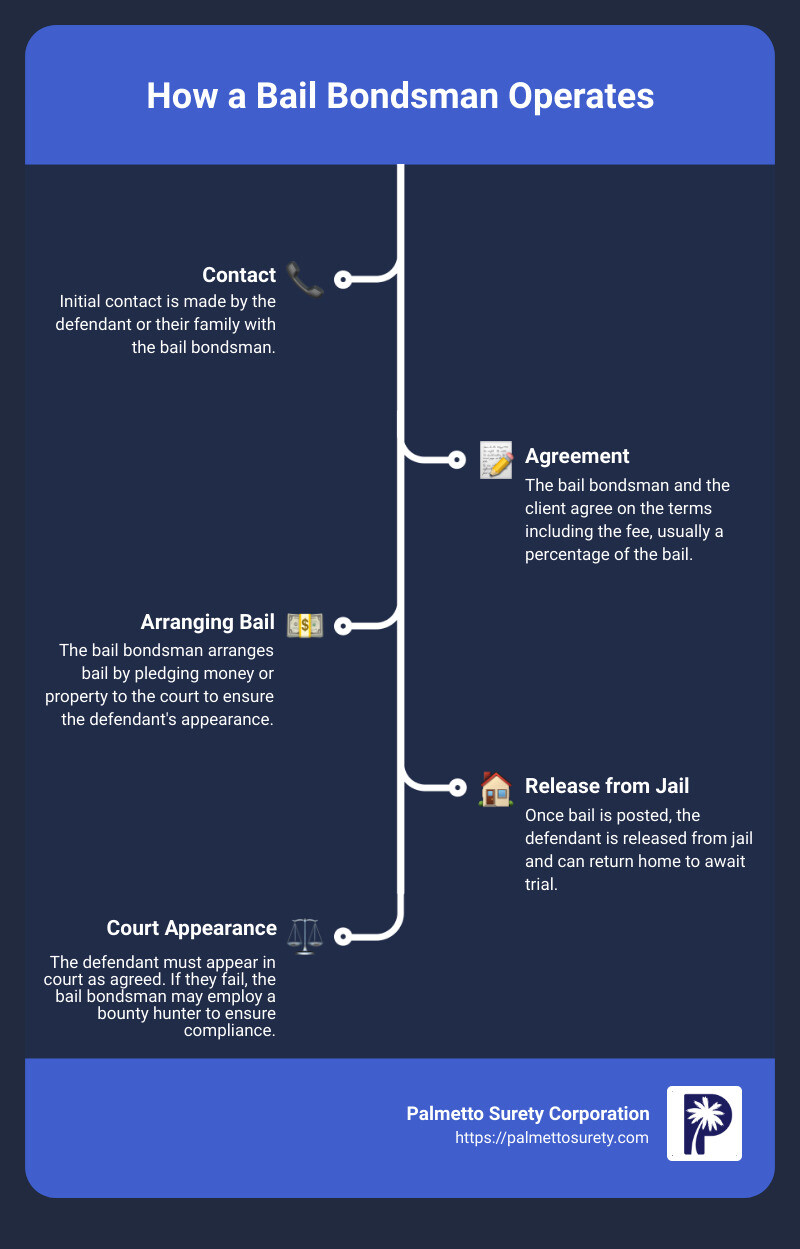
– Setting the Bail: After the bail amount is set by the court, the defendant can contact a bail bondsman if they cannot afford to pay the full amount.
– Contract Agreement: The defendant or a representative signs a contract with the bondsman, agreeing to pay a non-refundable fee, typically 10% of the bail amount.
– Posting Bail: The bondsman posts a bail bond, which is a type of surety bond, to the court, ensuring the court that the defendant will appear for all scheduled court dates.
– Ensuring Compliance: If the defendant fails to appear, the bail bondsman may seek the help of a bounty hunter to ensure compliance and to avoid financial loss.
Can a bail bondsman search my house?
A bail bondsman does not have general police powers and cannot conduct searches without consent. However, if you signed a contract with a bail bondsman and included a clause that allows them to search your home as part of the agreement to secure bail, they might be able to do so under those specific contractual terms. It’s important to read and understand any contract fully before signing.
These FAQs highlight the critical aspects of how bail bonds work and the responsibilities involved. Understanding these can help defendants and their families make informed decisions about engaging with bail bond services and managing the conditions associated with them.
Conclusion
Understanding the crucial role of customer service in the bail bond process is paramount. At Palmetto Surety Corporation, we pride ourselves on our commitment to providing exemplary customer support rooted in timeless business values. Our approach ensures that every client is treated with respect, dignity, and the prompt attention they deserve during what can often be a stressful time.
What sets us apart at Palmetto Surety Corporation is not just our extensive experience and broad range of services in the surety bond market. It’s our dedication to upholding ethical business practices that prioritize accountability, reliability, and integrity. These principles guide us in protecting our clients against financial risks and losses, while also ensuring that they have the support they need to navigate the bail process effectively.
We understand that the need for a bail bond can arise unexpectedly, which is why our team is equipped to respond swiftly and efficiently. Our state-of-the-art technology allows us to manage and expedite the bail bond process, ensuring that our clients can secure their bonds promptly and with ease.
At Palmetto Surety Corporation, we do more than just provide bail bonds; we build lasting relationships based on trust and transparency. Whether you’re an individual seeking a bail bond or a business in need of a surety bond, we are here to guide you every step of the way. Our goal is to make the best out of a challenging situation and ensure a smooth and straightforward process for our clients.
In conclusion, navigating bail bonds can be complex, but with Palmetto Surety Corporation, you’re not alone. We stand ready to provide you with the support, expertise, and understanding needed to address your specific circumstances with confidence. Reach out to us today, and let us help you take the first step towards resolving your bail bond needs with professionalism and care.


