


Do You Get Your Bond Back After Court? Top Facts in 2024
Understanding Bail Bond Refunds: What You Need to Know
Do you get your bond refunded back after court?
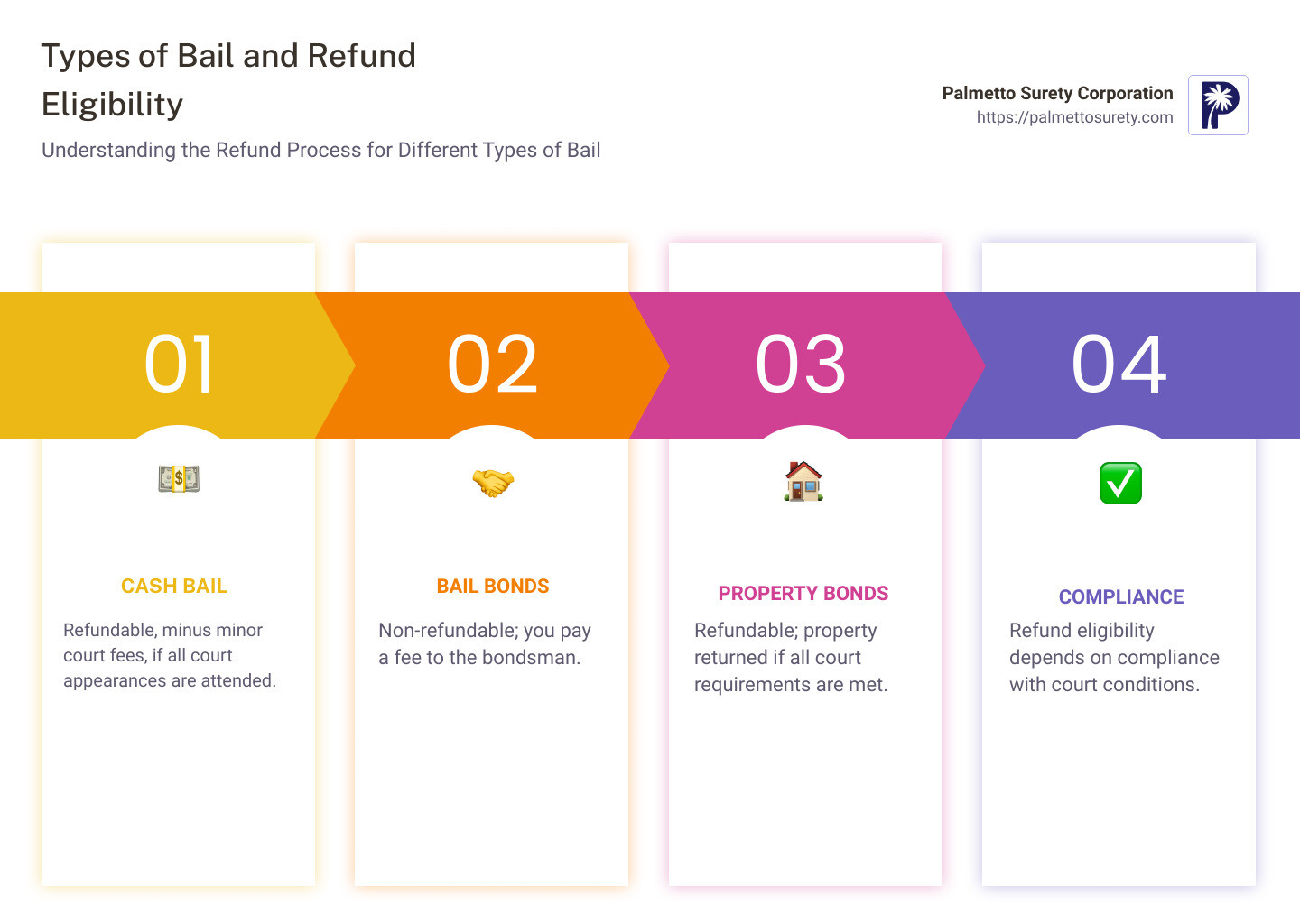
– Cash Bail: Refundable, minus minor court fees, if all court appearances are attended.
– Bail Bonds: Non-refundable; you pay a fee to the bondsman.
– Property Bonds: Refundable; property returned if all court requirements are met.
Navigating bail money can be overwhelming, especially when you or a loved one is facing legal troubles. Do you get your bond back after court? This is the question most people have when trying to understand the bail system. The answer depends on the type of bail used—cash bail, bail bonds, or property bonds—and compliance with court conditions. Knowing these details can save you stress, time, and money.
Bail allows defendants to be released from custody while awaiting trial. It’s a financial assurance that the defendant will appear in court. Understanding how to get your bond money back, if eligible, requires knowing the specifics: cash bail is refundable under certain conditions, bail bonds involve non-refundable fees, and property bonds can be complex but offer refunds if conditions are met.
I’m Haiko de Poel Jr, with a proven track record in marketing and legal consulting, including expertise on do you get your bond back after court. It’s crucial to grasp these refunds to ensure smooth legal and financial planning.
What is Bail and How Does it Work?
Bail is a sum of money or property given to the court to temporarily release a defendant from jail while they await trial. The purpose of bail is to ensure that the defendant returns for all required court appearances.
When someone is arrested, a judge sets the bail amount based on several factors, including the severity of the crime and the defendant’s flight risk. The U.S. Constitution prohibits “excessive bail,” which means the amount should be reasonable and not used to keep someone in jail unfairly.
Purpose of Bail
The main goal of bail is to balance two things:
1. Ensuring the defendant returns to court – The bail acts as a financial incentive.
2. Protecting the community – By keeping potentially dangerous individuals in custody if they can’t post bail.
Types of Bail
There are several forms of bail, each with its own rules and conditions:

- Cash Bail: This is the most straightforward type. The defendant or someone on their behalf pays the full bail amount in cash. If the defendant attends all court appearances, the cash bail is refunded, minus any court fees.
- Bail Bonds: If the defendant can’t afford the full cash bail, they can use a bail bondsman. The bondsman charges a non-refundable fee (usually 10% of the bail amount) and posts the full bail amount for the defendant. However, this fee is not returned, even if the defendant attends all court appearances.
- Property Bonds: Instead of cash, the defendant can use property as collateral. If the defendant attends all court appearances, the property is returned. If not, the court can seize the property.
The Role of a Bail Bondsman
A bail bondsman steps in when the defendant can’t afford to pay the full bail amount. The bondsman charges a fee (typically 10%) and provides a surety bond to the court, guaranteeing the defendant’s appearance in court.
Example:
If bail is set at $10,000, the defendant pays the bondsman $1,000 (10%). The bondsman then posts the $10,000 bail. If the defendant fails to appear in court, the bondsman is responsible for paying the full bail amount.
Court Appearances
Attending all scheduled court appearances is crucial. Missing a court date can result in:
– Forfeiture of bail: The court keeps the bail money or property.
– Arrest warrants: A warrant is issued for the defendant’s arrest.
– Additional charges: The defendant may face extra charges for failing to appear.
In many jurisdictions, courts issue failure to appear (FTA) warrants if the defendant skips court, leading to more legal trouble and financial loss.
Cash Bail
Cash bail is the most reliable way to ensure the return of your bail money. As long as the defendant attends all court appearances and complies with court conditions, the bail amount is refunded, minus any court fees.
Steps to Get Cash Bail Back:
- Attend all court appearances.
- Comply with all court conditions.
- Submit an Application for Return of Cash Bail form after the case concludes.
Bail Bonds and Refunds
With bail bonds, the fee paid to the bondsman is non-refundable. This means you won’t get your money back, even if the defendant attends all court appearances.
Surety Bonds involve a third party (the bondsman) who guarantees the defendant’s appearance in court. The premium paid for this service is the cost of using a bail bondsman and is not returned.
In summary, do you get your bond back after court depends on the type of bail posted. Cash bail is refundable if all court conditions are met, while bail bonds involve non-refundable fees.
Next, we’ll dive into factors that can affect bail refunds, including court conditions and compliance.
Do You Get Your Bond Back After Court?
When it comes to getting your bond back after court, understanding the type of bail posted is crucial. Let’s break down the details for cash bail and bail bonds to clarify what you can expect.
Cash Bail Refunds
Cash bail is a straightforward way to secure your release from jail. You pay the full amount set by the court, and if you attend all court appearances and comply with all conditions, you are eligible for a refund.
- Court Appearances: The most important factor in getting your cash bail back is showing up for all scheduled court dates. Missing even one appearance can lead to forfeiture of your bail money.
- Court Fees: Be aware that any unpaid court fees, costs, or fines may be deducted from your bail money before it is refunded.
- Refund Eligibility: To be eligible for a refund, you must meet all court-imposed conditions and obligations. This includes not only attending court but also adhering to any additional requirements like check-ins or restrictions.
- Application Process: Once your case is resolved, you can request a refund by submitting an Application For Return of Cash Bail. Ensure you have the original receipt, as it proves your ownership of the deposited funds. The refund process can vary depending on the jurisdiction, but usually, it involves receiving a check from the court.
Bail Bonds and Refunds
Using a bail bondsman is a common alternative for those who cannot afford to pay the full bail amount in cash. However, this option comes with its own set of rules regarding refunds.
- Non-Refundable Fee: When you use a bail bondsman, you pay a non-refundable fee, typically around 10% of the total bail amount. For example, if your bail is set at $50,000, you would pay the bondsman $5,000.
- Surety Bonds: The bail bondsman acts as a surety, guaranteeing your appearance in court. The remaining bail amount is covered by the bondsman, who may require collateral such as real estate or vehicles.
- Bond Premium: The fee you pay to the bondsman, known as the bond premium, is not returned to you, regardless of the outcome of your case. This fee is the cost of the service provided by the bail bondsman.
In summary, do you get your bond back after court depends on the type of bail posted. Cash bail is refundable if all court conditions are met, while bail bonds involve non-refundable fees.
Next, we’ll dive into factors that can affect bail refunds, including court conditions and compliance.
Factors Affecting Bail Refunds
When it comes to getting your bail money back, several factors come into play. These include court conditions, additional court requests, forfeiture, and debt application. Understanding these elements is crucial to ensure a smooth refund process.
Court Conditions and Compliance
Court conditions are specific requirements set by the court that must be met to secure the return of your bail money. These conditions can vary but often include:
- Psych evaluations: Courts may require psychological evaluations to assess the defendant’s mental state.
- Drug screenings: Regular drug tests may be mandated to ensure the defendant remains clean.
- Community service: Completing a set number of community service hours can be a condition for bail.
Failure to comply with these conditions can lead to forfeiture of the bail money. For example, if the defendant skips a drug screening or fails to complete community service, the court may decide to keep the bail money.
Forfeiture and Debt Application
Forfeiture occurs when the defendant does not meet the conditions set by the court or fails to appear for court dates. In such cases, the court keeps the bail money to cover the breach of conditions.
Debt application is another factor that can affect your bail refund. The U.S. Attorney’s Office can request the court to apply your bail money to any outstanding debts or fines. This includes:
- Fines: Monetary penalties imposed by the court.
- Restitution: Compensation required to be paid to victims.
- Court fees: Administrative costs associated with the case.
For instance, if you owe $1,000 in fines and have posted $5,000 in bail, the court may deduct the fines from your bail money before refunding the balance.
Understanding these factors can help you navigate the bail refund process more effectively. Next, we’ll address some frequently asked questions about bail refunds to clarify common concerns.
Frequently Asked Questions about Bail Refunds
How Long Does it Take to Get Your Bail Money Back?
The timeline for getting your bail money back can vary. Generally, once the case is resolved, you can expect the refund process to begin. However, it often depends on the court’s processing time, which can range from a few days to several weeks.
Typically, courts process refunds within 10 to 15 business days after the final court appearance or resolution of the case. That weekends and holidays can extend this timeline.
What Happens if Charges are Dropped?
If the charges against you are dropped, you are usually eligible to get your bail money back. This is also true in cases of acquittal or dismissal.
However, you must ensure that all court appearances were attended and that any release conditions were met. If these criteria are satisfied, the court will initiate the refund process. Any unpaid court fees or fines may still be deducted from your bail money before the refund.
Can Bail Money Be Assigned to Someone Else?
Yes, bail money can be assigned to someone else, such as a relative or an attorney. This requires completing an Application for Assignment of Bond Funds. The form can be obtained from the Clerk’s Office or the court’s website.
Once the application is submitted, the court will review and decide whether to approve the request. If approved, the assignee can then fill out an Application for Return of Cash Bail once the case is resolved and the judgment is final.
Next, we’ll explore the importance of compliance with court conditions and how they affect your bail refund.
Conclusion
Navigating the bail process can be complex, but understanding the key aspects, like whether you get your bond back after court, can make it easier.
Summary
When it comes to cash bail, you generally get your money back if you attend all court appearances and comply with all conditions. The court will refund your bail minus any applicable fees. However, if you use a bail bondsman, the premium you pay is non-refundable. Forfeiture of bail can occur if you fail to meet court requirements, making compliance crucial.
Importance of Compliance
Following court conditions is essential. Missing court dates or violating conditions can lead to forfeiture of your bail, additional charges, and even arrest warrants. Compliance ensures you get your bail money back and helps you avoid further legal complications.
Palmetto Surety Corporation
At Palmetto Surety Corporation, we understand the intricacies of the bail process and are committed to providing quick, efficient bail bond solutions. Our experienced team offers exemplary customer support and ensures you navigate the bail system smoothly.
By choosing us, you benefit from our decades of expertise and cutting-edge technology that simplifies obtaining and managing surety bonds. Our 24/7 support team is always ready to assist you, ensuring you meet all court requirements and increasing the likelihood of getting your bail money back.
For more information on how we can assist you with court bonds, visit our Court Bonds page.
Understanding the bail process and complying with court conditions are vital steps in ensuring a successful outcome. With the right knowledge and support, you can navigate this challenging time with confidence.


