


Become a bail bondsman: Lucrative 2025 Career
Why Becoming a Bail Bondsman Offers a Rewarding Career Path
Considering a career as a bail bondsman? You’re looking at a path that blends financial opportunity with vital community service. The bail bonds industry, generating over $2 billion annually, allows professionals to earn $50,000 to $80,000+ per year by helping families steer difficult legal challenges.
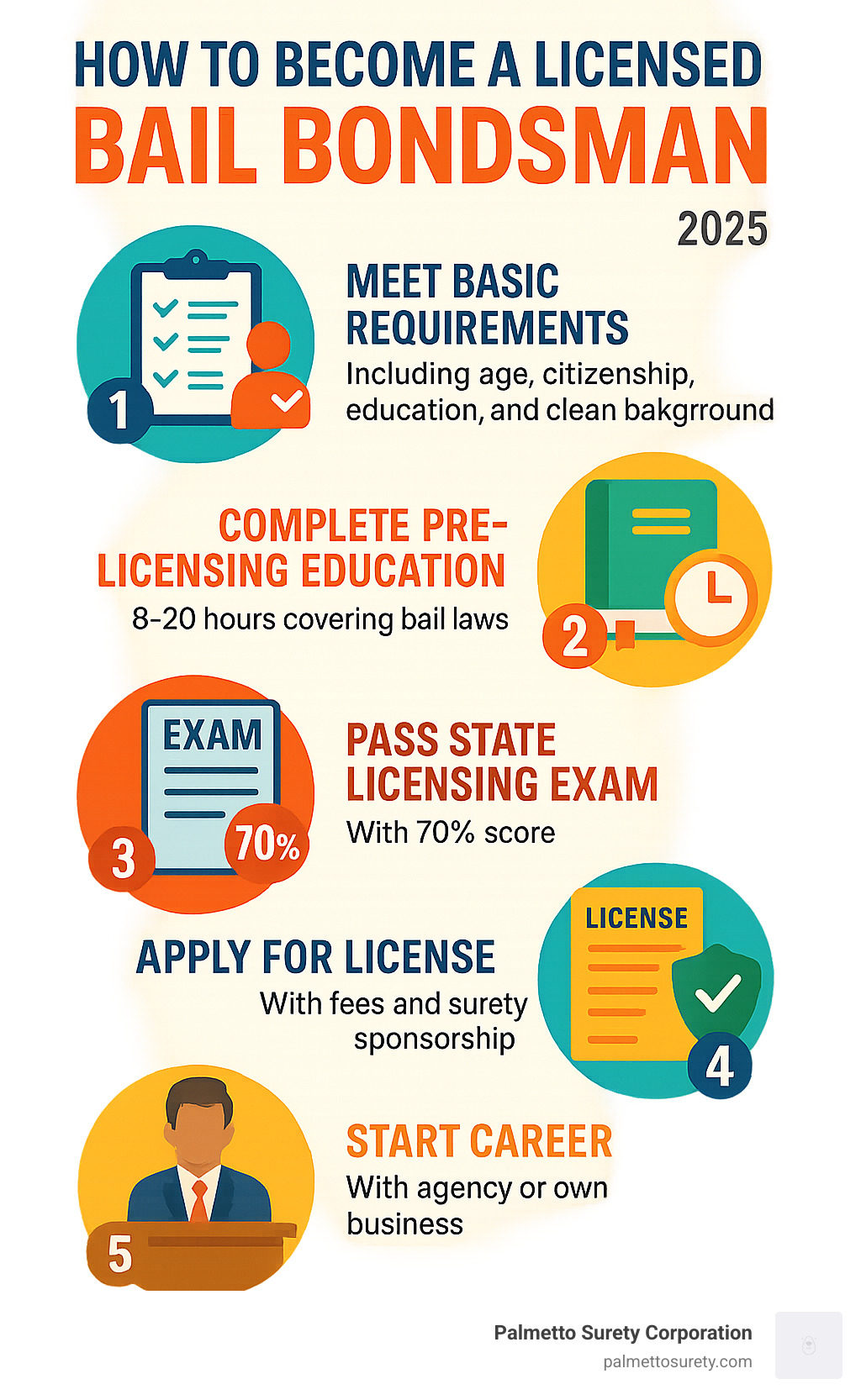
Quick Steps to Become a Bail Bondsman:
- Meet Basic Requirements – Be 18+ years old (21+ in some states), U.S. citizen, high school diploma, clean criminal record
- Complete Pre-Licensing Education – Take 8-20 hour state-approved course covering bail laws and regulations
- Pass State Licensing Exam – Score 70% or higher on multiple-choice test (costs $40-$80)
- Apply for License – Submit application, fees ($50-$700), and secure surety company sponsorship
- Start Your Career – Work for an agency or start your own bail bond business
This profession suits those with strong negotiation and financial skills. A Reddit user advised prospective bondsmen: “Look up bail bondsman positions from larger companies on sites like Indeed or Glassdoor to check requirements. Figure out how to get a bail license in your state and ensure you meet the requirements.”
Bail bondsmen are crucial intermediaries, helping defendants secure release before trial. The business model is stable, with only 1-3% of clients skipping bail and over 70% of those eventually found, making it an essential service.
I’m Haiko de Poel Jr. With my experience at Palmetto Surety Corporation, I’ve helped many individuals become a bail bondsman. This guide will walk you through every step of entering this recession-proof profession.
Understanding the Role and Industry of a Bail Bondsman

When you become a bail bondsman, you become a lifeline for families in crisis. Imagine a loved one is arrested with bail set at $10,000—the nationwide median bail amount for felonies. For most, paying this amount quickly is impossible.

That’s where bail bondsmen come in. We bridge the gap, helping people steer the legal system. We give them a chance to return home, keep their jobs, and prepare their defense while awaiting trial.
The bail bonds industry upholds the principle of “innocent until proven guilty.” Without us, many would stay in jail just because they can’t afford bail. This work directly impacts lives and supports our justice system.
What a Bail Bondsman Does
The day-to-day reality of being a bail bondsman is diverse. Your primary role is serving as a liaison between courts and defendants. You guide families through the overwhelming bail process, explaining their options and obligations.
Smart bail decisions hinge on risk assessment. You’ll evaluate a defendant’s background, criminal history, community ties, and flight risk. This requires both analytical skill and intuition.
Posting bail means working with courts or a surety company. You charge a non-refundable fee, typically 10% for state and 15% for federal charges, which covers your service and financial risk.
Client monitoring is crucial after release. You ensure clients know their court dates and follow release conditions. A simple reminder call can prevent major issues.
Paperwork and record-keeping are essential. You must carefully document every contract, court document, and client interaction to comply with state regulations and good business practice.
In rare cases (1-3% of clients), you’ll need to perform skip tracing if someone fails to appear in court. While over 70% are eventually found, this may involve working with bounty hunters to locate defendants.
For a deeper dive into these responsibilities, check out our comprehensive guide on What Does a Bail Bondsman Do?.
Salary and Job Outlook
The financial prospects are a major draw. The U.S. bail bonds industry generates over $2 billion annually. New bail bondsmen can expect to earn around $55,000 per year. With experience and business savvy, earnings grow significantly. Experienced bondsmen and agency owners often earn well over $80,000 annually, with six-figure incomes possible.
The profession offers excellent self-employment opportunities. You can build your own client base and determine your income, unlike in many corporate jobs.
This is a recession-proof industry. Arrests happen regardless of the economy, ensuring consistent demand. The projected job growth of 4.9% over the next decade is above the national average, indicating a stable field.
You can learn more about compensation details in our article on Bail Bondsman Salary and Earning Potential.
Benefits of the Career
Beyond the money, becoming a bail bondsman offers unique lifestyle benefits not found in typical office jobs.
- Being your own boss is a major draw. You control your schedule, clients, and business operations, which is incredibly satisfying.
- The flexible schedule means you might get calls at any hour, but it also allows you to manage your time for personal commitments during the day.
- Financial stability comes from the consistent, year-round demand for bail services.
- Most importantly, you’re helping people in crisis. You become a lifeline for scared and confused families, guiding them through a difficult time. The gratitude from clients is genuinely heartwarming.
- The dynamic work environment is never boring. Each day brings new people and challenges, keeping the job interesting and honing your people skills.
How to Become a Bail Bondsman: A Step-by-Step Guide

Let’s cover the practical steps to become a bail bondsman. While state rules vary, the general process is predictable. The journey requires attention to detail, as state regulations ensure only qualified individuals enter the profession to handle significant funds and work within the justice system.
Step 1: Meet the Basic Requirements to Become a Bail Bondsman
First, ensure you meet the basic qualifications. These are non-negotiable requirements enforced by every state.
- Age: Most states require you to be at least 18 years old, though some, like North Carolina, require you to be 21. This reflects the maturity needed for the role.
- Citizenship and Residency: You must be a U.S. citizen or legal resident. Most states also have a residency requirement, such as North Carolina’s six-month minimum.
- Education: A high school diploma or GED is required. A college degree isn’t mandatory, but one in a related field like criminal justice or finance is a significant advantage.
- Criminal Background: Your criminal background is critical. A felony conviction is almost always an automatic disqualifier. Certain misdemeanors, especially financial crimes, may also be disqualifying. The background check is thorough due to the financial trust involved.
For a complete breakdown of these prerequisites, check out our detailed guide on Requirements to Become a Bail Bondsman.
Step 2: Complete Pre-Licensing Education and Training
Next, complete your state-mandated pre-licensing education. This coursework provides the foundation of your professional knowledge.
- Course Length: Course length varies by state, from 12 hours in North Carolina to 20 hours in California. These courses provide essential daily knowledge.
- Curriculum: The curriculum covers state-specific bail laws, court procedures, the rights of the accused, professional ethics, financial aspects of bonding, and skip tracing techniques.
- Cost: Courses cost around $500. Even if not mandatory in your state, completing the training is highly recommended to gain invaluable knowledge and improve your chances of passing the exam.
- Approval: Ensure your course is approved by your state’s regulatory body, like the Department of Insurance, to avoid wasting time and money. For specific examples, you can review the North Carolina state requirements.
Step 3: Pass the State Licensing Exam
After your education, you must pass the state licensing exam. Proper preparation makes this manageable.
Register for the exam through your state’s Department of Insurance or a provider like Pearson Vue. Exam fees range from $40 to $80. The exam is typically a 1-2 hour, 50-100 question multiple-choice test focused on your pre-licensing course material. A 70% score is usually required to pass. Retakes are generally allowed after a waiting period. Thorough preparation is key.
Step 4: Obtain Your License to Become a Bail Bondsman
After passing the exam, the final step is obtaining your license. This involves paperwork, fees, and patience.
- Application: Submit your application online via your state’s Department of Insurance, including your course certificate and exam results. Application fees range from $50 to $700, a necessary investment in your career.
- Fingerprinting: Fingerprinting is mandatory for the background check, which verifies your clean record through state and federal databases. This involves an additional fee.
- Sponsorship: A critical step is securing surety company sponsorship. You need backing from a surety insurance company, which provides the financial guarantee for the bonds you post. At Palmetto Surety Corporation, we provide this essential support to qualified bail bondsmen across the southeastern U.S.
- Issuance and Renewal: License issuance takes a few weeks after approval. Licenses require renewal every two years, which includes continuing education and fees.
For more detailed information about the entire licensing process, visit our comprehensive guide on How to Become a Bail Bondsman.
Navigating the Business and Legal Landscape

With your license in hand, you’re at a crossroads. The bail bonds industry offers multiple paths to success. Will you join an established agency or start your own business?
Choosing Your Path: Agency vs. Employment
Your first major decision is whether to work for an agency or start your own business. Both paths have merits and will shape your career.
Working for an established agency provides a safety net and invaluable hands-on experience from seasoned professionals. You get an existing client base, court relationships, and mentorship. The trade-off is less control and capped earning potential. Some states even require an apprenticeship, highlighting the value of this experience.
Starting your own business offers freedom and unlimited earning potential. You control your brand and keep the profits. However, it requires significant startup capital, business acumen, and the ability to handle everything from marketing to finance. You’ll need to build relationships with surety companies like Palmetto Surety Corporation and manage all financial risks, including forfeitures.
Many successful bondsmen start at an agency to gain experience and capital before launching their own business.
Licenses, Regulations, and Risks
The bail bonds industry is heavily regulated to protect the public and the justice system. Understanding these rules is essential for your success.
- License Types: License types vary by state but often include: Surety Bail Bondsman (working as an agent for a surety company), Professional Bail Bondsman (using your own assets, which requires a large financial deposit), and Bail Bond Runner (an entry-level, supervised role).
- State-Specific Laws: State-specific laws differ dramatically. It’s crucial to understand your local regulations on everything from fee structures to client interactions before you begin operating.
- States Where Commercial Bail is Unlawful: Be aware that commercial bail bonds are illegal in several states, including Illinois, Kentucky, Oregon, and Wisconsin. These places use other pretrial release systems. Ensure you’re not planning to operate in one of these states.
- Financial Risks: The financial risks are substantial. Bond forfeiture occurs when a defendant fails to appear in court, making the full bail amount due. While collateral offers protection, collecting on forfeitures can be difficult and costly.
- Skip Tracing: Skip tracing adds complexity. While only 1-3% of defendants fail to appear, locating them requires persistence and investigative skills. This part of the job can involve personal risk.
- Industry Associations: Industry associations like the Professional Bail Agents of the United States provide valuable resources, support, and advocacy for bail agents.
Understanding the business and legal landscape is about building a sustainable, profitable career. For a comprehensive understanding of how the entire system works, check out The Bail Bond Process Explained.
Frequently Asked Questions about Becoming a Bail Bondsman
As you consider this career, you likely have questions. Here are straightforward answers to the most common ones we hear from people looking to become a bail bondsman.
What is the typical earning potential for an experienced bail bondsman?
The financial prospects are attractive. New bondsmen typically earn around $55,000 annually. With experience, your potential grows significantly. Experienced bondsmen and agency owners can earn over $80,000 annually, with some reaching six figures. The bail bondsman industry makes over $2 billion annually, so there is significant potential. Your income is directly tied to your reputation, network, and business skills.
Can a person with a criminal record become a bail bondsman?
Generally, a felony conviction is an automatic disqualifier. The profession requires significant trust and financial responsibility. Some states also restrict licensing for certain misdemeanors, especially those involving finance or fraud. A thorough background check is a mandatory part of the application process to ensure the integrity of the industry. A clean record is essential.
How long does it take to get a bail bondsman license?
The timeline varies by state, but the entire process can take anywhere from a few months to over a year. Here’s a breakdown:
- Pre-licensing education: A few days to a few weeks.
- Exam preparation and testing: A few weeks to a month.
- Application processing: This is often the longest phase, taking several weeks to months for the state to review your application, background check, and surety sponsorship.
- License issuance: Typically 2-3 weeks after approval.
Check with your state’s Department of Insurance for the most accurate processing times.
Conclusion
Exploring how to become a bail bondsman is the first step toward a unique career blending financial opportunity, independence, and community service. The path involves meeting basic requirements, completing education, passing the state exam, and obtaining your license. From there, you can join an agency or start your own business, with experienced bondsmen earning $80,000 or more in this $2 billion industry.
Beyond the income, the work is rewarding. You help families steer crises, allowing people to keep their jobs and prepare their legal defense. While challenges like bond forfeitures exist, they are manageable with proper training and support.
A reliable surety partner is crucial for success. For over 20 years, Palmetto Surety Corporation has supported bail agents across the southeastern United States. We offer the quick approvals and dependable service you need to build a successful business.
Ready to start your journey? Learn more about partnering with us through our bail surety bonds program and let us help you succeed.


