


Bail vs Bond: Top 5 Key Differences Revealed in 2025
Why Understanding Bail vs Bond Could Help You Avoid Costly Mistakes
Bail vs bond confusion can lead to costly financial decisions during a legal crisis. While these terms are often used interchangeably, they represent different approaches to securing pretrial release, and the best option depends on the bail amount, local rules, and your situation.
Quick Answer: Bail vs Bond Key Differences
- Bail: Money you pay directly to the court (generally refundable if all court requirements are met)
- Bond: A bail agent posts the bail while you pay a non-refundable premium/fee for the service
- Cost: Bail typically requires the full amount upfront; a bond usually costs a state-regulated percentage (commonly 10–15%, depending on the state)
- Risk: With bail, you risk forfeiting your own money if court requirements aren’t met; with a bond, the agent assumes the bail forfeiture risk (and may require collateral)
- Refund: Bail is typically returned at the end of the case (minus any applicable court fees); bond premiums are not refundable
When someone gets arrested, families face an immediate decision that can seriously affect cash flow. Do you come up with the full bail amount, or do you work with a bail agent?
Note: Release options (including release on recognizance and other non-cash conditions) vary widely by jurisdiction, charge, and individual circumstances.
I’m Haiko de Poel Jr., and I’ve spent years in the surety and bail bond industry, including significant work with companies like Palmetto Surety Corporation and National Pretrial. Through my experience, I’ve seen how bail vs bond decisions can impact families.
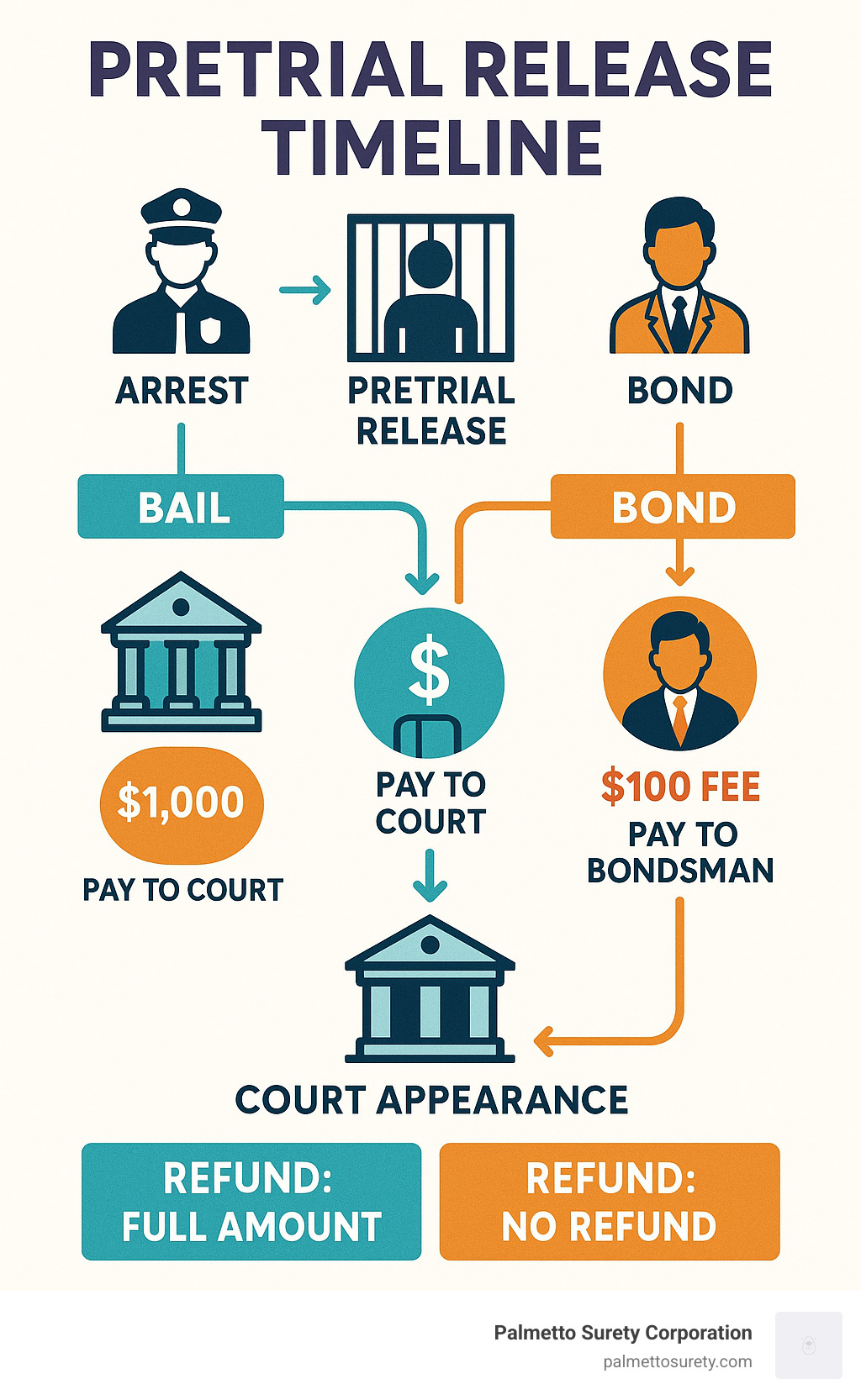
Quick bail vs bond terms:
Bail vs Bond 101: Definitions & Key Differences
Understanding bail vs bond isn’t just about knowing legal terms — it’s about making a smart decision when you’re already stressed and overwhelmed.
When your loved one gets arrested, you generally have two paths forward. You can pay the court directly (that’s bail), or you can work with a professional who posts bail while you pay them a non-refundable premium/fee (that’s a bond). Both can secure release, but they work differently for your wallet.

What is Bail?
Bail is money you pay directly to the court — think of it as a security deposit that helps ensure someone returns to court. The court holds the funds, and if all court requirements are met, the bail is typically returned when the case is resolved (minus any applicable fees).
Cash bail is the most straightforward option. If the judge sets bail at $5,000, you pay $5,000 to the court.
Property bail may allow you to use real estate instead of cash. The court can place a lien on property, subject to local rules.
Release on recognizance (ROR) is when the court releases someone based on a promise to appear, without requiring bail. Availability depends on jurisdiction, charge, and the judge’s decision.
The key thing about bail? It’s generally refundable if all court requirements are met. There may be administrative fees or other deductions depending on the jurisdiction.
What is a Bond?
A bond flips the script. Instead of you paying the court, a bail bond agent posts the bail. You pay the agent a non-refundable premium/fee (often a state-regulated percentage of the bail amount), and the agent assumes the bail forfeiture risk. Agents may require collateral depending on the situation.
Surety bonds are what most people mean by “bail bonds.” The agent posts bail and guarantees the defendant’s appearance.
Property bonds can involve collateral in the form of property, depending on the agent’s requirements and state law.
Federal bonds apply in federal cases and often have stricter requirements.
Immigration bonds apply in certain immigration detention matters and are governed by different processes.
Here’s the crucial difference: the premium/fee you pay to the agent is not refundable, even if you do everything right and show up to every court date.
Bail vs Bond: Main Differences
The bail vs bond choice usually comes down to five key factors.
Who pays the court makes all the difference. With bail, you’re dealing directly with the court. With bonds, a licensed agent handles posting bail while you pay the agent a fee.
Refundability is where the financial impact hits. Bail is typically returned if requirements are met (minus fees). Bond premiums are not returned — that premium is the cost of the service.
Risk shifts between the options. With bail, you risk your own money if requirements aren’t met. With bonds, the agent assumes the forfeiture risk (and may require collateral).
Speed can vary. In some jurisdictions, working with an experienced bail agent may help streamline the posting process, but timing depends on the jail, court, and local procedures.
The bottom line? If bail is $10,000, you may pay $10,000 to the court and potentially get most of it back later, or you may pay an agent a non-refundable premium (commonly 10–15%, depending on the state) to avoid paying the full amount upfront. Neither choice is automatically better — it depends on your situation and local rules.
| Factor | Bail | Bond |
|---|---|---|
| Who Pays Court | You or your family | Bail bond agent |
| Upfront Cost | Full bail amount | State-regulated premium/fee (often 10–15%, depending on the state) |
| Refundable | Typically yes (minus applicable fees, if requirements are met) | No — premium/fee is not refundable |
| Risk Bearer | You | Agent (may require collateral) |
| Speed | Can vary by jurisdiction | Can vary; may be faster in some jurisdictions |
Step-by-Step: How the Bail Process Works
When someone you care about gets arrested, understanding the bail process can help you make smart decisions during a stressful time. The bail vs bond choice happens early, so knowing what to expect can save you both time and money.

The journey from arrest to release follows a predictable pattern, though timing varies by location and circumstances.
Arrest and booking comes first — your loved one is processed at the jail. This can take anywhere from a couple of hours to longer depending on the facility.
The initial appearance often happens within 24 to 48 hours, depending on local rules and scheduling. This is when bail may be set, modified, or denied.
The bail decision is where everything hinges. The judge reviews the case and decides whether to grant release, set conditions, or deny bail.
Setting the Amount
Judges consider multiple factors when setting bail, including:
The severity of the charges (and any alleged violence)
Criminal history
Flight risk assessment and community ties
Local bail schedules (where applicable), which judges may adjust based on circumstances
Paying Bail & Getting Your Money Back
Once bail is set, you may have several ways to secure release. Cash payment means paying the full amount to the court. Property options may allow pledging real estate or other assets, subject to local rules.
Working with a bail bond agent typically means paying a non-refundable premium/fee (often a state-regulated percentage) for the agent to post the full bail amount.
If you choose cash bail and meet all court requirements, bail is typically returned after the case concludes, minus applicable court fees (which vary by jurisdiction).
Skip Court? Here’s What Happens
Missing court dates can trigger serious consequences, including:
A bench warrant for arrest
Bail forfeiture (cash bail may be lost; bond may be forfeited to the court)
Possible additional charges for failure to appear (varies by jurisdiction)
The bottom line: show up for court and follow release conditions. It’s the simplest way to protect both freedom and finances.
Inside the Bond Process & Costs
The bond process operates differently from paying bail directly. Understanding these differences helps you decide which route makes sense.

When you can’t afford the full bail amount, a bail bond agent may be able to post bail while you pay a non-refundable premium/fee and, in some cases, provide collateral.
Working With a Bondsman
Bail bond agents are licensed professionals who specialize in posting bail for defendants. At Palmetto Surety Corporation, we’ve built a network of experienced agents throughout the Southeast who understand the urgency families face.
The process typically works like this:
- Contact: You call an agent (many offer 24/7 availability)
- Application: Complete paperwork (requirements vary)
- Payment: Pay the premium/fee (state-regulated; often 10–15%, depending on the state)
- Collateral: Provide additional security if required
- Release: Agent posts bail and the defendant is released
In many cases, applications can be processed quickly depending on the jail, court, and documentation.
Types of Bonds & When They Apply
Different situations can involve different bond types:
Surety Bonds: Common for many state cases; the agent guarantees the bail amount to the court.
Property Bonds: May involve property as collateral, depending on the agent and state law.
Federal Bonds: Used in federal cases with stricter requirements.
Immigration Bonds: Used in certain immigration detention matters.
Unsecured Bonds: A promise to pay if court requirements aren’t met (availability varies).
Partially Secured Bonds: A hybrid where a portion is paid or secured upfront (availability varies).
Fees, Collateral & Hidden Costs
The bail vs bond cost comparison isn’t always straightforward. While premiums are typically state-regulated, additional items can apply depending on the situation:
Premium/Fee: Non-refundable charge for the service
Collateral: Security such as car titles, jewelry, or property deeds (when required)
Payment Plans: Some agents offer financing; terms vary
Conditions: Violations of release conditions can create serious consequences
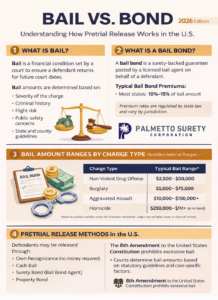
Be wary of quotes that seem “too good to be true.” Reputable agents should explain pricing and requirements clearly up front.
Reforms, Alternatives & Jurisdictional Differences
The bail vs bond landscape continues to change as states consider fairness, public safety, and court appearance rates. Because laws differ widely, the best approach is to understand your local options.

The U.S. vs The Rest of the World
Commercial bail bonding is largely unique to the United States and is restricted or prohibited in many other countries. In the U.S., some states have eliminated or heavily restricted commercial bail bonds, while others continue to permit them under state regulation.
Even within the U.S., certain states have banned or restricted commercial bail bonds, including Illinois, Kentucky, Oregon, and Wisconsin. Some jurisdictions use alternatives like deposit systems where a percentage is paid directly to the court (rules vary).
Emerging Alternatives to Cash Bail
Some jurisdictions use alternatives that reduce reliance on money-based release:
Risk assessment tools (where used) to guide release decisions
Pretrial services programs with supervision conditions
Electronic monitoring in certain cases
Bail funds run by nonprofits in some communities
Recent State Reforms & Criticisms
Several states have implemented bail reforms, and outcomes remain a topic of debate. Some reforms reduce cash bail for certain charges while expanding non-cash conditions, and others restore judicial discretion for specific offenses.
Important: Bail reform details change frequently. Always check current local rules.
Bail vs Bond FAQs
When you’re facing a bail vs bond decision, certain questions come up again and again.
Is bail or bond money refundable?
Cash bail paid to the court is typically refundable if court requirements are met, minus any applicable fees. Timing and deductions vary by jurisdiction.
Bond premiums/fees paid to a bail bond agent are not refundable because they pay for the service of posting bail.
For example, if bail is $10,000, you may pay $10,000 to the court and potentially receive most of it back later (minus fees). If you use a bond, you may pay a non-refundable premium/fee (often 10–15%, depending on the state) and may need collateral depending on the circumstances.
Who decides the bail vs bond amount?
The judge sets the bail amount (or release conditions). Many courts use bail schedules as a starting point, then adjust based on case specifics.
Bail bond agents do not set bail amounts — they help post bail after the court sets the amount.
Can I avoid both bail and bond altogether?
Sometimes, yes. Options can include:
Release on recognizance (ROR)
Citation release (in some cases)
Supervised release through pretrial services
Pretrial diversion programs (in some jurisdictions/cases)
Having a lawyer can help you understand and request available non-cash options, but outcomes depend on the jurisdiction, charge, and individual circumstances.
Conclusion
Making the right bail vs bond choice can affect your financial situation and your ability to get a loved one home quickly. If you can afford the full bail amount and can leave it with the court until the case concludes, paying cash bail may be the most economical option because it’s typically refundable if requirements are met.
But many families don’t have thousands of dollars available on short notice. In that case, working with a licensed bail bond agent can reduce the upfront cost by using a non-refundable premium/fee to have the agent post bail.
At Palmetto Surety Corporation, we work with a network of experienced agents throughout the Southeast. Every case is different, and release options, timing, and costs depend on the jurisdiction and circumstances.
Don’t try to navigate this alone. Whether you’re leaning toward cash bail or considering a bond, having experienced professionals explain your options can help you avoid expensive mistakes. The most important thing — regardless of the path you choose — is to appear for every court date and follow release conditions.
If you’re facing a bail decision right now, reach out to professionals who can walk you through your options without pressure or confusion.
More info about bail bond services — because making the right choice for your family’s situation is what matters most.
Disclaimer: This content is for general educational purposes only and is not legal advice. Bail laws, premium rates, fees, and release procedures vary by state and may change. For guidance on a specific case, consult a licensed bail agent or an attorney in the relevant jurisdiction.


