


Bail Bonds in Texas: 7 Essential Facts You Must Know 2025
Why Understanding Bail Bonds in Texas Could Save You Time and Money
Bail bonds in Texas work differently than in many other states, and knowing the basics can make the difference between sitting in jail for weeks or getting released within hours. If you or a loved one has been arrested in the Lone Star State, you need to understand your options fast.
Here’s what you need to know about bail bonds in Texas:
- Bail = The total amount set by the court (you pay 100% to get it back later)
- Bond = A guarantee from a licensed company (you pay 10-20% as a non-refundable fee)
- Timeline = Bail is typically set within 48 hours of arrest
- Cost = Bond companies charge 10-20% of the total bail amount
- Release = Processing takes 2-8 hours after the bond is posted
- Refund = You get cash bail back if you appear in court, but bond fees are never refunded
The Texas bail system operates under specific rules found in the Texas Code of Criminal Procedure Chapter 17. Each county has its own Bail Bond Board that licenses and regulates bond companies, with mandatory boards required in counties over 110,000 people.
Most people choose surety bonds through licensed companies because few families have thousands of dollars in cash readily available. These companies essentially loan the bail money to the court in exchange for a premium fee and often require collateral or a co-signer.
I’m Haiko de Poel Jr, and through my work with surety companies and the criminal justice system, I’ve seen how confusing bail bonds in Texas can be for families facing these situations. My goal is to break down this complex process into simple terms so you can make informed decisions quickly.
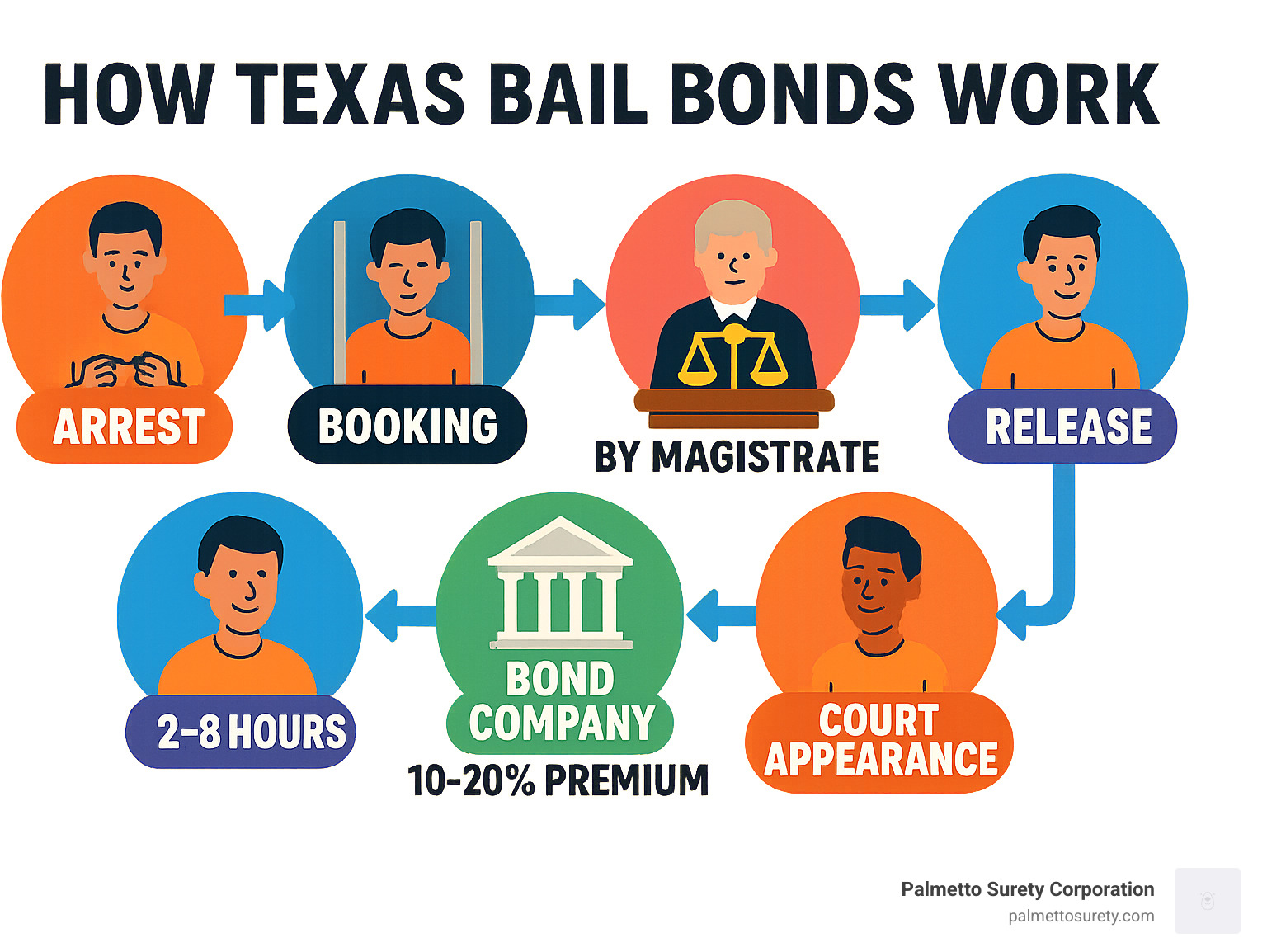
Bail vs. Bond: The Basics You Must Know
When someone you care about gets arrested in Texas, you’ll quickly hear two words thrown around: “bail” and “bond.” While people often use these terms like they mean the same thing, understanding the difference could save you thousands of dollars and hours of confusion.
Bail is the full amount of money the court wants as security to ensure the defendant shows up for trial. Think of it as a refundable deposit – if you have $50,000 sitting in your bank account and bail is set at $50,000, you can pay the court directly and get your money back when the case is over (assuming all court appearances are made).

Bond works completely differently. This is where a licensed surety company steps in to help. Instead of paying the full amount, you pay the bond company a fee – usually 10-20% of the total bail amount – and they guarantee the court that the defendant will appear.
Here’s why this matters: If bail is set at $50,000, you can either pay the court $50,000 in cash (and get it back later) or pay a bond company $5,000-$10,000 as a non-refundable fee. Most families choose the bond option because they don’t have tens of thousands of dollars lying around.
| Payment Method | Upfront Cost | Money Back? | Best For |
|---|---|---|---|
| Cash Bail | 100% of bail amount | Yes, if defendant appears | Those with significant cash available |
| Surety Bond | 10-20% premium | No, premium is non-refundable | Most families (90%+ of cases) |
What is a Bail Bond in Texas?
Bail bonds in Texas are essentially insurance policies for the court system. When a bond company writes a bond, they’re making a promise to the court: “We guarantee this person will show up for trial, and if they don’t, we’ll pay the full bail amount.”
Let’s say your brother gets arrested and bail is set at $25,000. You don’t have $25,000 in cash, but you can scrape together $2,500 for the bond company’s fee. The bond company takes your payment, posts the full $25,000 with the court, and your brother gets released.
How Is Bail Set in the Lone Star State?
In Texas, a magistrate must set bail within 48 hours of arrest. This isn’t optional – it’s required by law. The magistrate looks at several key factors to determine how much financial security is needed to ensure the defendant returns to court.
The magistrate considers the severity of the offense first. A shoplifting charge will typically have much lower bail than an assault case. They also examine the defendant’s criminal history – someone with multiple prior arrests poses a higher flight risk than a first-time offender.
Community ties play a huge role in bail decisions. A defendant with a steady job, family in the area, and property ownership is more likely to stay and face the charges. Someone with no local connections might be tempted to disappear rather than return to court.
Types of Bail Bonds in Texas (And When Each Makes Sense)
When you’re facing an arrest situation in Texas, you’ll quickly find that not all bail bonds in Texas work the same way. The state recognizes five main types of release options, and choosing the right one can save you thousands of dollars and hours of stress.
Cash bonds are the most straightforward option—you pay the full bail amount directly to the court in cash. While this might sound expensive upfront, you’ll get every penny back when the case concludes (assuming all court appearances are made). This works best for families with significant savings who want to avoid bond fees entirely.
Surety bonds are what most people think of when they hear “bail bond.” A licensed bond company pays the bail for you in exchange for a premium fee, typically 10-20% of the total bail amount. This is by far the most popular choice because few families have $10,000 or $20,000 sitting in their checking account.
Personal recognizance bonds (also called PR bonds) are like getting released on your word alone—no money required upfront. However, these are only available for minor offenses and first-time defendants who pose minimal flight risk.

Surety Bonds: The Most Common Form of Bail Bonds in Texas
There’s a reason why surety bonds represent over 90% of all bail bonds in Texas—they make release possible for ordinary families who don’t have tens of thousands of dollars lying around. When your loved one is sitting in jail and bail is set at $15,000, coming up with the full amount feels impossible. That’s where surety companies step in.
The premium structure is straightforward: you pay between 10-20% of the total bail amount as a fee to the bond company. This money is completely non-refundable, even if all charges are eventually dropped. Think of it as the cost of getting your family member home tonight instead of waiting weeks or months for trial.
For example, if bail is set at $10,000, you’ll pay between $1,000 and $2,000 to the bond company. Many companies offer payment plans for larger bonds, allowing you to pay a portion upfront and spread the rest over several months.
The co-signer role is crucial to understand before you sign any paperwork. Most bond companies require someone to act as an indemnitor—essentially promising that the defendant will appear in court. As a co-signer, you’re taking on significant responsibility. If the defendant skips their court date, you could be liable for the full bail amount.
The Step-by-Step Process (Cost, Paperwork & Release Times)
Walking through an arrest and bail process can feel overwhelming, but knowing what to expect helps families stay calm and make smart decisions. The good news is that bail bonds in Texas follow a predictable timeline, and most people are released within hours once the process begins.
The booking process typically takes 1-8 hours after arrest. Your loved one will be fingerprinted, photographed, and entered into the jail’s computer system. Within 48 hours, a magistrate must set bail. This isn’t negotiable—it’s required by Texas law.
Once bail is set, you can contact a licensed bonding company. Most reputable companies offer 24/7 service because arrests don’t follow business hours. Payment and paperwork usually take 30-60 minutes once you arrive. Bond companies collect their premium fee (that 10-20% we discussed earlier) plus any required collateral.
After the bond is posted, release typically takes 2-8 hours depending on how busy the jail is. Larger facilities like Harris County can take longer, while smaller county jails might process releases in under two hours.
The entire process is regulated by the Texas Occupations Code § 1704, which protects consumers from predatory practices and ensures standardized procedures. According to the latest report on Texas bail reform, these regulations have helped streamline the process while maintaining important safeguards.
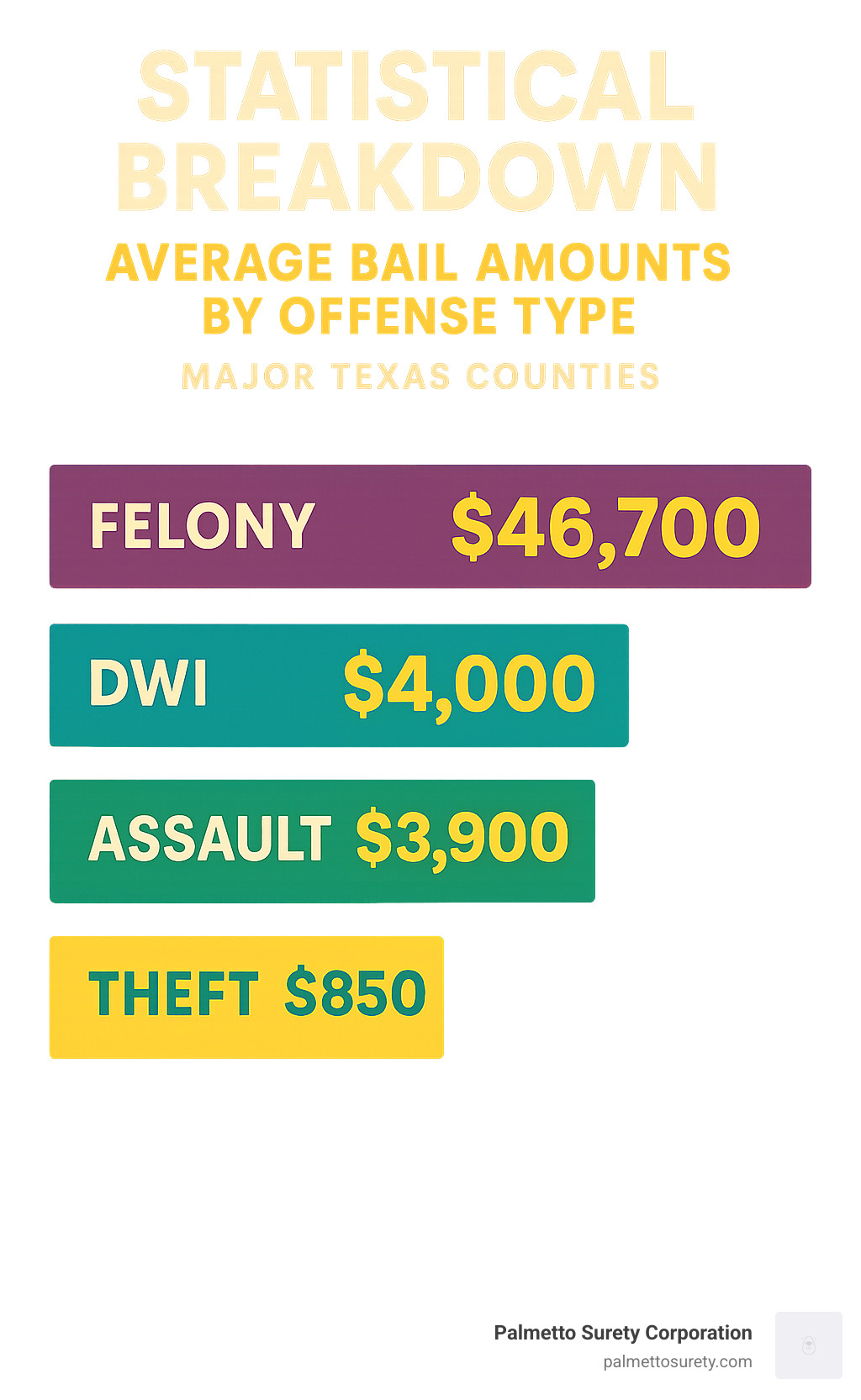
How Much Does a Bail Bond Cost in Texas?
Bail bonds in Texas cost between 10-20% of the total bail amount, and here’s the part that surprises many families: this fee is completely non-refundable. Think of it as paying for a service, not making a deposit.
Most bond companies charge a minimum fee of $100-200, even for very small bonds. For typical misdemeanor cases, you’re looking at $500-2,000 in fees. Felony bonds can range from $1,000 to $10,000 or more, depending on the bail amount.
Here’s how the math works in real life: a $5,000 bail costs $500-1,000 in bond fees. A $25,000 bail runs $2,500-5,000 in fees. For serious felonies with $100,000 bail, you’re looking at $10,000-20,000 in fees.
Do You Get Bail Money Back in Texas?
If you paid cash bail directly to the court, you get that money back when the case ends—regardless of guilt or innocence. The court will deduct any fines, fees, or court costs from your refund, but the remaining balance comes back to you.
If you used a bond company, the premium fee you paid is gone forever. That 10-20% fee compensates the company for taking on the financial risk of guaranteeing the court appearance. Even if charges are dropped the next day, you don’t get that money back.
Here’s the critical part: you only get money back if the defendant shows up for every single court date. Miss one appearance, and the entire bail amount can be forfeited.
Conditions of Release & What Happens If You Don’t Show Up
Getting released from jail feels like a huge relief, but it’s really just the beginning of a process that requires careful attention and responsibility. Both the court and your bond company will set specific rules that must be followed until your case is completely resolved.
The court typically imposes several standard conditions that apply to most people released on bond. You’ll likely need to check in regularly with pretrial services, which might mean a phone call every week or a monthly in-person visit. Travel restrictions are common too—many people are limited to staying within Texas or even within their home county without court permission.
If your case involves alleged victims or witnesses, expect a no-contact order that prohibits any communication, including through social media or third parties. The court may also require you to avoid drugs and alcohol completely, surrender your passport if you have one, or even wear an electronic monitoring device if you’re considered a flight risk.
When someone doesn’t show up for court, things happen fast and they’re not pleasant. The judge immediately issues a bench warrant for your arrest, which means any police officer who encounters you will take you to jail. The bond company faces pressure too—they have a limited time to either find you and bring you to court or pay the full bail amount to the court.
For more detailed information about surety responsibilities and legal requirements, you can review the official Texas statutes that govern this process.
Responsibilities After Posting Bail Bonds in Texas
Once bail bonds in Texas are posted and you’re released, both you and anyone who co-signed for your bond have ongoing responsibilities that last until your case is completely finished.
As the defendant, your primary responsibility is showing up for every single court date. This sounds simple, but court dates can change, and it’s your responsibility to stay informed. Missing court isn’t just about forgetting an appointment—it’s considered a separate crime that can result in additional charges.
You’ll also need to maintain regular contact with your bond company. This usually means a monthly phone call or check-in, but some companies require more frequent contact for higher-risk cases.
Consequences of Violating Bail or Bond Conditions
The consequences of violating bail conditions hit fast and hard. Within hours of missing a court date or violating conditions, an arrest warrant will be issued with your name on it.
Your bond will be revoked immediately, which means you’re no longer eligible for release on the current bond. If you want to get out again, you’ll need a completely new bond, and judges typically set much higher amounts for people who’ve already violated conditions once.
The financial consequences extend beyond just higher bonds. Any cash bail you paid directly to the court will be forfeited, meaning you lose that money entirely. Bond companies may seize any collateral you provided, such as car titles or property deeds. Co-signers become liable for the full bail amount, not just the premium they helped you pay.
Recent Reforms, County Differences & How to Choose a Reputable Bondsman
The Texas bail system has undergone significant changes in recent years, and if you’re dealing with bail bonds in Texas, it’s important to understand how these reforms might affect your situation. The biggest change came with Senate Bill 6, known as the Damon Allen Act, which passed in 2021.
The Damon Allen Act brought several important changes. Magistrates must now review a defendant’s complete criminal history before setting bail, rather than just looking at the current charge. Personal recognizance bonds are no longer allowed for certain violent offenses, and magistrates receive better training on risk assessment.
These reforms mean that if you’re facing charges for violent offenses or have a criminal history, you’re more likely to need a surety bond rather than being released on your own recognizance.
Every county in Texas handles bail differently, even though they all follow the same basic state laws. Harris County, home to Houston, operates under federal oversight due to previous bail reform litigation. Dallas County takes a more conservative approach to bail setting but offers an extensive pretrial services program. Bexar County, which includes San Antonio, has an active Bail Bond Board with comprehensive regulation of bond companies.

Finding Licensed Bail Bond Companies in Texas
When you’re stressed and need bail bonds in Texas quickly, it’s tempting to go with the first company you find online. But taking a few extra minutes to verify you’re working with a reputable company can save you thousands of dollars and a lot of headaches.
Start by checking your county’s Bail Bond Board website for a list of licensed companies. Every legitimate bond company must be licensed in the specific county where the arrest occurred. The Texas Department of Insurance guidelines also provide helpful information about what to expect from licensed companies.
Watch out for red flags that indicate predatory companies. No legitimate bond company can guarantee specific outcomes like “we’ll get the charges dropped.” If a company asks for excessive collateral—like demanding your house deed for a $5,000 bond—that’s a warning sign.
When you call potential bond companies, ask specific questions about their fee structure, payment plan options, and collateral requirements. Find out how quickly they can post the bond and what their check-in requirements will be.
Payment Plans & Low-Income Options
Most bond companies offer payment plans for bonds over $1,000, typically requiring 25-50% down with the remainder paid over 3-12 months. Interest rates vary by company, and good credit isn’t always required.
Personal Recognizance bonds remain an option for eligible defendants, especially those facing first-time, non-violent charges. Your attorney can argue for reduced bail or PR bond eligibility at the bail hearing.
Several charitable organizations in Texas provide bail assistance for low-income families, particularly for specific types of cases. Local community bail funds, religious organizations, and legal aid societies sometimes offer help.
The key is being honest about your financial situation from the beginning. Reputable bond companies want to help and often have more flexibility than their standard policies might suggest.
Frequently Asked Questions About Bail Bonds in Texas (Quick Hits!)
When families face the stress of an arrest, they need answers fast. These are the most common questions we hear about bail bonds in Texas, along with practical solutions that can help you steer this challenging situation.
Do I still have options if I can’t afford the 10% premium?
Don’t panic if you can’t come up with the full premium right away—you’re not out of options. Most families find themselves in this exact situation, and the bail bond industry has adapted to help.
Payment plans are your best friend here. Nearly every reputable bond company offers flexible payment arrangements, especially for bonds over $1,000. Many will work with you for as little as $100-200 down on smaller bonds, letting you pay the remainder over several months.
Consider bringing in multiple co-signers to share the financial burden. When three family members each guarantee part of the bond, it reduces everyone’s individual risk and makes the process more manageable.
You might also qualify for a personal recognizance bond, where the court releases the defendant on their promise to appear without requiring any money upfront. This typically happens for first-time offenders or minor charges, and a good attorney can argue for this option.
How long does it take to get out of jail after the bond is posted?
This is probably the question we get asked most, and unfortunately, there’s no simple answer. Release times depend on several factors, but I can give you realistic expectations.
City jails typically process releases fastest—usually 30 minutes to 4 hours. These smaller facilities have less volume and can move people through the system more quickly.
County jails are where most people end up, and here you’re looking at 4-24 hours for release. In busy counties like Harris or Dallas, weekend releases can take even longer due to reduced staffing.
The time of day makes a huge difference. Bonds posted during business hours (8 AM to 5 PM) generally process faster because more staff are available. Late-night or weekend bonds often sit until the next business day.
What should I do if I have an outstanding warrant?
Here’s the thing about warrants—they don’t disappear, and they can turn any routine traffic stop into an arrest. But you have more control over the situation than you might think.
Don’t wait for the warrant to find you. Instead, take charge by arranging a “walk-through” bond. This process lets you surrender voluntarily with all the paperwork already completed, often getting you released within 1-2 hours instead of sitting in jail for days.
Start by contacting a bond company to discuss pre-approval. They can have everything ready before you surrender, including collateral arrangements and payment plans. This preparation makes a huge difference in processing time.
When you’re ready to surrender, do it during business hours when possible. Monday through Friday, 8 AM to 3 PM typically offers the fastest processing. Avoid Friday afternoons or weekends unless absolutely necessary.
Conclusion

When you’re facing an arrest situation in Texas, time moves fast but knowledge gives you power. Bail bonds in Texas don’t have to feel like navigating a maze blindfolded—with the right information, you can make smart decisions that protect both your loved one’s freedom and your family’s finances.
The most important thing to remember is that bail is typically set within 48 hours, giving you a clear timeline to work with. Most families choose surety bonds because paying 10-20% of the bail amount is far more manageable than coming up with thousands of dollars in cash.
Following all conditions after release is absolutely crucial. We’ve seen too many families turn a manageable $1,000 bond fee into a $10,000 nightmare because someone missed a court date or violated their release conditions. The courts take these violations seriously, and the consequences hit both your wallet and your freedom.
Each county in Texas operates a bit differently, but the basic process remains consistent statewide. Whether you’re dealing with Harris County’s federal oversight or a smaller county’s more traditional approach, the fundamentals of bail bonds in Texas stay the same—licensed companies, regulated fees, and clear responsibilities for everyone involved.
Your next steps should be swift but informed. If you’re facing a bail situation right now, verify that any bond company you contact is properly licensed through your county’s Bail Bond Board. Understand all fees upfront, ask about payment plans if needed, and make sure everyone involved understands their responsibilities after release.
At Palmetto Surety Corporation, we’ve spent over 20 years helping families steer these exact situations throughout the southeastern United States. Our network of licensed agents understands that when you call us, you’re probably having one of the worst days of your year. That’s why we focus on approving applications within hours and providing clear, honest guidance without the runaround.
The goal isn’t just getting your loved one home tonight—it’s successfully completing the entire legal process while keeping your family’s finances intact. Every court appearance matters, every check-in with the bond company matters, and every condition of release matters.
Communication is your safety net. If you’re ever unsure about a court date, a reporting requirement, or a condition of release, pick up the phone. Contact your attorney, contact your bond company, contact the court clerk—but don’t guess. A simple phone call can prevent complications that cost thousands of dollars and weeks of additional stress.
For families dealing with bail bonds in Texas, this process has helped millions of people maintain their jobs, care for their families, and work with their attorneys from a position of freedom rather than from behind bars. You’re not alone in this, and with the right approach, you can steer it successfully.
If you need assistance with bail bonds or want to learn more about our services, visit our bail bonding company page or contact one of our licensed agents in your area. We’re here to help you through this challenging time with the expertise and compassion your family deserves.


