


Court Bonds Florida: 5 Essential Tips for Success
Court bonds florida play a vital role in the legal landscape, providing financial protection and assurance in various court proceedings. Whether you’re involved in civil litigation or handling fiduciary responsibilities, understanding these bonds is essential for legal professionals and their clients in Florida. Here’s a concise overview of what you need to know:
- Types of Court Bonds: These include judicial bonds, fiduciary/probate bonds, and appeal bonds.
- Purpose: They safeguard parties from potential financial losses resulting from court decisions.
- Requirements: Each type has specific requirements, including financial documentation and sometimes collateral.
In Florida, these bonds are often more cost-effective than other forms of court-ordered securities, making them a preferred choice for many. As you seek clarity on court bonds florida, understanding these fundamentals is key to ensuring compliance and protection during legal proceedings.
I am Haiko de Poel Jr., your guide through the complex world of court bonds florida. With extensive expertise in strategic marketing and digital transformation, I have successfully navigated the intricacies of branding, rebranding, and driving significant business growth across the surety bond industry. I’m eager to share insights that will enhance your understanding and engagement with this critical legal topic.
Understanding Court Bonds in Florida
When navigating the legal landscape in Florida, understanding court bonds is crucial. These bonds play a significant role in the judicial process, offering financial security and ensuring that legal obligations are met. Let’s delve into the two main types you’ll encounter: bail bonds and surety bonds.
Bail Bonds
Bail bonds are a promise to the court that a defendant will appear for their future court dates. This type of bond is crucial in criminal cases. There are two main types:
-
Cash Bond: This is where the full amount is paid in cash to the court. It’s straightforward but can be financially burdensome.
-
Surety Bond: This involves a bail bond agency, which guarantees the bond and often requires collateral. The agency charges a fee, typically a percentage of the total bond amount.
Surety Bonds
Surety bonds are more common in civil cases. They ensure that parties fulfill their legal obligations. These bonds are a three-party agreement involving:

- Principal: The party that needs the bond.
- Obligee: The party protected by the bond.
- Surety: The company that issues the bond and guarantees the principal’s obligations.
Legal Requirements
In Florida, obtaining a court bond involves meeting specific legal requirements:
-
Licensing: Verify the license of the bond agent involved.
-
Documentation: Prepare financial statements and relevant court documents. This is crucial for judicial and fiduciary bonds.
-
Collateral: Some bonds, especially in appeals, may require collateral to protect the surety.
Meeting these legal requirements ensures that the bond process is smooth and that all parties are protected.
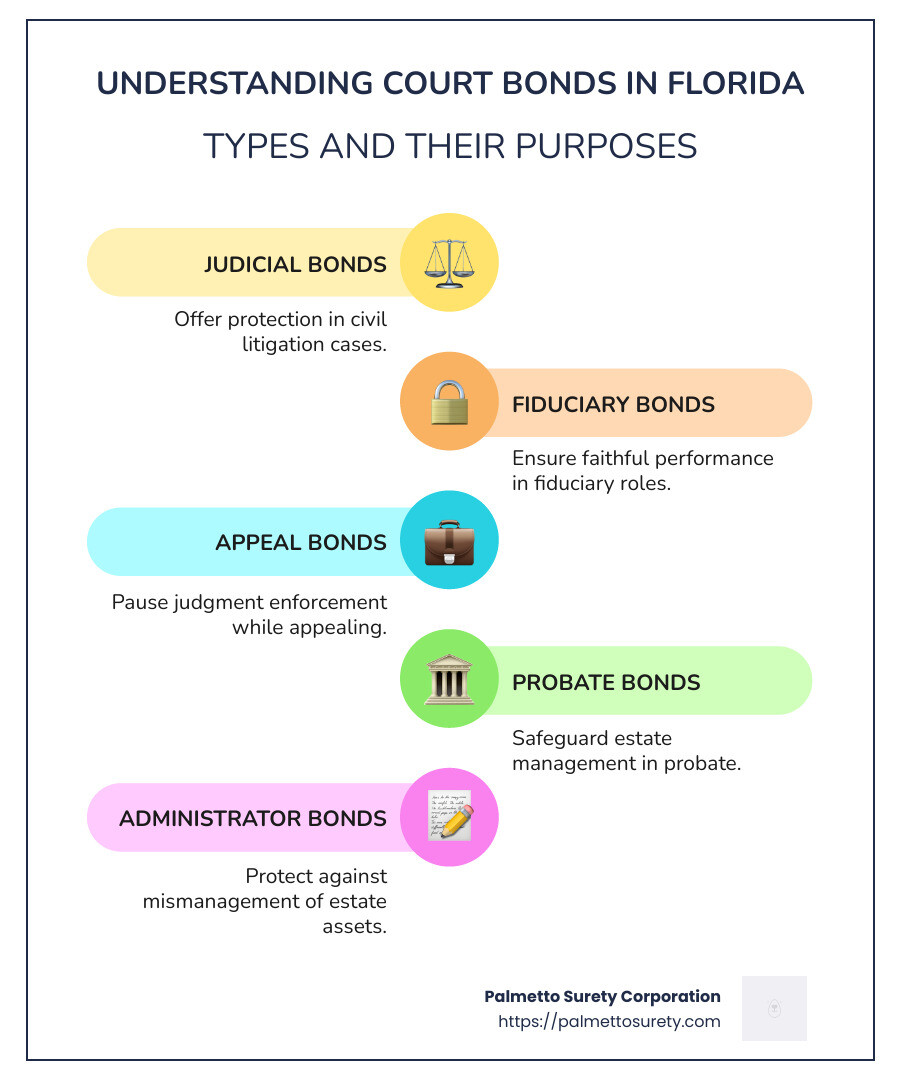
Types of Court Bonds
Court bonds are essential tools in the legal system. They ensure that parties involved in legal proceedings meet their obligations. In Florida, there are several types of court bonds you might encounter. Let’s explore them.
Appeal Bonds
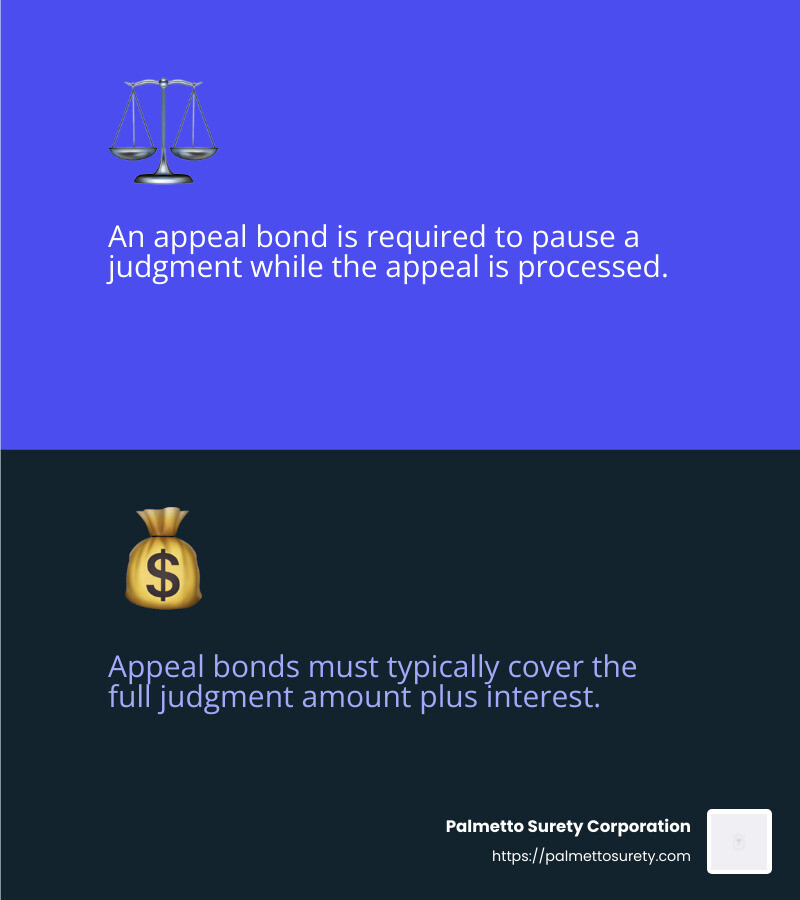
An appeal bond is used when a party wants to challenge a court decision. This bond ensures that if the appeal fails, the original judgment plus any interest and costs will be paid.
- Purpose: To delay judgment enforcement while the appeal is reviewed.
- Requirements: Typically, the bond must cover the full judgment amount and any accrued interest.
- Collateral: Often required, especially if the judgment amount is high.
Civil Litigation Bonds
Civil litigation bonds are used in various legal situations to protect parties from potential financial loss.
Judicial Bonds
These bonds are part of civil litigation and protect litigants from financial harm during legal proceedings. Types include:
- Injunction Bonds: Prevent a party from doing something harmful.
- Attachment Bonds: Secure a party’s interest in disputed property.
Fiduciary Bonds
These bonds ensure that individuals appointed by the court, like administrators, act in the best interest of those they represent.
- Probate Bonds: Used in estate administration to protect heirs and creditors.
- Administrator Bonds: Ensure that estate administrators act faithfully and honestly.
Fiduciary Bonds
Fiduciary bonds are crucial in protecting the interests of those who cannot protect themselves, like minors or incapacitated individuals.
- Role: Guarantees that fiduciaries perform their duties ethically.
- Examples: Guardianship bonds and conservatorship bonds.
- Court Involvement: The court monitors fiduciary actions closely to ensure compliance.
Understanding the different types of court bonds florida can be complex, but knowing their purpose and requirements helps steer legal processes more smoothly. Whether dealing with appeals, civil litigation, or fiduciary responsibilities, these bonds provide essential security and trust in the judicial system.
Costs and Premiums of Court Bonds
When it comes to court bonds in Florida, understanding the costs and premiums involved is crucial. These costs can vary based on several factors, including the type of bond, the amount required, and the applicant’s financial situation.
Bond Costs
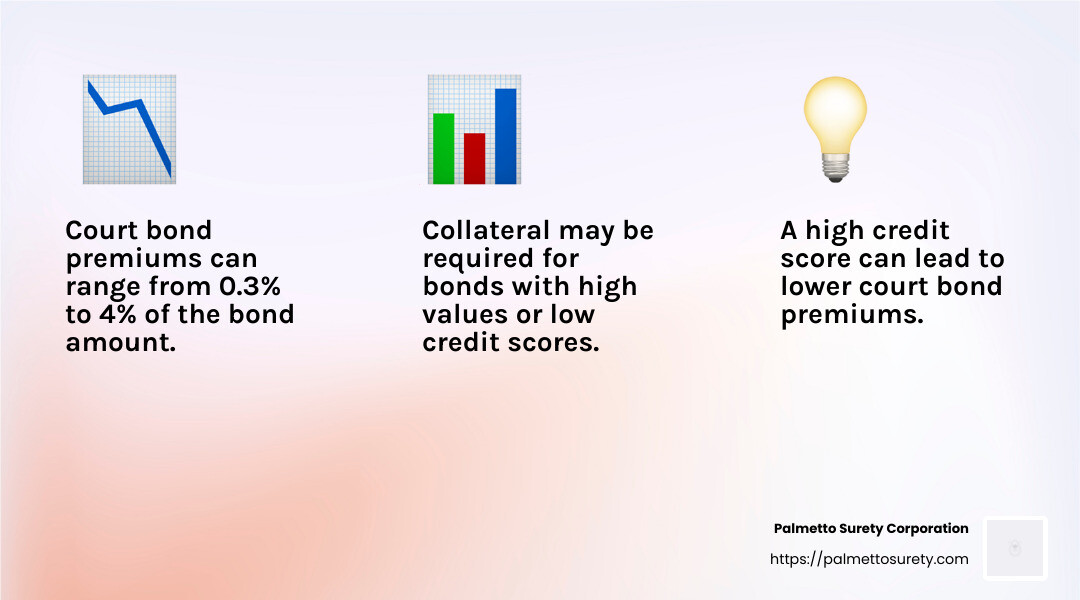
The cost of a court bond typically includes the bond premium, which is a percentage of the bond amount. This premium can range from 0.3% to 4% of the total bond value. For example, if you need a $20,000 surety bond, the premium could be as low as $60 or as high as $800, depending on your credit score and other factors.
Credit Score Impact
Your credit score plays a significant role in determining the premium rate for a court bond. A higher credit score often results in a lower premium rate. Conversely, a lower credit score might mean higher premiums. Surety companies use your credit score to assess the risk of issuing the bond. It’s similar to how credit scores affect interest rates on loans.
Premium Rates
Premium rates are not only influenced by credit scores; they also depend on the type of bond and the amount of risk involved. For instance, appeal bonds might have higher premiums due to the potential financial risk if the appeal is unsuccessful.
In some cases, collateral may be required to secure a bond, especially for high-value bonds or if the applicant has a lower credit score. Collateral can include cash, real estate, or other assets that provide security to the surety company.
In summary, the costs and premiums of court bonds in Florida are influenced by several factors, including the bond amount, the applicant’s credit score, and the type of bond. Understanding these elements can help you anticipate and manage the financial implications of securing a court bond.
Process of Obtaining a Court Bond
Obtaining a court bond in Florida involves a few key steps, which might seem complex but can be managed by breaking them down.
Application Process
First, you need to fill out an application. This form gathers essential information about you or your business. You’ll need to provide details like your financial history, the type of court bond you need, and the bond amount. Be ready to include any relevant court documents, especially if you’re dealing with judicial bonds.
Underwriting
After submitting your application, it goes through underwriting. This is where the surety company assesses the risk of issuing the bond. They look at your credit score, financial statements, and even court documents. The goal is to determine how likely you are to fulfill the bond’s obligations.
The underwriting process is crucial because it influences your bond premium. A strong financial profile can lead to better rates. On the flip side, if there are risks, like a low credit score, the premium might be higher.
Collateral Requirements
In some cases, you might need to provide collateral. This is more common for high-value bonds or if the surety company sees a higher risk. Collateral can be cash, real estate, or other assets. It’s a way for the surety to secure their position if a claim is made against the bond.
For example, supersedeas and appeal bonds often require collateral because these bonds carry significant financial risk. If the appeal is unsuccessful, the bond ensures payment to the prevailing party, which adds a layer of risk for the surety.
Understanding these steps can help you steer the process smoothly. From application to underwriting and collateral, each step is essential in obtaining a court bond in Florida.
Frequently Asked Questions about Court Bonds in Florida
How much does a $20,000 surety bond cost?
The cost of a $20,000 surety bond in Florida depends on several factors, primarily your credit score and financial history. Typically, the premium for a surety bond ranges from 1% to 15% of the bond amount.
For someone with a strong credit score, the premium might be as low as 1%, meaning the cost would be around $200. However, if your credit score is lower, the premium could increase, potentially reaching up to 15%, which would make the cost $3,000.
These premiums are non-refundable once the bond is issued.
What is the difference between a bond and a bail in Florida?
A bond and bail serve different purposes in the legal system, though both involve financial arrangements.
-
Bail is a sum of money paid to the court to ensure that a defendant appears for their trial. If the defendant shows up, the bail money is returned, minus any fees or penalties. If not, the money is forfeited.
-
A bond, on the other hand, is a broader term that includes various types of financial guarantees. In the context of court bonds, these are surety bonds that ensure compliance with court orders or judgments. For example, an appeal bond ensures that if an appeal is lost, the judgment will be paid.
In Florida, both bail and bonds are essential parts of the judicial process, but they serve distinct functions.
How much does a $75,000 bail bond cost?
When it comes to a $75,000 bail bond, the cost is typically calculated as a percentage of the bail amount. In Florida, the premium for a state bail bond is usually 10% of the bail amount.
This means for a $75,000 bail bond, you would pay a premium of $7,500. This fee is generally non-refundable once the bond is posted.
Your credit score can also impact the process. While the premium is fixed, a lower credit score might require additional collateral to secure the bond. This could include assets like real estate or cash, ensuring the surety company that they will recover their losses if the defendant fails to appear in court.
Understanding these details can help you steer the financial aspects of court bonds in Florida, ensuring you’re well-prepared for any legal proceedings.
Conclusion
Navigating court bonds in Florida can seem daunting, but that’s where we come in. At Palmetto Surety Corporation, we pride ourselves on making the process as smooth and straightforward as possible.
Our expertise in the southeastern United States, combined with over 20 years of experience, allows us to offer quick and reliable service. We understand the urgency that often accompanies the need for court bonds, and we excel at approving most applications within hours.
Whether you’re dealing with appeal bonds, civil litigation bonds, or fiduciary bonds, our team is here to guide you every step of the way. Our commitment to fast, efficient service means you can focus on your legal matters without unnecessary delays.
For those in need of court bonds, our extensive network of bail agents and bonding companies ensures that you’re in capable hands. We know the ins and outs of the surety bond landscape and are dedicated to providing you with the most effective solutions custom to your needs.
If you’re in the southeastern U.S. and require a court bond, look no further than Palmetto Surety Corporation. We’re here to help you steer the complexities of the legal system with ease and confidence.


