


Claim Bond Back: 5 Proven Tips for Easy Refunds
When you’re looking to recover funds tied to a surety or bail bond, the process to claim bond back is crucial. Here’s a streamlined guide to help you get started.
Steps to claim bond back:
-
Check Your Bond Type: Determine if your bond is a surety, bail, or another type, as the process can differ.
-
Gather Necessary Documentation: Collect all contracts or agreements related to the bond.
-
Contact the Issuing Surety: Initiate the claim process by reaching out to your bond issuer or surety company.
-
File Your Claim: Submit all required paperwork and follow up for confirmation.
-
Await Determination: After filing your claim, you’ll be notified if additional information is needed or if it’s approved.
While the process to claim bond back may seem straightforward, complexities can arise depending on the bond type and jurisdiction.
As Haiko de Poel Jr, with extensive experience in driving brand expansions at Palmetto Surety Corporation and a deep understanding of surety market intricacies, I’m here to guide you confidently through your bond refund journey. Let’s explore how to streamline your process and ensure you reclaim your bond effectively.


Simple guide to claim bond back terms:
– bond refund process
– bond refund time
– tenant bond return
Understanding Bond Claims
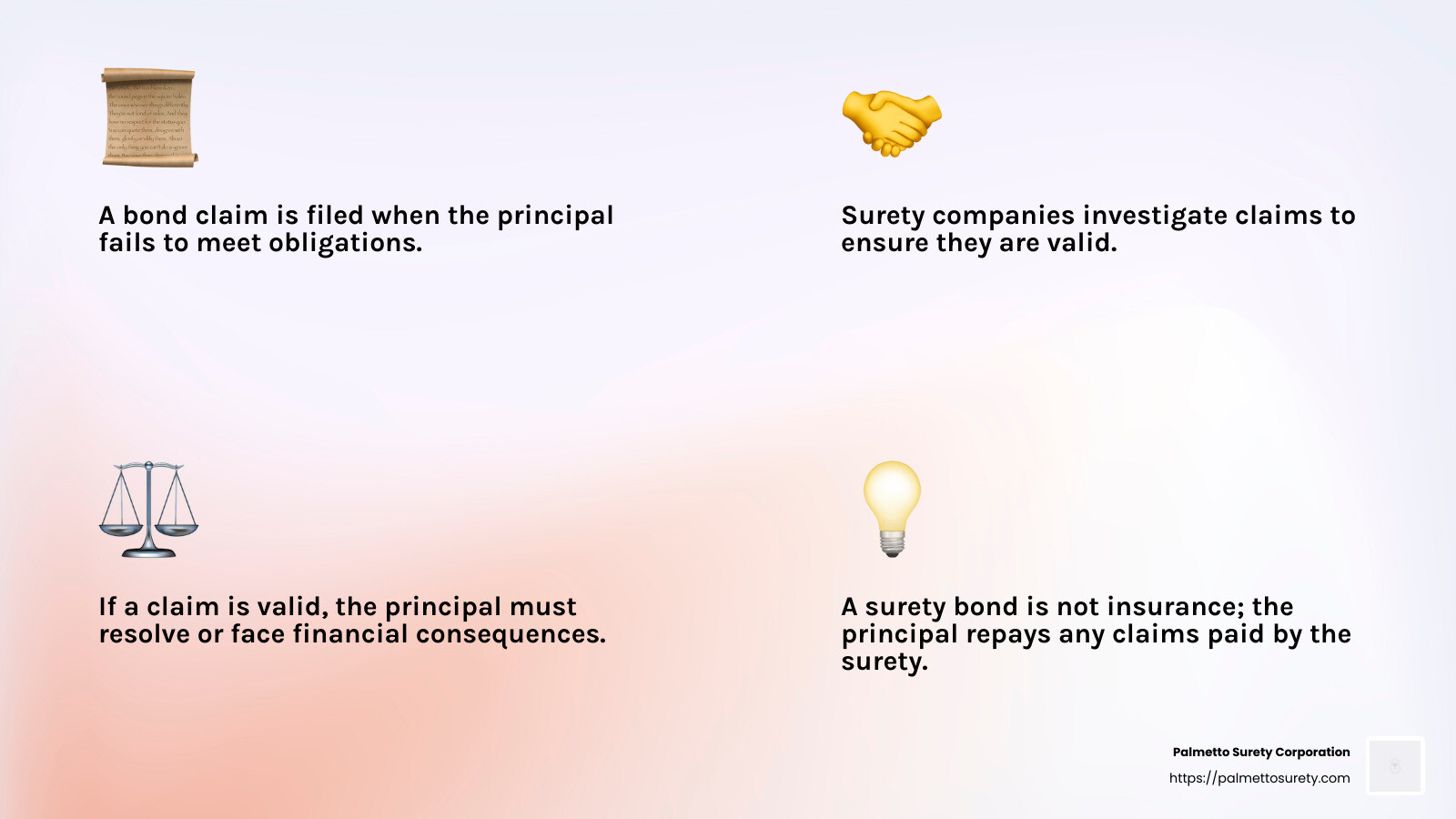
When it comes to bond claims, understanding the basics can save you time and stress. A bond claim is essentially a formal complaint that a party, known as the obligee, files against a bond. This happens when the principal—the party that purchased the bond—fails to meet their obligations. If you’re a business owner, it’s crucial to know that a claim can arise from intentional violations or even misunderstandings.
Surety Companies and Their Role
Surety companies play a pivotal role in the bond claim process. They act as a guarantor, ensuring that the principal fulfills their duties. If a claim is made, the surety will investigate to determine its validity. This means they will look into the details and decide whether the claim is justified.
-
Principal: The party responsible for fulfilling the bond’s terms.
-
Obligee: The party protected by the bond.
-
Surety: The company that issues the bond and investigates claims.
Obligations of the Principal
As a principal, you have specific obligations under your bond. If a claim is found valid, you must either resolve it, provide a valid defense, or face financial consequences. If you fail to address the claim, the surety may pay the obligee and then seek reimbursement from you. A surety bond is not insurance; you are expected to repay any claims settled by the surety.
Understanding these aspects of bond claims is essential for anyone involved in the process. It not only helps protect your interests but also ensures you know what to expect and how to respond if a claim arises.
Stay informed and proactive to steer the bond claim process smoothly.
How to Claim Your Bond Back
Navigating the process to claim your bond back can seem daunting, but breaking it down into manageable steps can make it straightforward. Whether you’re dealing with a payment bond on a public project or a rental bond, understanding the filing process and meeting deadlines is crucial.
Filing Process
The first step in claiming your bond refund is to gather all necessary documentation. This includes any preliminary notices you sent, contracts, invoices, and communication logs related to the bond. These documents serve as evidence to support your claim.
Once you have your paperwork in order, you need to file your claim with the surety company. This often involves submitting a sworn statement of claim along with your supporting documents. Be sure to follow any specific instructions provided by the surety to avoid delays.
Tip: Respond promptly to any requests from the surety for additional information. Delays in providing documentation can slow down the process significantly.
Meet the Deadlines
Meeting deadlines is critical in the bond refund process. Each state has its own timeline for filing bond claims, often dictated by the Little Miller Act for public projects. Missing these deadlines can forfeit your right to claim your bond back.
For example, some states require a preliminary notice to be sent at the start of the project, while others have specific deadlines for filing the actual claim. It’s important to check the specific rules in your state to ensure compliance.
Quick Facts
-
Documentation: Keep all related documents organized and accessible.
-
Timeliness: File claims and respond to requests without delay.
-
State-Specific Rules: Be aware of your state’s deadlines and requirements.
By following these steps and staying organized, you can effectively steer the process to claim your bond back. The key is preparation and promptness. This approach not only increases your chances of a successful refund but also minimizes stress and confusion.
Steps to Ensure a Successful Bond Refund
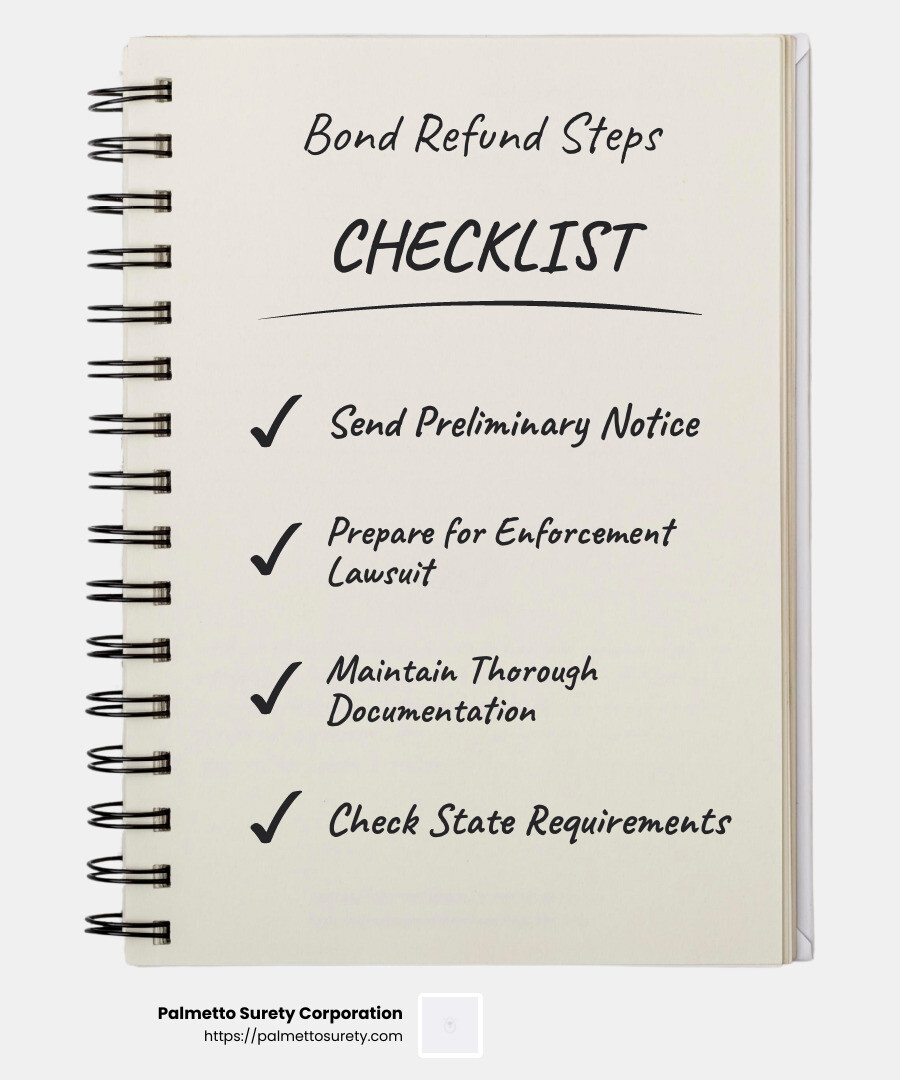
Once you’ve initiated the process to claim your bond back, there are several critical steps to follow to ensure success. These steps include sending a preliminary notice, preparing for a potential enforcement lawsuit, and maintaining thorough documentation.
Preliminary Notice
A preliminary notice is an essential first step in the bond refund process. This notice informs the surety and involved parties of your intent to claim the bond. It’s a proactive measure that can help expedite the refund process.
-
Why It’s Important: Sending a preliminary notice can sometimes be a legal requirement, especially in public projects. It serves as an official record of your claim and can protect your rights.
-
How to Send It: Make sure the notice includes all necessary details, such as the project name, your contact information, and a brief description of the claim. Check your state’s requirements to ensure compliance.
Documentation
Documentation is the backbone of a successful bond refund claim. Keeping meticulous records can make or break your case.
-
What to Include: Gather contracts, invoices, payment records, and any correspondence related to the bond. These documents provide evidence and support your claim’s validity.
-
Organizing Tips: Use digital tools to scan and organize documents. Keep copies in both electronic and paper formats to ensure accessibility.
Quote: “Proper documentation is not just an option; it’s a necessity for a successful bond claim.”
Enforcement Lawsuit
If your claim faces unreasonable delays or is denied, you may need to consider filing an enforcement lawsuit. This step should be your last resort after exhausting all other options.
-
When to File: Before moving to this step, ensure that you’ve complied with all requirements and deadlines. An enforcement lawsuit can be a lengthy and costly process, so it’s crucial to be prepared.
-
Legal Advice: Consult with a legal professional experienced in bond claims to guide you through the lawsuit process. They can help assess the strength of your case and advise on the best course of action.
Quick Tips
- Stay Proactive: Regularly follow up with the surety to check the status of your claim.
- Know the Rules: Each state has unique requirements and deadlines. Familiarize yourself with these to avoid potential pitfalls.
- Seek Help: Don’t hesitate to seek legal advice if you’re unsure about any part of the process.
By taking these steps seriously, you can improve your chances of a successful bond refund. Preparation, organization, and timely action are your best allies in this process.
Next, let’s address some frequently asked questions about bond refunds to clarify any lingering doubts.
Frequently Asked Questions about Bond Refunds
What is a bond claim?
A bond claim arises when someone believes that the obligations under a bond have not been met. This can occur in various situations, such as when a contractor fails to complete a project or a business does not adhere to licensing laws. The obligations of the principal (the party required to act) are key here. If these obligations aren’t fulfilled, the surety (the bond provider) might have to step in. However, unlike insurance, the principal must repay the surety for any claims paid out.
Can you refund a bond?
Yes, you can claim bond back, but the process varies depending on the type of bond. For instance, if you have a rental bond, you can apply for a refund through your state’s rental authority. For municipal securities, the process can be more complex. Municipal bonds are often refunded through a process called “refunding,” where old bonds are replaced with new ones, usually to take advantage of lower interest rates. This process involves issuing new bonds to pay off the old ones, effectively “refunding” the bondholders.
How does a company pay back a bond?
Companies repay bonds by making regular interest payments to bondholders, often semi-annually, until the bond reaches its maturity date. At maturity, the company repays the face value of the bond to the bondholders. This repayment structure is crucial for investors as it provides a predictable income stream and a return of principal at the end of the bond’s term. For municipal bonds, the repayment might involve complex financial strategies, including the use of new bonds to pay off existing ones, as mentioned earlier in the refunding process.
By understanding these elements, you can steer the bond refund process more effectively and make informed decisions about your financial engagements.
Conclusion
At Palmetto Surety Corporation, we pride ourselves on delivering quick and efficient service to our clients. With over 20 years of experience in the commercial surety and bail bond industry, we understand the importance of surety bonds in protecting businesses and ensuring obligations are met. Our expertise spans various industries, including construction, manufacturing, transportation, and healthcare, allowing us to cater to a diverse range of needs.
What sets us apart is our ability to approve most applications within hours. This speed not only saves time but also provides peace of mind, knowing that your bond needs are in capable hands. Whether you’re looking to secure a surety bond for a construction project or need a bail bond through our extensive network of agents, we have you covered.
For those looking to claim bond back, understanding the process is key. We are here to guide you through every step, ensuring that you have the support and information you need to successfully steer the bond refund process.
Explore our services and learn more about how we can assist you by visiting our website. Let us help you secure your business and meet your obligations with confidence.
Thank you for choosing Palmetto Surety Corporation as your trusted partner in surety bonds.


