


Tenant Bond Return: 5 Essential Tips for 2025 Success
Understanding Tenant Bonds
Tenant bonds, often referred to as rental bonds or security deposits, are essential components of rental agreements. They offer a layer of financial protection for landlords while also incentivizing tenants to uphold their lease obligations. Let’s break down the key elements of tenant bonds:
What is a Tenant Bond?
A tenant bond is a sum of money that a tenant provides to a landlord at the beginning of a lease. This bond acts as a form of insurance for the landlord. If the tenant fails to pay rent, causes damage beyond normal wear and tear, or breaches the lease agreement, the landlord can use this bond to cover those costs.
How Much is a Tenant Bond?
Typically, the amount of a tenant bond is equivalent to one month’s rent. However, this can vary depending on local laws and the terms of the lease. Some areas might allow landlords to charge more, especially if the property comes with higher risks or additional amenities.
Why are Tenant Bonds Important?
Financial Protection: The primary purpose of a tenant bond is to protect the landlord from financial losses. It ensures that funds are available to cover any damages or unpaid rent.
Tenant Accountability: Knowing that their bond is at stake encourages tenants to take better care of the property and adhere to lease terms.
The Tenant Bond Return Process
Conditions for Bond Return
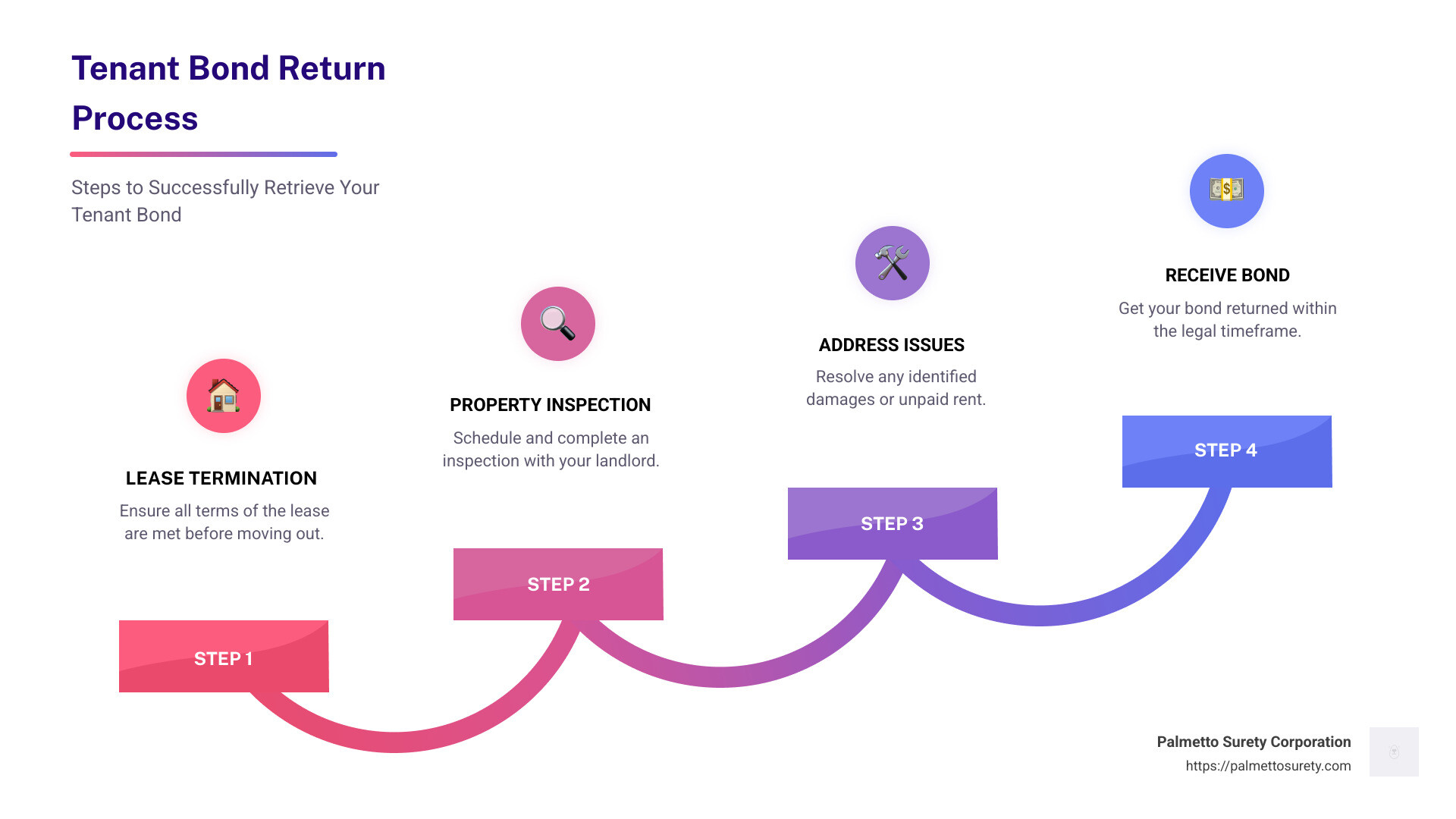
When a lease concludes, the tenant bond return process begins. Initially, the landlord performs a property inspection to identify any damages beyond normal wear and tear. It’s essential to differentiate between normal wear and tear, which is anticipated, and actual damages, which may require repair.
-
Normal Wear and Tear: This includes minor scuffs on walls or the natural fading of paint due to sunlight. These typically do not justify deductions from the bond.
-
Damages: These could be broken windows, large holes in walls, or significant stains on carpets. If such damages are present, the landlord may deduct repair costs from the bond.

Additionally, the landlord will verify if there is any unpaid rent. If the tenant owes rent, this amount can also be deducted from the bond. Tenants should ensure all rent is paid up to the lease termination date to avoid deductions.
Timeframes for Bond Return
After the inspection, the landlord must process the bond return within a specific timeframe. In most areas, landlords have 30 days from the lease termination to return the bond. This period allows time for inspections and any necessary repairs or calculations.
-
Certified Mail: Some states require landlords to send the bond return, along with an itemized statement of any deductions, via certified mail. This ensures both parties have a record of the transaction.
-
Interest: In certain regions, the bond must accrue interest while held. The rate and conditions for this can vary, so tenants should check local regulations. If applicable, landlords should include any earned interest in the bond return.
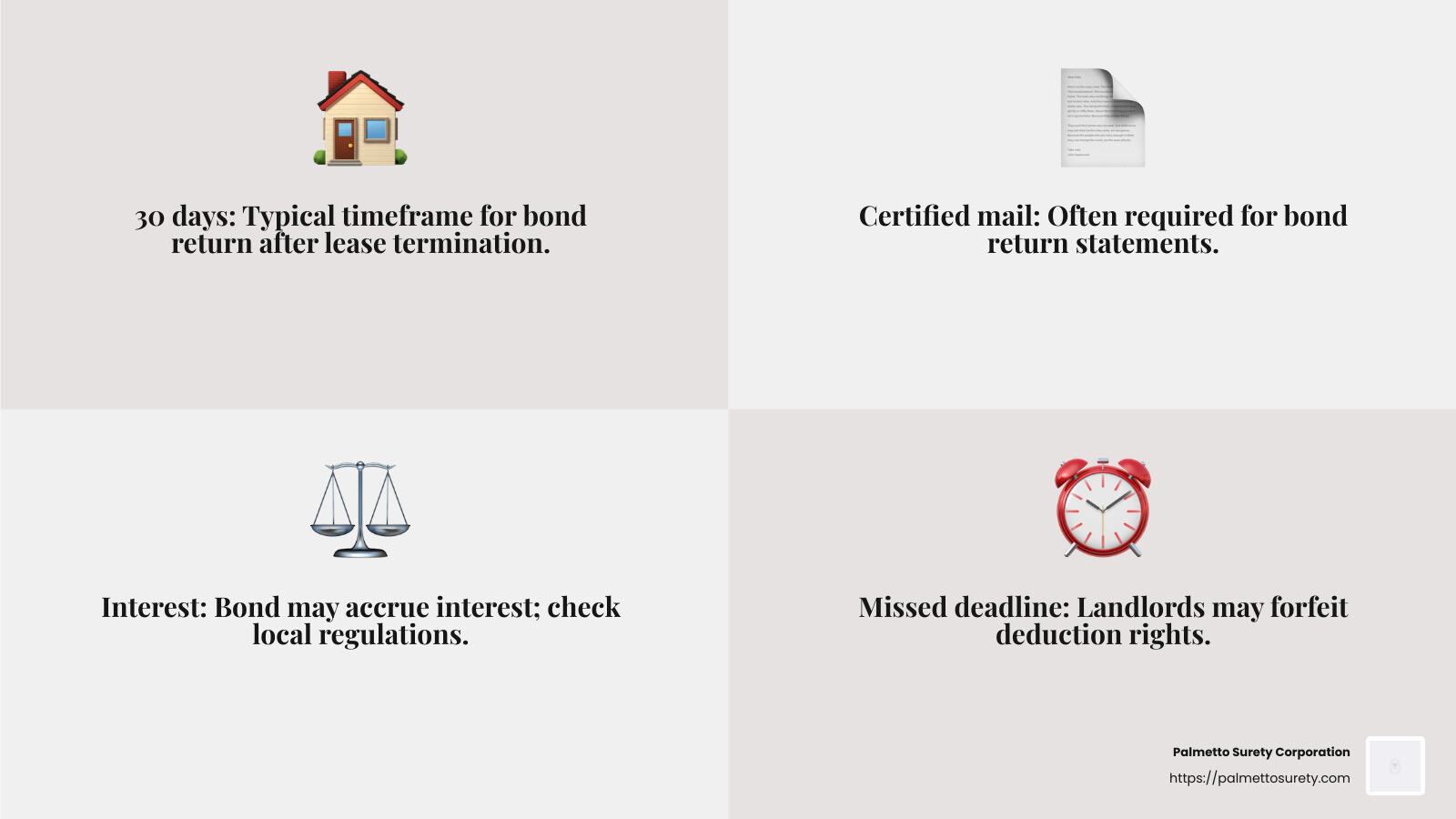
If the landlord fails to return the bond within the specified timeframe, they may forfeit the right to make any deductions. This emphasizes the importance of landlords adhering to the timeline and ensures a fair process for tenants.
Legal Obligations and Rights
Handling Disputes
Understanding the legal obligations and rights in the tenant bond return process is essential for both tenants and landlords. Here’s what you need to know to handle disputes effectively.
Tenant Rights and Landlord Responsibilities
Tenants are entitled to receive their bond back, minus any legitimate deductions, such as unpaid rent or damages. Landlords must provide an itemized list of these deductions and return any remaining bond within the agreed timeframe, typically 30 days.
If landlords do not fulfill these obligations, tenants have several options for recourse:
-
Mediation Services: This is a less formal way to resolve disputes. A neutral third party assists both sides in reaching an agreement. Mediation can be quicker and less costly than going to court.
-
Small Claims Court: If mediation is unsuccessful, tenants can file a claim in small claims court. This option is best for straightforward cases with clear evidence, like unpaid deductions or failure to return the bond.
-
Legal Advice: In complex cases, consulting with an attorney can be beneficial. They can offer guidance on tenant rights and help build a strong case if court action is necessary.
Interest on Deposits
In some areas, landlords are required to keep tenant bonds in interest-bearing accounts. If so, tenants are entitled to this interest upon bond return, minus any allowable administrative fees. For example, a landlord might deduct a 1% fee from the interest as an administrative charge.
Preventing Disputes
To avoid disputes, both parties should:
-
Document Everything: Keep records of payments, communications, and condition reports. This documentation can be vital in resolving disagreements.
-
Communicate Clearly: Open communication can prevent misunderstandings. Discuss any potential issues before they escalate into disputes.
Handling disputes over tenant bond returns can be challenging. However, by understanding your rights and responsibilities, and exploring mediation or legal avenues, you can work towards a fair resolution.
Frequently Asked Questions about Tenant Bond Return
What happens if the landlord does not return the bond in 30 days?
When a tenant moves out, landlords have an obligation to return the bond, often within 30 days. If this doesn’t happen, tenants have rights to protect themselves.
Landlord Obligations
- Provide an Itemized Statement: Landlords must provide a detailed list of any deductions from the bond, such as for damages or unpaid rent.
- Return the Remaining Bond: After deductions, the remaining bond amount should be returned to the tenant promptly.
If a landlord fails to do this within 30 days, they may lose the right to keep any portion of the bond. Tenants can then pursue mediation or file a claim in small claims court to recover their money.
Can a tenant use the bond for the last month’s rent?
Using the bond as the last month’s rent might seem convenient, but it’s usually not allowed unless explicitly stated in the lease agreement.
Lease Agreement and Rental Payments
- Lease Terms: Most lease agreements specify that the bond cannot be used for rent payments. This ensures the bond is available to cover any damages or unpaid rent after moving out.
- Rental Payments: Tenants must continue to pay rent as usual until the end of the lease term.
Always check your lease agreement for any specific terms regarding the use of the bond for rent, and discuss with your landlord if you need clarification.
How is interest on a tenant bond calculated?
In some areas, landlords are required to hold tenant bonds in interest-bearing accounts. Here’s how the interest is typically calculated:
Interest Rate and Administrative Fee
- Interest Rate: The bond may earn interest over the period it’s held. The rate is usually set by local regulations.
- Administrative Fee: Landlords can often deduct a small administrative fee from the earned interest before returning it to the tenant. For example, a 1% fee might be common.
The exact rules can vary, so it’s important for both landlords and tenants to understand the local laws regarding interest on tenant bonds. This ensures transparency and fairness in the bond return process.
Conclusion
As we wrap up our discussion on tenant bond return, it’s clear that understanding this process is crucial for both landlords and tenants. The bond serves as a financial safety net, ensuring that properties are maintained and obligations are met. For landlords, knowing the ins and outs of bond returns can prevent disputes and ensure a smooth transition at the end of a lease.
At Palmetto Surety Corporation, we understand the importance of efficiency and reliability in financial matters. Our expertise in providing surety bonds across various industries means we know how to steer complex requirements with ease. Whether you’re a landlord needing assurance or a business seeking compliance, our quick and efficient service can meet your needs.
Our commitment to excellence ensures that applications are approved swiftly, often within hours. This allows our clients to focus on what they do best, without the hassle of lengthy processes.
For more information on how we can assist you with your surety bond needs, visit our Palmetto Surety Corporation service page and experience our seamless service firsthand.
In conclusion, understanding the tenant bond return process is just one of the many ways landlords can ensure a successful leasing experience. With the right knowledge and support, handling bonds can be straightforward and stress-free.


