


Notary Bond Cost: Top Guide for 2025 Savings!
Notary Bond Cost is a crucial factor for anyone embarking on the path to becoming an official notary. A notary serves as an impartial witness, verifying the authenticity of signatures on important legal documents. They are vital in preventing fraud in transactions such as real estate deals, wills, and affidavits. Before starting their duties, notaries are required to secure a surety bond. Here’s a concise overview of what you need to know about Notary Bond Cost:
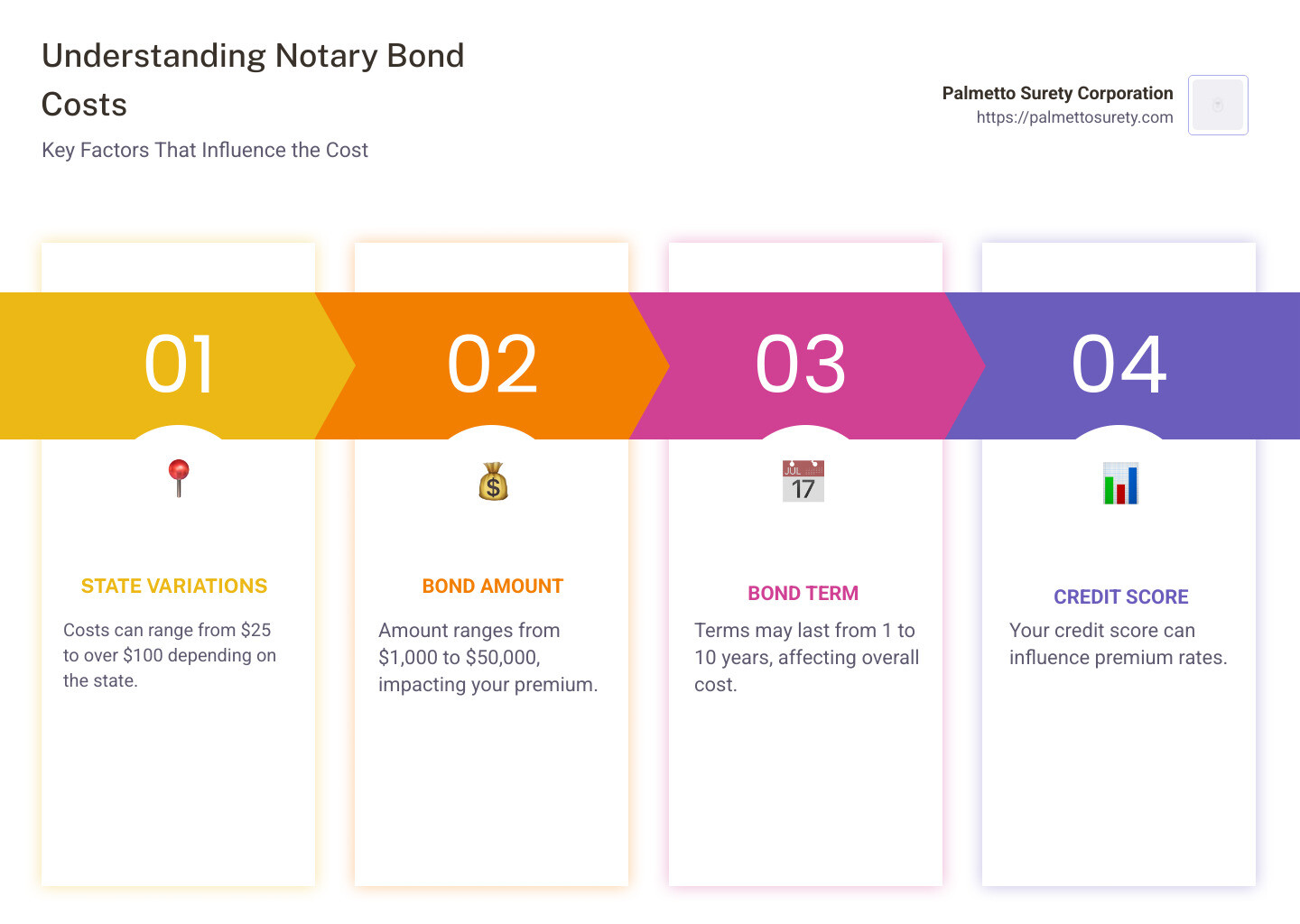
- Costs vary by state, ranging from $25 to over $100.
- Bond terms can last from 1 to 10 years.
- Bond amounts differ, typically from $1,000 to $50,000.
- Additional costs may include Errors and Omissions (E&O) insurance, which is optional but can protect notaries from personal financial liability.
Understanding notarial duties and bond requirements is essential for anyone considering a career as a notary. I’m Haiko de Poel Jr., an expert in simplifying complex topics like Notary Bond Cost through strategic marketing. With experience in refining processes at leading companies, I’m here to help you navigate this financial landscape with confidence.
Basic Notary Bond Cost vocab:
Understanding Notary Bonds
When you think about a notary bond, picture a safety net for clients. This bond is a type of surety bond that notaries must have before they start notarizing documents. It ensures that the notary will act honestly and ethically, offering protection to clients against any mistakes or fraudulent actions.
What is a Surety Bond?
A surety bond is not just a piece of paper. It’s a promise—a legal agreement involving three parties:
- Principal: The notary public who needs the bond.
- Obligee: The state or public entity requiring the bond.
- Surety: The company that backs the bond, assuring the obligee that the principal will fulfill their obligations.
If a notary fails in their duties, the client can file a claim. The bond covers financial losses, ensuring clients are protected.
Role of a Notary Public
A notary public acts as an impartial witness during the signing of important documents. They verify identities, ensure all parties understand the document, and that everyone involved is signing voluntarily. This role is crucial in preventing fraud and ensuring trust in transactions.
Example: Imagine buying a house. A notary verifies the identities of the buyer and seller, ensuring both parties agree to the terms. This step prevents any fraudulent claims later on.

Client Protection
The main goal of a notary bond is client protection. It provides a safety net for clients against errors or fraudulent practices by the notary. If a mistake happens, the client can claim compensation through the bond.
Important Note: While a notary bond protects clients, it doesn’t cover the notary’s personal liability. That’s where Errors and Omissions (E&O) insurance comes into play, covering the notary if they make a mistake.
Understanding the importance of notary bonds helps ensure that the notary public performs their duties with integrity and accuracy, safeguarding the interests of all parties involved.
Notary Bond Cost
When it comes to Notary Bond Cost, several factors come into play. The cost isn’t a one-size-fits-all; it varies based on a few key elements like state regulations, bond amount, and even your credit score.
Factors Affecting Notary Bond Cost
State Regulations: Different states have different requirements for notary bonds. These regulations can influence both the bond amount and the premium rates. For instance, in Texas, a notary is required to have a $10,000 bond, while Alabama requires a $50,000 bond.
Bond Amount and Term: The bond amount is the maximum coverage offered by the bond. Higher bond amounts generally mean higher premiums. The term of the bond—how long it lasts—also affects the cost. A longer term might have a higher upfront cost but could save money over time compared to renewing frequently.
Credit Score: Yes, your credit score can impact the cost of your notary bond. A better credit score might help you secure a lower premium rate. This is because the surety company views you as a lower risk.
Typical Costs by State
Let’s take a look at some typical costs in different states to give you an idea of what you might expect:
-
Alabama: The cost for a 4-year, $50,000 notary bond is $100. This is one of the higher bond amounts, reflecting the state’s requirement to ensure thorough client protection.
-
California: Here, a notary bond costs $50 for a 4-year term with a bond amount of $15,000. This cost includes delivery via US Mail or FedEx, as digital copies are not accepted by the state.
-
Texas: For a 4-year, $10,000 bond, the cost is $50. This is a common bond amount among states, balancing affordability with sufficient coverage.
-
Florida: Notaries in Florida pay $99 for a 4-year, $7,500 bond. This reflects the state’s lower bond amount requirement compared to others like Alabama.
These examples illustrate the variation in Notary Bond Cost across different states, influenced by specific state regulations and bond requirements. Understanding these factors can help you anticipate what you might pay for a notary bond in your state.
Notary Bond vs. Errors and Omissions Insurance
When you’re a notary, understanding the difference between a notary bond and Errors and Omissions (E&O) insurance is crucial. Both offer protection, but they serve different purposes.
Notary Bond: Protecting the Public
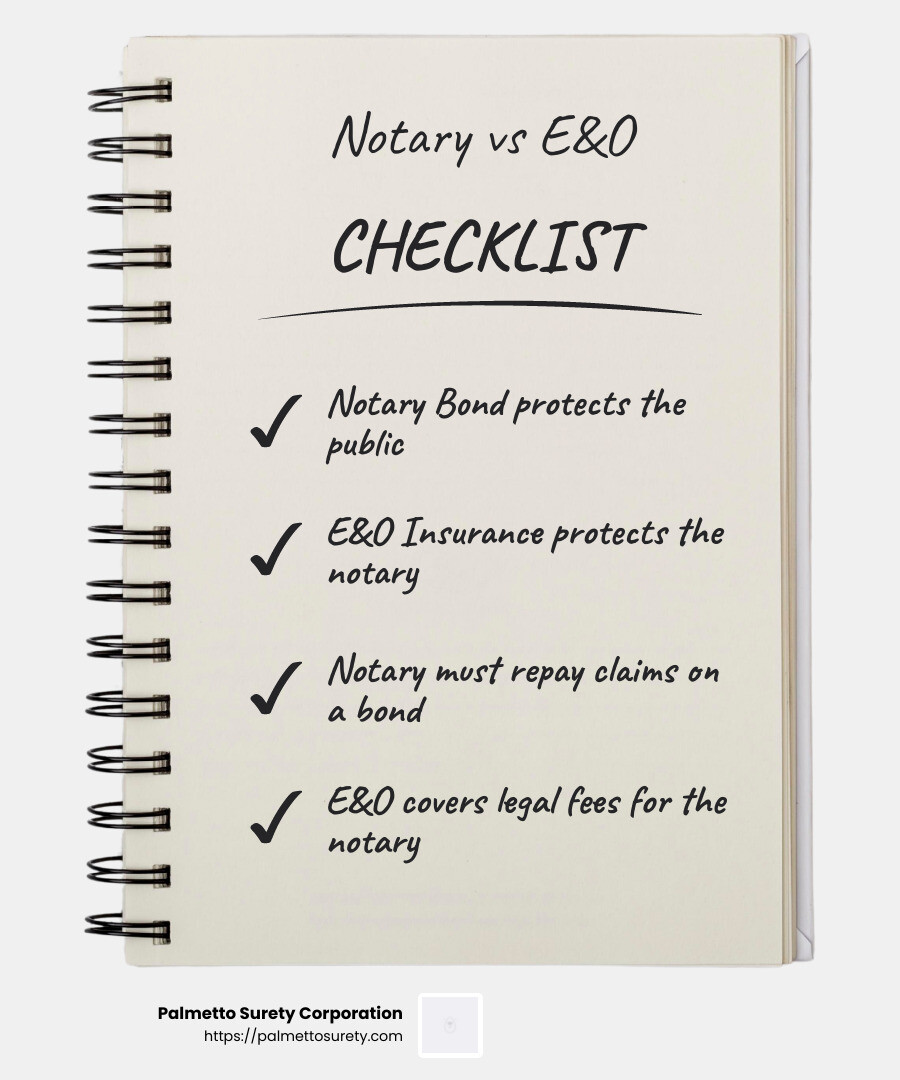
A notary bond is a type of surety bond. Its main purpose is to protect the public from any mistakes or misconduct by the notary. If a notary makes an error or engages in fraud, the person affected can make a claim against the bond. The bond ensures that the affected party can recover financial losses up to the bond amount.
However, it’s important to note that the notary is ultimately responsible for reimbursing the surety company for any claims paid out. This means that while the public is protected, the notary is not shielded from financial liability.
Errors and Omissions Insurance: Protecting the Notary
On the other hand, Errors and Omissions Insurance is designed to protect the notary themselves. This insurance covers the notary’s legal fees and settlements if they are sued for an error or omission in their duties. Unlike a notary bond, E&O insurance does not require the notary to repay the insurance company for covered claims.
E&O insurance is not typically required by law, but it can be a wise investment. In some states, like Texas, notaries have unlimited personal financial liability for errors. In such cases, having E&O insurance can be a financial lifesaver.
Financial Liability: Who Bears the Cost?
The key difference between the two lies in who bears the financial liability. With a notary bond, the notary must pay back any claims made against the bond. This makes it more like a line of credit than traditional insurance. In contrast, E&O insurance shifts the financial burden away from the notary, providing peace of mind and financial protection.
Understanding these differences can help you make informed decisions about your notarial practice. Whether you choose to invest in E&O insurance in addition to your required notary bond can depend on your state’s regulations and your personal risk tolerance.
In the next section, we’ll explore how to purchase a notary bond and what options are available to you.
How to Purchase a Notary Bond
Purchasing a notary bond is a straightforward process, especially when you use a service like Palmetto Surety Corporation. This service simplifies the steps and offers quick delivery options.
Application Process
-
Choose Your Provider: Start by selecting a reliable provider like Palmetto Surety Corporation. They offer bonds from national A-rated carriers, ensuring quality and trustworthiness.
-
Determine Your State Requirements: Notary bond requirements differ by state. For instance, a notary in Texas requires a $10,000 bond, while in California, it’s $15,000. Make sure you know your state’s specific requirements before proceeding.
-
Fill Out the Application: Complete an online application with your personal and professional details. This usually includes your name, contact information, and the state where you will perform notary duties.
-
Pay the Premium: The cost of your notary bond, or Notary Bond Cost, depends on your state and the bond amount. For example, a 4-year term bond in Texas costs $50. Ensure you have this information ready when you apply.
-
Receive Your Bond: Once your payment is processed, your bond will be sent to you. Palmetto Surety Corporation offers instant download options for many states, meaning you can receive your bond via email almost immediately. For states requiring a physical seal, the bond may be sent via mail or FedEx.
Delivery Options
-
Instant Download: In many states, you can receive your bond digitally, allowing you to print it immediately. This is fast and convenient, especially if you’re in a hurry.
-
Mail or FedEx Delivery: Some states require a bond with an embossed or raised seal. For these, Palmetto Surety Corporation will mail your bond to you. This option might take a bit longer, so plan accordingly.
With these steps, purchasing a notary bond is efficient and hassle-free. Whether you need a bond quickly or require a physical copy, Palmetto Surety Corporation provides options that cater to your needs.
In the next section, we’ll tackle some frequently asked questions about notary bond costs to help you further understand this important aspect of your notarial duties.
Frequently Asked Questions about Notary Bond Costs
How much does a $10,000 notary bond cost?
The Notary Bond Cost for a $10,000 bond varies by state. For example, in Texas, a $10,000 notary bond costs $50 for a 4-year term. Meanwhile, in states like Michigan and Missouri, the cost is $30 and $40 respectively, also for a similar term. These variations are due to differences in state regulations and the bond amounts required.
What is the difference between a notary bond and a surety bond?
A notary bond is a specific type of surety bond that notaries public must obtain to protect their clients from financial harm due to errors or misconduct. Essentially, a notary bond acts as a safety net for the public, ensuring that the notary fulfills their duties lawfully.
A surety bond is a broader term that applies to various types of bonds used in different industries to guarantee performance or compliance with regulations. While all notary bonds are surety bonds, not all surety bonds are notary bonds. The key difference lies in their scope and purpose.
Do I need errors and omissions insurance with my notary bond?
While not legally required, Errors and Omissions (E&O) Insurance is highly recommended for notaries. Unlike a notary bond, which protects the public, E&O insurance protects you, the notary, from personal financial liability in case of an error or omission. This insurance can cover legal fees and damages, offering an extra layer of financial protection.
Each state has its own regulations regarding notary liability. For instance, in Texas, notaries have unlimited personal financial liability for errors, making E&O insurance particularly beneficial. It’s wise to check your state’s requirements and consider how E&O insurance can safeguard your assets.
Conclusion
Choosing the right notary bond is essential for protecting both your clients and yourself. At Palmetto Surety Corporation, we understand the importance of quick and efficient service. With over 20 years of experience in the commercial surety industry, we specialize in providing fast approvals and streamlined processes for obtaining notary bonds.
Our team is dedicated to making the Notary Bond Cost process as simple and stress-free as possible. We aim to approve most applications within hours, ensuring you can focus on your notarial duties without unnecessary delays.
Whether you’re in Florida, Georgia, Louisiana, Mississippi, South Carolina, Tennessee, or Texas, our network of experienced agents is ready to assist you. We pride ourselves on our commitment to customer satisfaction and our ability to offer custom solutions for your bonding needs.
If you have any questions or need assistance, don’t hesitate to reach out. We’re here to help you every step of the way. Secure your notary bond with confidence and enjoy the peace of mind that comes with choosing Palmetto Surety Corporation.


