


Get Bond Back: Top 5 Essential Steps for 2025
When you get bond back, a perplexing journey through the bail system unfolds. Understanding how to reclaim bond money can make a significant difference in a person’s path to justice. Here’s the essence:
-
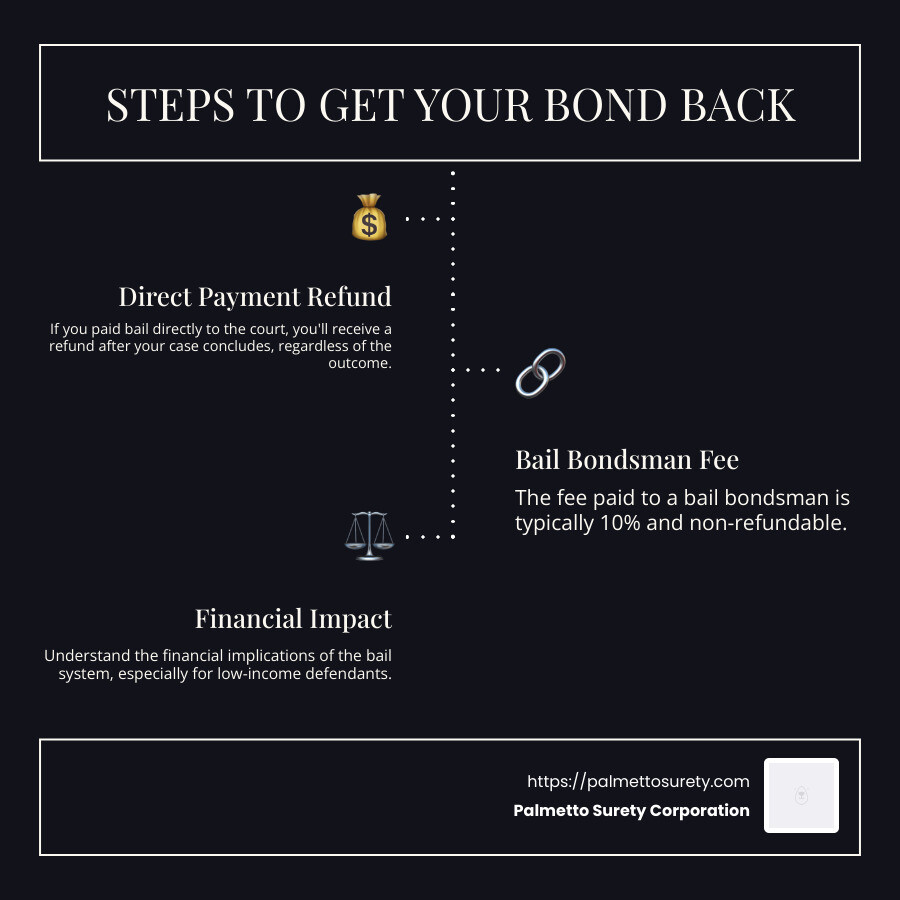
Direct Payment Refund: If you paid the bail amount directly to the court, expect a refund after the case resolves, regardless of the trial’s outcome.
-
Bail Bonds: Paying a bail bondsman only gets you out of jail; the fee, usually 10%, is non-refundable.
The bail system in the U.S., though designed to secure court appearances, often tilts unfairly against those without financial means. It burdens low-income defendants, sometimes forcing them to remain incarcerated pre-trial or lose money they can’t afford.
I’m Haiko de Poel Jr., a seasoned expert in the bail and bond arena. With years of experience helping individuals and businesses steer these challenges, I know how daunting the quest to get bond back can be. Stay with us as we solve this process further.
Simple guide to get bond back:
– bond refund process
– bond refund time
– bond refund contact
Understanding Bail and Bonds
Navigating bail and bonds can be confusing. Let’s break it down into simple terms.
Bail vs. Bond
Bail is a sum of money paid directly to the court to secure a defendant’s release from jail while awaiting trial. It acts as a promise that the defendant will return for their court dates. If they attend all required hearings, the bail money is refunded, minus any fees or penalties.

Bond, on the other hand, is an agreement involving a third party, usually a bail bondsman. When you can’t afford to pay the full bail amount, you can turn to a bail bondsman. They pay the bail on your behalf in exchange for a non-refundable fee, typically around 10% of the total bail amount. This service allows you to avoid staying in jail before your trial, but remember, the fee is not returned, even if you attend all court dates.
Cash Bail
Cash bail is straightforward. You or someone on your behalf pays the full bail amount in cash to the court. This is a direct transaction with the court, meaning if you comply with all court requirements, you get the bond back, minus any deductions for court fees or fines. It’s a clean process, but the upfront cost can be steep.
Bail Bondsman
A bail bondsman is a professional who provides bail bond services. They charge a fee to post bail on your behalf. This fee is their compensation for taking on the risk that you might not show up for court. If you do skip town, they may use collateral you’ve provided to cover their loss.
Key Points:
- Cash Bail: You pay the full amount to the court and get it refunded if you meet all conditions.
- Bail Bond: You pay a fee to a bail bondsman, and they cover the bail. The fee is non-refundable.
The bail system is designed to ensure defendants appear in court, but it often imposes financial burdens, especially on low-income individuals. Understanding these options can help you make informed decisions if you or someone you know faces arrest.
Steps to Get Bond Back
Getting your bond back can be a straightforward process if you know what steps to follow. Here’s how you can ensure you receive your bond refund:
Court Compliance
First and foremost, court compliance is crucial. Attending all your court dates and fulfilling any other legal obligations is the key to getting your bond back. Missing a court date can lead to bond forfeiture, meaning you could lose the entire amount.
Tip: Keep a calendar or reminder system to ensure you don’t miss important court appearances.
Refund Process
The refund process begins once your case concludes, provided you’ve complied with all court requirements. If you posted cash bail directly, the court will refund the amount, minus any deductions. To initiate the process, you may need to fill out a Motion for Disbursement of Bond form.
For those who used a bail bond, remember the fee paid to the bail bondsman is non-refundable. However, if you provided collateral, such as property or a vehicle, it should be returned once the case is settled.
Deductions
When you get your bond back, be aware there may be deductions. These can include:
- Court Fees: Even if you comply with all conditions, the court may deduct administrative fees from your bond.
- Fines or Restitution: If the court imposes fines or restitution, these amounts might be taken out of your bond refund.
- Legal Expenses: Any additional legal costs ordered by the court could also be deducted.
Example: If you posted a $1,000 cash bail and the court fees total $100, you would receive a refund of $900, assuming no other deductions.
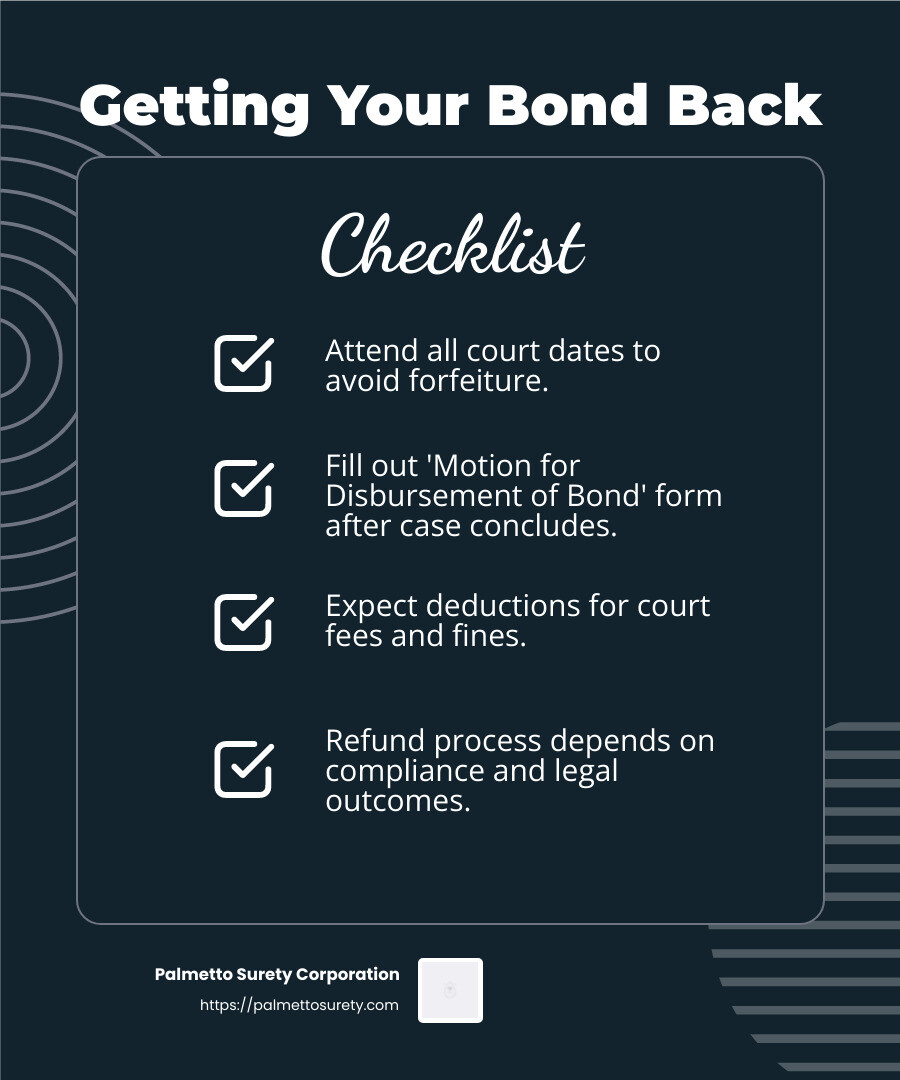
These steps are essential for ensuring you can get bond back smoothly. Always keep track of court communications and maintain records of all transactions related to your bail or bond. This will help you steer the refund process with ease.
Factors Affecting Bond Refunds
When you’re trying to get bond back, several factors can impact how much you actually receive. Let’s break down the key elements that can affect your bond refund:
Court Fees
Court fees are often deducted from your bond before it’s refunded. These fees cover administrative costs and are standard in many jurisdictions. Even if you’re found not guilty, you may still be responsible for these fees.
Example: If your bond was $1,000 and the court fees are $150, you would receive $850 back.
Penalties
Penalties can also reduce the amount of your bond refund. If you violate any court orders or conditions of your release, the court might impose penalties. These penalties could be subtracted from your bond.
Tip: Always adhere to the conditions set by the court to avoid unnecessary penalties.
Legal Outcomes
The legal outcome of your case plays a significant role in the bond refund process. If you’re found guilty, the court might use part of your bond to cover fines or restitution. However, if charges are dropped or you’re acquitted, you should receive most of your bond back, minus any applicable fees.
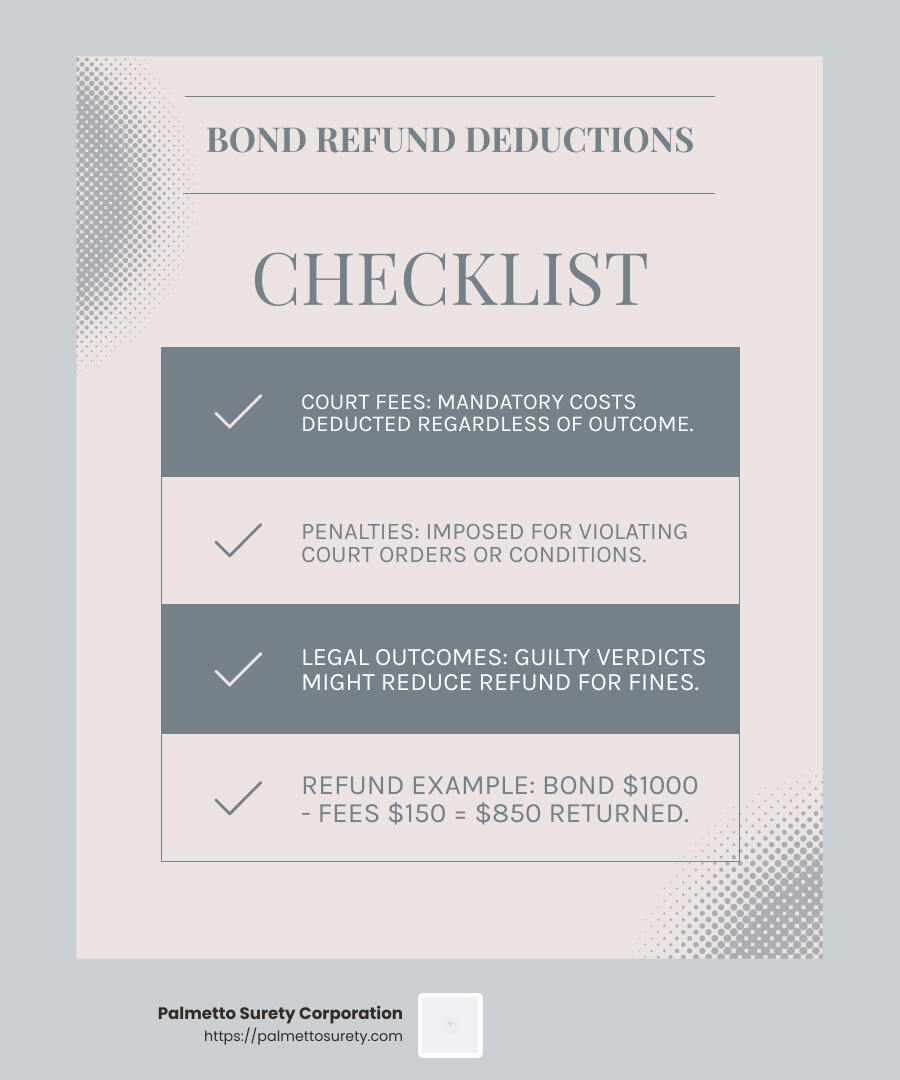
Deductions Overview
Here’s a quick look at potential deductions from your bond:
- Court Fees: Mandatory costs that are deducted regardless of the case outcome.
- Fines or Restitution: Applied if you’re found guilty or as part of a settlement.
- Penalties: For failing to meet court conditions or obligations.
Understanding these factors helps you better navigate the process to get bond back. Always check with your legal advisor or the court for specific details related to your case to ensure a smooth refund process.
Frequently Asked Questions about Getting Bond Back
How do I get my bail money back?
Getting your bail money back is all about court compliance. If you attended all required court dates and followed the court’s instructions, you’re generally eligible for a refund. However, the refund process can vary depending on the type of bail you used.
- Cash Bail: If you paid cash bail, you’ll receive a refund minus any court fees or penalties. The refund process usually takes 2 to 3 months.
- Bail Bonds: If you went through a bail bondsman, the premium you paid is non-refundable. The full bail amount is returned to the bondsman, not to you.
To start the refund process, you’ll often need to fill out a specific form, such as a “Motion for Disbursement of Bond.”
Are bail and bond the same thing?
While people often use “bail” and “bond” interchangeably, they are not the same.
- Bail is the amount set by the court to ensure you attend your trial. You can pay this amount directly to the court.
- Bond involves a third party, like a bail bondsman, who guarantees the court you will appear. The bondsman charges a non-refundable fee (usually about 10% of the bail amount) for this service.
The main financial difference is that cash bail is refundable if you comply with court conditions, while the bond premium is not.
What happens if I miss a court date?
Missing a court date can lead to forfeiture of your bail or bond. This means you lose the money you’ve put up as a guarantee.
- Court Obligations: It’s crucial to meet all court obligations to avoid forfeiture. If you know you’ll miss a date, contact your attorney immediately to reschedule.
- Consequences: If you skip a court date without notifying your legal advisor, the court can issue a warrant for your arrest, and you may lose your bail entirely.
Staying on top of your court schedule is essential to ensure you can get bond back and avoid additional legal troubles.
By understanding these aspects, you can better steer the bail and bond system, ensuring a smoother process when trying to reclaim your money. Always consult with your legal advisor for specific guidance custom to your situation.
Conclusion
At Palmetto Surety Corporation, we believe in the principles of equitable justice and providing financial solutions that ease the burden of navigating the legal system. Our mission is to help you through the complexities of bail and bond processes, ensuring you have the support and guidance needed to manage your financial commitments effectively.
Equitable Justice is at the heart of what we do. We understand that the bail system can be daunting and financially taxing. Our services are designed to offer a fair chance for everyone to secure their release while awaiting trial, without causing undue financial stress.
Our financial solutions are custom to meet your needs quickly and efficiently. With over 20 years of experience, we specialize in providing a wide range of surety bonds across various industries, including construction, manufacturing, and healthcare. Our quick approval process means you won’t be left waiting in uncertainty.
By partnering with us, you gain access to a network of experienced bail agents and bond agents who are committed to helping you get your bond back with minimal hassle. Our team is here to guide you every step of the way, ensuring that you fulfill court obligations and steer the refund process smoothly.
For more information on securing your bond refund and exploring our services, visit our Palmetto Surety Corporation page. Let us help you find the financial solutions you need for a fair and just outcome.


