


Bail Enforcement Agent: 5 Crucial Facts in 2025
Bail enforcement agents, often known as bounty hunters, play a crucial role in the U.S. justice system. They locate and apprehend fugitives who have skipped bail, ensuring they return to face the court. This profession is unique to the United States due to its historical roots and current legal framework that permits their operations. Unlike police officers, bail enforcement agents work for bail bond agents and operate under different legal standards.
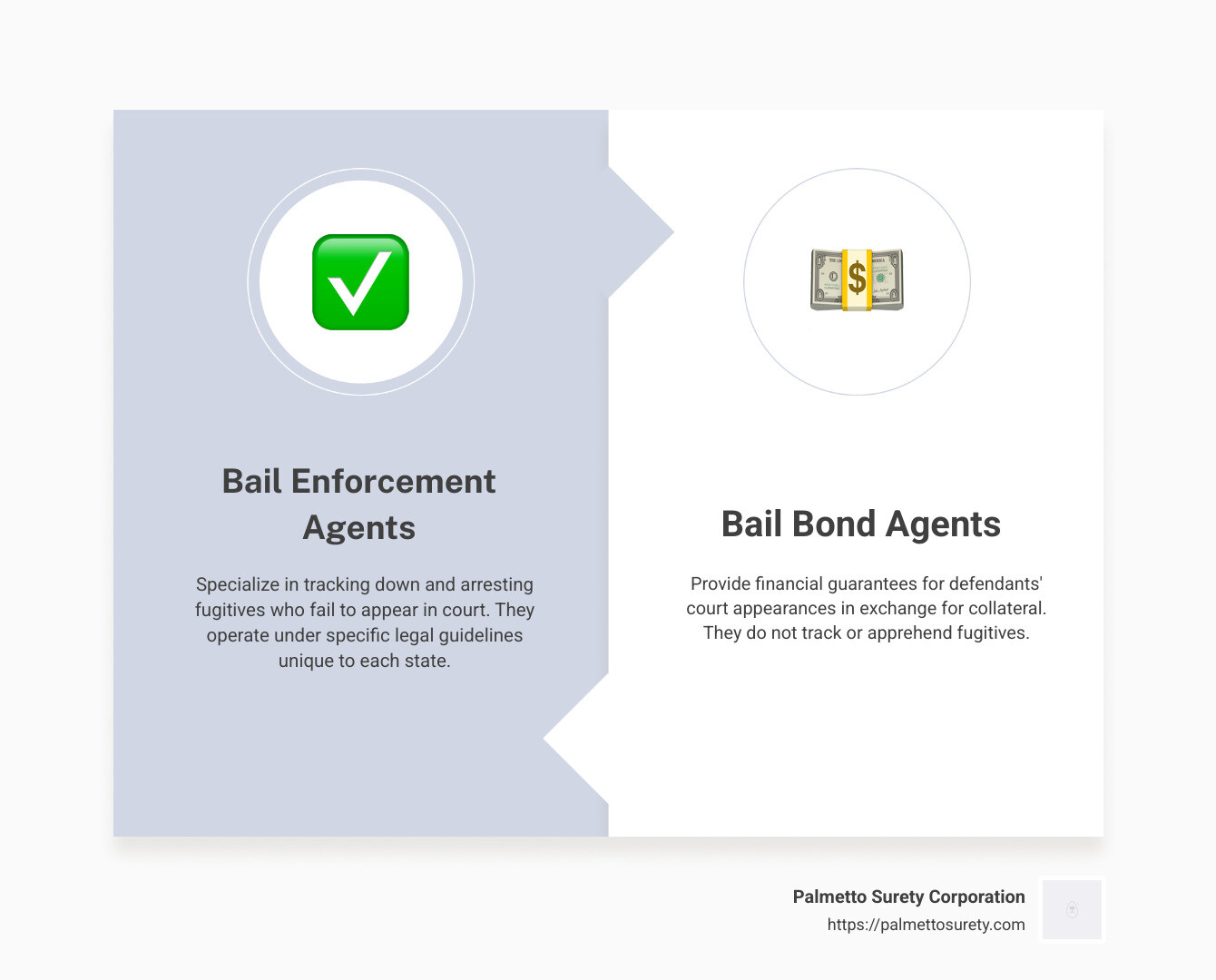
- Bail Enforcement Agents: Specialize in tracking down and arresting fugitives who fail to appear in court.
- Bail Bond Agents: Provide financial guarantees for defendants’ court appearances in exchange for collateral.
- Bounty Hunters: Another name for bail enforcement agents, reflecting their pursuit of fugitives for a financial reward.
While the role of a bail enforcement agent might sound thrilling, it requires extensive knowledge of legal limitations and an understanding of state-specific laws. The profession involves often-dangerous tasks that require both physical skills and strategic thinking. Palmetto Surety Corporation understands the importance of this role and provides the necessary support for bail agents in the southeastern United States.
As Haiko de Poel Jr, an expert in marketing and digital change, and with my experience at Palmetto Surety Corporation, I’ve seen how understanding the role of a bail enforcement agent can significantly impact your business success and legal compliance. This introduction serves as a gateway to deeper insights into the work and challenges faced by these agents.
Understanding the Role of a Bail Enforcement Agent
Responsibilities and Duties
A bail enforcement agent is responsible for locating and apprehending fugitives who have failed to appear in court. This process, known as fugitive recovery, ensures that individuals who skip bail are brought back to face justice. Bail enforcement agents work closely with bail bond agents, who provide financial guarantees for defendants’ court appearances.
Key responsibilities include:
-
Apprehending Fugitives: Agents track down individuals who have skipped bail. They use various methods, including surveillance and investigative techniques, to locate them.
-
Ensuring Court Appearances: Once apprehended, fugitives are returned to the court system to face their charges, preventing bond forfeiture for the bail bond agent.
Bail enforcement agents must be adept at handling challenging situations, often requiring them to operate in high-pressure environments. They must also maintain detailed records of their activities and interactions with fugitives to ensure accountability and compliance with legal standards.

Legal Framework and Limitations
The legal authority of bail enforcement agents varies by state, and they must operate within the confines of state laws. Here are some important legal aspects:
-
State Laws: Each state has specific regulations governing the actions of bail enforcement agents. For example, in Connecticut, agents must notify local police before attempting an apprehension, while in Florida, only licensed “limited surety agents” can legally apprehend fugitives.
-
Reasonable Force: Agents are allowed to use reasonable force to apprehend fugitives. However, excessive force can lead to legal consequences. It’s crucial for agents to understand what constitutes reasonable force in their jurisdiction.
-
Private Property Entry: Entering private property without permission can be a legal gray area. In some cases, agents may enter if they have reasonable belief that the fugitive is present, but this must be done with caution to avoid potential legal issues.
Bail enforcement agents must continuously educate themselves on the legal nuances of their profession to ensure they operate within the law. This understanding not only protects them from liability but also ensures the integrity of the justice system.
The role of a bail enforcement agent is complex and demanding, requiring a balance of investigative skills, legal knowledge, and tact. Palmetto Surety Corporation recognizes these challenges and supports agents by offering resources and expertise to steer the intricacies of the profession.
How to Become a Bail Enforcement Agent
Becoming a bail enforcement agent involves meeting specific state requirements, which can vary widely. Here’s a general overview of the typical steps involved:
-
State Requirements: Each state has its own set of rules and regulations. For instance, in Connecticut, agents must undergo a background check and complete a minimum of 20 hours of criminal justice training. In Nevada, the requirement is more stringent, with at least 80 hours of training needed.
-
Background Checks: A clean criminal record is crucial. Prospective agents often undergo background checks by both state and federal agencies, such as the FBI. This ensures that only individuals with a trustworthy background are allowed to operate in this field.
-
Education: Some states require specific educational qualifications. This may include completing certain training programs that cover topics like surveillance techniques, legal procedures, and tactical operations. For example, advanced programs in Connecticut offer tactical firearms training to prepare agents for high-risk situations.
-
State Regulations and Licensing: Licensing is mandatory in most states. This involves passing state examinations and obtaining a license from the relevant state department, such as the Nevada Division of Insurance or the Connecticut Department of Emergency Services and Public Protection.
-
Training Programs: Training is a critical component. It not only covers the operational aspects of the job but also focuses on legal and ethical guidelines. Agents must be familiar with state-specific laws regarding apprehension and the use of force.
Insurance and Liability Considerations
Insurance is a key consideration for bail enforcement agents due to the risks involved in their work. Here are the main aspects to consider:
-
Liability Insurance: Given the potential for legal challenges, having liability insurance is essential. This protects agents from claims that may arise from their actions during fugitive recovery operations.
-
Surety Bonds: These are often required as part of the licensing process. Surety bonds act as a financial guarantee that the agent will operate within the legal framework and fulfill their obligations responsibly.
-
Risk Management: Understanding and managing risks is crucial. This includes assessing situations carefully, using reasonable force, and ensuring compliance with all legal requirements. Agencies like Palmetto Surety Corporation offer expertise in risk management, helping agents steer complex situations.
By meeting these requirements and securing the necessary insurance, bail enforcement agents can operate effectively and within the law. This ensures not only their safety but also the integrity of the justice system, providing peace of mind for all parties involved.
Differences Between Bail Enforcement Agents and Bail Bond Agents
Bounty Hunters vs. Bail Bond Agents
Understanding the differences between bail enforcement agents and bail bond agents is crucial, as they play distinct roles in the criminal justice system. While these professions often intersect, their responsibilities, legal authority, and operational guidelines differ significantly.
1. Role and Responsibilities
-
Bail Bond Agents: These agents provide the financial backing that allows defendants to be released from jail while awaiting trial. They charge a fee, typically around 10% of the bail amount, to secure a defendant’s release. Their primary responsibility is ensuring the defendant appears in court. If the defendant fails to appear, the bail bond agent may lose the full bail amount.
-
Bail Enforcement Agents (Bounty Hunters): These professionals are hired to locate and apprehend fugitives who have skipped bail. Their main task is to return these individuals to custody to prevent the bail bond from being forfeited. They are usually paid a percentage of the bail amount once the fugitive is captured.
2. Legal Authority and Use of Force
-
Bail Bond Agents: Their legal authority is limited to financial transactions and ensuring compliance with court dates. They do not have the legal right to apprehend fugitives directly.
-
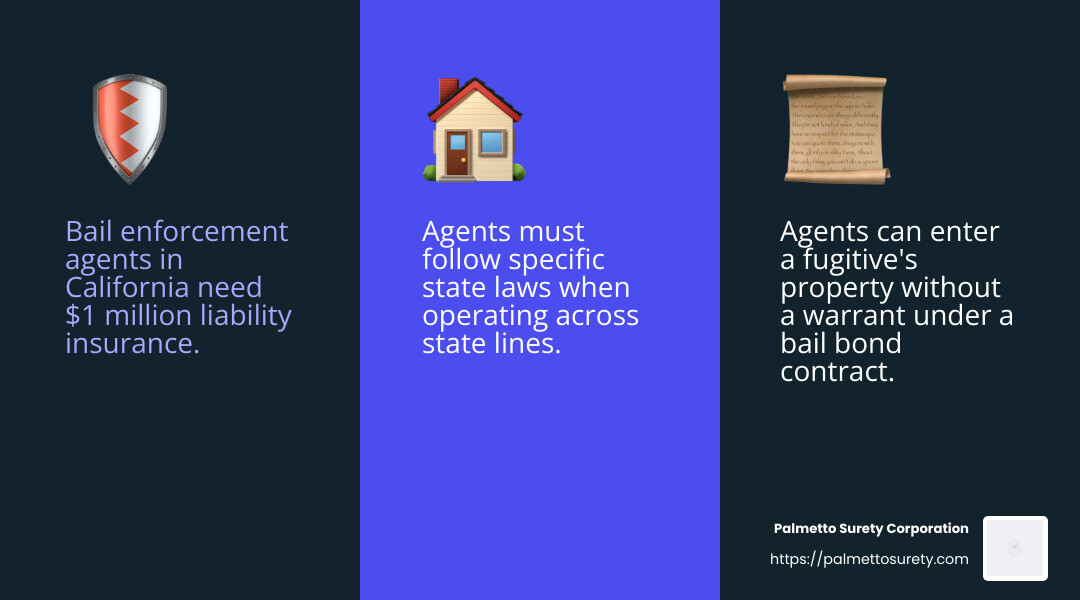
Bail Enforcement Agents: These agents possess the legal authority to apprehend fugitives, sometimes even entering private property without a warrant. They may use reasonable force to capture a fugitive, although the specifics can vary by state law. For example, in California, bounty hunters must maintain a minimum $1 million liability insurance policy to cover potential legal issues arising from their actions.
3. Weapon Authorization and Apprehension Guidelines
-
Bail Bond Agents: Generally, they do not carry weapons as their role is primarily administrative and financial.
-
Bail Enforcement Agents: They may carry weapons, such as firearms or tasers, depending on state regulations. For instance, in Texas, a bounty hunter must be a peace officer or a licensed security officer to carry a weapon legally. Training in tactical operations and weapon handling is often required to ensure agents operate safely and within the law.
4. Fee Structure
-
Bail Bond Agents: They earn their income through fees charged for posting bail, typically a non-refundable percentage of the bail amount. This fee compensates them for the risk of losing the full bail amount if the defendant fails to appear in court.
-
Bail Enforcement Agents: Their compensation is usually a percentage of the bail amount, paid upon the successful capture and return of a fugitive. This performance-based structure incentivizes them to locate fugitives efficiently.
In summary, while both bail bond agents and bail enforcement agents work within the bail system, their roles, legal authority, and operational methods are distinct. Understanding these differences is essential for anyone involved in the bail process, whether as a defendant, agent, or part of the legal system.
Frequently Asked Questions about Bail Enforcement Agents
What powers do bail enforcement agents have in the USA?
Bail enforcement agents, often known as bounty hunters, have specific powers that vary by state. Generally, they are authorized to apprehend fugitives who have skipped bail. This means they can track down and capture individuals who have failed to appear in court. These agents operate under the authority of the bail bond agreement and can cross state lines to seize a fugitive. However, they must comply with state laws governing their conduct.
In some states, bail enforcement agents can use reasonable force to detain a fugitive. For example, in Connecticut, agents must notify local law enforcement before making an arrest and wear a uniform and badge during their operations. The extent of their authority can differ, so agents need to be familiar with the legal framework in each state they operate.
Can a bail enforcement agent enter private property without a warrant?
The ability of a bail enforcement agent to enter private property without a warrant is a complex issue. In many cases, agents do have the right to enter a fugitive’s property to make an arrest, as they are acting under the bail contract. This is based on the legal principle that when someone signs a bail bond agreement, they waive certain rights, including the right to privacy, to some extent.
However, entering third-party properties without consent or a warrant is generally not allowed. Agents must be cautious and ensure they are not violating any laws related to trespassing or unlawful entry. State laws can vary significantly on this issue, so agents need to be thoroughly knowledgeable about the legal requirements in each jurisdiction they work in.
What are the insurance requirements for bail enforcement agents?
Insurance is a critical consideration for bail enforcement agents due to the inherent risks of their job. Many states require agents to carry liability insurance to cover potential damages or legal issues that may arise during their operations. For instance, California mandates a minimum $1 million liability insurance policy for bounty hunters.
Liability insurance helps protect agents from lawsuits or claims related to their actions, such as wrongful arrest or property damage. Additionally, some states may require agents to have surety bonds, which act as a financial guarantee that they will perform their duties ethically and legally.
Agents must verify the specific insurance mandates in each state they operate to ensure compliance and protect themselves from legal repercussions.
Conclusion
As we wrap up our exploration of the role and responsibilities of a bail enforcement agent, it’s clear that this profession requires a deep understanding of legal frameworks, state-specific regulations, and the complexities of apprehending fugitives. These agents play a crucial role in the criminal justice system, ensuring that individuals who skip bail are brought back to court, thus maintaining the integrity of the bail process.
At Palmetto Surety Corporation, we recognize the unique challenges faced by bail enforcement agents and strive to support them with quick, efficient, and reliable services. Our expertise in commercial surety bonds and our extensive network of bail bondsmen enable us to offer comprehensive solutions custom to the needs of these professionals.
With over 20 years of experience, Palmetto Surety Corporation has established itself as a trusted partner in the southeastern United States, providing the necessary tools and resources to help agents steer their responsibilities effectively. Our commitment to quick service ensures that applications and approvals are handled promptly, allowing agents to focus on their critical duties without unnecessary delays.
For those in the bail enforcement industry seeking a dependable partner, Palmetto Surety Corporation offers the expertise and support needed to succeed. Whether it’s securing necessary bonds or understanding the nuances of state regulations, we’re here to help you every step of the way.


