


Bail Bondsperson Meaning: Top 3 Vital Insights 2025
To understand legal support and the judicial process, especially in the U.S., grasp what a bail bondsperson meaning involves. Bail bondspersons, also known as bail bondsmen, are professionals who help defendants secure release from jail by providing surety bonds. These bonds act as a promise that the defendant will return for court appearances, allowing them to stay out of jail during their trial process.
Key Points:
– Bail Bondsperson: A professional in the bail bond industry.
– Function: Provides a surety bond to the court on behalf of a defendant.
– Fee: Typically charges a non-refundable 10% of the bail amount.
A bail bondsperson plays a crucial role in the legal system by bridging the gap between law enforcement and individual rights. They ensure that defendants can continue with their daily lives while allowing the judicial process to function smoothly without unnecessary incarcerations for minor offenses.
My name is Haiko de Poel Jr, and I specialize in enhancing business operations with strategic insights, particularly in the surety bond sector. Utilizing my extensive experience, I have helped facilitate the legal process, making the complex market of surety clearly understandable and accessible.
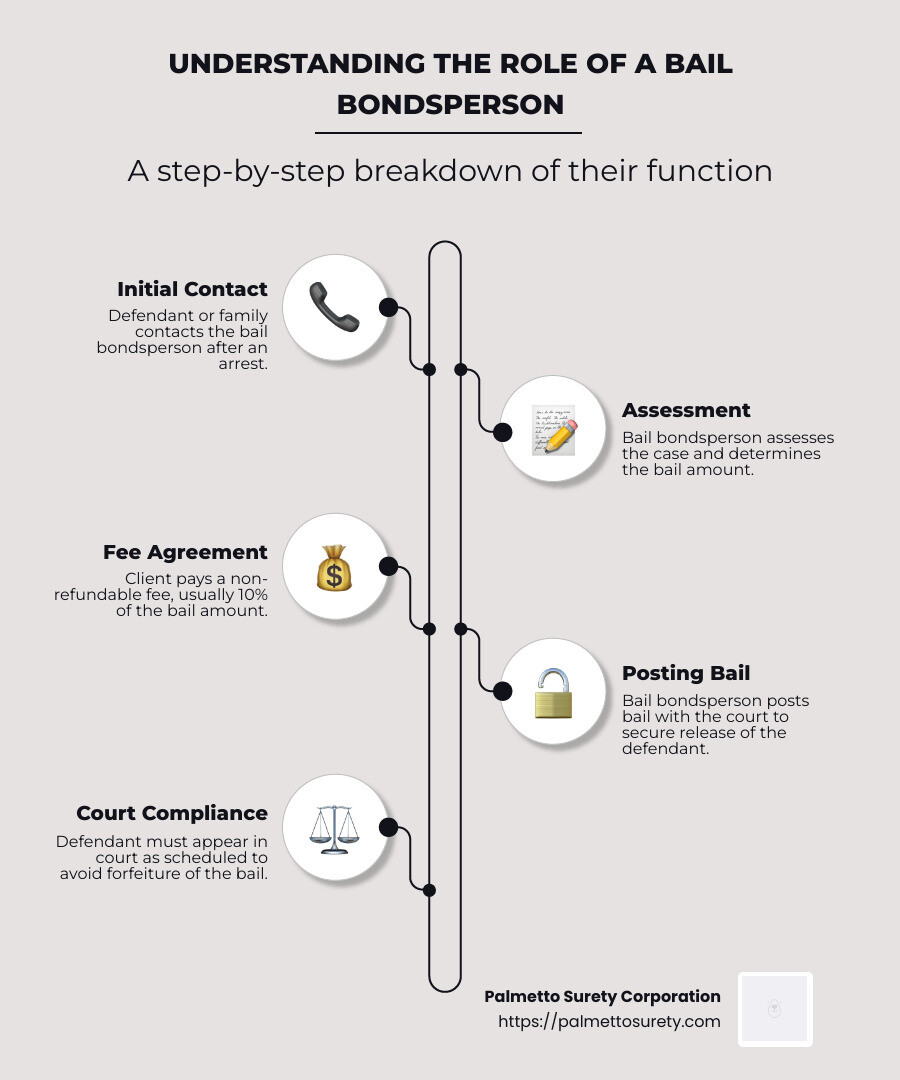
What is a Bail Bondsperson?
A bail bondsperson is a key figure in the judicial system, especially in the United States, where they provide a crucial service by helping defendants gain temporary freedom while awaiting trial. The bail bondsperson meaning revolves around being a mediator between the court and the defendant, ensuring that the defendant appears in court as required.
Role and Responsibilities
The main role of a bail bondsperson is to provide a surety bond to the court on behalf of a defendant. This bond acts as a guarantee that the defendant will appear for their scheduled court appearances. In return for this service, the bail bondsperson typically charges a non-refundable fee, usually around 10% of the bail amount. This fee serves as the bondsperson’s compensation for taking on the risk associated with the defendant’s release.
A bail bondsperson often collaborates with a surety company, which underwrites the bond. The bondsperson is responsible for ensuring the defendant’s compliance with court requirements and may employ bounty hunters if the defendant fails to appear in court.
Historical Context
The practice of using surety bonds dates back thousands of years. The earliest known records of bail bond agreements come from clay tablets in the Akkadian city of Eshnunna, located in modern-day Iraq, around 2750 BC. These ancient agreements set the foundation for what would become a formalized system of bail in the United States.

In the U.S., the first modern bail bonds business was established by Peter P. McDonough in San Francisco in 1898. Since then, the industry has evolved significantly, adapting to changes in legal frameworks and societal needs.
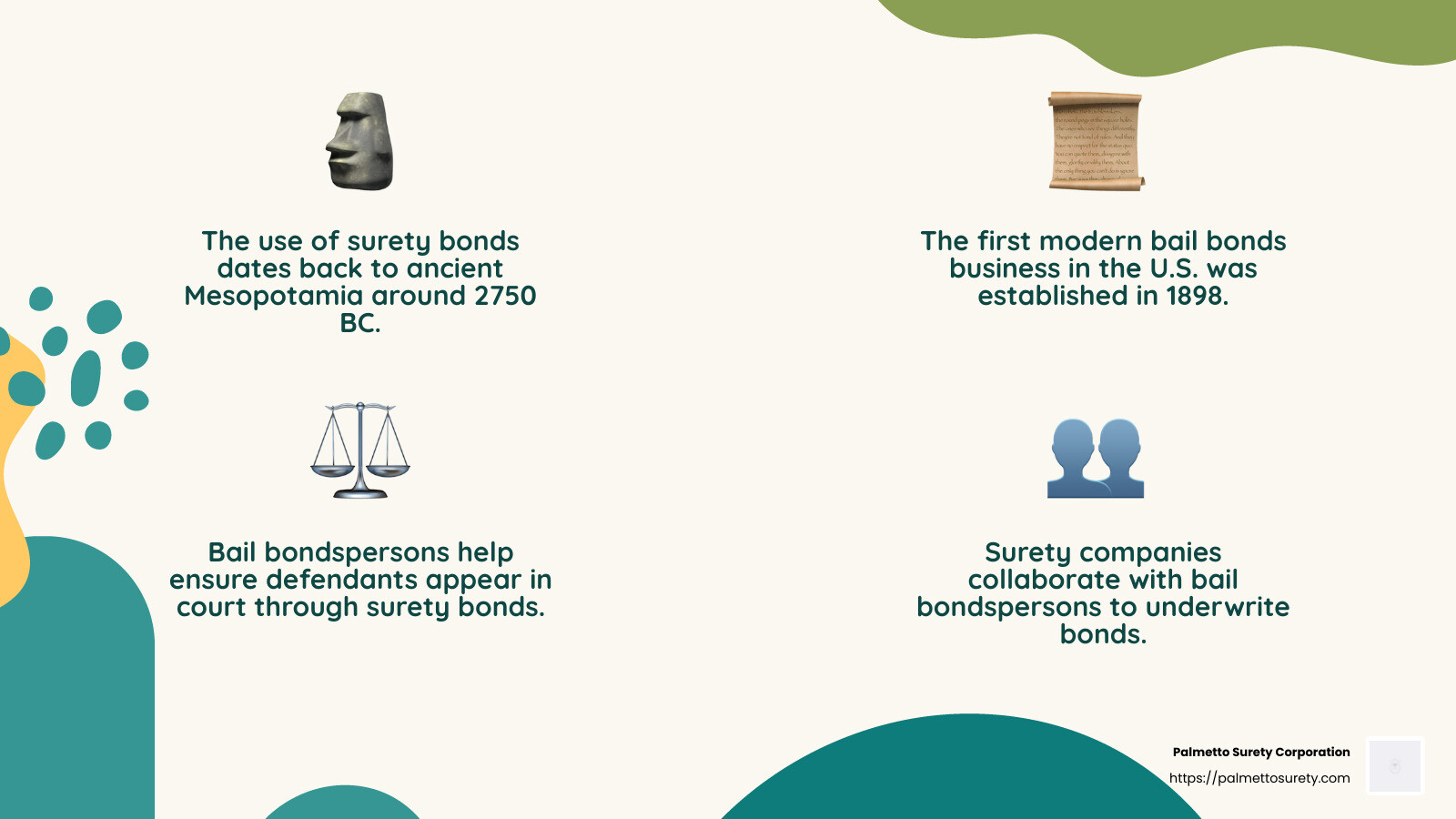
The role of a bail bondsperson remains vital in contemporary legal systems, providing defendants with the means to maintain their freedom and continue their lives while awaiting trial. By offering this service, bail bondspersons help balance the scales of justice, ensuring that the legal process respects both public safety and individual rights.
How Bail Bondspersons Operate
A bail bondsperson plays a crucial role in the judicial system, especially when a defendant cannot afford the full bail amount set by the court. Let’s explore how they operate, focusing on the bail bond process, licensing, regulation, and the fees involved.
Bail Bond Process
When a defendant is unable to pay their bail, a bail bondsperson steps in. They provide a surety bond to the court, promising that the defendant will appear for all required court dates. In exchange, the defendant typically pays the bail bondsperson a non-refundable fee, usually around 10% of the total bail amount. This fee compensates the bondsperson for the risk they take by ensuring the defendant’s appearance in court.
If the defendant fails to appear, the bondsperson may lose the full bail amount paid to the court. To mitigate this risk, bondspersons often require collateral, such as property or valuable assets, from the defendant or their family.
Licensing and Regulation
Bail bondspersons must steer a complex landscape of state laws and regulations. Each state has its own requirements for licensing and operation. For example, in California, the California Department of Insurance regulates the industry, ensuring that bondspersons adhere to specific standards and practices.
Additionally, the Uniform Criminal Extradition Act plays a role in regulating how bondspersons operate across state lines, particularly when a defendant flees to another state. This act provides a framework for returning fugitives to the state where they face charges.
Pricing and Fees
The 10% fee charged by bail bondspersons is standard, but some states regulate this percentage to protect consumers. For instance, certain states cap this fee at 8%. Beyond the upfront fee, additional charges may apply, especially in federal cases where bail amounts can be significantly higher.
Collateral is often required to secure a bail bond, providing the bondsperson with a safety net. This could include real estate, vehicles, or other valuable assets. If the defendant appears in court as promised, the collateral is returned once the case concludes.
The bail bond system is a balancing act, ensuring defendants can maintain their freedom while awaiting trial, without compromising public safety. Bail bondspersons, guided by state regulations and industry standards, provide a vital service that upholds the integrity of the judicial process.
Legal and Ethical Considerations
Criticism and Controversies
The bail bond industry has faced significant criticism and controversy over the years. Critics argue that the system is inherently discriminatory and contributes to mass incarceration. Let’s explore some of these issues and the calls for reform.
Bail Reform and Discrimination
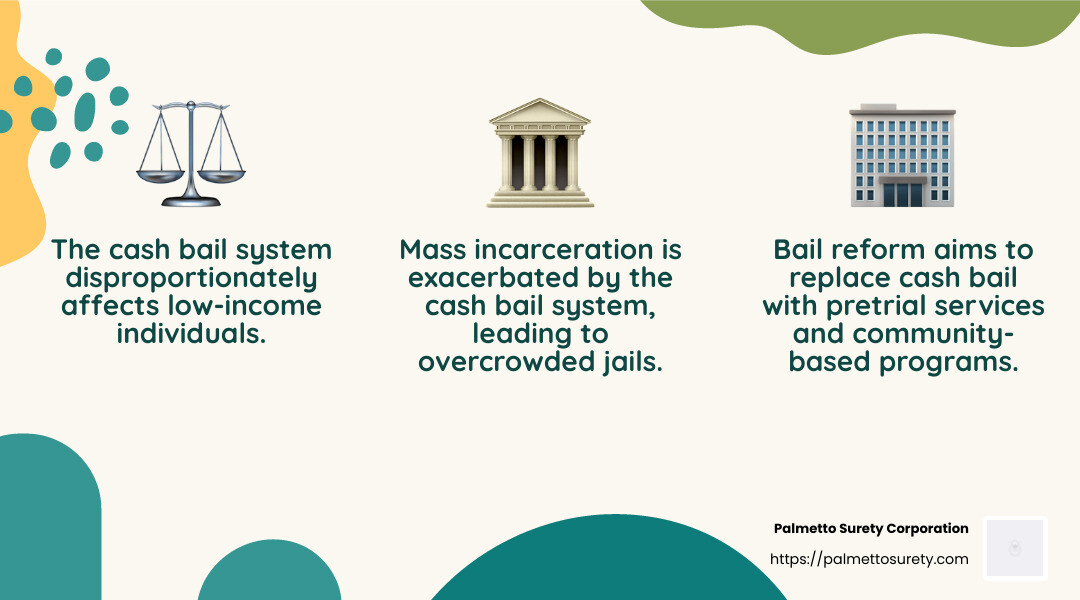
The current bail system is often criticized for disproportionately affecting low-income individuals and marginalized communities. The American Civil Liberties Union (ACLU) has been vocal about how the system discriminates against those who cannot afford bail, leading to prolonged detention for minor offenses. This economic disparity means that wealthier defendants can secure their release, while poorer individuals remain incarcerated.
Efforts toward bail reform aim to address these inequalities by reducing reliance on cash bail and exploring alternatives like pretrial services and community-based programs. These alternatives seek to ensure that a person’s freedom is not determined by their financial status.
Public Safety and Misconduct
Public safety is a primary concern when discussing bail bonds. Critics argue that the profit-driven nature of the bail bond industry can lead to ethical issues. There have been instances of misconduct, where bail bond agents have engaged in illegal activities, such as bribing officials or using excessive force to apprehend defendants.
A notable example is the “Operation Wrinkled Robe” case in Louisiana, where a far-reaching FBI investigation uncovered bribery between judges and a bail bonding agency. Such cases highlight the need for stricter regulation and oversight to prevent abuses within the system.
Mass Incarceration
The bail system is also linked to the broader issue of mass incarceration. By requiring cash bail, the system contributes to overcrowded jails filled with individuals who have not been convicted but cannot afford bail. This not only strains public resources but also raises ethical questions about the presumption of innocence.
Calls for Reform
Organizations like the ACLU advocate for reforms that would reduce the reliance on cash bail and promote fairer alternatives. These reforms focus on assessing a defendant’s risk rather than their financial capacity, enhancing public safety and reducing the potential for discrimination.
The bail bond industry, while providing a necessary service, must steer these legal and ethical challenges to ensure fairness and justice for all individuals, regardless of their economic standing.
Frequently Asked Questions about Bail Bondspersons
What does a bail bondsperson do?
A bail bondsperson acts as a surety, helping defendants secure their release from jail before trial. When a person is arrested, the court sets a bail amount as a guarantee that the defendant will appear for their court date. Many people cannot afford to pay this amount upfront. This is where a bail bondsperson steps in. They provide a bond to the court, pledging the full bail amount on behalf of the defendant.
In return, the defendant pays the bail bondsperson a non-refundable fee, usually around 10% of the total bail amount. The bail bondsperson is responsible for ensuring that the defendant appears in court. If the defendant fails to show up, the bondsperson may hire a bounty hunter to locate and return the defendant to court.
How do bail bondspersons make money?
Bail bondspersons earn money by charging a non-refundable fee for their services. This fee is typically 10% of the bail amount for state charges and can be higher for federal charges. For example, if a defendant’s bail is set at $10,000, the bail bondsperson charges $1,000 for the service. This fee compensates the bondsperson for the risk and services provided.
In some cases, the bondsperson may require collateral, such as property or valuable items, to secure the bond. If the defendant fails to appear in court, the bail bondsperson can claim the collateral to cover the full bail amount. This business model allows bail bondspersons to earn a profit while providing a crucial service to those who cannot afford bail.
Are bail bondspersons legal in all states?
No, bail bondspersons are not legal in all states. The practice of commercial bail bonding is illegal in some states, including Illinois, Kentucky, Oregon, and Wisconsin. These states have different systems for handling pretrial release, often focusing on risk assessments rather than monetary bail.
In states where bail bonding is legal, regulations vary. For instance, in California, bail bond agreements must be verified and certified by the California Department of Insurance. Each state has its own laws governing the licensing and operation of bail bondspersons, ensuring they adhere to specific standards and practices.
Despite its legality in many states, the bail bond industry faces criticism and calls for reform due to concerns about fairness and public safety.
Conclusion
At Palmetto Surety Corporation, we understand the critical role that bail bondspersons play in the justice system. Our focus is on providing quick and efficient service across the southeastern United States. With over 20 years of experience, we have honed our processes to ensure that our clients receive the support they need when they need it most.
Our services are designed to help individuals secure their release from jail swiftly, allowing them to continue their daily lives while awaiting trial. We pride ourselves on our ability to approve most applications within hours, thanks to our streamlined procedures and dedicated team.
Operating in states like Georgia, Florida, Louisiana, Mississippi, South Carolina, Tennessee, and Texas, we have built a reputation for reliability and professionalism. Our network of experienced bail bond agents is committed to maintaining the highest standards of service, ensuring that our clients’ needs are met promptly and effectively.
For more information about how Palmetto Surety Corporation can assist you, please visit our service page to learn more about our offerings and how we can help you steer the bail bond process with confidence.


