


Florida How to File a Claim Against a Contractor’s Bond: 4 Essential Steps in 2024
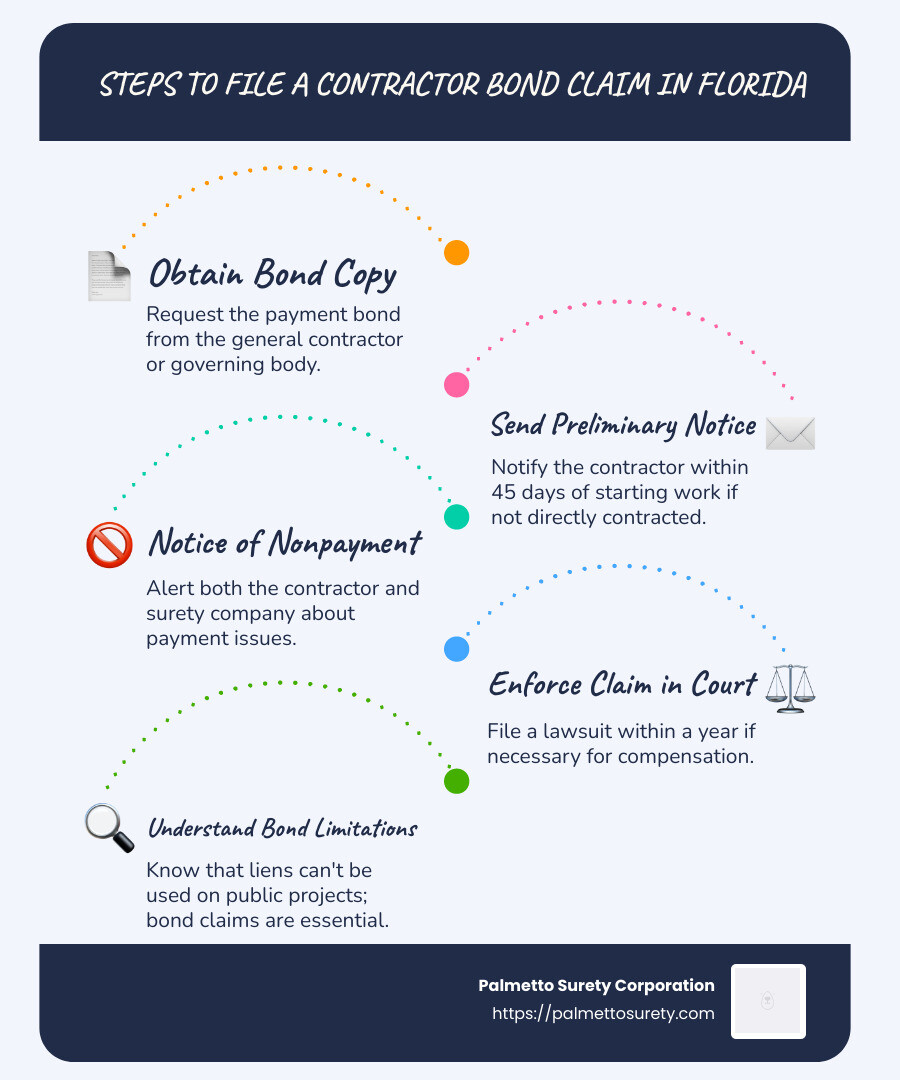
Florida how to file a claim against a contractor’s bond is a crucial topic for those involved in public construction projects. When payment disputes arise, understanding the bond claim process is essential. Here’s a concise guide to the necessary steps:
- Obtain a Copy of the Bond: Request the payment bond from the general contractor or the relevant authority.
- Submit Notice to Contractor: If you’re not directly contracted with the general contractor, send a preliminary notice within 45 days of starting work.
- Send Notice of Nonpayment: If payment issues continue, notify both the contractor and the surety company.
- Enforce Your Claim in Court: If needed, file a lawsuit within a year.
In Florida, construction liens are not applicable on public projects due to state laws, making bond claims the primary method for resolution. Acting promptly within these legal frameworks ensures that contractors and subcontractors receive their rightful compensation.
I’m Haiko de Poel Jr., a seasoned marketing expert with experience in guiding businesses through complex processes like florida how to file a claim against a contractor’s bond. My background in strategic marketing ensures clear, effective communication tailored to your needs. Let’s explore the essential information you need.
Basic florida how to file a claim against a contractor’s bond glossary:
– are contractors required to be bonded in florida
– florida contractor bond requirement
– florida contractor surety bond
Understanding Contractor Bonds in Florida
Contractor bonds in Florida are essential for ensuring that construction projects run smoothly and that all parties meet their contractual obligations. These bonds serve as a safety net, protecting project owners, subcontractors, and suppliers. Here’s a breakdown of the main types of bonds you might encounter in Florida:
Surety Bonds
A surety bond is a three-party agreement involving the principal (contractor), the obligee (project owner), and the surety (bonding company). The purpose of a surety bond is to guarantee that the contractor will complete the project according to the contract terms. If the contractor fails to meet these obligations, the surety steps in to cover the costs or find another contractor to finish the work.
Payment Bonds
Payment bonds ensure that subcontractors and suppliers receive payment for their work and materials. This bond is crucial because it protects against non-payment issues, which can disrupt project timelines and cause financial strain. In Florida, payment bonds are often required for public projects under the Little Miller Act, which mandates bonds for contracts over $100,000.
Performance Bonds
A performance bond guarantees the satisfactory completion of a project. It assures the project owner that the contractor will perform according to the contract’s specifications. If the contractor defaults, the surety must either complete the project or compensate the project owner for any losses. This bond is essential for managing risks and ensuring project quality.


Key Points to Remember
- Surety bonds provide a broad safety net, ensuring contractors fulfill contractual obligations.
- Payment bonds protect subcontractors and suppliers, ensuring they get paid for their contributions.
- Performance bonds guarantee project completion as per agreed standards, protecting the project owner’s investment.
Understanding these bonds is vital for anyone involved in construction in Florida. They not only provide financial protection but also help maintain trust and accountability in the industry. If you’re dealing with a contractor bond in Florida, knowing these basics will help you navigate the process more effectively.
Florida How to File a Claim Against a Contractor’s Bond
If you’re a subcontractor, supplier, or project owner in Florida, knowing how to file a claim against a contractor’s bond is crucial. This process ensures you get paid for your work or materials if the contractor fails to meet their obligations. Let’s walk through the steps you need to take:
Step 1: Obtain a Copy of the Bond
The first step in filing a claim is to obtain a copy of the bond. This document contains essential information needed for your claim. You can request the bond from the general contractor. If they do not respond, Florida law allows you to request the bond from the government body overseeing the project. It’s wise to have this document on hand from the start of the project, so you’re prepared if issues arise.
Step 2: Send Notice to Contractor
Once you have the bond, the next step is to send a preliminary notice to the contractor. This notice is crucial, especially if you are not in direct contractual privity with the general contractor. Florida law requires this notice to be sent via certified mail within 45 days of starting work or supplying materials. This step helps ensure your claim is recognized and maintains your right to file a bond claim later.
Step 3: Send Notice of Nonpayment
If payment issues arise, you need to send a Notice of Nonpayment to both the contractor and the surety company. This notice must be sent within 90 days after you finish your work or supply materials. It’s a formal declaration that you intend to claim against the bond due to nonpayment. Like the preliminary notice, this should also be sent via certified mail to ensure it’s received and documented.
Step 4: Enforce Your Claim
If the contractor and surety do not resolve the payment issue after receiving your nonpayment notice, the final step is to enforce your claim through a lawsuit. Florida law requires you to file this lawsuit within one year of the last day you provided labor or materials. However, if a Notice of Contest of Claim Against Payment Bond is filed by the contractor, this period shortens to just 60 days. Legal counsel experienced in Florida construction law can be invaluable here to steer the complexities and protect your rights.
These steps form the backbone of the claim process in Florida. By following them carefully, you can increase your chances of a successful claim, ensuring you get paid for your hard work.
Frequently Asked Questions about Contractor Bond Claims
How do I file a claim against a contractor in Florida?
Filing a claim against a contractor in Florida involves a few crucial steps. First, ensure you have a copy of the contractor’s bond, which you can request from the general contractor or the relevant government body if needed. Once you have this, send a preliminary notice to the contractor, especially if you’re a subcontractor or supplier. This notice should be sent within 45 days of starting work or supplying materials.
Next, if payment issues arise, send a Notice of Nonpayment to both the contractor and the surety company within 90 days of completing your work. If these steps do not resolve the issue, you may need to enforce your claim through a lawsuit. Florida’s statute of limitations for filing such a lawsuit is one year from the last day you provided labor or materials, though this can be shortened to 60 days if contested by the contractor.
What is a contractor’s disciplinary bond?
A contractor’s disciplinary bond is a type of license bond required in Florida to ensure contractors adhere to state regulations. This bond serves as a financial guarantee that contractors will perform their work according to the law and ethical standards. Should a contractor fail to meet these standards, the bond can be claimed against to cover any damages or penalties.
The amount of the bond and the contractor’s credit score can affect the cost of this bond. Florida has specific requirements for these bonds, which vary depending on the contractor’s classification and work scope. This bond protects consumers by providing a financial recourse for poor workmanship or violations of contractor laws.
Can I sue a contractor in Florida?
Yes, you can sue a contractor in Florida if there are legal grounds to do so. Common reasons for suing include negligence, construction defects, or breach of contract. Before pursuing a lawsuit, it’s often advisable to attempt resolution through direct communication or mediation. However, if these efforts fail, you may proceed to file a lawsuit in civil court.
To sue, you’ll need to demonstrate that the contractor failed to fulfill their contractual obligations or acted negligently. Collect evidence such as contracts, emails, and photographs of defects to support your case. Consulting with a legal professional experienced in Florida construction law can help you steer the process effectively and determine the best course of action.
Conclusion
Navigating the complexities of Florida contractor bond claims can be challenging, but with the right support, it becomes manageable. At Palmetto Surety Corporation, we pride ourselves on our quick service and extensive industry expertise. With over 20 years of experience, we have honed our processes to ensure our clients receive the best possible assistance in securing and managing surety bonds.
Our team understands the intricacies of Florida’s laws and regulations, making us a reliable partner in your construction projects. We offer a range of surety bonds custom to meet the specific needs of various industries, from construction to healthcare. Our ability to approve most applications within hours sets us apart, allowing you to focus on what you do best—running your business.
If you need help with a contractor bond or have questions about the claims process, we are here to assist. Our commitment to excellence ensures you receive the guidance and support you need every step of the way.
For more information on our services and how we can help with your surety bond needs, visit our Palmetto Surety Corporation service page.


