


Florida Contractor Bond Requirement: Top 3 Crucial Facts
Florida contractor bond requirement is a crucial step for any contractor looking to operate in the Sunshine State. To quickly address what this involves:
- Secure a surety bond corresponding to your license type.
- Obtain a credit score check and ensure it’s above 660, or be prepared to post additional bonds if it’s lower.
- Meet all legal obligations by submitting necessary paperwork to the Florida Department of Business and Professional Regulation.
- Maintain worker’s compensation insurance for your employees.
For a contractor, understanding these requirements is not merely a box-ticking exercise. It’s about ensuring compliance with state laws, which helps to build trust with clients and safeguard the business from potential legal challenges.
Florida’s construction sector is booming, but only contractors who adhere to Florida contractor bond requirement can partake in this growth. This guarantees that contractors are responsible and financially stable enough to see a project through to completion. Surety bonds act as a safety net, not only protecting the project owners but also the wider community, by ensuring that projects are completed ethically and satisfactorily.
My name is Haiko de Poel Jr, and I specialize in explaining complex topics like the florida contractor bond requirement for businesses across a range of industries. With my background in innovative marketing strategies and compliance solutions, I bring a wealth of knowledge to guide you through these essential processes.

Quick florida contractor bond requirement terms:
– are contractors required to be bonded in florida
– florida contractor surety bond
– surety bond contractor florida review
Understanding Florida Contractor Bond Requirements
When diving into Florida contractor bonds, it’s important to grasp the different types of bonds required and their conditions. These bonds ensure that contractors meet their legal obligations and maintain trust with clients and the community.
Types of Bonds Required
Surety Bonds are a key component of the Florida contractor bond requirement. They act as a three-party agreement between the contractor (the principal), the state or local government (the obligee), and the bond issuer (the surety). The purpose is to guarantee that contractors fulfill their contractual obligations.
License Bonds are required for all contractors operating in Florida. These bonds ensure that contractors adhere to state regulations and standards. If a contractor fails to comply, the bond provides financial compensation to affected parties.

Bid Bonds are necessary when contractors submit proposals for projects. They guarantee that the contractor will enter into the contract if their bid is accepted.
Performance Bonds ensure that the contractor completes the project as per the agreed terms and conditions. If the contractor doesn’t deliver, the bond compensates the project owner.
Payment Bonds guarantee that subcontractors and suppliers are paid for their work. This ensures that the project can proceed without financial hiccups.
Bond Amounts and Conditions
The bond amounts vary based on the contractor’s credit score and the type of work they perform. Contractors with a credit score below 660 are required to post additional bonds:
- $5,000 Bond: This is generally for Division 2 contractors who have completed a financial responsibility course.
- $10,000 Bond: Required for Division 2 contractors who haven’t completed the course and Division 1 contractors who have completed it.
- $20,000 Bond: Applicable to Division 1 contractors who haven’t completed the financial responsibility course.
These varying bond amounts ensure that contractors with lower credit scores provide additional financial security, protecting clients and the public from potential issues.
Understanding these bond requirements is crucial for any contractor looking to work in Florida. It not only ensures compliance with state laws but also builds a foundation of trust and reliability in the eyes of clients and stakeholders.
How to Obtain a Florida Contractor Bond
Getting a Florida contractor bond involves several steps, each crucial to ensuring that you meet all legal requirements and secure the best possible terms. Here’s a simple guide to help you through the process.
Cost Factors
The cost of obtaining a contractor bond in Florida depends on several factors:
-
Personal Credit: Your credit score plays a significant role in determining the bond premium. Contractors with higher credit scores generally receive better rates, ranging from 1.8% to 8% of the bond amount annually. Those with lower scores may face higher premiums or additional bond requirements.
-
Contracting Experience: Experienced contractors often benefit from lower bond rates. Demonstrating a solid track record of completed projects can work in your favor.
-
Bond Claims: If you’ve had claims filed against previous bonds, it might impact the cost of your new bond. A clean claims history can help keep your costs down.
Steps to Purchase
-
Application Process: Begin by filling out an application with a surety bond company. This will require providing details about your business, financial history, and the specific bond amount you need.
-
Credit Assessment: The surety company will conduct a credit check. This is a “soft hit” and won’t affect your credit score. The assessment helps determine your bond’s premium.
-
Bond Pricing: After evaluating your credit and experience, the surety company will offer a pricing quote. Make sure to compare quotes from different providers to find the best rate.
-
Online Order: Many surety companies, like Palmetto Surety Corporation, offer an online ordering system. This simplifies the process, allowing you to secure your bond quickly and efficiently.
-
Bond Issuance: Once you agree to the terms and pay the premium, the surety company will issue your bond. This document is your proof of compliance with Florida’s contractor bond requirements.
-
Renewal Process: Contractor bonds typically need annual renewal. Stay ahead by marking renewal dates on your calendar. Renewing on time ensures continuous compliance and avoids potential penalties.
By following these steps, you can obtain a Florida contractor bond that meets all regulatory standards, ensuring your business is protected and ready to operate legally within the state.
Local and County Bonding Requirements
When working as a contractor in Florida, understanding local and county bonding requirements is essential. While the state does not mandate a specific contractor bond, many counties and cities do have their own requirements. These bonds ensure contractors adhere to local regulations and protect public interests.
Examples of Local Requirements
County Bonds
Different counties in Florida have distinct bonding requirements. For instance, Nassau County requires a $2,000 contractor bond. This bond acts as a safeguard, ensuring that contractors perform their duties responsibly and meet local standards. Similarly, Palm Beach County mandates a $2,000 bond for contractors operating within its jurisdiction. These bonds help maintain quality and trust between contractors and the local community.
City Bonds
Cities often have their own bonding rules, separate from county requirements. In Orlando, for example, state-regulated contractors must secure a bond with a minimum value of $5,000. This bond is crucial for obtaining the necessary licenses to work within the city. Specialty contractors in Orlando might face different minimum bond amounts, depending on the nature of their work.
Permit Bonds
Permit bonds are specific to individual projects and are active only for the duration of that project. These bonds are often required for construction activities that impact public property, like city streets or sidewalks. For example, Orlando requires right-of-way bonds for projects on public land, with the bond amount based on the project’s cost.
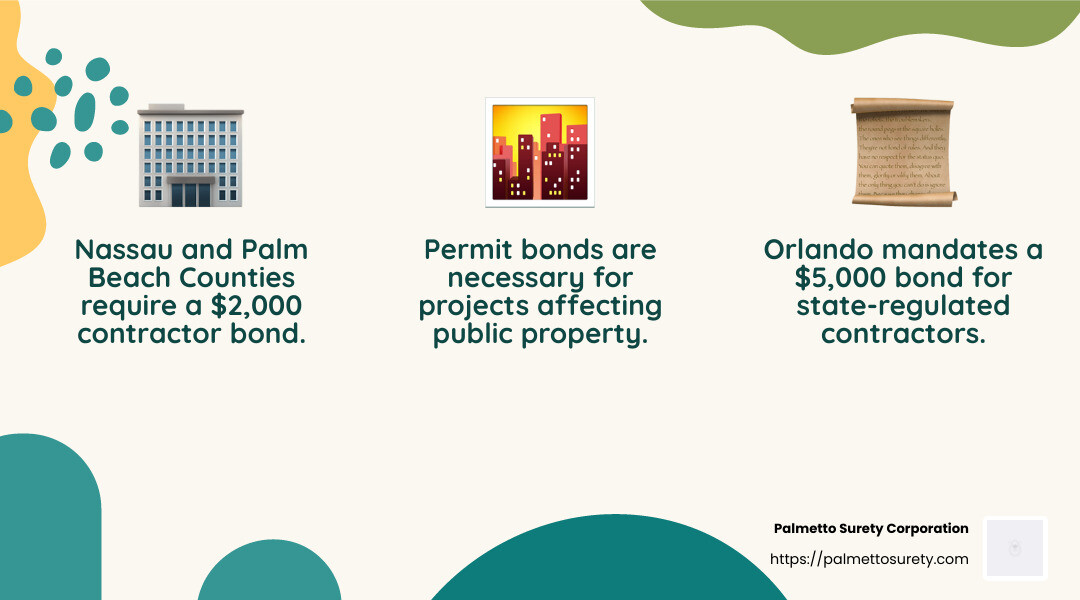
Local bonding requirements can vary significantly across Florida. It’s essential for contractors to research and understand the specific needs of each area they plan to work in. This ensures compliance and smooth project execution.
In the next section, we’ll dig into frequently asked questions about Florida contractor bonds, addressing common queries and providing clarity on essential topics.
Frequently Asked Questions about Florida Contractor Bonds
Do Florida contractors need to be bonded?
Yes, contractors in Florida generally need to be bonded, especially if they have a credit score below 660. In these cases, a license bond is required to ensure they comply with state regulations. This bond acts as a form of protection for the public, guaranteeing that contractors will adhere to licensing laws and ethical business practices.
What is the minimum bond amount in Florida?
The minimum bond amount for contractors in Florida varies based on the contractor’s credit score and the type of work they perform. Generally, $5,000 is the lowest bond amount required for certain Division 2 contractors. However, for minor infractions or misdemeanors related to contracting, there might be a $250 bond requirement. It’s important for contractors to check the specific bond requirements applicable to their situation.
What are the three types of bonds required from a contractor?
Contractors in Florida might encounter several types of bonds, but three of the most common are:
-
Bid Bonds: Ensure that a contractor can fulfill the terms of a bid if awarded the contract. They provide assurance that the contractor is financially and technically capable of completing the project.
-
Performance Bonds: Guarantee that the contractor will complete the project according to the contract terms. These bonds protect the project owner from losses if the contractor fails to deliver as promised.
-
Payment Bonds: Ensure that the contractor will pay subcontractors, laborers, and suppliers. This bond protects these parties from non-payment, ensuring they receive compensation for their contributions to the project.
Understanding these bonds is crucial for contractors operating in Florida, as they help manage risks and build trust with clients. Each bond serves a specific purpose and is integral to the successful execution of construction projects.
Conclusion
At Palmetto Surety Corporation, we understand the complexities of the Florida contractor bond requirement and are committed to making the process as smooth and efficient as possible. Our team specializes in offering quick approval and efficient service, ensuring that contractors get the bonds they need without unnecessary delays.
With over 20 years of experience in the surety bond industry, we have honed our processes to provide fast and reliable service. Most applications are approved within hours, allowing contractors to focus on what they do best—building and creating.
Our expertise in the construction sector means we know exactly what contractors need to comply with state regulations and protect their business interests. Whether you need a bid bond, performance bond, or payment bond, Palmetto Surety Corporation is here to help.
For more information on how we can assist you with your bonding needs, visit our service page and experience the ease of working with a trusted partner in the surety bond industry. Let us handle your bonding requirements so you can focus on growing your business.


