


Performance Bond Florida Statute: Top 5 Critical Insights
Performance bond Florida statute is a crucial concept for those involved in construction and public works in the Sunshine State. At its core, Florida statutes mandate the use of performance bonds in public construction projects to ensure the completion of contracts according to plans and specifications. These bonds serve as a safeguard, providing financial backing to property owners if contractors fail to fulfill their obligations.
- Performance bonds guarantee: Contract completion and adherence to project specifications.
- Key statutes: Florida’s legal framework around performance bonds includes specific requirements outlined in Section 255.05.
- Protects against: Contractor defaults, ensuring projects are completed or compensations are made.
As we dig deeper into this article, we’ll explore the intricacies of performance bonds, including the responsibilities of the surety company and the options available when contractors default.
My name is Haiko de Poel Jr., and I specialize in marketing and digital change with a keen understanding of performance bond Florida statute. Through my role at Palmetto Surety Corporation, I have gained significant insight into how these statutes impact surety businesses and their clients. This article aims to shed light on these essential components of construction law in Florida.
Performance bond florida statute terms to learn:
– florida law on recorded performance bonds
– insurance and bond
– purchase a surety bond fl
What is a Performance Bond?
A performance bond is a type of insurance policy that guarantees the completion of a construction project as per the agreed plans and specifications. This bond is a safety net for property owners, ensuring that they won’t be left in the lurch if a contractor fails to deliver on their commitments.
How Does a Performance Bond Work?
A performance bond involves three key parties:
- Obligee: This is usually the property owner or the entity commissioning the project. They require the bond to protect their interests.
- Principal: The contractor undertaking the project. They are responsible for purchasing the bond as a demonstration of their commitment to completing the project.
- Surety Company: The financial institution or insurance company that issues the bond. They promise to cover any losses if the contractor defaults.
Contractor Obligations
Contractors, as principals, have specific obligations when they secure a performance bond:
- Project Completion: They must complete the project according to the contract’s terms, including timelines and quality standards.
- Adherence to Plans: Contractors must follow the detailed plans and specifications outlined in the contract.
- Financial Responsibility: If they fail to meet their obligations, the contractor must reimburse the surety company for any payouts made to the obligee.
Role of the Surety Company
The surety company plays a pivotal role in the performance bond process:

- Financial Backing: They provide the financial assurance that the contractor will complete the project.
- Risk Assessment: Before issuing a bond, surety companies assess the contractor’s ability to fulfill the contract, evaluating their financial health, experience, and track record.
- Claims Handling: In the event of a contractor default, the surety company steps in to address claims, which may include paying the bond amount or finding a new contractor to complete the project.
In summary, a performance bond is a critical tool in the construction industry, ensuring that projects are completed as promised and protecting property owners from potential contractor defaults. We’ll dive into the specifics of Florida’s performance bond statute and what it means for those involved in public projects.
Florida’s Performance Bond Statute
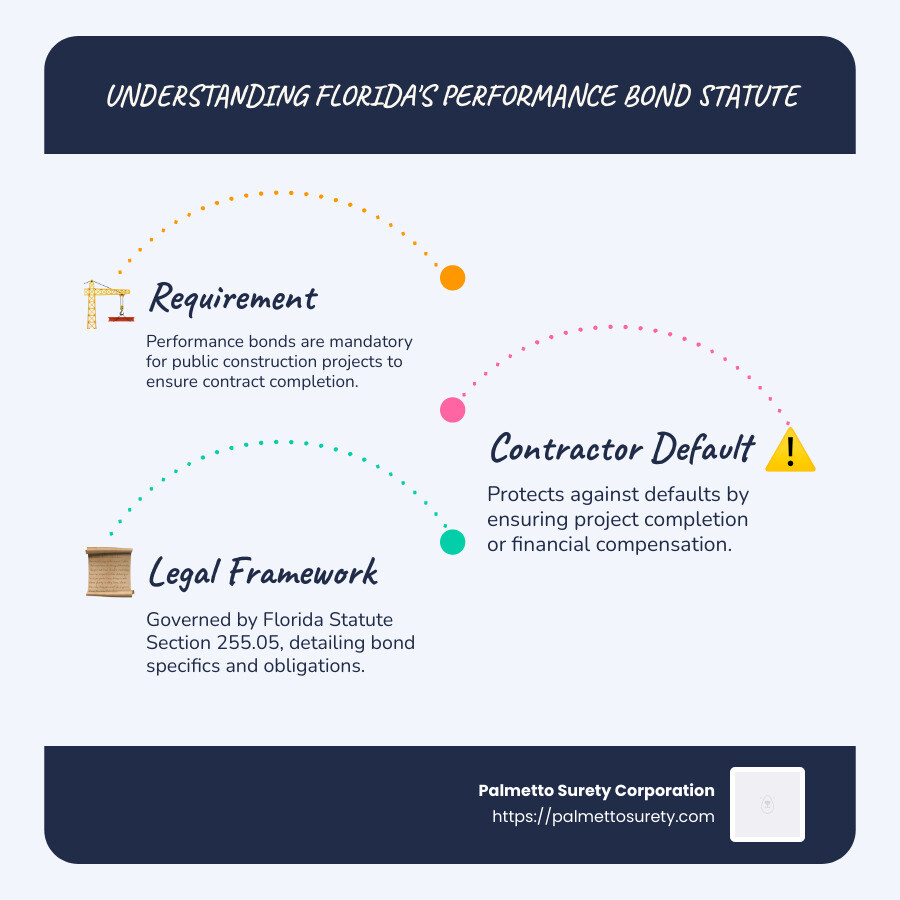
In Florida, performance bonds are governed by Section 255.05 of the Florida Statutes. This section is crucial for anyone involved in public construction projects in the state. Let’s break down what this statute entails and how it impacts public projects.
Understanding Section 255.05
Section 255.05 mandates that any public construction project in Florida must have a performance bond in place. This requirement ensures that the project will be completed according to the contract’s terms, providing a safety net for public entities like cities or counties. The bond amount typically matches the contract value, offering full coverage if the contractor defaults.
Key Provisions
- Mandatory Bonds for Public Projects: All public construction projects must have a performance bond. This is non-negotiable and acts as a protective measure for public funds.
- Liability Limitations: The statute clearly outlines the surety’s liability. The surety is responsible for the cost of completing the project, but only up to the bond’s penal sum. This means they are not liable for damages beyond the bond amount.
- Exclusions: The surety is not liable for personal injury or property damage claims arising from the project. Their responsibility is strictly limited to the financial aspects of completing the work.
Why It Matters
Performance bonds under Section 255.05 are a vital part of Florida’s construction landscape. They ensure that public projects are completed without financial risk to taxpayers. By requiring these bonds, Florida safeguards its public infrastructure investments.
For contractors, understanding these requirements is essential. It not only helps them comply with legal obligations but also positions them as reliable partners in public construction projects.
As we dig further, we’ll explore the key provisions of Florida’s performance bond laws and what happens if a contractor defaults. Stay tuned for insights into how these laws protect both public entities and contractors.
Key Provisions of Florida’s Performance Bond Laws
When it comes to performance bonds in Florida, understanding the key provisions is crucial for contractors and sureties alike. These provisions ensure that construction projects run smoothly and that all parties are protected if things go wrong.
Bond Requirements
Florida’s performance bond laws, as outlined in Section 255.05, require that any public construction project must have a performance bond. This bond acts as a guarantee that the contractor will complete the project as per the contract terms. The bond amount is typically set to match the contract value, ensuring full coverage in case of defaults.
- Mandatory for Public Projects: Performance bonds are obligatory for public construction projects to protect public funds and ensure project completion.
- Coverage: The bond covers the cost of completing the project, but only up to the bond’s penal sum. It does not cover personal injury or property damage.
Contractor Default
A contractor default occurs when the contractor fails to fulfill their obligations under the contract. This can happen due to various reasons such as financial difficulties or mismanagement.
- Impact of Default: If a contractor defaults, the surety must step in to ensure the project is completed. This is where the performance bond plays a critical role, providing a financial safety net.
Surety Options
When a contractor defaults, the surety has several options to address the situation:
- Pay the Bond Amount: The surety can choose to pay the bond amount to the project owner, covering the costs of completing the project as specified.
- Finance the Contractor: If the project is near completion, the surety might opt to finance the current contractor to finish the work, minimizing disruption.
- Negotiate a Solution: The surety and contractor may negotiate to find a mutually agreeable way to complete the project to the owner’s satisfaction.
- Replacement Contractor: The surety might decide to take over the project and hire a replacement contractor to finish the remaining work.
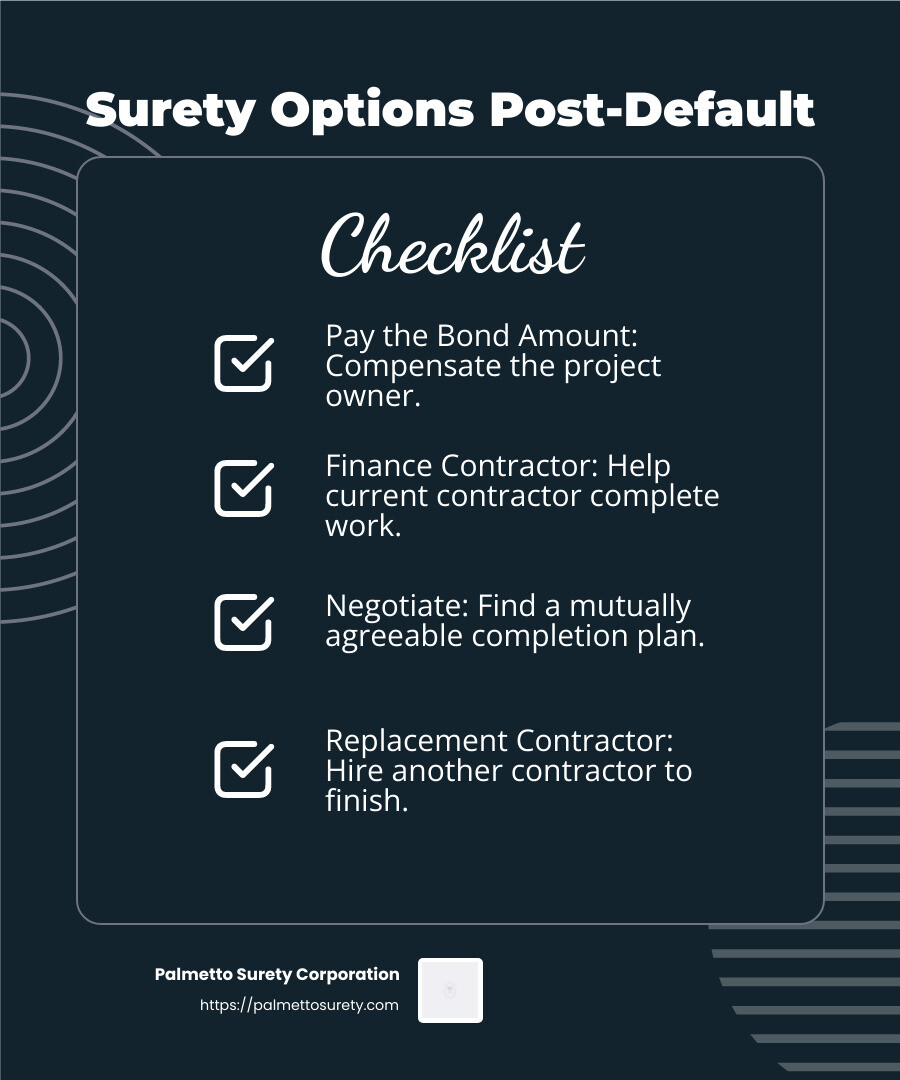
These options allow flexibility for the surety while ensuring that the project owner is not left in a lurch. It’s essential for contractors to maintain open communication with all parties to prevent defaults and disputes.
Understanding these key provisions of Florida’s performance bond laws helps all parties involved—contractors, sureties, and project owners—steer the complexities of construction projects with confidence. Next, we will explore the statute of limitations on performance bonds in Florida and its implications.
Statute of Limitations on Performance Bonds in Florida
In Florida, the statute of limitations on performance bonds is a crucial aspect to consider for both contractors and sureties. This statute outlines the time frame within which legal action must be initiated in the event of a bond-principal default.
Five-Year Time Frame
The performance bond Florida statute specifies a five-year statute of limitations. This means that any legal action related to a performance bond must be brought within five years from the date of the bond-principal default. This time limit ensures that claims are made while evidence is still fresh and relevant.
Bond-Principal Default
A bond-principal default occurs when the contractor, who is the principal on the bond, fails to fulfill their contractual obligations. This default triggers the surety’s responsibility to step in and address the issue, as outlined in the bond agreement. If a claim arises from such a default, it’s important to act within the five-year window to preserve legal rights.
Legal Cases and Precedents
Legal cases in Florida have reinforced the importance of adhering to the statute of limitations. Courts have consistently ruled that failing to file a claim within the specified period results in losing the right to seek remedy. This underscores the need for contractors and sureties to be vigilant about timelines and documentation.
In one notable case, a contractor faced termination for default due to project delays. The ensuing legal battle highlighted the significance of the five-year limit, as the contractor’s attempts to challenge the default were dismissed due to the expiration of the statute of limitations.
Understanding the statute of limitations on performance bonds in Florida is essential for all parties involved. It ensures that claims are timely and that the resolution process is fair and efficient. Next, we’ll address frequently asked questions about performance bonds in Florida, providing clarity on common concerns.
Frequently Asked Questions about Performance Bonds in Florida
What is a performance bond in Florida?
A performance bond in Florida is a guarantee that a contractor will complete a project according to the terms of the contract. This bond is issued by a surety company, which provides financial backing to ensure the project is finished as agreed. If the contractor fails to meet their obligations, the surety steps in to cover the costs of completing the work.
What is the statute of limitations on a performance bond in Florida?
In Florida, the statute of limitations for a performance bond is five years. This means that any legal action related to a bond-principal default must be initiated within this time frame. The clock starts ticking from the date of the contractor’s default, not the date the bond was issued. It’s crucial to act promptly to preserve legal rights and ensure claims are valid.
What are the options for a surety after a contractor default?
When a contractor defaults, the surety has several options to address the situation:
- Pay the bond amount: The surety can choose to pay the amount of the bond to the project owner, covering the financial loss due to the contractor’s failure.
- Finance the contractor: Sometimes, the surety may decide to provide additional funds to the contractor, helping them complete the project. This is often considered when the project is near completion.
- Replacement contractor: The surety might opt to hire a new contractor to finish the remaining work. This involves finding a qualified replacement to ensure the project is completed to the owner’s satisfaction.
These options are designed to protect the interests of all parties involved and ensure that the project is completed as planned. Understanding these choices helps in navigating the complexities of a contractor default.
In the next section, we will conclude our discussion by highlighting how Palmetto Surety Corporation can assist with performance bonds, ensuring quick and reliable service.
Conclusion
Navigating the complexities of performance bonds in Florida can be challenging, but Palmetto Surety Corporation is here to simplify the process. With over 20 years of experience, we specialize in providing surety bonds custom to meet the needs of various industries, including construction, manufacturing, and transportation.
Our quick and efficient service is what sets us apart. We understand that time is of the essence in construction and project management. That’s why we aim to approve most applications within hours, ensuring that projects can proceed without unnecessary delays.
At Palmetto Surety Corporation, we pride ourselves on our ability to offer personalized solutions and exceptional support. Our team is dedicated to guiding you through every step, from understanding the intricacies of Florida’s performance bond laws to selecting the right bond for your project.
For more information on how we can assist you with your surety bond needs, visit our service page.
Choose Palmetto Surety Corporation for a seamless and reliable experience in securing performance bonds.


