


Freight broker bond application: 5 Best Proven Steps
Freight broker bond application is a crucial step for those venturing into logistics. To start, you must secure a freight broker bond, also known as a BMC-84 surety bond, which is mandated by the Federal Motor Carrier Safety Administration (FMCSA). This $75,000 bond ensures financial responsibility and compliance with industry regulations.
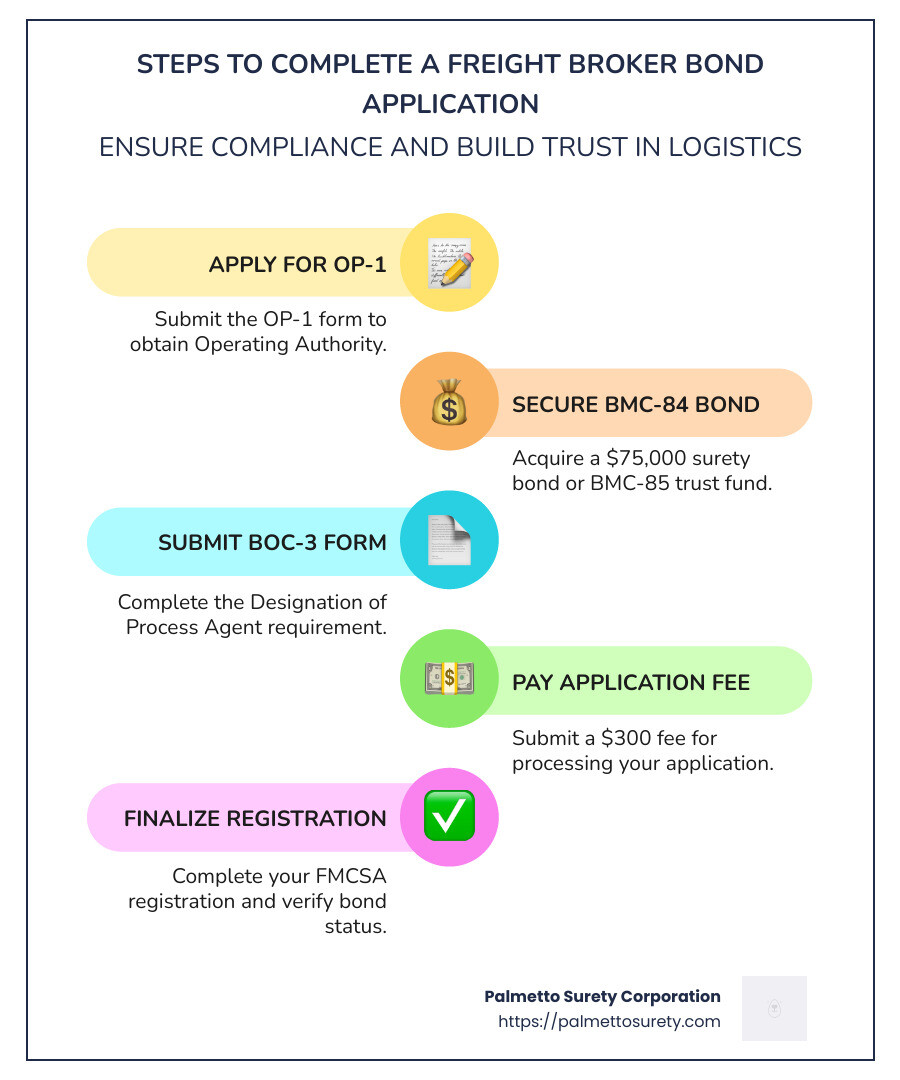
- Apply for an OP-1 Operating Authority.
- Secure a BMC-84 surety bond or BMC-85 trust fund agreement of $75,000.
- Submit the BOC-3 form for “Designation of Process Agent.”
- Pay a $300 application fee.
The freight broker bond application not only demonstrates your financial reliability but also builds trust with your clients in the logistics sector. It’s significant due to compliance enforced by the FMCSA, helping to protect shippers and carriers from potential losses.
I am Haiko de Poel Jr, an expert in navigating digital changes and strategic marketing solutions, enriched by my experiences with Palmetto Surety Corporation. My deep dive into the freight broker bond application process has offered a unique perspective on simplifying complex bond requirements, ensuring a seamless acquisition path for brokers like you.
Understanding Freight Broker Bonds
Freight broker bonds are essential for anyone looking to operate as a freight broker in the United States. These bonds, often referred to as BMC-84 bonds, are a requirement set forth by the Federal Motor Carrier Safety Administration (FMCSA) under Title 49 U.S.C. 13904. But what exactly are these bonds, and why are they crucial?
What is a BMC-84 Bond?
A BMC-84 bond, also known as an ICC broker bond, is a type of surety bond that freight brokers must secure to ensure compliance with federal regulations. This bond acts as a financial guarantee that brokers will adhere to all contractual obligations and pay carriers and shippers for their services. The bond is set at $75,000, which serves as a safety net protecting the parties involved in the freight transaction.
Importance of Title 49 U.S.C. 13904
Title 49 U.S.C. 13904 is the legal framework that mandates the requirement for freight brokers to secure a BMC-84 bond. This section of the U.S. Code outlines the licensing and registration requirements for brokers, ensuring they maintain financial responsibility. The purpose of these regulations is to create a trustworthy environment within the logistics industry, safeguarding against fraudulent activities and financial defaults.
Why Are These Bonds Necessary?
Freight broker bonds are not just about compliance. They are about building trust and credibility in the logistics sector. By holding a BMC-84 bond, brokers demonstrate their commitment to ethical business practices, which can be a significant advantage in a competitive market. Moreover, these bonds provide peace of mind to shippers and carriers, knowing they have a financial recourse in case of non-payment or contractual breaches.
In summary, understanding and securing a freight broker bond is a critical step for anyone looking to succeed in the freight brokerage industry. These bonds ensure compliance with federal regulations, protect against financial risks, and help build trust with clients and partners.


In the next section, we will dig into the freight broker bond application process, exploring how to steer FMCSA registration and use online portals for a seamless experience.
The Freight Broker Bond Application Process
Navigating the freight broker bond application process can seem daunting, but breaking it down into manageable steps can make it straightforward. This section will guide you through the process, from FMCSA registration to understanding bond costs and premiums.
Step-by-Step Guide
-
FMCSA Registration
Before applying for a freight broker bond, you need to register with the Federal Motor Carrier Safety Administration (FMCSA). This registration is crucial as it grants you the authority to operate as a freight broker. -
Get Your Motor Carrier Number
Once registered, you’ll receive a Motor Carrier (MC) number. This unique identifier is essential for filing your surety bond electronically. The process to obtain your MC number typically takes 4-6 weeks through the Unified Registration System (URS). -
Use the Online Portal
The FMCSA provides an online portal where you can manage your registration and bond applications. This platform simplifies the process, allowing you to file your bond electronically and keep track of your application status. -
Electronic Filing
After gathering all necessary documents and information, you can file your bond electronically. This step is crucial for ensuring your bond is processed quickly and efficiently.
Cost and Premiums
Understanding the cost structure of freight broker bonds is vital for budgeting and financial planning.
-
Bond Cost
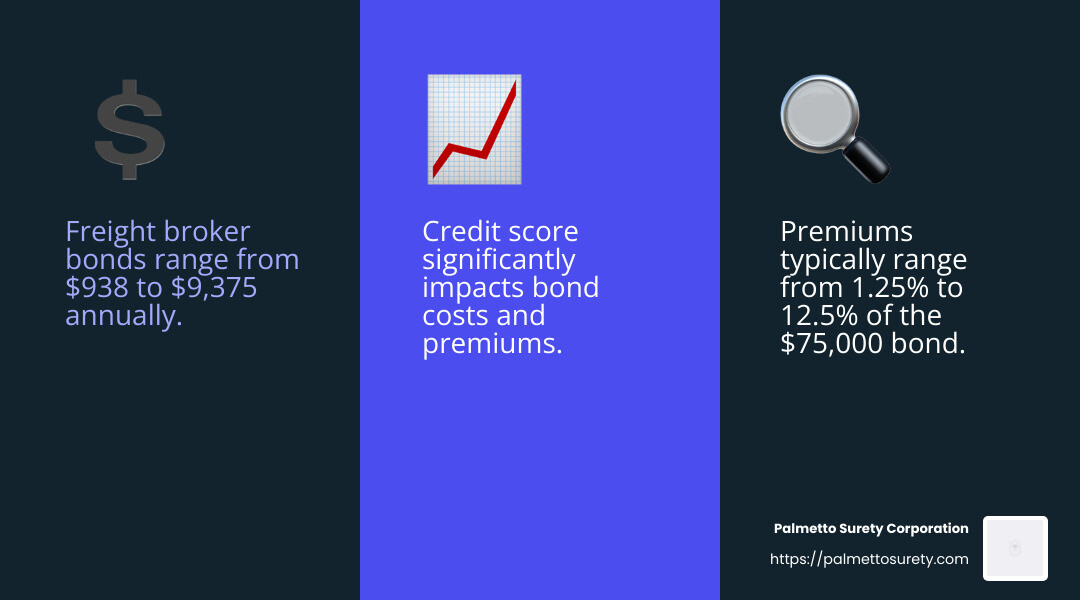
The cost of a freight broker bond varies based on several factors, including credit score and financial history. Typically, premiums range from 1.25% to 12.5% of the $75,000 bond amount. -
Credit Score
Your credit score plays a significant role in determining your bond premium. A higher credit score usually results in a lower premium. Some providers, like Pacific Surety, offer competitive rates even for those with less-than-perfect credit. -
Financial Statements
While some companies require business or personal financials for approval, others, like Jet Insurance, have streamlined their process to reduce costs and make it accessible for new businesses.
By understanding these steps and costs, you can steer the freight broker bond application process with confidence. This preparation will ensure you’re ready to operate legally and efficiently in the freight brokerage industry.
In the next section, we will discuss how to maintain and renew your freight broker bond, ensuring continuous compliance with FMCSA requirements.
How to Maintain and Renew Your Freight Broker Bond
Maintaining your freight broker bond is as important as getting it in the first place. Here’s a simple guide on the annual renewal process, bond status verification, and meeting FMCSA requirements.
Annual Renewal
Freight broker bonds must be renewed every year to keep your business compliant with FMCSA regulations. The renewal process is straightforward:
-
Receive Your Renewal Notice
Most surety companies will send you a renewal notice well before your bond expires. This notice will include the renewal premium and any updated terms. -
Pay Your Renewal Premium
Once you receive the renewal notice, promptly pay the renewal premium to avoid any lapses in coverage. A lapse can lead to suspension of your freight broker authority. -
Verify Bond Status
After payment, verify that your bond is active and on file with the FMCSA. This can usually be done through the FMCSA’s online portal. Keeping your bond status updated ensures your business remains in good standing.
Bond Status Verification
Regularly checking your bond status is crucial to ensure compliance. Here’s how you can do it:
-
FMCSA Online Portal
Use the FMCSA’s online portal to verify your bond status. It’s a quick and easy way to confirm that your bond is active and that all information is correct. -
Contact Your Surety Provider
If you have any doubts or questions about your bond status, reach out to your surety provider. They can provide detailed information and assist with any necessary updates.
FMCSA Requirements
Staying compliant with FMCSA requirements is essential for maintaining your freight broker authority:
-
Keep Information Updated
Ensure that all your business information, including your address and contact details, is current with the FMCSA. This is vital for receiving timely notifications and avoiding penalties. -
Monitor Regulatory Changes
Stay informed about any changes in FMCSA regulations that might affect your bond or operations. Regularly visiting the FMCSA website or subscribing to industry newsletters can help you stay updated. -
Renew on Time
Always renew your bond before it expires. Late renewals can lead to fines or suspension of your operating authority.
By following these steps, you can easily maintain and renew your freight broker bond, ensuring your business stays compliant and operational.
Next, we will tackle some frequently asked questions about freight broker bonds to further clarify any doubts you might have.
Frequently Asked Questions about Freight Broker Bonds
How does a freight broker bond work?
A freight broker bond, also known as a BMC-84 bond, is a type of surety bond required by the FMCSA. It ensures that freight brokers and forwarders comply with federal regulations. The bond acts as a financial guarantee that brokers will fulfill their contractual obligations to shippers and carriers. If a broker fails to meet these obligations, such as not paying carriers on time, a claim can be filed against the bond. The surety company will investigate the claim and, if valid, compensate the harmed party up to the bond amount, which is usually $75,000.
What is the purpose of a BMC-84 bond?
The primary purpose of a BMC-84 bond is compliance with FMCSA regulations. It serves as a payment guarantee to motor carriers and shippers that the broker will adhere to the terms of their contracts. This bond is crucial for maintaining the integrity of the freight industry by ensuring that brokers operate ethically and responsibly. Without it, brokers cannot legally operate, as it is a mandatory requirement for obtaining and maintaining a freight broker license.
How much does a freight broker bond cost?
The cost of a freight broker bond can vary, but it generally starts at around $938 for the required $75,000 bond. The exact premium you pay is a percentage of the total bond amount and is influenced by several factors:
-
Credit Score: A higher credit score can lower your premium cost, as it indicates financial stability and reliability.
-
Financial Statements: Strong financial statements can also reduce the cost, as they demonstrate the broker’s ability to meet financial obligations.
-
Industry Experience: Experienced brokers with a proven track record might qualify for lower rates.
It’s important to shop around and compare quotes from different surety providers to ensure you’re getting the best rate possible. The premiums are paid annually, and you must renew your bond each year to stay compliant with FMCSA requirements.
Conclusion
At Palmetto Surety Corporation, we pride ourselves on delivering quick approval and efficient service for your freight broker bond needs. With over 20 years of experience in the surety bond industry, we understand the complexities involved in securing a freight broker bond. This is why we have streamlined our processes to ensure you get bonded swiftly and without hassle.
Our commitment to efficiency means most applications are approved within hours. This quick turnaround is crucial for brokers who need to maintain compliance with FMCSA regulations without delay. We handle everything from underwriting to electronic filing, making the process as smooth as possible.
Choosing Palmetto Surety Corporation means choosing a partner that prioritizes your business needs. We work closely with you to provide custom solutions that fit your specific requirements. Our team is dedicated to helping you steer the freight broker bond application process with ease, ensuring you can focus on what you do best—running your brokerage.
For more information on how we can assist you with your freight broker bond, visit our service page. Let us help you secure your bond quickly and efficiently, so you can keep your business moving forward.


