


Purchase a Surety Bond FL: 7 Powerful Tips 2024
If you’re looking to purchase a surety bond fl, you’re in the right place. Surety bonds are essential financial tools that provide a guarantee that contractual obligations will be met, often required by state regulations or for securing business deals. In Florida, understanding, navigating, and obtaining the right surety bond can be the difference between smooth business operations and unexpected financial liabilities.
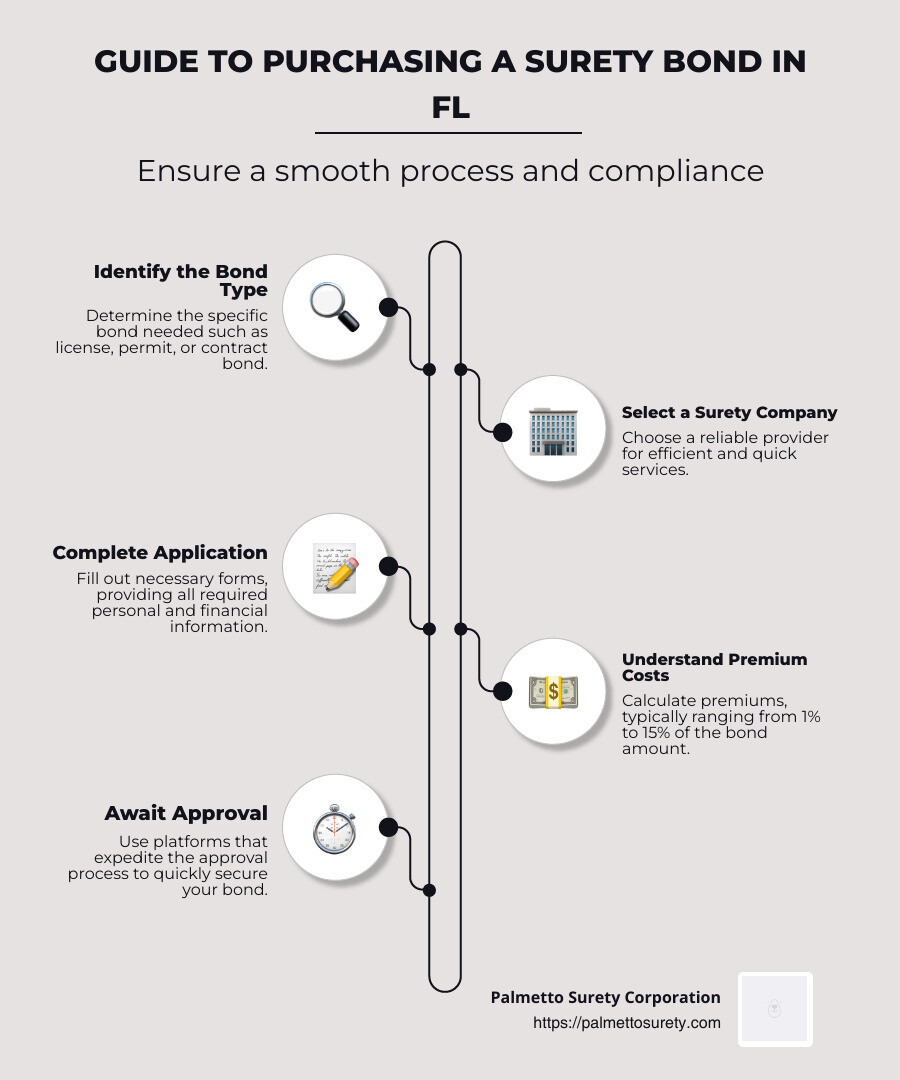
Here’s a quick guide to purchase a surety bond fl:
- Identify the Bond Type: Determine the bond required for your specific need (e.g., license, permit, or contract bond).
- Select a Reliable Surety Company: Consider trusted providers like Palmetto Surety Corporation, renowned for quick and efficient services.
- Complete the Application Process: Fill out the necessary forms, providing financial and personal history as required.
- Understand Premium Costs: Premiums usually range from 1% to 15% of the bond amount based on risk evaluation.
- Await Approval: Some companies offer state-of-the-art platforms that expedite this process, making it quicker and easier to secure your bond.
My name is Haiko de Poel Jr., and with experience in marketing and digital change, I’ve helped steer businesses like Palmetto Surety Corporation to new heights. By redesigning strategies, I’ve made the process to purchase a surety bond fl as simple and effective as possible.
Understanding Surety Bonds
Surety bonds are unique financial agreements involving three key parties: the principal, the obligee, and the surety. Each plays a distinct role in ensuring the bond fulfills its intended purpose.
Three-Party Agreement
-
Principal: This is the individual or business required to obtain the bond. They are responsible for fulfilling the obligations set forth in the bond agreement. If these obligations are not met, the principal is liable for any claims made against the bond.
-
Obligee: The obligee is the entity that requires the bond. Often a government agency, they set the bond requirement to protect the public or ensure that the principal complies with laws and regulations.
-
Surety: The surety is the company that issues the bond. They provide a financial guarantee to the obligee that the principal will meet their obligations. If the principal fails to do so, the surety covers the financial damages up to the bond amount. The principal must then reimburse the surety for any payouts made.
This three-party relationship is crucial because it ensures that all parties involved are protected. The obligee is assured of compliance, the principal gains the trust necessary to conduct business, and the surety provides a financial safety net.

How Surety Bonds Work
When you purchase a surety bond fl, you are essentially entering into a contractual agreement that acts as a financial safety net. If the principal fails to fulfill their obligations, the obligee can make a claim on the bond. If the claim is valid, the surety pays the obligee up to the bond’s value. However, the principal must then repay the surety for the claim amount.
This arrangement not only protects the obligee but also encourages principals to adhere to their commitments, knowing that failure to do so could lead to financial repercussions.
Understanding these components and their interactions is essential for anyone looking to steer surety bonds, especially in Florida where they play a significant role in business operations and compliance.
Types of Surety Bonds in Florida
In Florida, surety bonds come in various forms, each serving a specific purpose. Here’s a breakdown of the most common types:
License and Permit Bonds
License and permit bonds are essential for businesses to legally operate in certain industries. These bonds ensure compliance with state regulations and protect the public from potential malpractice. For instance, if you’re a car dealer in Florida, you might need a license bond to sell vehicles legally. Many industries, from construction to healthcare, require these bonds to safeguard consumer interests and ensure business integrity.
Court Bonds
Court bonds are typically required during legal proceedings. They protect the rights of litigants or other involved parties. For example, if someone is appealing a court decision, an appeal bond might be necessary to ensure that the original judgment can be enforced if the appeal fails. These bonds offer a financial guarantee that court orders will be honored.
Contract Bonds
Contract bonds are pivotal in the construction industry. They assure project owners that contractors will fulfill their contractual obligations. Common types include:
- Bid Bonds: Ensure that a contractor enters the contract if selected.
- Performance Bonds: Guarantee that the project will be completed as per the contract terms.
- Payment Bonds: Protect suppliers and subcontractors by ensuring they get paid.
These bonds are crucial for managing risks and ensuring project completion.

Popular Bonds
In addition to the specific categories above, some bonds are particularly popular in Florida due to the state’s unique business landscape. These include:
- Notary Bonds: Required for notaries public to protect the public from errors or misconduct.
- Public Official Bonds: Ensure that public officials perform their duties ethically and lawfully.
- Fiduciary Bonds: Needed for individuals managing another’s assets, ensuring they act in the best interest of the asset owner.
Each of these bonds serves a distinct purpose but shares the common goal of protecting parties involved in various transactions or agreements. Understanding the right bond for your needs is crucial when you decide to purchase a surety bond fl.
By familiarizing yourself with these bond types, you can ensure compliance with Florida regulations and safeguard your business interests effectively.
How to Purchase a Surety Bond in FL
Buying a surety bond in Florida might seem daunting, but it’s simpler than you think. Here’s a straightforward guide to help you through the process.
Purchase Process
The first step to purchase a surety bond FL is understanding the specific bond type you need. Whether it’s a license bond for your business or a contract bond for a construction project, identifying the right bond is crucial. Once you know what you need, the next step is finding a reputable surety company. Palmetto Surety Corporation is known for its expertise in offering a variety of surety bonds, ensuring you find the right fit for your requirements.
Online Application
Thanks to technology, applying for a surety bond has never been easier. Many companies, including Palmetto Surety, offer online applications. This streamlined process allows you to fill out necessary forms, provide essential information, and submit your application from the comfort of your home or office. Typically, you’ll need to provide personal and business details, including your financial standing and credit score.
Bond Premium
The cost of your surety bond, known as the bond premium, is a fraction of the total bond amount. This premium is determined by several factors, including the bond type and your creditworthiness. On average, premiums range from 1% to 15% of the bond amount. Applicants with strong credit scores and financial stability often enjoy lower premium rates, making it more affordable to secure the required bond.
Underwriting
Once you submit your application, the underwriting process begins. During this stage, the surety company evaluates your financial history, credit score, and business experience. This assessment helps determine the risk involved in issuing the bond. The better your financial profile, the smoother the underwriting process will be, potentially resulting in lower premiums. If you have less-than-perfect credit, don’t worry—some companies offer flexible options to accommodate various credit situations.
With these steps, you can confidently steer the process of obtaining a surety bond in Florida. Whether you’re a seasoned business owner or new to surety bonds, understanding these key elements will help you make informed decisions and secure the necessary protection for your operations.
Factors Affecting Surety Bond Costs
When it comes to the cost of surety bonds in Florida, several key factors come into play. Understanding these can help you anticipate expenses and manage your budget effectively.
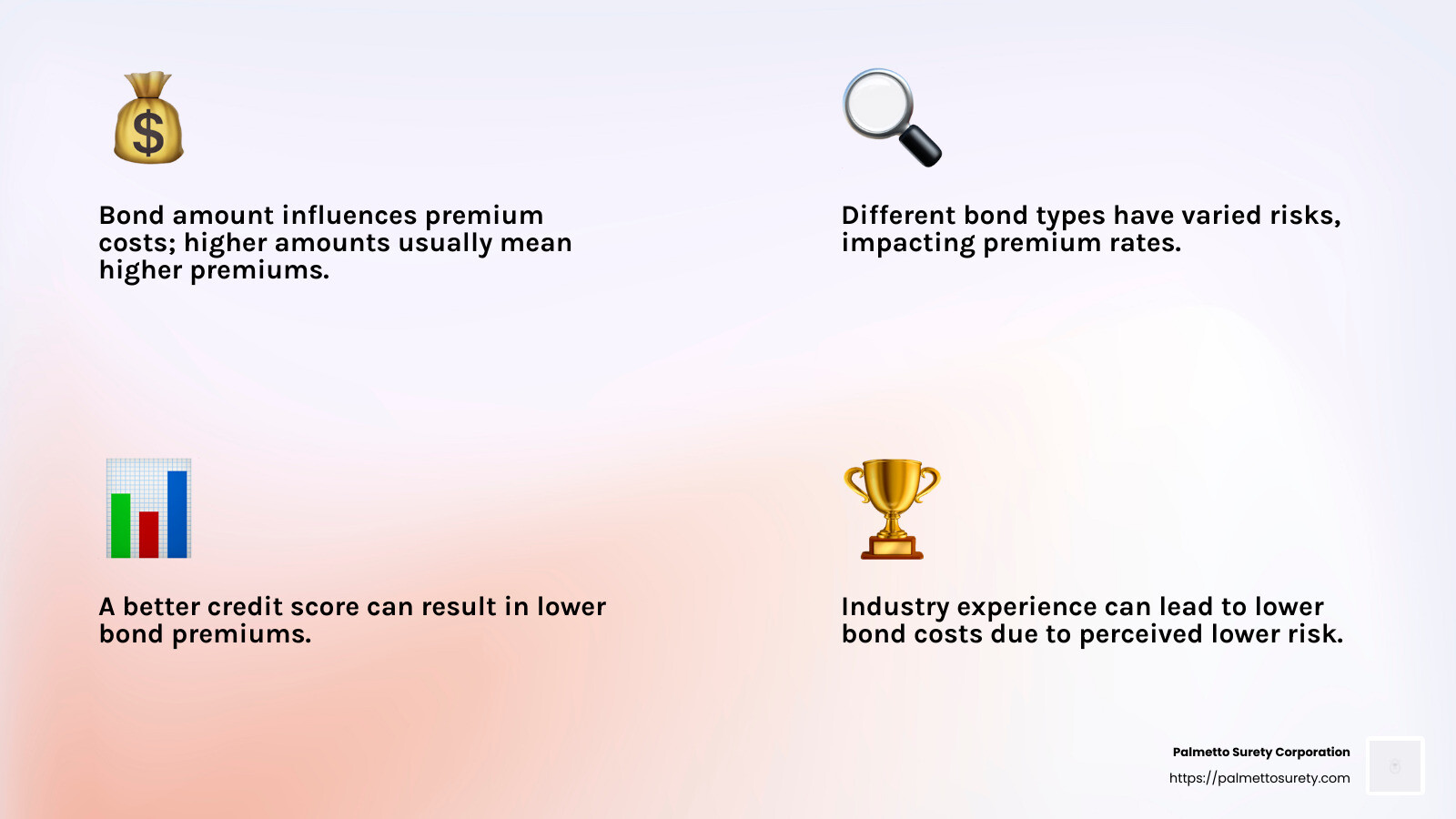
Bond Amount
The bond amount is the maximum coverage provided by the surety company in the event of a claim. This amount is not what you pay upfront but rather the cap on potential payouts. However, it directly influences your bond premium, which is a percentage of this total. A higher bond amount typically means a higher premium.
Bond Type
Different types of bonds carry different levels of risk, which affects the premium. For instance, a contractor license bond may be riskier than a notary bond due to the complexities involved in construction projects. Riskier bonds require higher premiums to offset potential claims. Knowing the specific bond type you need is crucial, as it sets the stage for cost determination.
Credit Score
Your credit score is a significant factor in determining your bond premium. Surety companies view a strong credit score as an indicator of financial responsibility, often leading to lower premiums. Conversely, a lower credit score could result in higher premiums. However, it’s important to note that some companies, like Palmetto Surety Corporation, offer flexible options for those with less-than-perfect credit.
Professional Experience
Experience in your industry can also impact your bond costs. Applicants with extensive industry knowledge and a proven track record may benefit from lower premiums. This is because experienced professionals are perceived as less risky to the surety company. So, highlighting your professional background during the application process can work in your favor.
By considering these factors, you can better steer the costs associated with purchasing a surety bond in Florida. Whether you’re a seasoned professional or just starting, understanding these elements will help you make informed decisions and manage your expenses wisely.
In the next section, we’ll tackle some of the most frequently asked questions about surety bonds in Florida, addressing common concerns and clarifying the process further.
Frequently Asked Questions about Surety Bonds in Florida
When considering how to purchase a surety bond in Florida, you might have several questions. Let’s address some of the most common queries to help you steer the process smoothly.
How do I get a surety bond in Florida?
Getting a surety bond in Florida involves a straightforward process. First, you need to identify the type of bond required for your specific situation. This could be a license bond, permit bond, or another type relevant to your industry.
Once you know the bond type, reach out to a reputable surety company like Palmetto Surety Corporation. They will guide you through the bond application, which typically involves providing some basic personal and business information. The surety company evaluates your application, considering factors like your credit score and professional experience.
After approval, you’ll pay a bond premium, which is a percentage of the bond amount. Once the premium is paid, the surety company issues the bond, and you’re all set!
How much does a $7,500 surety bond cost in Florida?
The cost of a $7,500 surety bond in Florida depends on the bond premium, which is a small percentage of the bond amount. Typically, the premium ranges from 1% to 15%, depending on factors such as your credit score, industry experience, and the bond type.
For instance, if the premium rate is 2%, you would pay $150 for a $7,500 bond. However, if the rate is higher due to a lower credit score or other factors, the cost might increase. It’s always a good idea to get a quote from the surety company to understand the exact amount you’ll need to pay.
Do Florida surety bonds expire?
Yes, Florida surety bonds do expire. Most bonds are issued for a set term, typically ranging from 1 to 3 years. It’s crucial to be aware of your bond’s expiration date and renew it before it lapses to ensure continuous coverage.
Some bonds are continuous, meaning they remain in effect until canceled by the surety company. However, even continuous bonds require regular premium payments to stay active. Make sure to check with your surety company about the specific terms and renewal process for your bond to avoid any lapses in coverage.
By understanding these aspects of surety bonds, you can confidently purchase a surety bond in Florida and ensure compliance with relevant regulations. Up next, we’ll dig into more details about Palmetto Surety Corporation and how they can assist you with quick approval and efficient service.
Conclusion
When it comes to securing a surety bond in Florida, Palmetto Surety Corporation stands out as a reliable and efficient choice. With over 20 years of experience in the surety bond industry, we specialize in offering quick approvals and exceptional service to our clients.
Our streamlined process ensures that most applications are approved within hours, allowing you to focus on your business without unnecessary delays. Whether you need a license bond, permit bond, or any other type of surety bond, we are here to guide you through the process with ease.
At Palmetto Surety Corporation, we understand the importance of having the right financial guarantees in place. Our team is dedicated to providing you with the best possible service, ensuring that you can meet your obligations with confidence.
For more information on how we can assist you in purchasing a surety bond in Florida, please visit our service page and experience the difference that quick approval and efficient service can make.


