


Florida Contractor Surety Bond: Top 5 Essential Tips
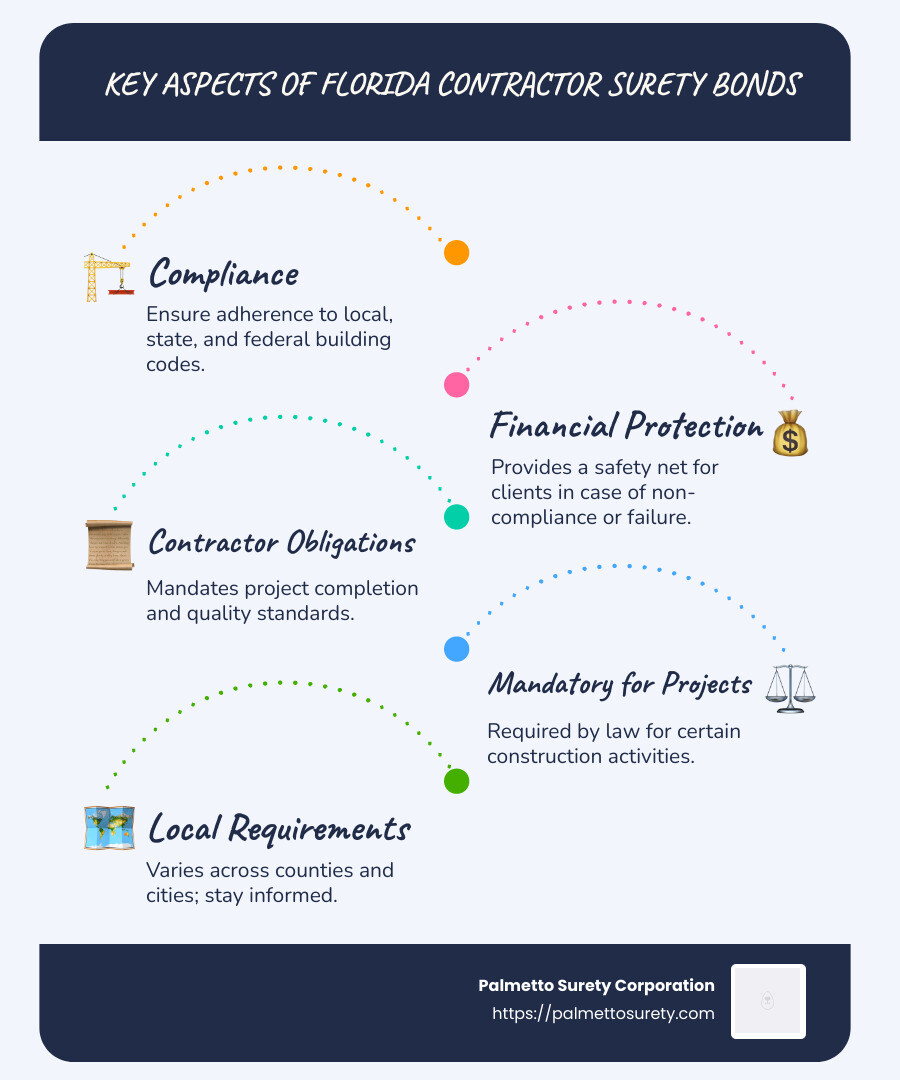
Florida contractor surety bond is essential for contractors aiming to comply with state regulations and protect project stakeholders. A Florida contractor surety bond acts as a guarantee that a contractor will adhere to local, state, and federal building codes and complete projects as agreed. In case of non-compliance or project failure, the bond provides a financial safety net for the client.
Key Considerations:
– Contractor Obligations: Compliance with licensing laws and construction standards
– Protection Against Default: Financial security for project owners
– Mandatory for Many Projects: Required by Florida law for certain construction activities
Florida’s requirements for contractor surety bonds may vary slightly across counties and cities, making it vital for professionals to be informed about local specifications. In this guide, we will dig deep into these diverse requirements and processes.
As Haiko de Poel Jr, a branding expert involved in rebranding Palmetto Surety Corporation, my experience with florida contractor surety bond spans both strategic marketing and the practicalities involved in obtaining bonds. This expertise guides us as we explore the landscape of contractor bonds in Florida, providing insights that are both practical and strategic.
Understanding Florida Contractor Surety Bonds
When it comes to construction projects in Florida, Florida contractor surety bonds play a vital role. These bonds serve as a financial guarantee that contractors will fulfill their contractual obligations. They protect project owners and ensure that construction projects are completed as agreed upon.
Types of Surety Bonds
There are several types of surety bonds that contractors in Florida might encounter. Each serves a unique purpose in the construction industry:
-
Contract Bonds: These are essential for construction projects. They ensure that contractors meet the terms of their contracts. Contract bonds include bid bonds, performance bonds, and payment bonds.
-
Bid Bonds: These protect project owners if a contractor fails to enter into a contract after winning a bid. Essentially, they ensure that the bidding process is fair and that the chosen contractor is committed to the project.

-
Performance Bonds: These guarantee that the contractor will complete the project according to the contract terms. If the contractor fails, the bond provides financial compensation to the project owner.
-
Payment Bonds: These ensure that subcontractors and suppliers are paid for their work and materials. They protect against financial loss due to non-payment by the contractor.
-
Commercial Bonds: While not specific to construction, these bonds are often required for licensed businesses. They ensure compliance with state regulations and protect the public from business misconduct.
Why Contractors Need Surety Bonds
Surety bonds are more than just a legal requirement; they provide significant benefits to both contractors and project owners:
-
Contractual Obligations: Surety bonds ensure that contractors adhere to their contractual commitments. They provide a layer of trust and accountability in the construction process.
-
Financial Protection: For project owners, surety bonds offer financial protection. If a contractor fails to meet their obligations, the bond compensates for any financial losses incurred.
-
Project Completion: By guaranteeing that projects are completed as agreed, surety bonds help maintain timelines and quality standards. This is crucial for both the contractor’s reputation and the project’s overall success.
In Florida, understanding the nuances of surety bonds is essential for contractors. They ensure compliance with local regulations and provide peace of mind for all parties involved in a construction project. Whether it’s a bid bond that secures a fair bidding process or a performance bond that guarantees project completion, surety bonds are indispensable in the Florida construction landscape.
How to Obtain a Surety Bond in Florida
Securing a Florida contractor surety bond is a straightforward process, but it requires attention to detail. Let’s break it down into simple steps to help you steer the journey smoothly.
Steps to Secure a Bond
-
Identify the Bond Requirement: First, determine which bond you need. This depends on your project type and the requirements set by the project owner or government authority.
-
Application Submission: Fill out a bond application. This will include basic information about your business and the specific bond you need.
-
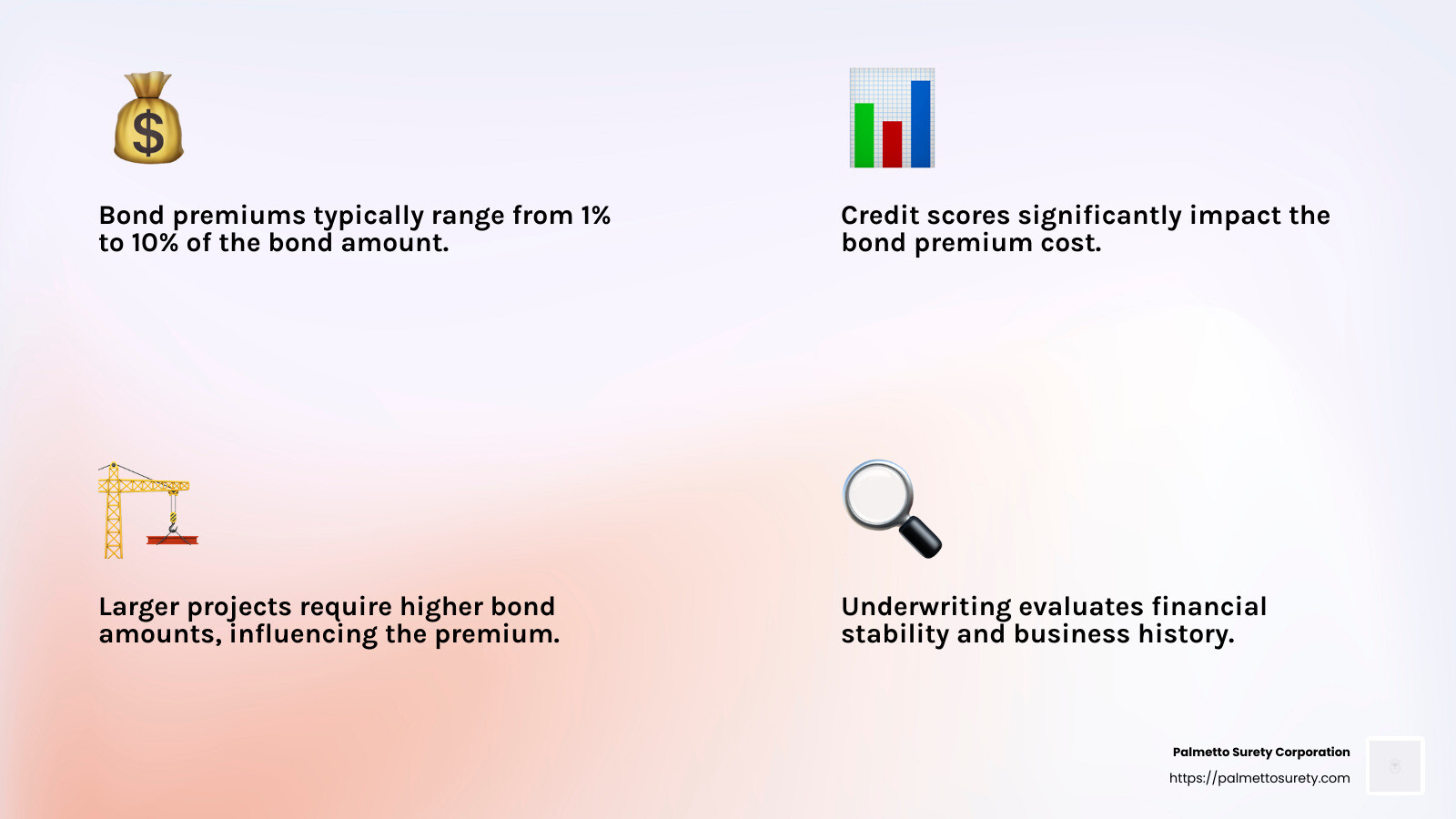
Underwriting Evaluation: Once you submit your application, the underwriting process begins. Underwriters assess your financial stability, business history, and credit score. This step determines your eligibility and the bond premium.
-
Approval Process: After underwriting, you’ll receive a bond quote. If everything checks out, you’ll be approved, and you can purchase the bond.
-
Receive and File the Bond: Once you pay the premium, you’ll receive the bond document. File it with the obligee, which could be a project owner or government agency.
Cost of Surety Bonds
The cost of a surety bond, or the bond premium, is a small percentage of the total bond amount. Here’s what influences the cost:
-
Bond Amount: The bond amount is the total coverage required. Larger projects require higher bond amounts, which can impact the premium.
-
Premium Percentage: Typically, premiums range from 1% to 10% of the bond amount. The exact percentage depends on several factors.
-
Credit Score Influence: Your personal and business credit scores play a significant role. Higher scores often mean lower premiums.
-
Business Financials and Experience: A strong financial background and extensive industry experience can lead to better rates.
By understanding these steps and cost factors, contractors can secure their Florida contractor surety bonds efficiently. This ensures compliance with local requirements and provides the necessary financial protection for construction projects.
Next, we’ll explore local bonding requirements in Florida, including examples from Orlando, Nassau County, and more.
Local Bonding Requirements in Florida
When working on construction projects in Florida, contractors must be aware of local bonding requirements that vary by county and city. These requirements ensure contractors are financially responsible and comply with local regulations. Let’s look at some examples from different regions in Florida.
County and City Bonds
County and city bonds are essential for contractors operating in specific areas. These bonds often include license bonds and permit bonds. A license bond is required before a contractor can obtain the necessary license to work in a particular area. Meanwhile, a permit bond is specific to a job and remains active only for the job’s duration.
Examples of Local Requirements
Orlando
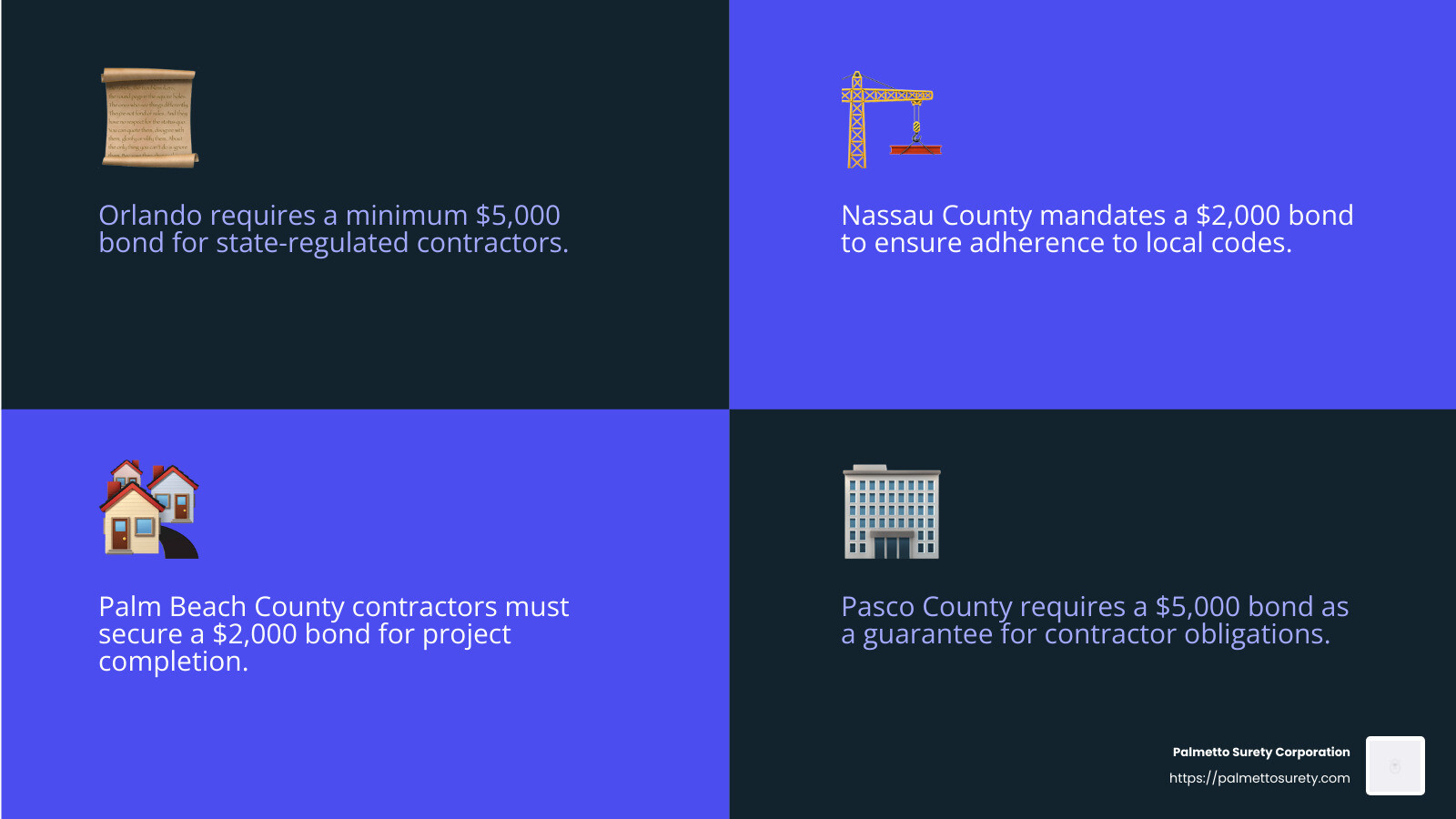
In Orlando, contractors might need several types of bonds depending on their project. For instance, the city requires a minimum $5,000 bond for state-regulated contractors. Specialty contractors may need a bond starting at $1,000. Additionally, right of way bonds are project-based and necessary for work on public property, such as streets or sidewalks.
Nassau County
Nassau County mandates a $2,000 bond for contractors. This ensures that contractors adhere to local codes and regulations, protecting both the county and its residents from potential financial loss.
Palm Beach County
In Palm Beach County, contractors must secure a $2,000 bond. This bond is a financial safeguard, ensuring contractors complete their projects as agreed and meet local standards.
Pasco County
Pasco County requires a $5,000 bond for contractors. This bond acts as a guarantee that the contractor will fulfill their obligations, providing peace of mind to the county and its citizens.
Understanding these local requirements is crucial for contractors to operate legally and successfully in Florida. Each bond serves to protect the public and ensure that contractors complete their work to the required standards. By securing the appropriate bonds, contractors can build trust with clients and local authorities, paving the way for successful project completion.
Next, we’ll address frequently asked questions about Florida contractor surety bonds to clarify any lingering doubts.
Frequently Asked Questions about Florida Contractor Surety Bonds
What is a Florida contractor surety bond?
A Florida contractor surety bond is a type of financial guarantee required for contractors working on construction projects. It ensures that the contractor fulfills their contractual obligations to the client and adheres to local and state regulations. If the contractor fails to complete the project as agreed, the surety bond provides financial protection to the client by covering any losses up to the bond amount.
How much does a surety bond cost in Florida?
The cost of a surety bond in Florida typically ranges from 1% to 10% of the bond amount. Several factors influence the exact cost, including the contractor’s credit score, financial history, and the type of bond required. For example, a contractor with a strong credit score may pay a lower percentage, while those with lower scores might face higher premiums. Requesting an online quote is the easiest way to get an accurate estimate for your specific situation.
Do all contractors in Florida need to be bonded?
Not all contractors in Florida are required to be bonded, but many are, especially those involved in public works or projects exceeding $100,000. The requirement for a bond often depends on the type of work and the specific regulations of the city or county where the project is located. It’s crucial for contractors to check local and state requirements to determine if a bond is necessary for their specific projects. Having the appropriate bond not only ensures compliance but also builds trust with clients and regulatory bodies.
Conclusion
In construction, having a Florida contractor surety bond is not just about compliance—it’s about trust and reliability. At Palmetto Surety Corporation, we understand the importance of these bonds and the role they play in ensuring projects are completed as promised. With over 20 years of experience, we specialize in providing quick and efficient service to meet the needs of contractors across Florida.
Our streamlined approval process allows us to approve most applications within hours. This means you can focus on what you do best—building and managing projects—without the hassle of lengthy paperwork or delays. Whether you’re working on a small local project or a large-scale development, having a surety bond in place provides peace of mind, knowing that financial and contractual obligations are secured.
For contractors seeking a reliable partner in the surety bond space, Palmetto Surety Corporation is here to help. We offer a range of bonds custom to your needs, ensuring you meet all local and state requirements. Our commitment to excellence means you receive not only a bond but a partnership dedicated to your success.
Get started with Palmetto Surety Corporation today and experience the ease and efficiency of securing your contractor surety bond with a trusted provider.


