


What is a Bond for Title South Carolina: Top 3 Benefits
What is a bond for title South Carolina is a common question for those navigating real estate financing. In South Carolina, a bond for title is a unique installment sale agreement used in real estate transactions. It allows buyers to take immediate possession of a property while making payments over time. During this period, the seller retains the legal title until the full payment is completed, ensuring security in the transaction for both parties.
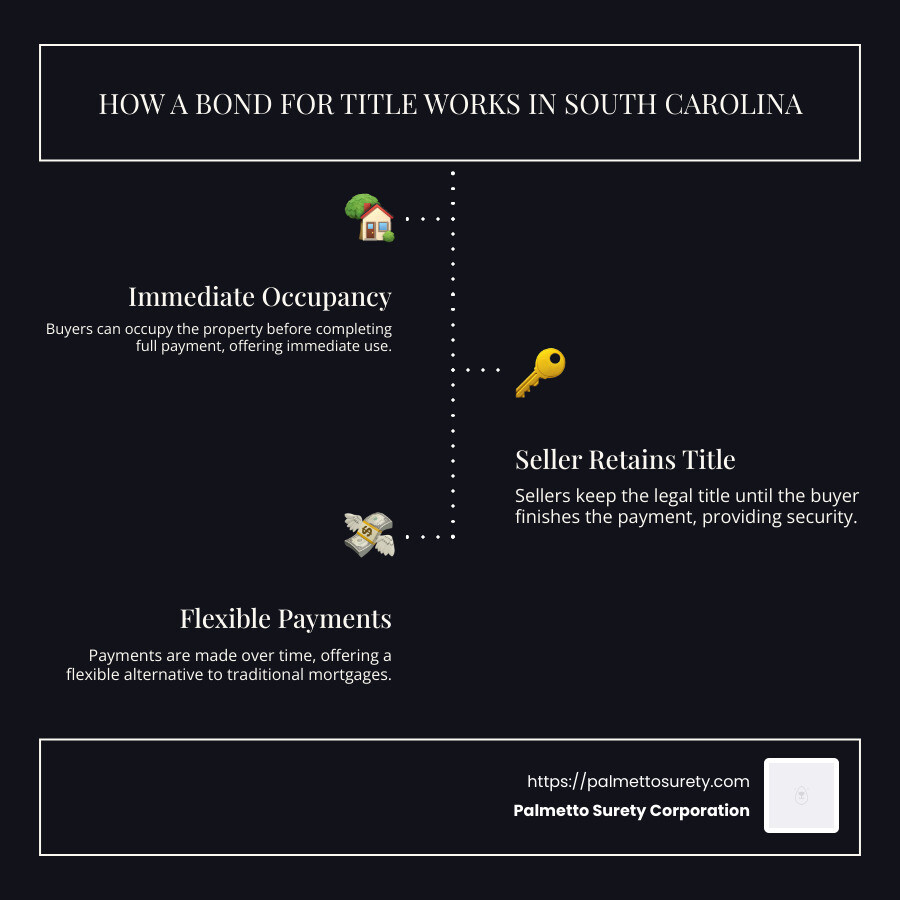
- Allows buyers to occupy property before full payment
- Seller retains title until all payments are made
- Offers a flexible alternative to traditional mortgages
The concept of bond for title is widely used as it provides both buyers and sellers with numerous benefits, including flexible payment arrangements and improved security measures. Whether you’re buying a home or investment property, understanding this financing method can open doors to new opportunities in the South Carolina real estate market.
As I guide you through the intricacies of what is a bond for title South Carolina, let me introduce myself. I am Haiko de Poel Jr, a seasoned strategist responsible for rebranding efforts in fast-growing sectors such as surety bonds. With years of experience assisting companies like Palmetto Surety Corporation in navigating complex financial landscapes, I’m here to help simplify the concept for you.
What is a Bond for Title in South Carolina?
A bond for title is a real estate term often used in South Carolina as a financing method for property transactions. This legal document allows a buyer to take possession of a property while making installment payments, with the seller retaining the legal title until all payments are completed. This approach offers flexibility, acting as a bridge for buyers who might not have immediate access to traditional mortgage financing.
Understanding the Legal Framework
In South Carolina, a bond for title is a contract that outlines the terms of property ownership between the buyer and the seller. The seller maintains the legal title to the property during the payment period, which protects them from potential default by the buyer. Meanwhile, the buyer gains equitable ownership, meaning they can enjoy certain benefits of ownership, such as using the property and claiming tax benefits.
The contract terms are crucial. They specify the purchase price, interest rates, and payment methods. Legal documents like this require careful drafting to ensure clarity and protection for both parties involved. It’s often advisable to seek legal guidance when entering such agreements to avoid misunderstandings and disputes.
Benefits of Using a Bond for Title
For Buyers:
- Flexible Payment Options: Buyers can make payments over time, instead of paying the full purchase price upfront.
- Immediate Property Use: Buyers can occupy and use the property while still paying it off.
- Pathway to Ownership: This method can serve as a stepping stone for those who might not yet qualify for traditional mortgages.
For Sellers:

- Faster Transactions: Sellers can close deals quickly, as buyers don’t need to secure a mortgage first.
- Security in Retaining Title: By holding the legal title, sellers have protection against buyer default.
- Potential for Higher Sale Price: The flexibility offered might allow sellers to negotiate a better overall price.
In summary, a bond for title in South Carolina provides a unique and flexible financing option for both buyers and sellers. By understanding the legal framework and benefits, parties can steer real estate transactions with confidence.
How Does a Bond for Title Work?
In a bond for title agreement, the seller retains the legal title of the property while the buyer makes scheduled payments. This arrangement allows the buyer to gain equitable ownership, meaning they can enjoy the property’s benefits, like living there or claiming tax deductions, even though they don’t yet hold the title.
Key Components of a Bond for Title Agreement
-
Purchase Price: This is the total amount the buyer agrees to pay over the contract term. It’s often higher than the property’s market value due to the convenience and flexibility of installment payments.
-
Interest Rates: The agreement will outline the interest rate applied to the outstanding balance. This rate can significantly affect the total cost of the purchase over time.
-
Payment Methods: Details on how payments are to be made, such as monthly or quarterly, and through what channels (e.g., bank transfer, check) are specified. Flexibility in payment methods can be negotiated to suit both parties.
-
Equitable Ownership: While the legal title remains with the seller, the buyer is considered the equitable owner. This status allows the buyer to use the property and claim certain benefits, although they cannot transfer or sell the property until they fulfill the contract terms.
Risks and Challenges
Default Risk: One of the primary risks in a bond for title agreement is the possibility of the buyer defaulting on payments. If this happens, the seller retains the title and may have the right to reclaim the property without refunding the payments already made by the buyer.
Legal Disputes: Disagreements can arise over contract terms, especially if they are not clearly defined. These disputes might involve payment schedules, interest rates, or property maintenance responsibilities.
Breach of Contract: If either party fails to adhere to the agreed terms, it could lead to legal action. For example, if a buyer fails to make payments on time, the seller might pursue legal remedies to enforce the contract or reclaim the property.
A bond for title offers a flexible path to property ownership but comes with its own set of risks and complexities. It’s crucial for both buyers and sellers to thoroughly understand the agreement’s terms and seek legal advice to mitigate potential challenges.
Frequently Asked Questions about Bond for Title in South Carolina
What is a Bond for Title South Carolina?
A bond for title in South Carolina is a unique real estate financing method where the seller retains the title of the property until the buyer completes all agreed-upon payments. This arrangement helps buyers who may not have the funds for a full upfront purchase. Instead, they make installment payments over time, allowing them to occupy the property as equitable owners. This means they can enjoy certain benefits like living in the home and potentially claiming tax deductions, even though the legal title remains with the seller until the contract is fulfilled.
How Does a Bond for Title Differ from a Traditional Mortgage?
When comparing a bond for title to a traditional mortgage, the key difference lies in the payment structure and title transfer process. In a traditional mortgage, the buyer receives the title at closing, but the property is used as collateral for the loan. The lender can foreclose if the buyer fails to make payments. In contrast, with a bond for title, the seller retains the title until the buyer completes all payments. This means the buyer does not have the legal title until the end of the payment term, which can be a significant difference in terms of ownership rights and responsibilities.
What Are the Legal Disputes Associated with a Bond for Title?
Legal disputes in bond for title agreements can arise from various issues:
-
Contract Disputes: Ambiguities in the contract terms can lead to disagreements. It is crucial that all terms, such as payment schedules and maintenance responsibilities, are clearly defined to prevent disputes.
-
Deed Transfer Issues: Problems can occur when transferring the deed if the buyer fulfills the contract terms but the seller fails to transfer the title. This can lead to legal action to enforce the contract.
-
Warranty Violations: If the property does not meet the agreed standards or if there are undisclosed issues, the buyer might claim a breach of warranty. This could result in legal proceedings to address the issue or seek compensation.
Understanding these potential challenges is essential for both buyers and sellers entering a bond for title agreement. Legal guidance is often recommended to steer these complex issues and ensure a smooth transaction process.
Conclusion
Navigating real estate transactions in South Carolina can be complex, especially when considering options like a bond for title. This unique financing method offers both opportunities and challenges. To ensure a smooth process, it’s crucial to have the right guidance and support.
Palmetto Surety Corporation stands out as a trusted partner in this journey. With over 20 years of experience, we specialize in providing surety bonds custom to meet the needs of our clients. Our expertise in the field ensures that both buyers and sellers are well-protected and informed throughout their transaction.
Legal guidance is vital when dealing with bond for title agreements. These contracts involve detailed terms and obligations that, if misunderstood, can lead to disputes. By partnering with experts like us, you can steer these complexities with confidence. We offer quick and efficient service, often approving applications within hours, ensuring that your transaction proceeds smoothly.
For more information on how we can support your real estate needs, visit Palmetto Surety Corporation. Let us help you secure your future with ease and confidence.


