


Bond Companies: Top 5 Best Picks for 2024 Success
Bond companies play a crucial role in both the financial and construction sectors by providing surety bonds. These bonds act as a guarantee that businesses, such as contractors, will fulfill their contractual obligations. Investing in bonds from these companies can also provide a reliable source of income for individuals looking to diversify their portfolios. By ensuring compliance and performance, bond companies build trust within industries and help projects proceed smoothly.
- What are bond companies?
-
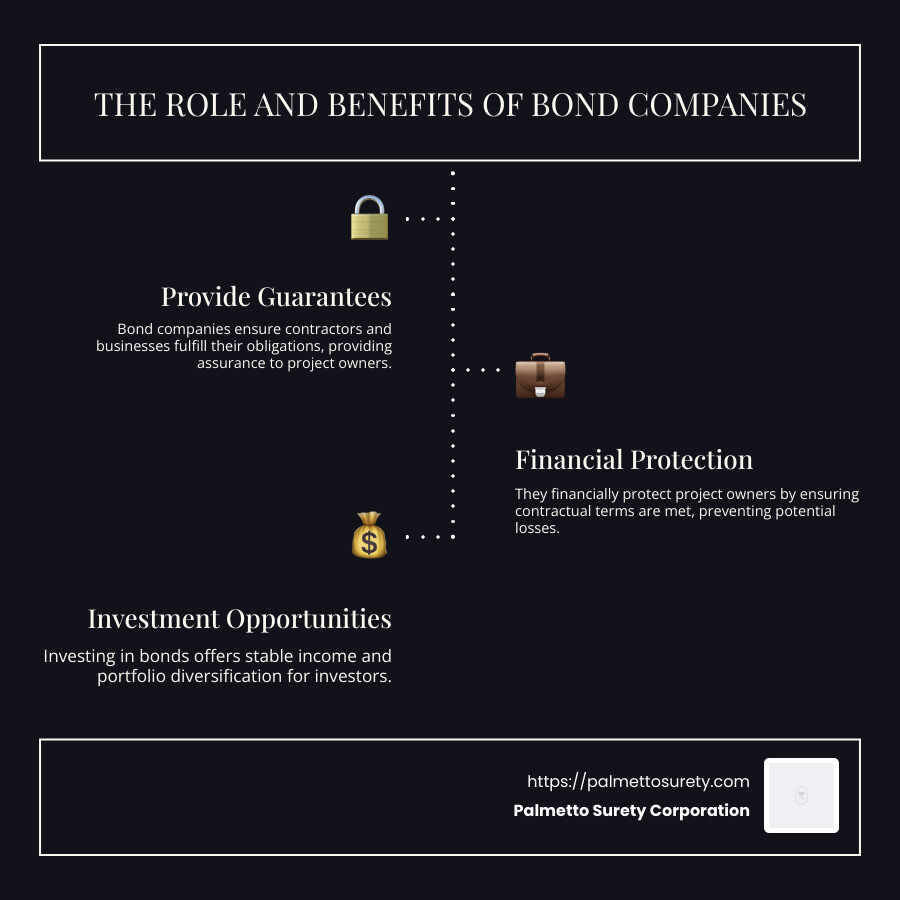
Bond companies, also known as sureties, provide guarantees that contractors or businesses will fulfill obligations.
-
Why are bond companies important?
-
They ensure that project owners are financially protected and that contractual terms are met.
-
How do they benefit investors?
- Investing in bonds offers a stable income source and helps diversify investment portfolios.
I’m Haiko de Poel Jr, a seasoned expert in branding and strategic marketing. Throughout my career, I’ve successfully driven change and growth for several organizations, including a leading role at one of the fastest-growing surety bond companies in the U.S. Now, let’s dive into understanding more about the importance of bond companies.
Simple bond companies word guide:
– bail settlement
– how do bail bonds work
– agent bail enforcement
What Are Bond Companies?
Bond companies are financial entities that provide guarantees through surety bonds. These bonds are essential in various industries, including construction and finance, to ensure that parties fulfill their contractual obligations.

Surety Companies and Their Role
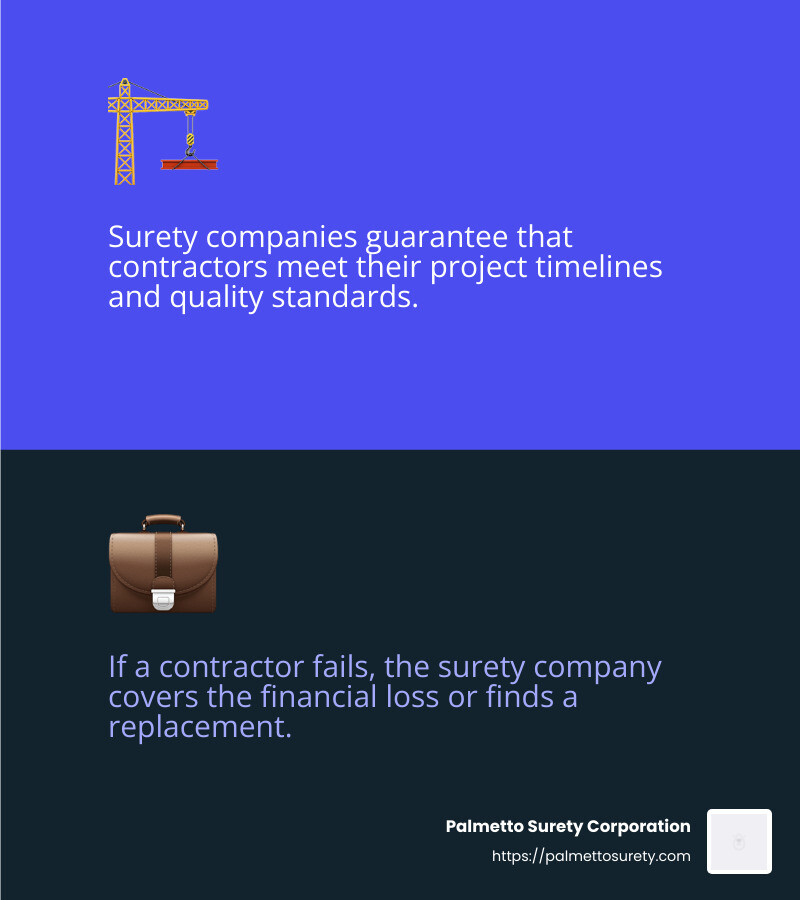
A surety company acts as a guarantor, providing a pledge to cover the obligations of a contractor or business if they fail to meet their commitments. This is crucial in construction projects where timelines and quality standards must be met. For example, if a contractor cannot complete a project, the surety company steps in to cover the financial loss or find a replacement to finish the work.
Understanding Fidelity Bonds
Fidelity bonds are a type of insurance that protect businesses from fraudulent activities by employees. These bonds are often used in industries where employees handle cash or valuable assets. By providing this protection, bond companies help businesses maintain trust and security.
The Financial Marketplace and Bond Companies
In the financial marketplace, bond companies play a vital role by issuing bonds that investors can purchase. These bonds are debt securities that provide a fixed income, making them an attractive investment option for those seeking stability. Investors essentially lend money to the company in exchange for periodic interest payments and the return of the bond’s face value at maturity.
Bond companies are integral to the financial ecosystem, offering solutions that protect businesses and provide investment opportunities. They ensure that projects are completed as promised and help maintain financial stability in various sectors.
Why Companies Issue Bonds
Companies often need to raise money for various reasons—expansion, new projects, or paying off existing debt. One popular way to do this is by issuing bonds. But why choose bonds over other financing options?
Raising Money Through Bonds
When a company issues bonds, it’s borrowing money directly from investors. The company agrees to pay back the loan with interest over a set period. This process is different from taking a direct loan from a bank. With bonds, companies can access funds from a broader range of investors, not just a single lender.
The Appeal of Debt Capital
Debt capital, like bonds, is attractive because it doesn’t dilute ownership. When companies issue stocks, they give away a piece of the company. But with bonds, the company maintains control. This is crucial for businesses that want to grow without losing management power.
Understanding Corporate Bonds
Corporate bonds are a type of debt security issued by companies. These bonds are an “IOU” from the company to the investor. The company gets the needed funds, and the investor gets regular interest payments and the return of the bond’s face value at maturity.
The bond market is a key player in the financial world, with the U.S. bond market alone valued at approximately $55,137 billion as of 2022.
Why Not Just Borrow from a Bank?
Borrowing from a bank is an option, but issuing bonds often comes with lower interest rates. This makes it a more cost-effective choice for many businesses. Plus, bonds come with fewer restrictions compared to bank loans. For instance, banks might impose limits on additional borrowing or acquisitions, which can hinder a company’s growth plans. Bonds offer more freedom to operate as the company sees fit.
In summary, issuing bonds is a strategic move for companies to raise needed funds while maintaining control and minimizing costs. This makes bonds a preferred choice for many businesses looking to expand or manage existing debts efficiently.
Major Bond Rating Agencies
When companies issue bonds, investors want to know how risky it is to lend them money. That’s where bond rating agencies come in. These agencies assess the creditworthiness of both the bonds and the companies issuing them. Think of them as the credit score keepers for the bond world.
The Big Three: Standard & Poor’s, Moody’s, and Fitch Ratings
In the U.S., the three primary bond rating agencies are Standard & Poor’s, Moody’s, and Fitch Ratings. Each of these agencies uses a unique letter-based system to rate bonds, helping investors quickly understand the risk involved.
-
Standard & Poor’s: This agency uses ratings from AAA (the highest) to D (default). A bond rated AAA is considered very safe, while a bond rated D is in trouble.
-
Moody’s: Moody’s also uses a letter grading system, ranging from Aaa to C. An Aaa rating means the bond is of the highest quality with minimal risk.
-
Fitch Ratings: Similar to Standard & Poor’s, Fitch rates bonds from AAA to D. Their ratings help investors determine the likelihood of a company defaulting on its bond payments.
Why Are These Ratings Important?
Creditworthiness is key. A higher bond rating means lower risk and often lower interest rates for the company issuing the bond. This is because investors feel more secure that they will get their money back, along with the agreed interest. Conversely, a lower rating means higher risk and usually higher interest rates to compensate investors for taking that risk.
How Do These Agencies Determine Ratings?
These agencies evaluate a company’s financial health, industry position, and economic conditions. They look at:
-
Financial Indicators: This includes reviewing balance sheets, income statements, and cash flow.
-
Industry Analysis: Agencies consider how the industry is performing and any unique challenges it faces.
-
Macroeconomic Factors: They assess broader economic conditions, like inflation and interest rates, which can impact a company’s financial stability.
These ratings help investors make informed decisions about where to put their money. Companies with high ratings can raise funds more easily and at lower costs, making these ratings crucial for their financial strategy.
Leading Bond Companies in the USA
When it comes to bond companies, a few names stand out in the USA. These companies are known for their efficiency, quick approvals, and reliable services. Let’s take a closer look at one of the leading names in the industry.
Palmetto Surety Corporation
Located in Charleston, SC, Palmetto Surety Corporation is renowned for its expertise in commercial surety bonds and bail bonds. They are celebrated for their quick approval process and efficient service, making them a go-to choice for many businesses and individuals. With over two decades of experience, Palmetto Surety Corporation emphasizes ethical business practices and customer satisfaction, ensuring that their clients receive top-notch service.
These bond companies play a crucial role in the financial landscape, providing the necessary guarantees that help businesses operate smoothly and securely. Whether you’re in need of a construction bond, a commercial surety bond, or a bail bond, Palmetto Surety Corporation has a proven track record of reliability and expertise.
Types of Bonds Issued by Companies
When companies need to raise money or ensure project completion, they often turn to different types of bonds. Let’s explore the key types of bonds issued by companies: corporate bonds, construction bonds, surety bonds, and investment bonds.
Corporate Bonds
Corporate bonds are a popular way for companies to raise cash without giving up ownership or taking out traditional loans. Investors buy these bonds, lending money to the company in exchange for regular interest payments and the return of the bond’s face value at maturity. Companies use the funds from corporate bonds for various purposes, such as expanding operations, funding research and development, or refinancing existing debt. These bonds are traded on the primary market and can also be found on the over-the-counter market, offering good liquidity for investors.
Construction Bonds
Construction bonds, a type of surety bond, are essential for many construction projects. They protect project owners by guaranteeing that contractors will fulfill their contractual obligations. There are three main types of construction bonds:
- Bid Bond: Ensures that a contractor can secure a performance bond if they win the bid.
- Performance Bond: Protects the project owner if the contractor’s work doesn’t meet agreed standards.
- Payment Bond: Guarantees that contractors will pay their workers and suppliers.
These bonds are crucial for government projects and other large-scale construction endeavors, providing financial security and ensuring project completion.
Surety Bonds
Surety bonds are agreements involving three parties: the principal (the party performing a task), the obligee (the party requiring the task), and the surety (the bond company). These bonds ensure that the principal fulfills their contractual obligations. Surety bonds are vital across various industries, from construction to service contracts. They help mitigate risks and build trust between parties involved in a contract.
Investment Bonds
Investment bonds, unlike other bonds, are not about guaranteeing performance or obligations. Instead, they are financial instruments that individuals or entities can purchase as part of an investment strategy. These bonds provide regular interest payments and return the principal at maturity, making them a stable investment option. Investment bonds can include corporate bonds, municipal bonds, and government securities, offering a range of risk and return profiles for investors.
Understanding these types of bonds helps businesses and investors make informed decisions, ensuring financial stability and successful project completion. Whether you’re a company looking to raise funds or an investor seeking reliable returns, bonds offer a variety of options to meet your needs.
How to Invest in Corporate Bonds
Investing in corporate bonds can be a smart way to earn steady income and diversify your investment portfolio. Let’s break down the basics of how these bonds work and how you can invest in them.
What Are Corporate Bonds?
Think of a corporate bond as an IOU from a company. When you buy a corporate bond, you’re lending money to the company. In return, the company promises to pay back the bond’s face value—the amount you lent—on a specific date, known as the maturity date. Meanwhile, you’ll earn interest at regular intervals, usually every six months. This interest is the company’s way of saying “thank you” for your loan.
Key Features of Corporate Bonds
-
Face Value: This is the amount you’ll get back when the bond matures. Most corporate bonds are issued in denominations of $1,000 or more.
-
Interest Rate: Also called the coupon rate, this is the percentage of the face value that the bondholder earns each year. If a bond has a face value of $1,000 and an interest rate of 5%, you’ll receive $50 annually.
-
Maturity Date: This is when the company must repay the bond’s face value. Corporate bonds can have short-term (1-5 years), medium-term (5-12 years), or long-term (over 12 years) maturities.
-
Debt Securities: Corporate bonds are considered debt securities because they represent a loan from the investor to the company. They’re less risky than stocks because bondholders are paid before stockholders if the company goes bankrupt.
How to Buy Corporate Bonds
You can purchase corporate bonds through:
-
Brokerage Firms: Many online brokerages offer corporate bonds. You’ll need to set up an account and decide whether to buy bonds directly from the company or on the secondary market.
-
Banks: Some banks offer corporate bonds, especially during initial bond offerings.
-
Bond Traders: These professionals can help you find and purchase bonds, often at a commission.
Considerations When Investing
-
Ratings: Corporate bonds are rated by agencies like Standard & Poor’s and Moody’s. Higher-rated bonds (AAA) are safer but offer lower returns, while lower-rated bonds (junk bonds) are riskier but can yield higher returns.
-
Liquidity: Some bonds are easier to sell than others. Bonds traded on the over-the-counter market typically offer good liquidity.
-
Diversification: Just like with stocks, diversifying your bond investments can help spread risk. Consider mixing bonds from different sectors and with varying maturities.
Investing in corporate bonds can be a reliable source of income, especially if you understand how they work and choose your investments wisely. Whether you’re saving for retirement or looking to grow your wealth, corporate bonds can be a valuable part of your investment strategy.
Frequently Asked Questions about Bond Companies
What does bond company mean?
A bond company is an entity that issues bonds to raise funds and provide financing. These companies can include government agencies, municipalities, and corporations. When we talk about bond companies in the context of surety, we’re often referring to surety companies. These companies provide surety bonds, which are agreements to ensure that a project or obligation is completed according to the terms of a contract. Surety bonds are crucial in industries like construction, where they guarantee performance, payment, and compliance.
What are the major bond rating companies?
The major bond rating agencies are Standard & Poor’s, Moody’s, and Fitch Ratings. These agencies assess the creditworthiness of both debt securities and their issuers. They use letter-based rating systems to convey the risk level of a bond. For example, Standard & Poor’s highest rating is AAA, indicating a very low risk of default. These ratings are essential for investors since they affect the interest rates companies pay and provide insights into the financial stability of bond issuers.
What big companies issue bonds?
Many large corporations issue bonds as a way to raise capital without giving up ownership stakes. Some of the notable companies that regularly issue bonds include Dell, Microsoft, AT&T, and Apple. These companies use bonds to finance various projects, expand operations, or refinance existing debts. Corporate bonds from such well-known companies are often attractive to investors due to their perceived stability and the regular income they provide through interest payments.
Conclusion
In bond companies, Palmetto Surety Corporation stands out as a leader in providing commercial surety bonds and bail bonds. Based in Charleston, SC, we have been serving the southeastern United States for over 20 years. Our commitment to quick approval and efficient service makes us a preferred choice for many businesses and individuals.
At Palmetto Surety Corporation, we specialize in surety bonds custom for industries like construction, manufacturing, transportation, and healthcare. Our ability to approve most applications within hours means our clients can move forward with their projects without unnecessary delays.
Our expertise and dedication to customer service ensure that our clients receive the support they need at every step. Whether you’re looking to secure a commercial surety bond or need assistance with bail bonds, we are here to help.
For more information on how Palmetto Surety Corporation can assist you, visit our service page. We’re ready to help you steer surety bonds with confidence and ease.


