


Who Regulates Bail Bondsman in Georgia: Top Facts 2024
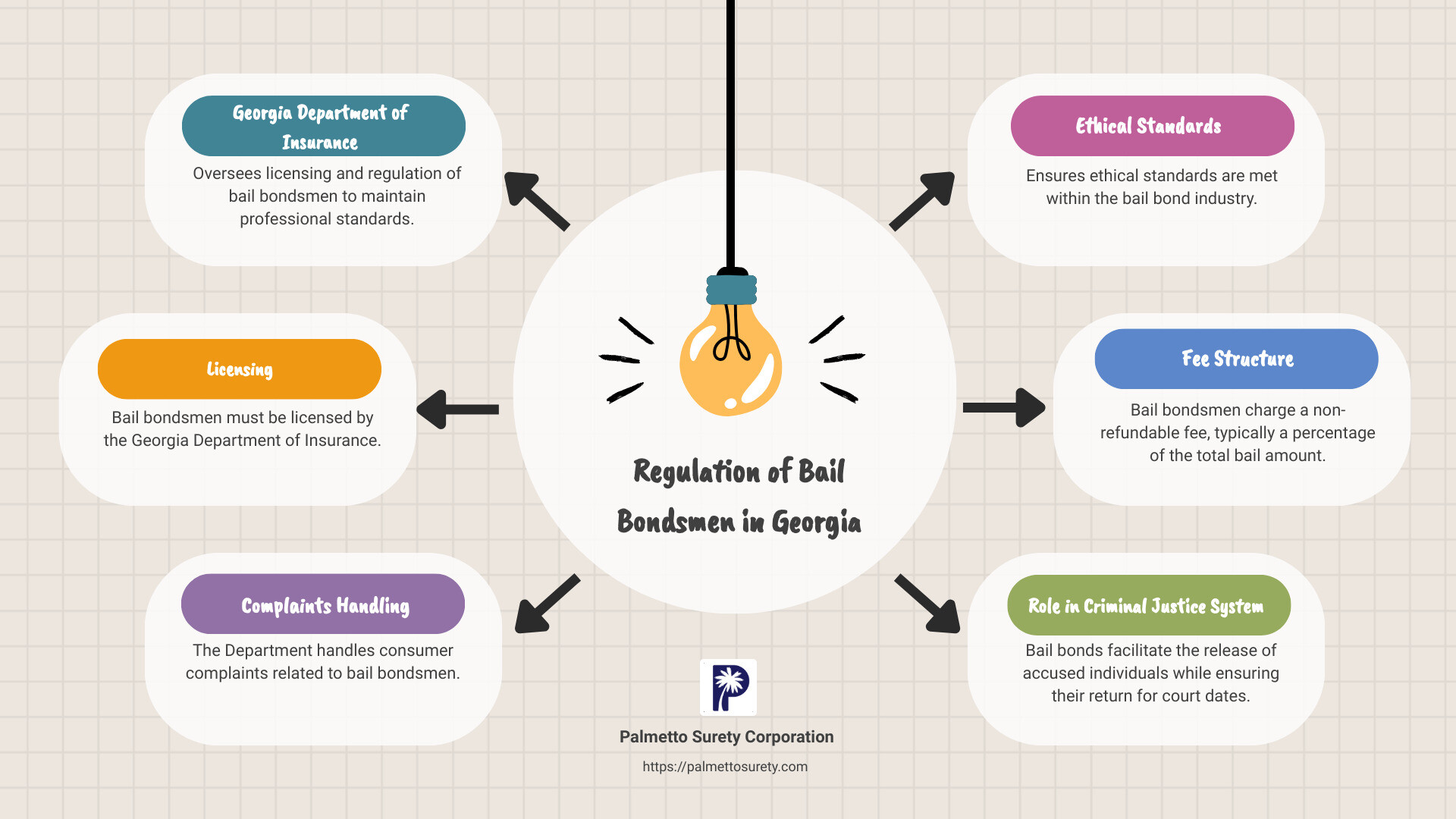
Who regulates bail bondsman in Georgia? The Georgia Department of Insurance oversees the licensing and regulation of bail bondsmen.
Bail bonds are a crucial part of the criminal justice system in Georgia, allowing individuals to be released from jail while they await trial. This system ensures that accused individuals can continue their daily lives and responsibilities, like work and family, while making sure they return for their court dates.
The process begins when a judge sets a bail amount based on the crime and the individual’s history. If the accused cannot pay the full bail amount, a bail bondsman, licensed by the Georgia Department of Insurance, can step in to provide a bail bond in exchange for a fee. This fee is typically a percentage of the total bail amount and is non-refundable.
The regulation of bail bondsmen is handled by the Georgia Department of Insurance to maintain professional standards and compliance with state laws. They make sure bail bondsmen operate ethically and manage complaints related to their services.
I’m Haiko de Poel Jr, an expert in marketing and digital change. My experience in the criminal justice system, particularly in rebranding companies like Palmetto Surety Corporation, gives me a unique perspective on regulatory oversight and the vital role it plays in maintaining trust and efficiency in the bail bond industry.
Who Regulates Bail Bondsmen in Georgia?
Role of the Georgia Department of Insurance
In Georgia, the Georgia Department of Insurance is responsible for overseeing the licensing and regulation of bail bondsmen. This department ensures that all bail bondsmen operate within the boundaries of the law and adhere to ethical standards.
Licensing and Regulation: To become a licensed bail bondsman in Georgia, individuals must meet specific criteria set by the Georgia Department of Insurance. This includes age requirements, residency, and passing a background check.
Oversight: The department conducts regular compliance checks to make sure bail bondsmen adhere to state laws and regulations. They also require ongoing training to keep bail bondsmen updated on legal changes and best practices.

Enforcement: If a bail bondsman violates any laws or regulations, the Georgia Department of Insurance has the authority to take disciplinary actions, which can range from fines to revoking their license.
Filing a Complaint
If you have a complaint against a bail bondsman, the Georgia Department of Insurance is the place to go.
Consumer Services: The department has a dedicated consumer services section where you can file a complaint. You can do this online or by mail. Make sure to provide as much detail as possible, including any documentation related to your issue.
Documentation: When filing a complaint, include all relevant documents. For example, if your complaint is about a refund check released without your signature, provide copies of any correspondence with the bail bondsman and any proof of the issue.
Legal Advice: If you believe there has been a violation of the law, such as releasing a check without your signature, it may be beneficial to seek legal advice. An attorney can help you understand your rights and the possible legal actions you can take.
Acting promptly can make a big difference in resolving your complaint effectively.

Requirements to Become a Bail Bondsman in Georgia
Becoming a bail bondsman in Georgia involves meeting specific requirements and going through a detailed process. Here’s what you need to know:
Licensing Process
1. Age Requirement
You must be at least 18 years old to apply.
2. Residency
Applicants must have been residents of Georgia for at least one year before applying. This ensures you are familiar with state laws and regulations.
3. Criminal Record
You must have a clean record. Specifically, you cannot have been convicted of a felony or any crime involving moral turpitude.
4. U.S. Citizenship
Being a U.S. citizen is mandatory. This is to ensure you comply with federal laws.
5. Application
Submit your application to the Georgia Department of Insurance. This includes filling out forms and paying fees.
6. Background Check
A thorough background check is conducted. This includes fingerprinting and a review of your criminal history.
7. Training
Complete any required training programs. These programs cover laws, ethics, and the responsibilities of a bail bondsman.
Continuing Education and Compliance
1. Ongoing Training
Bail bondsmen must participate in ongoing training. This keeps you up-to-date with changes in laws and best practices.
2. Compliance Checks
Regular compliance checks are conducted by the Georgia Department of Insurance. This ensures you continue to meet all legal requirements.
3. Ethical Standards
Following ethical standards is crucial. You must act in the best interest of your clients and the public. Misconduct can lead to penalties or loss of your license.
Next, we’ll explore how bail bonds work in Georgia, including the roles of judges and bail bondsmen.
How Bail Bonds Work in Georgia
Setting Bail
When someone is arrested in Georgia, the first step in the bail process is the bail hearing. During this hearing, a judge sets the bail amount. The judge considers several factors, including the nature of the crime and the individual’s criminal history. The goal is to set a bail amount that ensures the defendant will return for their court appearances.
Posting Bail
If the defendant or their family cannot afford the full bail amount, they can turn to a bail bond agent. A bail bondsman charges a fee, typically a percentage of the total bail amount, which is non-refundable. Once the fee is paid, the bail bondsman posts bail on behalf of the defendant. This allows the defendant to be released from jail while awaiting trial.
Responsibilities of the Defendant
After being released, the defendant has several responsibilities. The most important is to attend all scheduled court appearances. Failing to appear, known as skipping bail, can lead to severe consequences. The bail bondsman may hire a bounty hunter to apprehend the defendant. Additionally, the bail bondsman is liable for the entire bail amount if the defendant does not show up in court.
Next, we’ll discuss the legal and ethical standards that bail bondsmen in Georgia must follow.
Legal and Ethical Standards for Bail Bondsmen
Relations with Clients
Bail bondsmen have a fiduciary responsibility to their clients. This means they must act in the best interest of the people they serve. The Code of Ethics requires bondsmen to disclose all possible liabilities, penalties, and detriments to their clients. This ensures that clients fully understand the risks involved in securing a bail bond.
For example, Article 2 of the Code of Ethics states that bondsmen should practice full and complete disclosure to all parties involved. This includes explaining any potential consequences of breaching the bail agreement.
Moreover, bondsmen must provide clients with copies of all binding legal documents. Article 5 emphasizes the importance of giving indemnitors true copies of contracts they are committing to.
Relations with the General Public
Bail bondsmen also have duties to the general public. They must avoid misrepresentations and unethical practices. Article 9 of the Code of Ethics highlights that bondsmen should protect the public from any misleading business practices in the bail industry.
Additionally, bondsmen should stay informed about movements affecting the criminal justice system. This allows them to contribute constructively to public policies and public safety initiatives.
Relations with Government Sector
Bail bondsmen must cooperate with the government sector to maintain public trust and safety. This includes adhering to laws and regulations governing bail transactions. Article 7 of the Code of Ethics mandates full compliance with state laws, especially those dealing with fiduciary relationships.
Moreover, bondsmen must respect the privacy and accuracy of information. They should only take actions like arresting or surrendering a principal when there is material evidence of a breach, as outlined in Article 3.
Next, we’ll address some frequently asked questions about bail bondsmen in Georgia.
Frequently Asked Questions about Bail Bondsmen in Georgia
What are the bonding laws in Georgia?
In Georgia, the bonding process begins with a bond hearing. During this hearing, a judge sets the bail amount based on the nature of the crime and the defendant’s criminal history. The bail serves as insurance to ensure the defendant appears in court for their trial.
If the defendant or their family cannot afford the full bail amount, they can seek help from a bail bondsman. The bondsman charges a non-refundable fee, usually a percentage of the total bail amount, to post bail on behalf of the defendant.
Can a bail bondsman enter your home in Georgia?
A bail bondsman in Georgia has the authority to apprehend a defendant who has skipped bail. However, they cannot enter your home without proper legal authorization. Typically, this means they need a search warrant or your consent to enter the premises.
If you refuse entry, the bondsman must obtain a search warrant from the court to legally enter your home. Always ensure you understand your rights and the legal requirements before allowing a bondsman into your residence.
How do I get my bail money back in Georgia?
If you posted a cash bond for your bail, you might be eligible for a refund once your case is completed. This process involves a few steps:
-
Case Completion: Ensure your case has reached its conclusion, either through a trial, dismissal, or settlement.
-
Refund Request: Contact the court or the agency where you posted the bail to request your refund.
-
Documentation: Provide any necessary documentation, such as receipts or court orders, to prove you posted the bail.
Once verified, the court will process your refund. This refund applies only to cash bonds. If you used a bail bondsman, the fee paid to them is non-refundable.
Next, we’ll explore the requirements to become a bail bondsman in Georgia.
Conclusion
At Palmetto Surety Corporation, we understand the critical role bail bonds play in the criminal justice system. Our commitment is to provide quick and reliable service to help individuals secure their release from custody while awaiting trial.
We offer a wide range of commercial surety bonds custom to meet various needs. Our expertise and state-of-the-art technology ensure that you can purchase, print, and manage your surety bonds with ease.
Our dedicated support team is available 24/7 to assist you, ensuring that your experience is smooth and efficient. Whether you’re dealing with a bail bond or other surety needs, we are here to help.
For more information on how we can assist you, visit our service page and find the Palmetto Surety Corporation difference today!
Next, we’ll explore the requirements to become a bail bondsman in Georgia.


