


Performance Bonds Florida: Top Guide 2024 – Ultimate Protection
Open uping the Importance of Performance Bonds in Florida
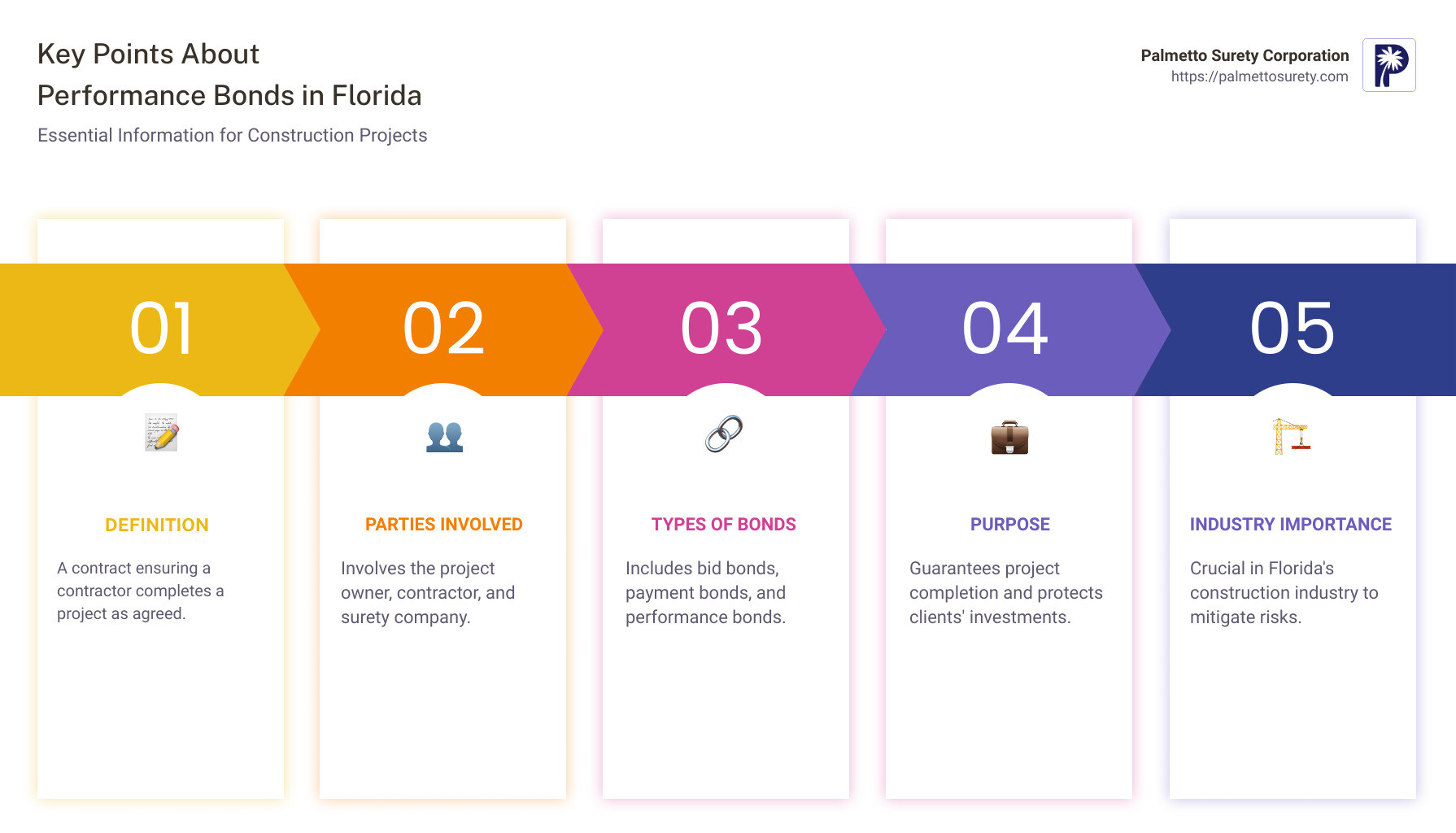
Performance bonds Florida are essential in the construction world. They guarantee project completion, protect clients’ investments, and ensure contractors meet their obligations.
Here’s what you need to know about performance bonds in Florida:
- Definition: A performance bond is a contract ensuring a contractor completes a project as agreed.
- Parties Involved: It involves the project owner, contractor, and surety company.
- Types: There are bid bonds, payment bonds, and performance bonds, each with its specific purpose.
Performance bonds, also known as surety bonds, are crucial in Florida’s construction industry. They protect against project delays and financial losses by ensuring contractors deliver on their promises. Without these bonds, clients face increased risks, and contractors might struggle to secure projects.
My name is Haiko de Poel Jr, and with years of experience in marketing and digital change, I’ve helped brands like Palmetto Surety Corporation guide many through the complexities of performance bonds Florida.
What Are Performance Bonds?
Performance bonds, also known as surety bonds, are crucial in Florida’s construction industry. They protect against project delays and financial losses by ensuring contractors deliver on their promises. Without these bonds, clients face increased risks, and contractors might struggle to secure projects.
Key Parties Involved
1. Project Owner (Obligee)
The project owner is the party that requires the bond. This could be a government agency, private entity, or any organization that needs assurance that the project will be completed as per the contract terms.
2. Contractor (Principal)

The contractor is the party that purchases the bond. They are responsible for completing the project according to the contract terms. If they fail, the performance bond provides financial protection to the project owner.
3. Surety Company
The surety company underwrites and issues the bond. They guarantee that the contractor will fulfill their obligations. If the contractor fails, the surety company steps in to cover the financial losses or find another contractor to complete the project.
How Performance Bonds Work
Performance bonds are a three-party agreement involving the project owner, contractor, and surety company.
Contract Terms
The bond agreement outlines the specific terms of the contract, including the scope of work, project timeline, and quality standards. These terms are crucial as they define what constitutes a default by the contractor.
Surety Obligations
The surety company investigates the contractor’s ability to complete the project before issuing the bond. They assess the contractor’s financial stability, credit history, and industry experience.
If the contractor defaults on the contract, the surety company has several options:
- Negotiate a Settlement: They may negotiate with the project owner and contractor to resolve the issue and complete the project.
- Hire a New Contractor: The surety company might hire a new contractor to finish the job.
- Financial Compensation: In some cases, the surety company provides financial compensation to the project owner to cover the losses.
Claim Process
If the project owner believes the contractor has defaulted, they can file a claim against the bond. The surety company will investigate the claim to determine its validity.
- Valid Claim: If the claim is valid, the surety company will take action as outlined above.
- Invalid Claim: If the claim is invalid, the surety company will deny it.
The contractor is ultimately responsible for repaying the surety company for any amounts paid out on claims. This repayment ensures that the surety company is not at a financial loss.
Performance bonds are essential for mitigating risks in construction projects. They provide financial protection to project owners and ensure that contractors are held accountable for their work. By understanding the roles of the key parties and how performance bonds work, both project owners and contractors can steer the complexities of construction projects with confidence.
Types of Construction Bonds in Florida
In Florida, construction bonds are crucial for ensuring projects are completed as agreed. There are three main types of construction bonds: Bid Bonds, Payment Bonds, and Performance Bonds. Each serves a specific purpose and has unique requirements.
Bid Bonds
Definition: A bid bond is a type of surety bond required during the bidding process for a construction project. It ensures that the contractor who wins the bid will enter into the contract and provide the necessary performance and payment bonds.
Purpose: The primary purpose of a bid bond is to protect the project owner by guaranteeing that the winning bidder will honor their bid and execute the contract at the bid price. If the contractor fails to do so, the bond compensates the project owner for the difference between the winning bid and the next lowest bid.
Requirements: To obtain a bid bond, contractors typically need to provide:
- A completed bid bond application
- Financial statements
- Proof of previous successful projects
- A bid bond amount, usually a percentage of the bid amount (commonly 5-10%)
Payment Bonds
Definition: A payment bond is a surety bond that guarantees subcontractors, laborers, and material suppliers will be paid for their work and materials, even if the contractor defaults.
Purpose: Payment bonds protect those who supply labor and materials to a project. They ensure that these parties receive payment, which helps maintain trust and smooth operations throughout the project.
Requirements: To secure a payment bond, contractors need to provide:
- Financial statements
- Credit reports
- Details of the construction contract
- The bond amount, which is often equal to the full contract value
Performance Bonds
Definition: A performance bond, also known as a contract bond, guarantees that the contractor will complete the project according to the terms and conditions of the contract.
Purpose: Performance bonds protect the project owner from financial loss if the contractor fails to complete the project as specified. This bond ensures that the project will be finished on time, within budget, and to the required standards.
Requirements: To obtain a performance bond, contractors must provide:
- Detailed financial statements
- Credit history
- Information about the project and contract
- The bond amount, which can vary but is typically a percentage of the total contract value (usually between 1-5%)
These construction bonds are vital for ensuring that projects in Florida are completed successfully and that all parties involved are protected. Understanding the differences between bid bonds, payment bonds, and performance bonds can help contractors and project owners steer the complexities of construction projects with greater confidence.
How to Obtain a Performance Bond in Florida
Application Process
Getting a performance bond in Florida is simpler than you might think. Here’s a quick rundown of the steps:
- Fill out an application: You can apply online, which takes about three minutes. Alternatively, you can download the application form, fill it out, and email it to [email protected].
- Submit required documents: Along with the application, you need to send financial statements, credit reports, and details about the project and contract.
- Review and approval: Once submitted, your application is reviewed by the surety company. This involves a credit check and an assessment of your financial stability and industry experience.
- Receive your bond: If approved, you’ll receive your performance bond, and you’re ready to start your project!
Required Documents
To apply for a performance bond, you’ll need to gather several key documents:
- Financial Statements: These should be detailed and up-to-date, showcasing your company’s financial health.
- Credit Reports: A credit check is crucial for assessing risk. A good credit score can help you get better rates.
- Contract Details: Include the contract and Notice of Award letter, as well as any bid specifications from the obligee.
- Bond Amount: Specify the bond amount needed, which is typically a percentage of the total contract value.
Underwriting Considerations
The underwriting process is where the surety company evaluates your application. Here are the main factors they consider:
- Creditworthiness: Your credit score plays a significant role. A higher score means lower premiums.
- Financial Stability: The surety will look at your financial statements to ensure you have the resources to complete the project.
- Industry Experience: Past project performance and your experience in the industry are crucial. This helps the surety gauge your ability to fulfill the contract terms.
By understanding these steps and requirements, you can streamline the process of obtaining a performance bond in Florida, ensuring your projects run smoothly and successfully.
Cost of Performance Bonds in Florida
Understanding the cost of performance bonds in Florida is crucial for contractors. Let’s break down the key factors:
Premium Rates
The premium for a performance bond is a small percentage of the bond amount. For most contractors, this rate falls between 1% to 3%. For example, if you need a $100,000 bond, expect to pay between $1,000 and $3,000.
Here’s a quick breakdown:
- Bond Amount: $100,000
- Premium Rate: 1% to 3%
- Cost: $1,000 to $3,000
Influencing Factors
Several factors influence the premium rate:
- Credit Score: A higher credit score can significantly reduce your premium. Contractors with scores above 700 often get the best rates.
- Financial History: The surety will review your financial statements to assess your ability to complete the project. Strong financials = lower premiums.
- Project Risk: The complexity and risk associated with the project also play a role. Riskier projects may lead to higher premiums.
- Industry Experience: Your track record and experience in the industry help the surety gauge your reliability. More experience often means lower premiums.
Typical Costs
Let’s look at some typical costs based on different scenarios:
- Small Project: For a $50,000 bond, with a 2% premium rate, you’ll pay around $1,000.
- Medium Project: For a $500,000 bond, with a 1.5% premium rate, you’ll pay around $7,500.
- Large Project: For a $1,000,000 bond, with a 1% premium rate, you’ll pay around $10,000.
Understanding these costs will help you budget and plan for your projects more effectively.
Frequently Asked Questions about Performance Bonds in Florida
How much is a performance bond in Florida?
The cost of a performance bond in Florida varies depending on several factors like the bond amount, the contractor’s credit score, and the perceived risk of the project. Typically, performance bond premiums range from 1% to 3% of the total contract value.
For example, if you need a $500,000 bond, the premium might be between $5,000 and $15,000. Smaller projects might see higher percentages, whereas larger projects might benefit from lower rates.
How do performance bonds work?
Performance bonds serve as a financial safety net for project owners. Here’s a simple breakdown of how they work:
- Three Parties: The project owner (obligee), the contractor (principal), and the surety company.
- Contract Terms: The contractor agrees to complete the project as per the contract.
- Surety Obligations: If the contractor fails to meet the contract terms, the surety steps in.
- Claim Process: The project owner can file a claim. The surety investigates and, if the claim is valid, pays for the completion of the project.
This ensures the project owner gets the work completed without financial loss, even if the original contractor defaults.
What is a typical performance bond rate?
Performance bond rates in Florida generally fall between 1% and 3% of the contract amount. However, various factors influence this rate:
- Credit Score: Higher credit scores usually mean lower rates.
- Financial History: A solid financial track record can reduce premiums.
- Project Risk: More complex or risky projects might attract higher rates.
For instance, a contractor with a good credit score working on a low-risk project might pay closer to 1%, while a higher-risk project or a contractor with a lower credit score might see rates nearer to 3%.
Understanding these rates helps you better estimate your costs and plan your projects efficiently.
Conclusion
In summary, performance bonds are essential for ensuring the successful completion of construction projects in Florida. They provide financial protection and peace of mind for project owners, ensuring that contractors fulfill their contractual obligations. By understanding the key parties involved, how performance bonds work, and the costs associated, you can make informed decisions that safeguard your projects.
At Palmetto Surety Corporation, we specialize in all types of surety bonds, including performance bonds in Florida. With over 20 years of experience, our dedicated team is here to guide you through the process, offering competitive rates and exceptional service. Our advanced technology allows you to purchase, print, and manage your bonds with ease, ensuring a hassle-free experience.
If you have any questions or need assistance with obtaining a performance bond, don’t hesitate to reach out to us. We’re here to help you every step of the way.
Contact us today to learn more about how we can support your bonding needs and ensure the success of your projects.
“Florida Surety Bonds have handled our surety bonding since we started our company back in early 2004. They have always serviced whatever needs we have had in a timely and efficient manner, helped guide us in financial matters, and reviewed our financial statements, assisting us in staying on course.”
–Florida Underground Utility Contractor
For more information and to apply for your bond, visit Palmetto Surety Corporation.


