


What is an Unsecured Bond in Court: Top 5 Crucial Facts
Essential Insights into Court Bonds
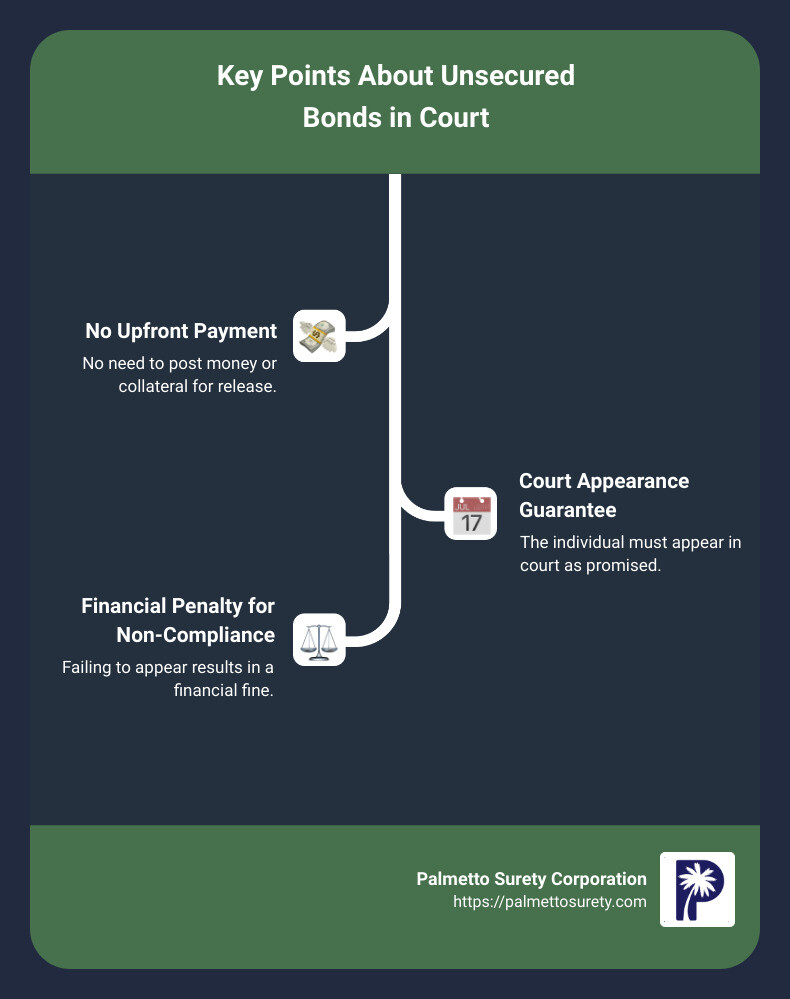
What is an unsecured bond in court? If you’ve come across this term, it means a judge has allowed someone to be released from jail without having to pay money upfront. Instead, they simply promise to appear in court on their designated date. Here’s a quick breakdown:
- No upfront payment: No need to post money or collateral.
- Court appearance guarantee: The person must show up in court as promised.
- Financial penalty for non-compliance: Failing to appear leads to a fine.
Understanding bonds is essential for anyone navigating the legal system. Bonds ensure that individuals will attend their court hearings after an arrest, offering a temporary reprieve from incarceration.
Palmetto Surety Corporation specializes in a variety of surety bonds, including those critical for securing bail. With experience in the industry, our expertise makes the bond process quicker and more predictable, helping individuals and businesses meet their legal requirements efficiently.
I’m Haiko de Poel Jr., a specialist in marketing and digital change at Palmetto Surety Corporation. Over the years, I have helped redesign and rebrand many businesses, including those in the surety bond market. This has provided me with in-depth knowledge on what is an unsecured bond in court.
What is an Unsecured Bond in Court?
An unsecured bond in court is a type of bond that doesn’t require any collateral. Think of it as a good faith agreement between the defendant and the court. The defendant promises in writing to appear in court at a specified date and time.
How Does an Unsecured Bond Work?
When a person is arrested, they may be given the option to be released on an unsecured bond. This means that the individual will not need to pay any money upfront. Instead, they sign a written promise to appear in court when required.
If they fail to show up, they will face a financial penalty. This penalty can be significant, and the court may take further legal action against them. Essentially, the court is trusting the individual to honor their commitment based on their word alone.
Who Qualifies for an Unsecured Bond?
Not everyone can get an unsecured bond. Typically, it’s reserved for individuals who have committed minor crimes and have no prior criminal history. Courts also consider factors like community ties. If the person has strong connections to the community, such as family, a job, or other responsibilities, they are seen as less likely to flee.

- Minor Crimes: Offenses that are not severe usually qualify.
- No Criminal History: A clean record increases eligibility.
- Community Ties: Strong local connections make a person a safer bet.
In summary, unsecured bonds are based on trust and are a way to allow low-risk individuals to await their court date outside of jail without needing to put up money or assets.
Next, we will explore the key differences between secured and unsecured bonds and what makes each unique.
Secured Bonds vs. Unsecured Bonds
Understanding the differences between secured and unsecured bonds is crucial when navigating the court system. Let’s break down what each one involves and the key differences that set them apart.
What is a Secured Bond?
A secured bond is a type of bail bond that requires collateral. This means that the person posting bail must provide an asset of value, such as a house, car, or other property, to back the bond. If the defendant fails to appear in court, the court can seize the collateral to cover the bail amount.
Common assets used for collateral include:
– Real estate
– Vehicles
– Jewelry
– Equipment
The collateral gives the court a tangible assurance that the defendant will return for their court date. If the defendant complies with all court requirements, the collateral is returned once the case is concluded.
Key Differences Between Secured and Unsecured Bonds
Collateral vs. No Collateral
- Secured Bonds: Require collateral. This means you need to put up an asset of value to secure the bond.
- Unsecured Bonds: Do not require collateral. Instead, you sign a written promise to appear in court.
Payment Upfront
- Secured Bonds: Often involve an upfront payment or the pledging of an asset. This could be in the form of cash or property.
- Unsecured Bonds: No upfront payment is needed. You are released based on your promise to return to court.
Financial Risk
- Secured Bonds: The financial risk is lower for the court because there is collateral that can be seized if the defendant doesn’t show up.
- Unsecured Bonds: The financial risk is higher for the court because there is no asset to fall back on. The court relies solely on the defendant’s promise to appear.
Court Preferences
Courts generally prefer secured bonds because they provide a safety net. However, unsecured bonds may still be issued in cases where:
– The crime is minor.
– The defendant has no prior criminal history.
– The defendant has strong ties to the community.
Here’s a simple comparison table to illustrate these points:
| Aspect | Secured Bond | Unsecured Bond |
|---|---|---|
| Collateral Required | Yes | No |
| Upfront Payment | Often required | Not required |
| Financial Risk | Lower for court | Higher for court |
| Court Preference | Generally higher | Case-dependent |
In summary, secured bonds involve collateral and offer lower risk to the court, while unsecured bonds rely on the defendant’s promise and involve higher risk.
Next, we will discuss the risks and benefits of unsecured bonds, shedding light on why they might be chosen despite the higher risk involved.
Risks and Benefits of Unsecured Bonds
Risks of Unsecured Bonds
High Risk: Unsecured bonds carry a higher level of risk for the court because they are not backed by collateral. This means if the defendant fails to appear in court, there are no assets to seize to cover the bond amount.
No Collateral: Unlike secured bonds, unsecured bonds don’t require the defendant to put up any property or assets. This can be a double-edged sword—while it makes the bond more accessible, it also increases the risk for the court and investors.
Higher Risk for Investors: Since unsecured bonds are based solely on the defendant’s promise to appear in court, investors (or bail bondsmen) are taking a bigger gamble. If the defendant skips their court date, the financial penalty falls on the investor.
Potential Financial Penalties: If the defendant fails to comply with the bond terms, they face financial penalties. This can include fines or additional charges, further complicating their legal situation.
Benefits of Unsecured Bonds
No Upfront Payment: One of the main advantages of unsecured bonds is that they don’t require an upfront payment. This can be a significant relief for individuals who may not have immediate access to large sums of money or valuable assets.
Accessible for Minor Crimes: Courts are more likely to issue unsecured bonds for minor crimes, especially if the defendant has no prior criminal history. This makes it easier for individuals to continue their daily lives while awaiting their court date.
Good Faith Reliance: Unsecured bonds operate on a good faith agreement. This means the court trusts the defendant to honor their promise to appear. This can be a positive reflection on the defendant’s character and may influence future legal decisions.
While unsecured bonds present higher risks due to the lack of collateral, they also offer significant benefits by being more accessible and less financially burdensome for individuals accused of minor crimes.
Frequently Asked Questions about Unsecured Bonds
What happens if I don’t appear in court?
If you don’t show up for your court date after being released on an unsecured bond, there are serious consequences. Firstly, you will face a financial penalty. This penalty is the amount you agreed to pay when you signed the bond agreement.
Additionally, the court might issue a warrant for your arrest. This means you could be taken back into custody and might not get the option for another unsecured bond in the future. It’s crucial to understand that failing to appear in court can have long-term impacts on your legal record and future bail options.
Can I switch from an unsecured bond to a secured bond?
Yes, it is possible to switch from an unsecured bond to a secured bond, but this usually happens under specific circumstances. For example, if you initially received an unsecured bond but later decide or need to provide collateral to ensure your appearance in court, you can request the court to change the terms.
However, this requires a court hearing, and the judge will consider factors such as your criminal history, the nature of the crime, and your ties to the community. It’s best to consult with your attorney to understand the process and implications fully.
Are unsecured bonds available for all types of crimes?
No, unsecured bonds are typically not available for all types of crimes. Courts usually offer unsecured bonds for minor offenses and to individuals with no or minimal criminal history.
Factors that influence the availability of unsecured bonds include:
- Severity of the crime: Minor misdemeanors are more likely to qualify.
- Criminal history: First-time offenders or those with a clean record are favored.
- Community ties: Strong ties to the community can increase eligibility.
For more serious crimes or if the defendant is considered a flight risk, secured bonds or no bond at all might be required. Always consult with a legal expert to understand your specific situation and options.
Next, we will summarize the key takeaways and discuss the importance of compliance with bond terms, highlighting Palmetto Surety Corporation’s role in bail bonds.
Conclusion
Understanding what is an unsecured bond in court can help you steer the legal system more effectively. Unsecured bonds rely on a defendant’s promise to appear in court without needing collateral. This makes them accessible but also requires strict compliance.
Importance of Compliance
Compliance with bond terms is crucial. Failure to appear in court can result in severe consequences, including:
- Re-arrest: You may be taken back into custody.
- Financial penalties: You could owe the full bond amount.
- Future difficulties: Non-compliance can affect future bond eligibility.
Always adhere to the terms of your bond to avoid these repercussions.
Palmetto Surety Corporation’s Role in Bail Bonds
At Palmetto Surety Corporation, we specialize in providing comprehensive bail bond services. Our expertise ensures that you or your loved one can steer the bail process smoothly and efficiently. We offer:
- Expert guidance: Helping you understand your bond options.
- Flexible solutions: Custom to meet your specific needs.
- 24/7 support: Always available to assist you.
Contact us to learn more about how we can assist you with your bail bond needs.
Understanding your bond options and complying with all terms ensures a smoother legal process. Palmetto Surety Corporation is here to support you every step of the way.


