


What is a Bond in a Civil Case? Top 3 Facts in 2024
Why Civil Case Bonds Matter
When navigating the complex landscape of civil litigation, understanding what is a bond in a civil case is crucial. These bonds act as a financial guarantee ensuring that all court-ordered obligations are met.
Quick Overview:
– Purpose: Financial guarantees in civil litigation.
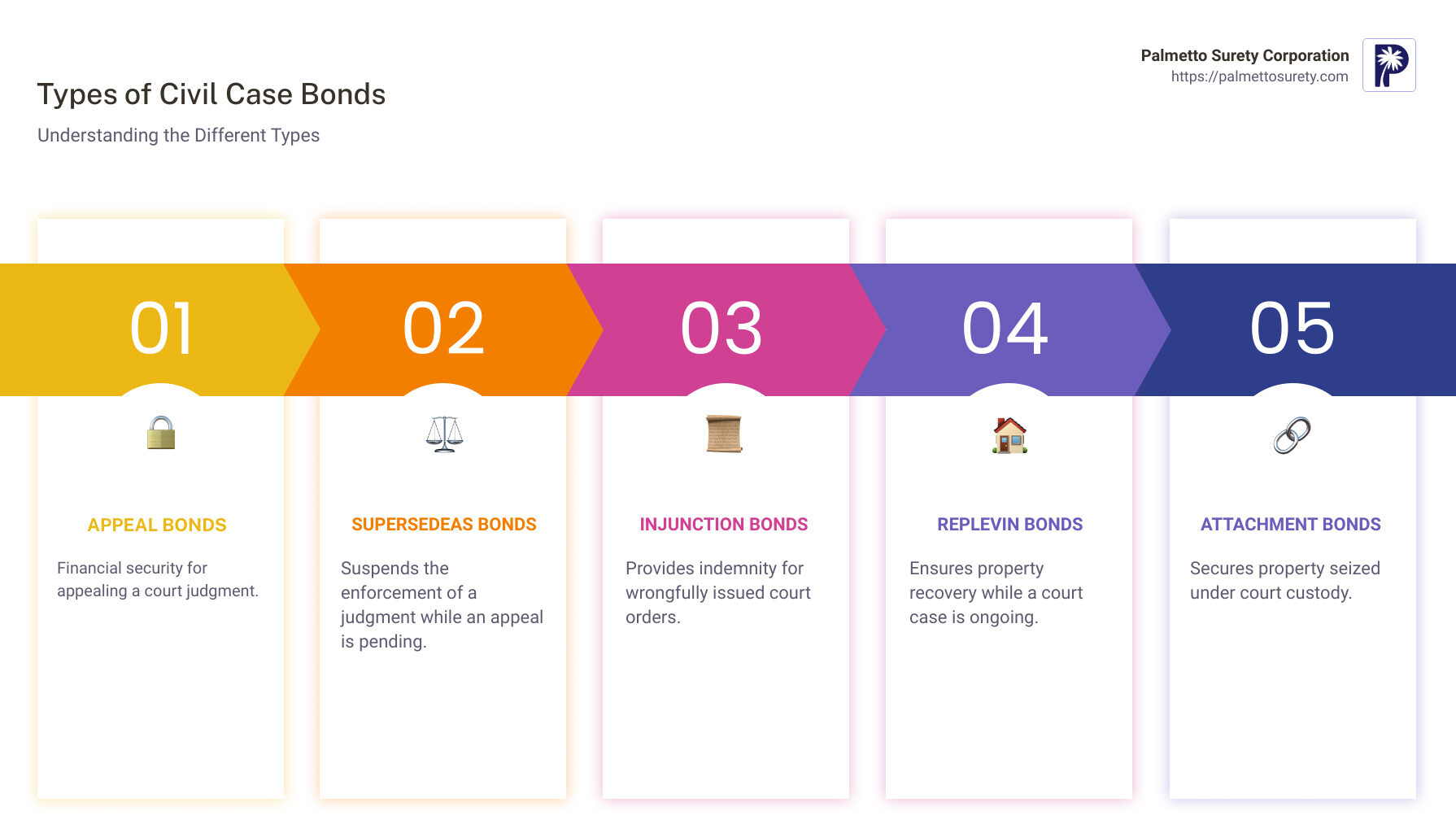
– Types: Appeal Bonds, Supersedeas Bonds, Injunction Bonds, Replevin Bonds, Attachment Bonds.
– Importance: Ensures compliance with court judgments and mitigates financial risks.
Civil case bonds play a pivotal role in maintaining trust and reliability within the judicial system. By providing financial security, they help protect the interests of all parties involved—whether it’s ensuring a plaintiff pays damages or a defendant fulfills a judgment order. Without these bonds, the risk for financial loss and unfulfilled legal obligations would be significantly higher.
I’m Haiko de Poel Jr., and with experience in rebranding and strategic development for companies like Palmetto Surety Corporation, I understand the intricacies of what is a bond in a civil case. This background informs my comprehensive approach to explaining this critical aspect of civil litigation.
What is a Bond in a Civil Case?
Types of Civil Case Bonds
In civil litigation, bonds act as financial guarantees to ensure that all parties fulfill their legal obligations. These bonds protect against financial loss and help maintain trust in the judicial process. There are several types of civil case bonds, each serving a specific purpose:
-
Appeal Bonds: Also known as supersedeas bonds, these are posted by an appellant who is appealing a court judgment. They ensure that if the appeal fails, the original judgment will be paid, along with any additional costs and interest.
-
Injunction Bonds: These bonds are required when a plaintiff seeks a court order to compel or prevent certain actions by the defendant. The bond guarantees that the plaintiff will cover any damages if the court later finds the injunction was unnecessary.
-
Replevin Bonds: Used when a plaintiff claims ownership of property held by the defendant. This bond ensures the property will be returned in the same condition if the court rules in favor of the defendant.

-
Attachment Bonds: These bonds allow a plaintiff to seize a defendant’s property before the case is decided. The bond ensures that the plaintiff will cover any damages if the attachment is later deemed wrongful.
How Civil Case Bonds Work
Civil case bonds are essential in providing financial security and ensuring compliance with court orders. Here’s how they function:
-
Court Requirements: The court mandates a bond to be posted by either the plaintiff or defendant at significant points in the litigation process. This requirement is to safeguard the interests of the opposing party.
-
Financial Guarantees: The bond acts as a financial pledge that the bonded party will fulfill their legal responsibilities. If they fail to do so, the bond can be claimed to cover the resulting financial losses.
-
Compliance and Risk Mitigation: By requiring bonds, courts ensure that parties are more likely to comply with judgments and orders. This reduces the risk of non-compliance and financial loss, fostering a more reliable legal system.
Example
Consider a scenario where a plaintiff seeks an injunction to stop a company from polluting a river. The court might require an injunction bond. If the court later finds the injunction was unnecessary, the bond would cover the company’s losses due to the halted operations.
Appeal Bonds and Supersedeas Bonds
When a party loses a case and decides to appeal, an appeal bond or supersedeas bond comes into play. These bonds ensure that the judgment amount, plus any interest and costs, will be paid if the appeal is unsuccessful. This prevents frivolous appeals and ensures that the winning party’s interests are protected during the appeal process.
Injunction Bonds
Injunction bonds are crucial when a court issues an order requiring a party to do or refrain from doing something. For example, if a business is ordered to stop using a trademark, an injunction bond ensures that any financial loss incurred by the business, if the injunction is later overturned, is covered.
Replevin Bonds
A replevin bond is used when a plaintiff claims that the defendant is wrongfully holding property that belongs to them. This bond ensures that the property will be returned in the same condition if the court sides with the defendant, protecting the defendant from potential losses.
Attachment Bonds
Attachment bonds allow a plaintiff to take control of a defendant’s property before the case is decided. This bond guarantees that the plaintiff will cover any damages if the court later finds the attachment wrongful, safeguarding the defendant’s interests.
By understanding the various types of civil case bonds and how they work, parties involved in litigation can better navigate the legal process with confidence and security. For more information on specific bonds and their applications, continue reading into the next section.
Appeal Bonds and Supersedeas Bonds
When navigating the appeal process in a civil case, understanding the role of appeal bonds and supersedeas bonds is crucial. These bonds serve as financial guarantees to ensure that judgments are secured and obligations are met during the appeal.
Appeal Bonds
Definition: An appeal bond is a type of surety bond required by the court when a losing party wants to appeal a judgment to a higher court.
Purpose: The primary purpose of an appeal bond is to provide financial security to the winning party. It ensures that if the appeal fails, the judgment amount, plus any interest and court costs, will be paid.
Judgment Appeal: When a defendant loses a case and decides to appeal, they must post an appeal bond. This bond covers the full judgment amount, including interest and costs, protecting the winning party’s financial interests during the appeal process.
Financial Security: Appeal bonds are considered high-risk because they guarantee payment of the judgment if the appeal is unsuccessful. This means the bond amount is usually higher than the original judgment to cover potential additional costs.
For instance, in a recent case involving Donald Trump, he struggled to secure an appeal bond for a $454 million judgment. This highlights the financial challenges and high stakes associated with appeal bonds.
Supersedeas Bonds
Definition: A supersedeas bond, often used interchangeably with an appeal bond, specifically stays the execution of a judgment during the appeal process.
Purpose: The main purpose of a supersedeas bond is to prevent the prevailing party from enforcing the judgment while the case is being reviewed by a higher court. It effectively “freezes” the status quo, ensuring no action is taken to collect on the judgment until the appeal is resolved.
Judgment Suspension: By posting a supersedeas bond, the appellant can suspend the enforcement of the judgment. This means the defendant’s assets are protected from seizure while the appeal is pending.
Financial Guarantee: Like appeal bonds, supersedeas bonds provide a financial guarantee that the judgment, including interest and costs, will be paid if the appeal is unsuccessful. This bond serves to protect the winning party’s right to collect on the judgment while the appeal is in progress.

In summary, both appeal bonds and supersedeas bonds play critical roles in the appeal process of civil cases. They provide financial security and ensure that the interests of the winning party are protected during the appeal. Understanding these bonds is essential for anyone involved in litigation, as they navigate the complexities of securing and suspending judgments.
For more detailed information on other types of civil case bonds, continue reading into the next section.
Other Types of Civil Case Bonds
Civil litigation requires various types of bonds, each serving a specific purpose. These bonds ensure legal compliance and offer financial protection to the parties involved. Let’s explore three common types: Injunction Bonds, Replevin Bonds, and Attachment Bonds.
Injunction Bonds
Definition: An injunction bond is a type of court bond required when a plaintiff seeks a court order to prevent the defendant from performing a specific act.
Purpose: This bond guarantees that the plaintiff will indemnify the defendant against any damages if the court later determines the injunction was wrongful.
Court Orders and Indemnification: For instance, if a company wants to stop a competitor from using a disputed trademark, the court may issue an injunction. The plaintiff must post an injunction bond to cover potential losses the defendant might incur if the injunction is found unjustified.
Replevin Bonds
Definition: A replevin bond is required when a plaintiff claims ownership of property held by the defendant and seeks its return before the final court decision.
Purpose: This bond ensures that the plaintiff will return the property in the same condition if the court rules in favor of the defendant.
Property Recovery and Legal Compliance: Imagine a scenario where a seller reclaims goods sold on an installment plan due to buyer default. The seller must provide a replevin bond to recover the goods legally. This bond protects the defendant (buyer) from any damages if the court finds the seller’s claim invalid.
Attachment Bonds
Definition: An attachment bond is needed when a plaintiff seeks to seize a defendant’s property to secure a potential judgment.
Purpose: This bond ensures that the plaintiff will cover any damages if the court decides the attachment was improper.
Property Security and Court Custody: For example, if a creditor believes a debtor might hide assets, they can request an attachment of the debtor’s property. The creditor must post an attachment bond to ensure the debtor is compensated if the court later rules in their favor.
These bonds are crucial in securing financial interests and ensuring legal compliance during civil litigation. Each bond serves a unique role, protecting the parties involved and maintaining the integrity of the judicial process.
For answers to common questions about civil case bonds, continue reading into the next section.
Frequently Asked Questions about Civil Case Bonds
What is the meaning of civil bond?
A civil bond is a financial guarantee required by a court during civil litigation. It ensures that one party will fulfill their legal obligations, such as paying a judgment or complying with court orders. Civil bonds protect the financial interests of the parties involved and help maintain the integrity of the judicial process.
What does a bond order mean in court?
A bond order in court is a directive that requires a party to provide a financial pledge, often in the form of a surety bond, to guarantee certain actions or payments. For example, in a bail situation, the court sets a bond amount that the defendant must pay to be released from custody. This bond assures the court that the defendant will appear for their trial.
What does putting up a bond mean?
Putting up a bond means providing a financial guarantee to meet court conditions. This can involve paying a sum of money or obtaining a surety bond from a bonding company. The bond acts as a pledge that the party will comply with court orders, such as appearing for trial or paying a judgment. If the party fails to meet these conditions, the bond may be forfeited, and the court can use it to cover any resulting losses.
For more details on civil bonds and how they work, continue to the next section.
Conclusion
Civil case bonds play a crucial role in ensuring that parties involved in legal disputes fulfill their obligations. From appeal bonds to supersedeas bonds, these financial guarantees provide security and compliance during the litigation process. They ensure that judgments are honored, properties are protected, and court orders are followed.
At Palmetto Surety Corporation, we understand the importance of quick and efficient service when it comes to securing civil case bonds. Our streamlined process and experienced team make it easy for you to get the bonds you need without hassle. We offer a wide range of bonds, including court bonds, and our platform allows for fast approvals and competitive rates.
By choosing Palmetto Surety Corporation, you are partnering with a company that is dedicated to meeting your surety bond needs with excellence and professionalism. Whether you are navigating an appeal or need a bond to secure property, we are here to help you every step of the way.
For more information on how we can assist you with your civil case bond needs, visit our court bonds page.
Need a civil case bond quickly? Apply now with Palmetto Surety Corporation and experience our hassle-free service!


