


Bail 101: Top Guide to Arrest & Release in 2024
Understanding Bail: A Critical Guide for Defendants and Families
When faced with an arrest, understanding bail can make a significant difference in navigating the criminal justice process. Bail is a system that allows a suspect to be released from custody, assuring they return for their court dates while waiting for trial.
Quick Facts:
– What is Bail? Bail is money or property given as assurance that a suspect will return to court.
– Why It’s Important: Without bail, a suspect remains in detention until the trial.
– Different Forms: Cash bail, bail bonds, and release on recognizance.
– Factors: Crime severity, criminal history, and flight risk affect the bail amount.
The primary purpose of bail is to ensure the suspect attends all court appearances while allowing them to remain free during this period. It serves as a balance between the presumption of innocence and the need to guarantee court attendance. By providing bail, the courts can avoid unnecessary pre-trial detention, which can be costly and impactful on the lives of defendants who are yet to be proven guilty.
My name is Haiko de Poel Jr, and with my background in branding, marketing, and navigating complex procedures like those in the criminal justice system, I bring a comprehensive understanding of bail to help demystify this essential part of pre-trial processes.
What is Bail?
Bail is a set of pre-trial restrictions that are imposed on a suspect to ensure that they will not interfere with the judicial process. It acts as a guarantee that the defendant will appear in court when required. The purpose of bail is to allow the defendant to remain free while awaiting trial, rather than being detained in jail.
Definition and Purpose
Bail serves as a financial or conditional release mechanism. It provides an incentive for the accused to attend all court proceedings. By offering bail, courts can avoid unnecessary pre-trial detention, which can be expensive and disruptive to the lives of individuals who have not yet been proven guilty.
Pre-Trial Restrictions
In many countries, bail includes specific conditions that the defendant must follow. These can include:
- No-contact orders: Prohibiting the defendant from contacting the alleged victim.
- Curfews: Requiring the defendant to be at home during certain hours.
- Electronic monitoring: Using devices to track the defendant’s movements.
These restrictions aim to ensure public safety and the integrity of the judicial process.

Court Appearance
One of the main conditions of bail is that the defendant must appear in court for all scheduled proceedings. Failure to do so can result in severe consequences, including the forfeiture of the bail amount and additional criminal charges such as “failure to appear.”
Forfeiture
If a defendant does not comply with the terms of bail, the bail is forfeited. This means that any money or property posted as bail is surrendered to the court. In the United States, if a bail bondsman was involved, they might apprehend the defendant to recover the forfeited amount.
In summary, bail serves as a crucial part of the pre-trial process, balancing the need for public safety with the rights of the accused to remain free while awaiting trial. It involves financial or conditional guarantees to ensure court appearances and adherence to legal requirements.
Types of Bail
When someone is arrested, there are several ways they can be released before their trial through different types of bail. These include cash bail, bail bonds, and recognizance. Let’s break down each type and how they work.
Cash Bail
Cash bail involves a cash deposit paid directly to the court. The amount is set by the judge during a bail hearing. If the defendant shows up for all court appearances and follows any conditions set by the court, the cash bail is refunded at the end of the case. However, if they fail to appear, the cash bail is forfeited and kept by the court.

Bail Bond
A bail bond is used when the defendant or their family cannot afford the full bail amount. Here’s how it works:
- A bail bondsman, also known as a bail agent, steps in to pay the bail on behalf of the defendant.
- The defendant or their family pays the bail bondsman a premium, typically 10% of the bail amount, which is non-refundable.
- An indemnity agreement is signed, where the defendant’s family agrees to pay the full bail amount if the defendant fails to appear in court.
- The bail bondsman may also require collateral, such as property or valuable items, to secure the bond.
The bail bondsman’s role is to ensure that the defendant appears in court. If the defendant skips bail, the bondsman can apprehend them to recover the forfeited amount.

Recognizance
Recognizance release, or “ROR,” is when the court allows the defendant to be released without paying any bail. Instead, the defendant signs a written promise to appear for all court dates. This type of bail is often granted to individuals who are deemed low-risk and have strong ties to the community.
Pre-Charge vs. Post-Charge Bail
- Pre-Charge Bail: This is granted before formal charges are filed. It allows the defendant to remain free while the investigation continues.
- Post-Charge Bail: This is granted after charges have been filed and typically involves a court hearing to determine the bail amount and conditions.
In both cases, the goal is to ensure the defendant appears in court while balancing public safety and the defendant’s rights.
In summary, the type of bail set for a defendant can vary based on their financial situation, the nature of the crime, and their ties to the community. Whether it’s cash bail, a bail bond, or recognizance, each method serves to ensure the defendant’s appearance in court.
Next, we’ll explore how bail amounts are determined and the factors that influence these decisions.
How Bail is Determined
When deciding bail, judges weigh several factors to ensure the defendant appears in court and public safety is maintained. Let’s break down these factors.
Factors Influencing Bail Amount
- Risk of Fleeing
Judges assess if the defendant might skip town to avoid trial. If the risk is high, the bail amount increases. For example, someone with strong ties to the community (like a job and family) is seen as less likely to flee.
- Type of Crime
The severity of the alleged crime heavily influences the bail amount. Serious crimes like armed robbery or murder result in higher bail compared to minor offenses like petty theft.
- Defendant’s Dangerousness
Judges consider if the defendant poses a threat to public safety. If they have a history of violence or the crime involved harm to others, the bail amount will be higher.
- Community Safety
Public safety is a top priority. If releasing the defendant might endanger the community, the judge may set a higher bail or deny it altogether.
- Criminal History
A defendant with a long criminal record is likely to face a higher bail. Repeat offenders are viewed as higher risks.
Bail Conditions
In addition to setting the bail amount, judges can impose conditions to ensure the defendant’s compliance and community safety. Here are some common conditions:
- No Contact Orders
Defendants may be ordered to avoid contact with the alleged victim or witnesses. This helps prevent intimidation or further harm.
- Curfews
A judge may set a curfew, requiring the defendant to stay home during certain hours. This reduces the risk of reoffending and ensures they are easier to monitor.
- Electronic Monitoring
Electronic ankle bracelets track the defendant’s movements. This condition ensures they stay within approved areas and comply with other bail conditions.
Judges use these factors and conditions to balance the defendant’s rights with public safety. Next, we’ll dive into the detailed steps of the bail process, from arrest to release.
The Bail Process
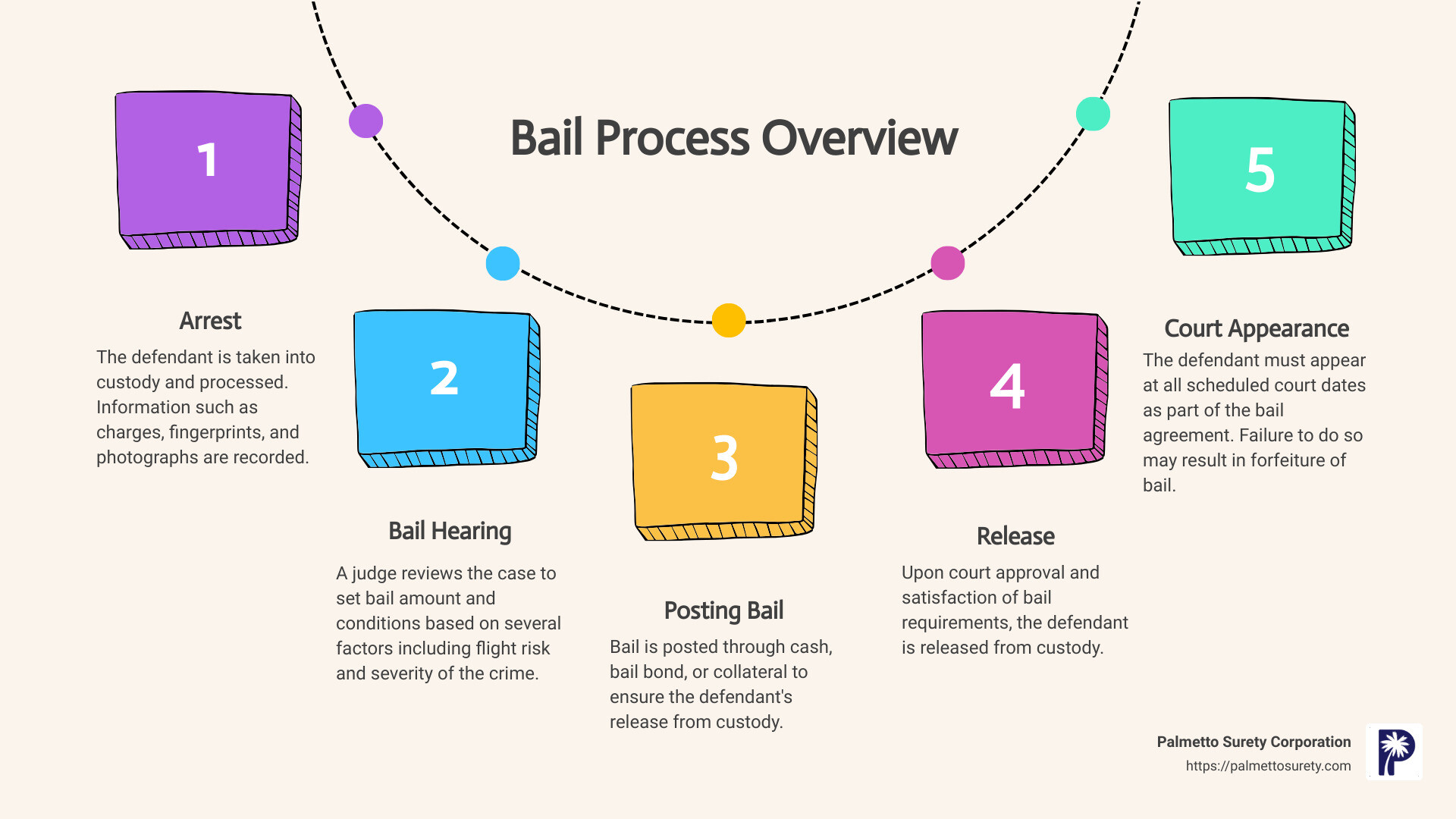
Arrest and Booking
When someone is arrested, the police take them into custody and bring them to the station for booking. This involves recording personal information, the charges, and taking fingerprints. The arrestee is also photographed, and their belongings are confiscated for safekeeping.
Bail Hearing
After booking, the defendant attends a bail hearing. A judge reviews the case and decides whether to grant bail. The judge considers factors like the severity of the crime, the defendant’s criminal history, and their risk of fleeing.
The judge sets the bail amount and may impose additional conditions, such as no-contact orders or electronic monitoring. If the crime is severe or the defendant is a flight risk, bail might be denied altogether.
Posting Bail
Once bail is set, the defendant has a few options to secure their release:
- Cash Bail: The defendant or someone on their behalf pays the full bail amount in cash. This money is refunded after the trial if the defendant complies with all court orders.
- Bail Bond: If the full bail amount is too high, a bail bond can be used. A bail bondsman posts the bail in exchange for a fee, usually 10% of the bail amount. The defendant or their indemnitors (friends or family) might need to provide collateral, like property or a car, to secure the bond.
- Collateral: This is something valuable given to the bail agent to ensure the defendant returns to court. If the defendant skips their court date, the bail agent can keep the collateral.
Release from Custody
Once bail is posted, the court must approve the release. The bail agent, if involved, ensures all paperwork is in order. The defendant is then released from custody with the promise to appear at all future court dates.
If the defendant meets all conditions and appears in court, any cash bail is refunded, and collateral is returned. If they fail to appear, the bail is forfeited, and the bail agent may track down the defendant to recover their losses.
Next, we’ll explore the role of bail agents and bail bondsmen in more detail.
Bail Agents and Bail Bondsmen
Role of Bail Agents
Bail agents, also known as bail bondsmen, are licensed professionals who help defendants secure their release from jail. They do not work for the court but act as intermediaries between the defendant and the court.
When a defendant cannot afford the full bail amount, a bail agent steps in. The agent posts bail on behalf of the defendant, ensuring their release. In return, the defendant (or their family) pays a fee, known as a premium, to the bail agent.
The bail agent’s primary role is to ensure that the defendant appears in court as required. If the defendant skips court, the bail agent has the right to surrender the defendant to the authorities. This means the bail agent can track down and apprehend the defendant to avoid financial losses.
Fees and Collateral
The fee or premium charged by bail agents is regulated. Here’s a breakdown of typical fees:
- The premium is usually 10% of the bail amount.
Collateral Requirements
In addition to the premium, bail agents often require collateral. Collateral can be cash, property, or other valuable assets, ensuring that the defendant will comply with court orders. If the defendant fails to appear in court, the bail agent can keep the collateral to cover the forfeited bail amount.
Refund Policies
Premiums paid to bail agents are generally non-refundable. However, if the defendant is not released from custody after the bail is posted, or if they are released on their own recognizance, the premium must be refunded.
Collateral is returned once the court case concludes and the defendant has met all required conditions. If the defendant skips bail, the collateral may be used to cover the costs incurred by the bail agent.
Bail agents play a crucial role in the bail system, ensuring that defendants can be released from custody while awaiting trial. They also bear the financial risk if defendants fail to appear in court.
Bail in Different Countries
United States
In the United States, bail often involves a cash deposit or a bail bond. A bail bond is a type of surety bond provided by a bail bondsman. The defendant or their family pays a fee, usually 10% of the bail amount, to the bondsman, who then posts the full bail amount with the court.
State Variations: Bail practices can vary significantly from state to state. For instance, commercial bail bonds are illegal in Illinois, Kentucky, Oregon, and Wisconsin. New Jersey and Alaska rarely use money bail.
Cash Bail: Cash bail is common, where the defendant pays the full bail amount in cash. If the defendant appears in court as required, the cash is refunded. If not, the cash is forfeited.
United Kingdom
In the United Kingdom, bail typically involves restrictions rather than cash payments. These restrictions can include curfews, electronic monitoring, and no-contact orders.
Sureties: Instead of paying cash, a surety may be required. This is a person who agrees to pay a sum of money if the defendant fails to appear in court.
Pre-Charge Bail: Known as police bail, this allows suspects to be released while investigations continue.
Canada
In Canada, the bail system is known as judicial interim release. Bail decisions are made by judges and can include conditions like sureties and curfews.
Sureties: A surety is someone who agrees to supervise the defendant and ensure they comply with bail conditions.
Public Confidence: Judges consider the need to maintain public confidence in the justice system when granting bail.
Australia
Australia’s bail laws vary by state but generally provide a prima facie entitlement to bail for many charges, except for serious crimes like murder or terrorism.
Compelling Reasons: In states like Victoria, defendants must show compelling reasons why bail should be granted for serious charges.
Exceptional Circumstances: For extremely serious charges, defendants must demonstrate exceptional circumstances to be granted bail, such as significant delays in the trial process.
India
In India, the law presumes innocence until proven guilty, and bail is a right for bailable offences.
Bailable vs. Non-Bailable Offences: For bailable offences, the police can grant bail. For non-bailable offences, only a judicial magistrate can grant bail.
Judicial Discretion: Judges have discretion in granting bail, considering factors like the severity of the crime and the risk of the defendant fleeing.
Understanding how bail works in different countries highlights the variations in legal systems and the balance between ensuring court appearances and respecting the rights of the accused.
Frequently Asked Questions about Bail
What happens if I can’t afford bail?
If you can’t afford bail, you may have to stay in jail until your court date. This can be a big problem, especially for low-income individuals. According to the Prison Policy Initiative, around 536,000 people in the U.S. are held in jails because they can’t afford bail.
However, there are some options:
- Bail Bondsmen: You can use a bail bondsman, who will post bail for you. In return, you pay them a fee, usually 10% of the bail amount. For example, if your bail is set at $10,000, you would pay the bondsman $1,000.
- The Bail Project: Organizations like The Bail Project pay bail for low-income individuals. They aim to create a fairer system by helping people return to court without the financial burden.
- Public Defender: Sometimes, public defenders can request the court to lower your bail or release you on your own recognizance (a promise to appear in court without paying bail).
Can bail be denied?
Yes, bail can be denied. Judges have the discretion to deny bail based on several factors:
- Severity of the Crime: For violent or serious crimes, judges may deny bail to protect public safety.
- Flight Risk: If the judge believes you might flee and not return for your court date, they can deny bail.
- Past Criminal Record: A history of not appearing in court or previous convictions can lead to bail being denied.
- Community Safety: If releasing you poses a danger to the community or the alleged victim, bail may be denied.
What are the consequences of skipping bail?
Skipping bail, also known as “bail jumping,” has serious consequences:
- Forfeiture of Bail: If you paid cash bail, you lose that money. If you used a bail bond, the bondsman will seek repayment from you or your co-signers.
- Arrest Warrant: The court will issue a warrant for your arrest. This means law enforcement will actively look for you.
- Additional Charges: Skipping bail can result in additional charges, making your legal situation worse.
- Impact on Future Bail: If you are arrested again, getting bail will be much harder. Judges will see you as a flight risk.
- Collateral Loss: If you used property as collateral for a bail bond, you risk losing it if you don’t show up in court.
Understanding these consequences is crucial. Ensuring you appear in court can save you from further legal troubles and financial loss.
Conclusion
In summary, bail is a critical part of our legal system, designed to ensure that defendants appear in court while allowing them to remain free during the pre-trial period. It encompasses various forms, including cash bail, bail bonds, and recognizance, each serving different needs and circumstances.
Understanding bail is essential for anyone involved in the criminal justice process. It impacts not only the defendant but also the community’s safety and the judicial system’s efficiency.
At Palmetto Surety Corporation, we are committed to making the bail process as smooth and understandable as possible. Our licensed bail agents are here to help you navigate the complexities of bail bonds, ensuring that you or your loved ones can secure release from custody promptly and affordably.
We hope this guide has provided you with a comprehensive understanding of bail, from arrest to release. If you have any questions or need assistance with a bail bond, don’t hesitate to reach out to us.
For more information and to explore our services, please visit Palmetto Surety Corporation.
Understanding bail is not just about knowing the process; it’s about safeguarding your rights and making informed decisions during challenging times. Thank you for trusting Palmetto Surety Corporation.


