


How to Become a Bail Bonds Agent: 5 Proven Steps for 2024
Introduction
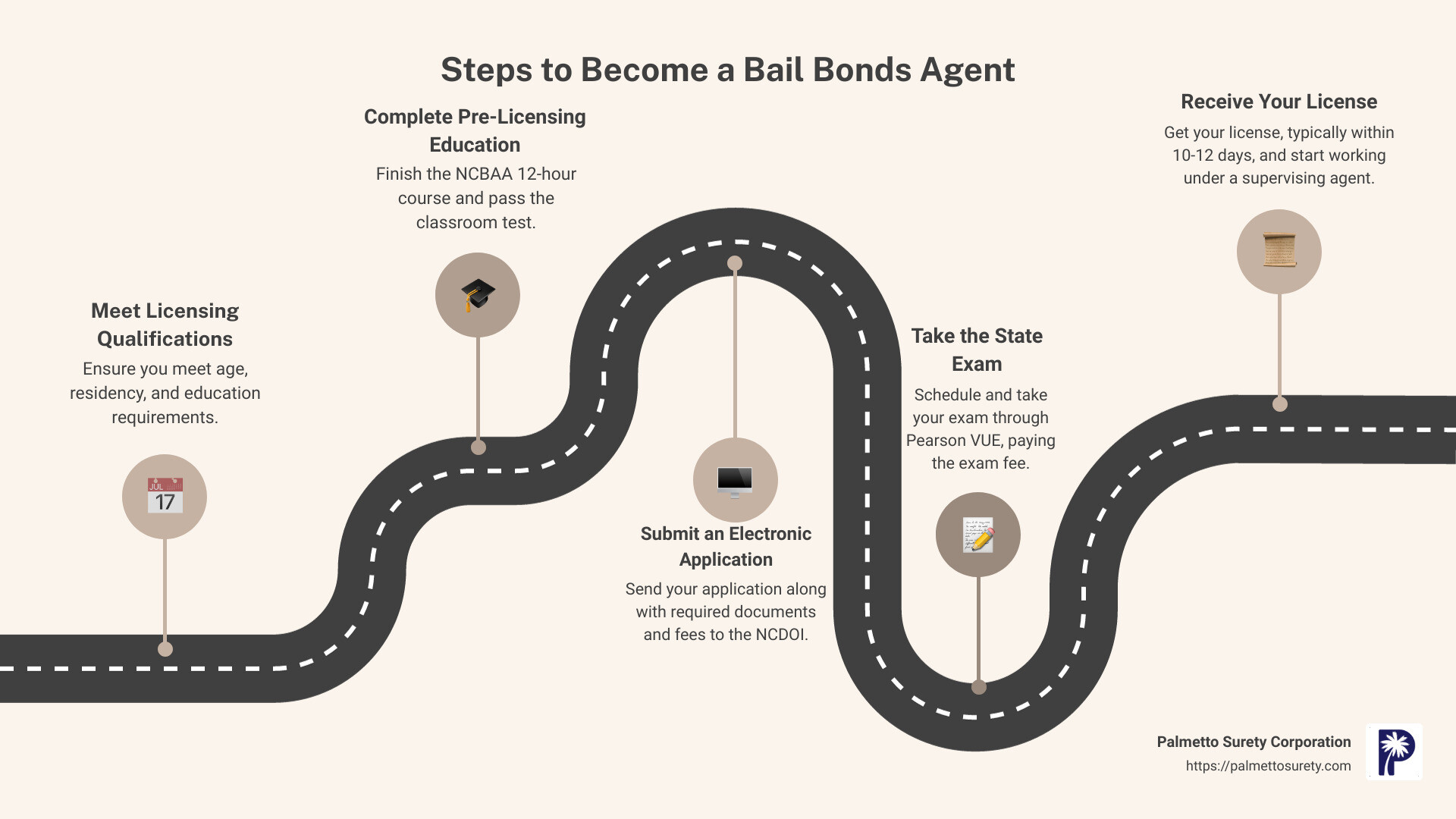
How to become a bail bonds agent? If you’re searching for a career with excitement, responsibility, and a chance to make a difference in your community, becoming a bail bonds agent might be the perfect fit for you. Here’s a simple overview:
- Meet licensing qualifications (age, residency, education).
- Complete pre-licensing education.
- Submit an electronic application.
- Take the state exam.
- Receive your license.
A career as a bail bonds agent is more than catching people who skipped bail. It’s about helping those in trouble and ensuring the judicial system operates smoothly. Palmetto Surety Corporation stands at the forefront of this industry, offering extensive support and expertise for those ready to embark on this fulfilling career path.
My name is Haiko de Poel Jr, and I bring years of experience in providing surety bonds and guiding future bail bonds agents. I’ve helped businesses navigate their contractual obligations smoothly, ensuring they meet all legal requirements effectively. Stay tuned as we dive deep into every step you need to take to become a successful bail bonds agent.
What Does a Bail Bonds Agent Do?
A bail bonds agent plays a crucial role in the criminal justice system. Their primary duties revolve around helping defendants secure their release from jail while awaiting trial. Here’s a closer look at what a bail bonds agent does:
Key Responsibilities
1. Providing Bail Bonds:
When someone is arrested, a judge sets a bail amount that must be paid for their release. Most people can’t afford to pay the full bail amount upfront. This is where a bail bonds agent steps in. The agent pays the bail on behalf of the defendant, charging a non-refundable fee (typically 10% of the bail amount) for this service.
2. Monitoring Defendants:
Once a defendant is out on bail, the agent is responsible for ensuring they adhere to all court obligations. This includes attending court dates and following any other conditions set by the court.
3. Handling Paperwork:
Bail bonds agents manage a lot of paperwork. They fill out forms, file documents with the court, and keep detailed records of their transactions and interactions with clients.

4. Collecting Collateral:
Agents often require collateral from defendants or their families. This could be a house, car, or other valuable asset. The collateral is used as a guarantee that the defendant will appear in court. If the defendant skips bail, the agent can seize the collateral.
5. Tracking Down Fugitives:
If a defendant fails to appear in court, the bail bonds agent may need to locate and apprehend them. This process is known as “skip tracing” and may involve working with bounty hunters.
Real-World Example
Imagine this scenario: John is arrested for a minor crime, and his bail is set at $10,000. John can’t afford this amount, so his family contacts a bail bonds agent. The agent agrees to post John’s bail for a fee of $1,000 (10% of the bail amount) and takes the family car as collateral. The agent then ensures John attends all his court dates. If John fails to appear, the agent can seize the car and might have to track John down to bring him back to court.
Court Obligations
Bail bonds agents must ensure their clients meet all court obligations. This includes:
- Attending Court Dates: Defendants must appear at all scheduled court hearings.
- Following Court Conditions: These might include staying within a certain area, avoiding contact with specific individuals, or undergoing regular drug tests.
Monitoring Tools
Agents use various tools to monitor defendants:
- Regular Check-ins: Defendants might have to check in with the agent regularly, either in person or via phone.
- Electronic Monitoring: In some cases, defendants are required to wear an electronic monitoring device.
Ensuring Compliance
Ensuring defendants comply with their court obligations is critical. Failure to do so can result in the agent losing the bail money posted and having to pay the court the full bail amount. This is why bail bonds agents are diligent in monitoring their clients and ensuring they understand the importance of meeting all court requirements.
By understanding these responsibilities and duties, you can see how becoming a bail bonds agent involves much more than just posting bail. It requires a keen eye for detail, strong organizational skills, and a commitment to ensuring justice is served.
Requirements to Become a Bail Bonds Agent
Age and Residency
To become a bail bonds agent in North Carolina, you must be at least 21 years old. This age requirement was increased from 18 to 21 in 2015 to ensure that agents have the maturity and life experience needed for the role.
Additionally, you must have lived in North Carolina for at least six months before applying. Proof of residency can be shown with a valid North Carolina ID or driver’s license. These requirements help ensure that agents are familiar with state laws and regulations.
Education and Training
Education is a key step in becoming a bail bonds agent. You need to have at least a high school diploma or a GED certificate.
Beyond basic education, you must complete a 12-hour pre-licensing education course. This course is offered by approved providers like the North Carolina Bail Agents Association (NCBAA). The course covers essential topics such as bail laws, ethics, and procedures. After completing the course, you will receive a certificate of completion, which you need to submit with your license application.
Background Check and Disqualifications
A clean background is crucial. You cannot have any felony convictions. If you have a felony on your record, you are automatically disqualified from becoming a bail bonds agent.
Minor offenses can also disqualify you. For example, if you have been convicted of a misdemeanor drug offense within the last 24 months, you are not eligible to apply.
Certain professions are also disqualified from becoming bail bonds agents due to potential conflicts of interest. These include:
- Sheriff or deputy
- Police officer
- Judge
- Attorney
- Probation or parole officer
- Jailer or assistant jailer
- Any other public employee involved with criminal justice
Even being a partner of someone in these professions can disqualify you.
Meeting these requirements ensures that you are prepared and eligible to become a bail bonds agent in North Carolina. In the next section, we will cover the step-by-step process to get licensed.

Steps to Become a Bail Bonds Agent
Step 1: Meet Licensing Qualifications
First things first, you need to meet the basic qualifications to become a bail bonds agent in North Carolina. Here’s what you need:
- Age: You must be at least 21 years old.
- Residency: You must have lived in North Carolina for at least 6 months.
- Identification: A valid North Carolina driver’s license or ID.
- Education: A high school diploma or GED.
- Background Check: No felony convictions and no misdemeanor drug offenses in the last 24 months.
Step 2: Complete Pre-Licensing Education
Next, you’ll need to complete a pre-licensing course. This is a 12-hour course offered by approved providers like the North Carolina Bail Agents Association (NCBAA). The course covers the basics of the bail bonds industry and prepares you for the state exam. Make sure to keep your certificate of completion, as you’ll need it for your application.
Step 3: Submit an Electronic Application
After finishing your course, it’s time to submit your application. You’ll do this through the North Carolina Department of Insurance (NCDOI) website. Here’s what you’ll need:
- Completed application form
- Fingerprint release form for a background check
- Certificate of pre-licensing education
- Proof of residency: Two documents like a utility bill or bank statement
- Application fees
Make sure all your documents are in order to avoid delays.
Step 4: Take the State Exam
Once your application is approved, you’ll receive a letter allowing you to schedule your state exam. This is done through Pearson VUE, and there’s a $40 exam fee. The exam covers topics like bail bond laws and practices. If you pass, Pearson VUE will notify the NCDOI and take your photo for your bail bonding ID.
Step 5: Receive Your License
After passing the exam, you’ll receive your bail bonding license within 10-12 business days. You’ll need to work under a supervising agent for your first year. This is a great time to learn the ropes and gain valuable experience.
Now that you know the steps, you’re well on your way to becoming a licensed bail bonds agent. In the next section, we’ll discuss the different types of bail bonds licenses available in North Carolina.
Types of Bail Bonds Licenses
Surety Bail Bondsman License
A Surety Bail Bondsman is the most common type of bail bonds license. This license allows you to execute or countersign bail bonds once you are appointed by an insurer. The insurer gives you the “powers” needed to perform your job.
- Application Cost: The application fee for a Surety Bail Bondsman License is $263.00, with an additional $48.00 processing fee, totaling $311.00. You’ll also need to pay a $51.50 fee for the state exam.
To get started, you’ll need to be appointed by an insurance company, which will provide you with the authority to issue bonds. This is a great option if you want to work independently but with the backing of an insurer.
Bail Bond Runner License
A Bail Bond Runner works under a licensed Professional Bail Bondsman. While you’ll have similar powers to a Surety Bail Bondsman, you’ll operate using the Professional Bondsman’s security rather than an insurer’s power.
- Application Cost: The application fee for a Bail Bond Runner License is $183.00, plus a $48.00 processing fee, totaling $231.00. The state exam fee is $51.50.
This license is ideal if you prefer to work under the guidance of an experienced Professional Bail Bondsman. It’s a great way to gain hands-on experience in the field.
Professional Bail Bondsman License
Becoming a Professional Bail Bondsman requires more financial capital compared to the other licenses. After passing the exam, you must deposit $15,000 in an American bank authorized by the commissioner.
- Application Cost: The application fee is $263.00, with a $48.00 processing fee, totaling $311.00. The state exam fee is $51.50.
- Security Deposit: A $15,000 deposit is required before you can receive your license.
This license is best suited for those who are ready to invest significantly in their bail bonding career. Once the deposit is confirmed, you’ll receive your license. If you don’t make the deposit within six months, your application will be canceled.
Each type of license offers different opportunities and responsibilities, so choose the one that aligns best with your career goals and financial situation. Next, we’ll discuss the renewal process and continuing education requirements to maintain your license.
Continuing Education and License Renewal
To keep your bail bonds agent license active, you must follow the renewal process and complete continuing education requirements. This ensures you stay up-to-date with the latest industry practices and legal changes.
Renewal Process
Your bail bonds agent license needs to be renewed every odd-numbered year by June 30th (e.g., 2021, 2023, 2025). Here’s what you need to do:
- Submit a Renewal Application: Complete the renewal form available on the NCDOI website.
- Pay the Renewal Fee: A $40 renewal fee is required.
- Complete Continuing Education: You must prove that you’ve attended at least three hours of continuing education.
Continuing Education
Continuing education is essential for maintaining your license and staying informed about changes in the bail bonds industry. The North Carolina Bail Agents Association (NCBAA) offers a three-hour continuing education course that you must complete before June 30th of your renewal year.
- Course Fee: The course costs $40.
- Course Content: Topics typically include updates on bail bond laws, best practices, and industry trends.
Why Continuing Education Matters
- Stay Compliant: Completing continuing education ensures you meet state requirements.
- Stay Informed: Learn about new laws, regulations, and industry best practices.
- Professional Growth: Enhance your skills and knowledge to better serve your clients.
By following the renewal process and completing your continuing education, you can maintain your license and continue your career as a successful bail bonds agent.
Next, let’s address some frequently asked questions about becoming a bail bonds agent.
Frequently Asked Questions about Becoming a Bail Bonds Agent
How do I become a bail bond agent in the US?
To become a bail bond agent in the United States, follow these steps:
- Meet Licensing Qualifications: Ensure you meet the age, residency, and background requirements for your state.
- Complete Pre-Licensing Education: Enroll in a pre-licensing course to learn about bail bond laws and practices.
- Pass the State Exam: Study for and pass your state’s licensing exam.
- Submit an Application: Apply for your license with your state’s Department of Insurance.
- Obtain Bail Insurance: Partner with a surety company to cover the financial risks of bail bonds.
What are the requirements to be a bail bondsman in NC?
In North Carolina, the requirements to be a bail bondsman include:
- Age and Residency: You must be at least 21 years old and have lived in NC for at least six months. You also need a valid NC ID or driver’s license.
- Education: A high school diploma or GED is required. Additionally, you need to complete a 12-hour pre-licensing course offered by approved providers like the North Carolina Bail Agents Association (NCBAA).
- Background Check: You must pass a background check and have no felony convictions or recent misdemeanor drug offenses.
- Disqualified Professions: Certain jobs, such as law enforcement officers and judges, disqualify you from becoming a bail bondsman.
Can a felon be a bail bondsman in NC?
No, felony convictions disqualify you from becoming a bail bondsman in North Carolina. Additionally, those with misdemeanor drug offenses within the last 24 months are also ineligible. The state takes these restrictions seriously to maintain the integrity and trustworthiness of bail bond agents.
For more detailed information on the specific steps and requirements, you can refer to the North Carolina Department of Insurance (NCDOI).
Next, we’ll explore the different types of bail bonds licenses available in North Carolina.
Conclusion
Becoming a bail bonds agent is a rewarding career that combines helping people with the excitement of the legal system. As a bail bonds agent, you’ll play a crucial role in the judicial process by ensuring that defendants show up for their court dates. This career offers financial stability and the opportunity to make a positive impact in your community.
At Palmetto Surety Corporation, we are committed to guiding you through every step of how to become a bail bonds agent. From meeting licensing qualifications to continuing education, we provide the support and resources you need to succeed.
Career Benefits
- Financial Stability: With a constant demand for bail bonds services, you’ll have a steady flow of clients.
- Community Impact: Help individuals navigate the legal system and secure their release from jail.
- Flexibility: As a bail bonds agent, you can often set your own hours and manage your own business.
- Personal Growth: Gain valuable skills in negotiation, client relations, and business management.
Why Choose Palmetto Surety Corporation?
We offer over two decades of experience in the surety bonds and bail bonds industry. Our team is dedicated to providing exceptional support, cutting-edge technology, and personalized service to ensure your success. Whether you are preparing to become a bail bonds agent or need assistance with surety bonds, we are here to help.
For more information on how to start your journey, visit our Surety Bonds page.
Contact Us
If you have any questions or need further assistance, don’t hesitate to contact us:
Phone: (866) 372-0827
Email: [email protected]
Embark on your path to success with Palmetto Surety Corporation. We are here to support you every step of the way.


