


State of Tennessee Surety Bond: Top 10 Essential Tips 2024
Introduction
State of Tennessee surety bonds are essential for smooth business operations and compliance with state regulations. Here’s what you need to know:
- A surety bond is a three-party contract involving the principal (business or individual), the obligee (entity requiring the bond), and the surety (bond provider).
- It ensures that the principal fulfills their obligations, offering security to clients and authority figures.
- Surety bonds act as both insurance for the obligee and credit for the principal.
Surety bonds are vital in Tennessee, given the diverse range of industries that rely on them—from construction and motor vehicles to tax services and public projects. Whether you are a contractor working on home improvements or a business selling alcohol, surety bonds guarantee compliance and protect against potential risks.
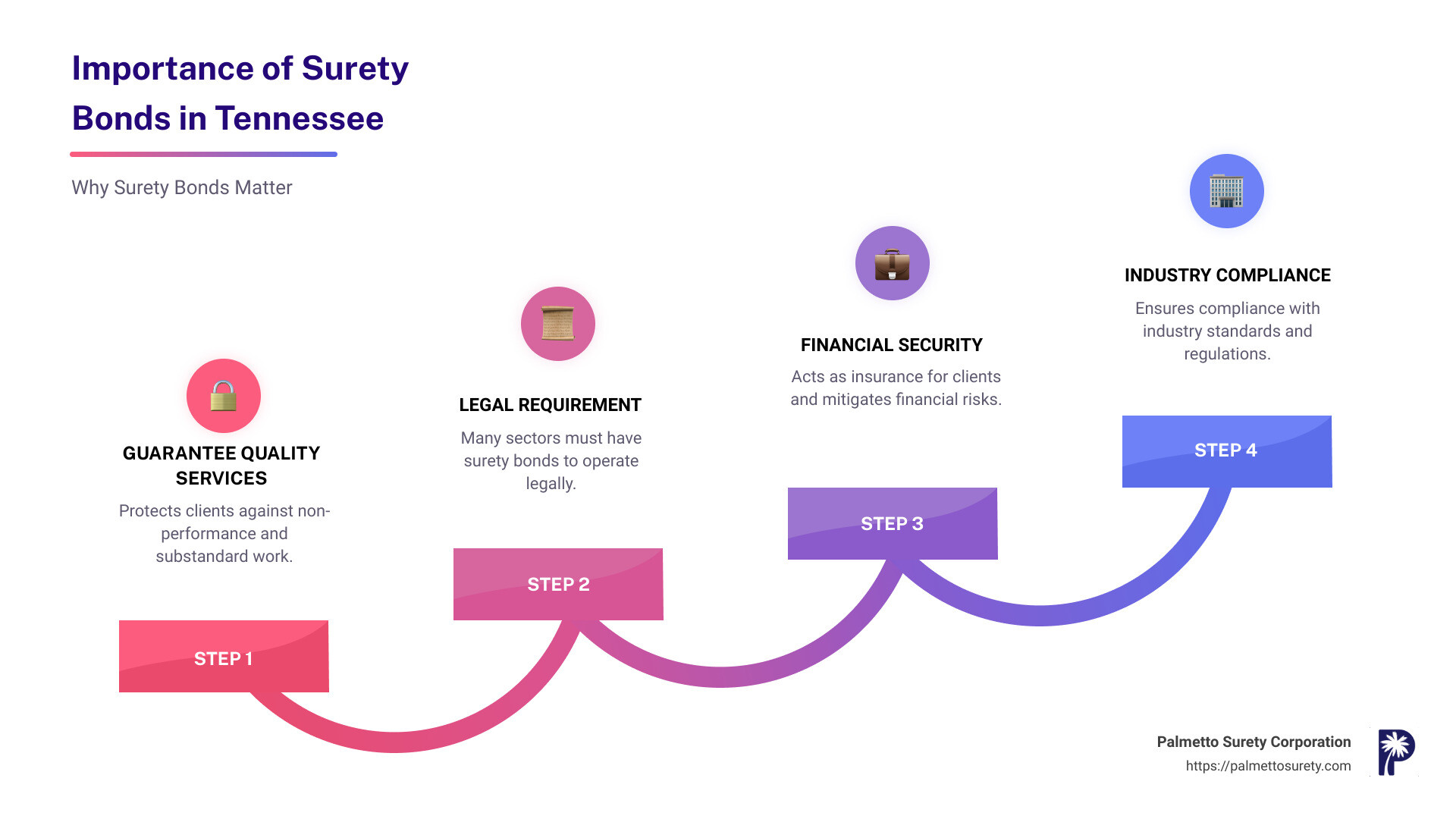
Here’s a quick summary of why surety bonds are crucial in Tennessee:
- Guarantee Quality Services: Protects clients against non-performance and substandard work.
- Legal Requirement: Many sectors must have surety bonds to operate legally.
- Financial Security: Acts as insurance for clients and mitigates financial risks.
Understanding Different Types of Surety Bonds in Tennessee
Surety bonds play a crucial role in various industries across Tennessee. They not only ensure compliance with state regulations but also offer financial protection to clients and the public. Let’s dive into some of the most common types of surety bonds in Tennessee.
Business Service Bonds
Business Service Bonds are essential for companies providing services on clients’ premises, such as janitorial or cleaning services. These bonds protect clients against theft or damage caused by the company’s employees. This bond builds trust and credibility, ensuring that businesses can operate smoothly and clients feel secure.
Alcohol Tax Bond
In Tennessee, businesses selling alcoholic beverages on their premises must obtain an Alcohol Tax Bond of $10,000. This bond ensures that the business pays all required state and sales taxes and adheres to Tennessee’s alcohol sale regulations. If a business fails to comply, a claim can be made against the bond, protecting the state from financial losses.
Appraisal Management Company Bond
Appraisal Management Companies (AMCs) must secure a bond to guarantee compliance with state regulations. This bond protects clients from any misconduct or errors made by the AMC. It ensures that the company operates ethically and meets all legal requirements.

Certificate of Title Bond
Vehicle owners in Tennessee who lack a certificate of title must obtain a Certificate of Title Bond. The bond amount matches the vehicle’s most recent appraised value. It protects the state and the public from financial losses if a new title needs to be issued. If the owner causes a situation requiring a new title, a claim can be made against the bond.
Contractor License Bonds
Contractor License Bonds are mandatory for contractors working on projects over a certain value. These bonds ensure that contractors adhere to state regulations and perform their work to the agreed standards. If a contractor fails to meet these standards, a claim can be made against the bond to cover any damages or losses.
Home Improvement Contractor Bond
Contractors in the home improvement sector, such as those installing driveways or roofing, must obtain a Home Improvement Contractor Bond of $10,000. This bond protects homeowners from damages resulting from negligence or harm caused by the contractor during the project.
Lottery Retailer Bond
Businesses selling lottery tickets must secure a Lottery Retailer Bond. This bond ensures that the retailer adheres to state regulations and promptly pays all lottery proceeds to the state. It protects the state and the public from financial losses due to non-compliance.
Motor Vehicle Dealer Bond
Motor vehicle dealers in Tennessee must obtain a Motor Vehicle Dealer Bond. This bond ensures that dealers comply with state laws and ethical business practices. It protects consumers from fraud, misrepresentation, and other unethical practices by the dealer.
Notary Bond
Notary Bonds are required for notaries public in Tennessee. This bond protects the public from any misconduct or errors made by the notary. It ensures that notaries perform their duties ethically and in accordance with state laws.
These are just a few examples of the many surety bonds available in Tennessee. Each bond type serves a specific purpose, ensuring compliance, protecting the public, and maintaining the integrity of various industries. Next, we’ll explore how to apply for a surety bond in Tennessee.
How to Apply for a Surety Bond in Tennessee
Applying for a state of Tennessee surety bond is straightforward. Follow these steps to ensure a hassle-free experience:
1. Contact the Obligee
First, identify the obligee—the entity requiring the bond. This could be a government agency, a business, or an individual. The obligee will specify the type of bond you need and the required bond amount.
2. Submit an Online Application
Once you know which bond you need, submit an online application. At Palmetto Surety Corporation, our application process is quick and easy. You’ll need to provide some basic information about your business and the bond you require.
3. Review and Quote
After submitting your application, our experts will review it. We’ll assess various factors like your credit score, professional experience, and business financials to determine the bond premium. You’ll then receive a quote, usually within minutes.
4. Payment and Receipt
Once you receive your quote, you can pay the bond premium online. Payment options are secure and straightforward. After payment, you’ll receive your bond immediately. We offer digital delivery and next-day shipping options for your convenience.
5. Sign and File
Finally, sign your bond and file it with the obligee. This step is crucial for compliance and ensures that your business is legally protected. If you have any questions, our live agents are ready to help.

Following these steps will help you secure your surety bond in Tennessee efficiently. Next, we’ll discuss the factors that affect the cost of surety bonds in Tennessee.
Key Factors Affecting Surety Bond Cost in Tennessee
When securing a state of Tennessee surety bond, understanding the cost factors can help you budget effectively. Here are the key elements that influence the price:
Bond Amount
The bond amount is the total value of the surety bond required. This is determined by the obligee (the entity requiring the bond). Higher bond amounts typically translate to higher premiums. For example, a $50,000 contractor license bond will cost more than a $10,000 notary bond.
Bond Type
Different types of surety bonds come with varying levels of risk, affecting their cost. For instance, a business service bond is generally less risky compared to a motor vehicle dealer bond, leading to lower premiums.
Personal Credit Score
Your personal credit score plays a significant role in determining your bond premium. Surety providers use your credit score to assess the risk of issuing the bond. Higher credit scores often result in lower premiums. A score above 700 can significantly reduce your costs.
Professional Experience
Experience in your field can also impact the cost of your surety bond. More experienced professionals are considered lower risk. For instance, a contractor with 10 years of experience may pay less for a bond than a newcomer.
Assets & Liquidity
Your assets and liquidity are scrutinized by surety providers to assess your financial stability. More assets and higher liquidity can lead to lower premiums. This is because you are seen as more capable of handling potential claims.
Business Financials
Finally, your business financials are critical. Surety companies look at your balance sheets, income statements, and cash flow. Strong financials can lower your bond cost as they indicate a lower risk of default.
Understanding these factors can help you get the best rate for your surety bond in Tennessee. Next, we’ll address some common questions about surety bonds in Tennessee.
Common Questions About Surety Bonds in Tennessee
How do I get a surety bond in Tennessee?
Getting a state of Tennessee surety bond is straightforward:
-
Contact the Obligee: First, find out which bond you need. The obligee (the entity requiring the bond) will provide this information.
-
Choose a Licensed Bond Provider: Work with a licensed provider, like Palmetto Surety Corporation. They can guide you through the process and ensure you get the right bond.
-
Submit an Online Application: Fill out an online application. This usually takes just a few minutes.
-
Review and Quote: The provider will review your application and offer a quote.
-
Payment and Receipt: Pay the bond premium to receive your bond instantly.
-
Sign and File: Sign your bond and file it with the obligee.
What is a $10,000 notary public surety bond payable to the state of Tennessee?
A $10,000 notary public surety bond is a requirement for notaries in Tennessee. This bond protects the public from any errors or misconduct by the notary. Here’s what you need to know:
-
Notary Requirements: Every notary in Tennessee must have this bond. It’s part of the state’s effort to ensure notaries act ethically and responsibly.
-
Protecting the Public: The bond acts as a financial guarantee. If a notary makes a mistake or engages in misconduct, the bond compensates the affected parties.
-
4-Year Commission: The bond covers the notary’s 4-year commission term. It must be renewed if the notary continues their service beyond this period.
Is a surety bond worth it?
Yes, a surety bond is definitely worth it. Here’s why:
-
Financial Assurance: A surety bond provides a safety net. It ensures that obligations will be met, protecting both parties in a contract.
-
Credibility: Having a surety bond enhances your credibility. It shows clients and partners that you are trustworthy and reliable.
-
Competitiveness: In many industries, a surety bond is a requirement. Without it, you might not be able to bid on projects or obtain licenses, putting you at a competitive disadvantage.
Understanding these common questions can help you navigate the surety bond process in Tennessee. For more information, reach out to Palmetto Surety Corporation.
How to Ensure Compliance with Tennessee Surety Bond Requirements
Ensuring compliance with state of Tennessee surety bond requirements is crucial. Here’s a step-by-step guide to help you stay on track:
Verify Bond Type with Obligee
First things first: Contact the obligee, the entity requiring the bond. They will tell you exactly which bond you need. For example, if you’re a contractor, you might need a Contractor License Bond. If you’re selling lottery tickets, a Lottery Retailer Bond is required.
Pro Tip: Always double-check with the obligee to avoid any costly mistakes.
Accurate Application Submission
Once you know the bond type, submit an accurate application. This includes:
- Personal Information: Name, address, and contact details.
- Business Information: Business name, type, and financial details.
- Bond Details: Type of bond, bond amount, and duration.
Accuracy matters. Any mistakes can delay the process or lead to rejection.
Immediate Bond Premium Payment
After submitting your application, you’ll receive a quote. This is the cost of your bond, usually between 1% and 10% of the bond amount.
Example: If you’re getting a $10,000 Notary Bond, your premium might be as low as $100.
Pay the premium immediately to avoid delays. Once paid, you’ll receive your bond quickly.
Proper Bond Filing with Obligee
Finally, file the bond with the obligee. This step is often overlooked but is crucial for compliance.
- Sign the Bond: Make sure both you and the surety company sign the bond.
- Submit to Obligee: Send the signed bond to the obligee as instructed.
Reminder: Some bonds need to be filed with specific government agencies. Always follow the instructions provided by the obligee.
By following these steps, you can ensure full compliance with Tennessee’s surety bond requirements, protecting your business and giving you peace of mind.
Next, we’ll answer some common questions about surety bonds in Tennessee, helping you navigate this essential aspect of doing business in the state.
Conclusion
Choosing Palmetto Surety Corporation for your surety bond needs in Tennessee ensures you’re partnering with a reliable and experienced company. With over twenty years of expertise in the surety bond industry, we pride ourselves on offering exceptional customer support and personalized service.
Our state-of-the-art technology streamlines the process, allowing you to purchase, print, and manage your surety bond with ease. Our dedicated support team is available 24/7 to assist you, ensuring that your needs are met promptly and efficiently.
Whether you need a business service bond, alcohol tax bond, or a notary bond, Palmetto Surety Corporation has you covered. We work closely with you to identify the most suitable bond for your specific requirements, ensuring compliance with Tennessee regulations.
For more information or to get started with your surety bond application, visit our Surety Bonds page. Let us help you secure your business and protect your interests with confidence.
By choosing Palmetto Surety Corporation, you are ensuring that your business operations in Tennessee are backed by a trusted partner, giving you peace of mind and financial security.


