


Probate Bonds Florida, USA: Top Guide for 2024 Estates
Introduction
Probate bonds Florida, USA are essential in ensuring the proper management of an estate’s assets during probate proceedings. These bonds are a type of surety bond mandated by the Florida probate court to safeguard the interests of beneficiaries and creditors against any misconduct by the estate’s personal representative.
At a glance:
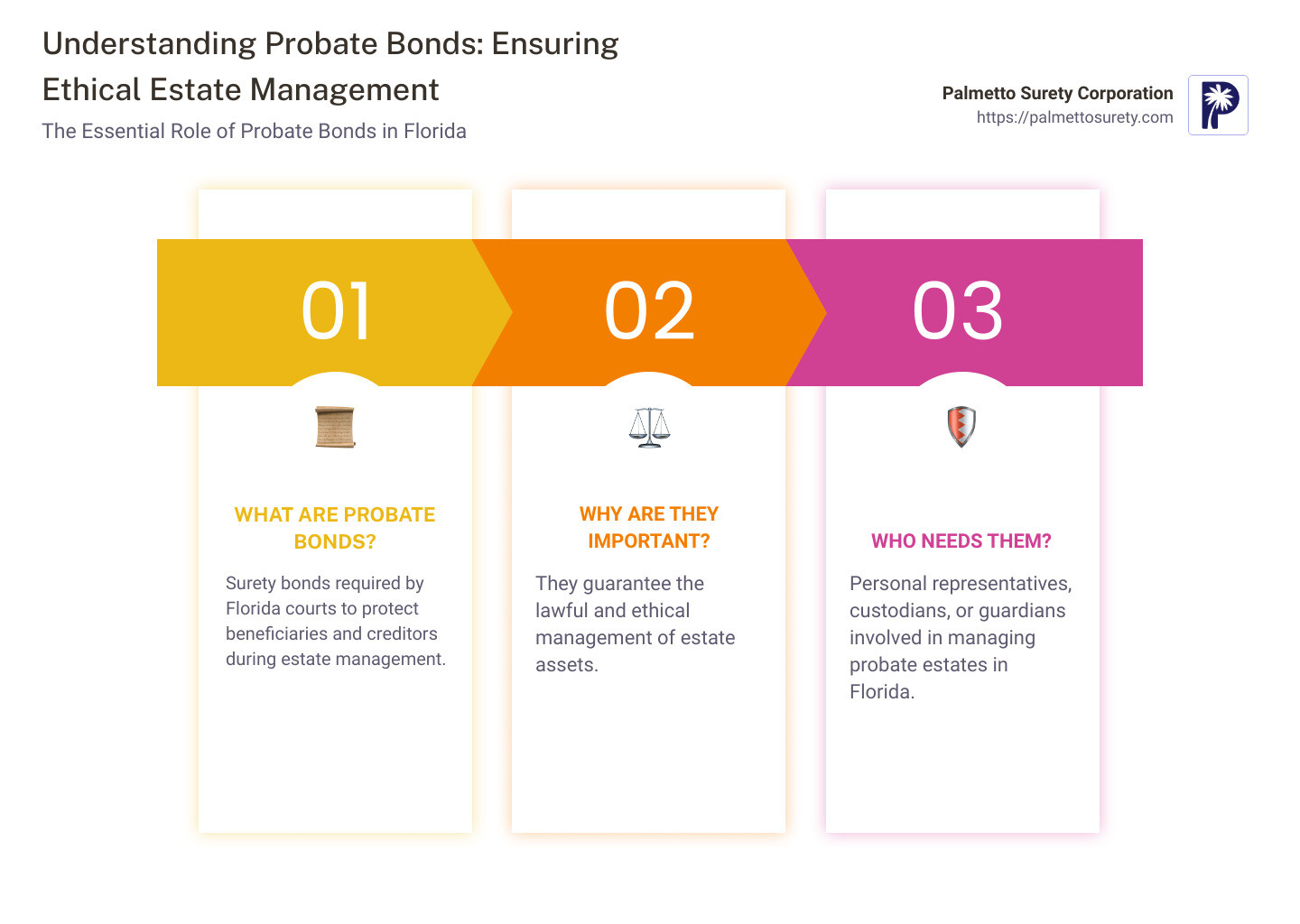
– What are Probate Bonds? Surety bonds required by Florida courts to protect beneficiaries and creditors during estate management.
– Why are they important? They guarantee the lawful and ethical management of estate assets.
– Who needs them? Personal representatives, custodians, or guardians involved in managing probate estates in Florida.
Understanding the role of probate bonds is crucial for anyone involved in executing a will or managing an estate. This guide will provide a comprehensive overview of probate bonds, emphasizing their importance within the Florida legal framework.
What is a Probate Bond?
A probate bond is a type of surety bond required by Florida courts to ensure that individuals managing someone else’s estate—like personal representatives, custodians, or guardians—act ethically and lawfully. These bonds serve as a financial guarantee to protect the estate’s beneficiaries and creditors from potential mismanagement or fraud.
Definition
In simple terms, a probate bond is a legal safeguard. When a court appoints someone to manage an estate, they may require this bond to ensure the appointed person, known as the principal, fulfills their duties responsibly. If the principal fails to do so, the bond provides financial recourse for any losses incurred by the estate’s beneficiaries or creditors.
Purpose
The primary purposes of a probate bond are:
- Guarantee Lawful Conduct: The bond ensures that the principal carries out their duties in accordance with the law and the terms of the will.
- Financial Protection: It provides a source of funds to compensate for any financial harm caused by the principal’s misconduct. This could include acts of fraud, theft, or gross mismanagement.
Personal Representative Bond
A personal representative bond is a specific type of probate bond required in Florida. Personal representatives, also known as executors or administrators, are individuals appointed to manage the deceased’s estate. They are responsible for tasks like distributing assets to heirs and paying off any debts.
In Florida, the court may require a personal representative to purchase a bond to ensure they manage the estate’s assets ethically and lawfully. This bond is particularly crucial if the personal representative resides outside of Florida or if the estate is of significant value.

Surety Bond Comparison
Probate bonds are a category within the broader surety bond family, which includes various bonds used for different legal and financial protections. Here’s a quick comparison:
- Probate Bond: Ensures ethical management of an estate by a personal representative or guardian.
- Performance Bond: Guarantees contractors complete a project according to the contract terms.
- License and Permit Bond: Ensures businesses comply with state or local regulations.
Each type of surety bond involves three parties:
- Principal: The individual required to obtain the bond (e.g., personal representative).
- Obligee: The entity requiring the bond (e.g., the court).
- Surety: The company that issues the bond and provides the financial guarantee.
In the case of probate bonds, the court requires the bond (obligee), the personal representative obtains it (principal), and the surety company backs it financially.
Understanding probate bonds is essential for anyone involved in managing an estate in Florida. These bonds ensure that personal representatives act in the best interest of the estate and its beneficiaries, providing a layer of financial protection against potential mismanagement or fraud.
Cost of Probate Bonds in Florida
Fee Structure
The cost of probate bonds in Florida, USA, primarily depends on the value of the estate and the bond amount set by the probate court. The fee structure for these bonds generally includes an annual premium that the personal representative must pay to the surety company.
Premium Calculation
The annual premium for a probate bond is calculated based on several factors:
- Estate Value: Larger estates require higher bond amounts, resulting in higher premiums.
- Bond Amount: The court sets the bond amount considering various factors like the value of the estate, the relationship between the personal representative and beneficiaries, and the types of assets involved.
- Creditworthiness: The financial standing and credit history of the personal representative also play a significant role. A representative with good credit can expect lower premiums.
For example, the annual premium for a $50,000 bond can range from approximately $275 to $350.
Renewal Requirements
Probate bonds typically renew annually. As long as the probate case remains open, the personal representative must pay the renewal premium each year. While many probate cases in Florida conclude within 12 months, some can extend beyond this period. In such cases, the premium must be paid each year unless the court decides to waive the bond requirement.
Cost Factors
Several factors influence the cost of probate bonds:
- Estate Complexity: Estates with diverse assets, such as real estate, investments, and personal property, may require higher bond amounts.
- Known Creditors: The number and amount of claims against the estate can affect the bond amount.
- Personal Representative’s Location: If the personal representative resides outside Florida, the court may require a higher bond amount or additional collateral.
- Family Allowance and Exempt Property: These can reduce the overall value of the estate, potentially lowering the bond amount.
- Liens and Encumbrances: Existing debts or liens on estate assets can also impact the bond amount.
While the personal representative may initially pay the premium from their own funds, it is typically reimbursable from the estate’s assets.
Understanding the cost structure of probate bonds in Florida helps personal representatives and beneficiaries manage estate administration expenses effectively. Now, let’s explore the application process for obtaining a probate bond in Florida.
Applying for a Probate Bond in Florida
Application Process
Applying for a probate bond in Florida can seem daunting, but it’s actually quite straightforward. At Palmetto Surety Corporation, we’ve simplified the process to make it as easy as possible. Here’s a step-by-step guide:
-
Gather Required Information: Before starting your application, gather all necessary details. You’ll need the decedent’s full name, the county where the probate case is being filed, information about estate assets, and the names of the estate heirs.
-
Complete the Application: You can apply online through our fast Online Application or download the application and return it by fax or secure message. The application will ask for information similar to a personal credit application, as well as probate case details.
-
Submit the Application: Once you’ve filled out the application, submit it. We typically confirm receipt within a few hours.
Online Application
Our online application process is designed for convenience. Simply visit our Online Application page, fill in the required fields, and submit. This method ensures your application is processed quickly and efficiently.
Fast Approval
Time is often of the essence in probate cases. We aim to approve and issue bonds the same day or within 24 hours after receiving all necessary information. To expedite the process, promptly respond to any follow-up questions we might have.
Qualifications
To qualify for a probate bond in Florida, applicants are evaluated based on three main criteria:
- Personal Credit History: A good credit score can significantly speed up the approval process.
- Legal Assistance: Having an attorney to answer questions can be beneficial.
- Experience: Prior experience handling probate or financial matters can also be advantageous.
Delivery Options
Once approved, your bond will be sent with USPS Delivery Confirmation / USPS Tracking at no additional charge. If you need the bond urgently, we offer overnight delivery for an additional cost.
Applying for a probate bond in Florida is a crucial step in estate administration. By following this streamlined process, you can secure the necessary bond quickly and efficiently, ensuring compliance with court requirements and protecting the estate’s assets.
Next, we will explore the different types of probate bonds available in Florida.
Types of Probate Bonds in Florida
In Florida, there are several types of probate bonds that may be required, depending on the specific role and responsibilities of the person managing the estate. Understanding these bonds is essential for ensuring compliance with legal requirements and protecting the interests of beneficiaries and creditors.
Administrator Bond
An Administrator Bond is required when someone is appointed by the court to manage the estate of a deceased person who did not leave a will. This bond ensures that the administrator will faithfully execute their duties, including paying debts and distributing assets according to Florida law.
Executor Bond
An Executor Bond (sometimes called an executor’s bond) is similar to an administrator bond but is required when the deceased person left a will. The executor is named in the will and is responsible for carrying out the deceased’s wishes. This bond protects beneficiaries from any potential mismanagement or dishonesty by the executor.
Trustee Bond
A Trustee Bond is required when a trustee is appointed to manage a trust created by a will. This bond ensures that the trustee will act in the best interests of the beneficiaries, managing and distributing the trust assets according to the terms of the trust.
Personal Representative Bond
A Personal Representative Bond is a broader term that encompasses both executor and administrator bonds. It is required for any individual appointed to manage the estate, whether appointed by a will or by the court. This bond ensures the personal representative will perform their fiduciary duties responsibly and in accordance with Florida law.
Each of these bonds serves to protect the estate’s assets and ensure that the appointed individual fulfills their legal obligations. Understanding the specific type of bond required for your role can help streamline the probate process and provide peace of mind for all parties involved.
Next, we will delve into the types of assets that may require a probate bond in Florida.
Probate Assets and the Need for a Bond
When dealing with probate in Florida, understanding what constitutes probate assets is essential. Here’s a breakdown to help clarify:
Probate Assets Definition
Probate assets are items owned solely by the deceased that must go through the probate process to be transferred to heirs. These assets do not automatically pass to someone else upon death and often include:
- Real estate solely in the deceased’s name
- Bank accounts without a payable-on-death (POD) designation
- Vehicles titled solely in the deceased’s name
- Personal property like jewelry, art, and collectibles
Probate assets are different from non-probate assets, which transfer automatically to beneficiaries without court intervention.
Automatic Succession
Some assets bypass probate due to automatic succession mechanisms. These include:
- Jointly owned property with rights of survivorship
- Life insurance policies with named beneficiaries
- Retirement accounts like IRAs and 401(k)s with designated beneficiaries
These assets transfer directly to the named individuals, avoiding the probate process.
Sole Name Assets
Assets titled solely in the deceased’s name with no designated beneficiary must go through probate. This ensures the court oversees the distribution according to the will or state law if no will exists.
Co-Owned Assets
Co-owned assets can be tricky. If the asset is held as tenants in common, the deceased’s share must go through probate. However, if held as joint tenants with rights of survivorship, the asset passes directly to the surviving owner without probate.
Understanding these distinctions is crucial for managing probate efficiently and ensuring that all required assets are accounted for in the probate bond process.
Next, we’ll address some common questions about probate bonds in Florida.
Frequently Asked Questions about Probate Bonds in Florida
How much does a probate bond cost in Florida?
The cost of a probate bond in Florida varies depending on the estate’s total value. Typically, the bond premium is calculated at one-half of one percent (0.5%) of the estate’s assets. For example, if the estate is worth $100,000, the bond premium would be around $500.
Here’s a quick breakdown of typical costs:
| Bond Amount Needed | Fee Range |
|---|---|
| <$20,000 | $100-$150 |
| $20,000-$30,000 | $150-$200 |
| $30,000-$50,000 | $200-$300 |
| $50,000+ | 0.5-0.8% |
These rates can vary based on the surety company and the personal representative’s creditworthiness. For the best rates, it’s advisable to contact a reliable surety bond provider like Palmetto Surety Corporation.
What is the personal representative bond in Florida?
A personal representative bond is a type of probate bond required by Florida courts to ensure that the estate’s personal representative (executor or administrator) performs their duties ethically and responsibly. This bond protects the estate’s beneficiaries and creditors from potential mismanagement or fraud.
In Florida, the bond amount is determined by the court and is based on several factors, including:
- The gross value of the estate
- The relationship between the personal representative and the beneficiaries
- The nature and type of the estate’s assets
- Known creditors and existing liens on the assets
If the personal representative fails to fulfill their duties, the bond provides financial compensation to the harmed parties.
What assets must go through probate in Florida?
In Florida, not all assets need to go through probate. The assets that do must typically be in the deceased’s sole name or co-owned without rights of survivorship. Here are the main types of assets that usually require probate:
-
Solely Owned Assets: Assets solely in the deceased’s name, such as a personal bank account or real estate, must go through probate.
-
Tenants in Common: If the deceased co-owned property as tenants in common, their share must go through probate.
-
Personal Property: Items like jewelry, vehicles, and other personal belongings in the deceased’s name.
However, some assets are exempt from probate, including:
- Jointly Owned Assets: Assets held as joint tenants with rights of survivorship automatically pass to the surviving owner.
- Beneficiary Designations: Life insurance policies, retirement accounts, and other assets with designated beneficiaries bypass probate.
- Trust Assets: Assets placed in a living trust do not go through probate.
Understanding which assets require probate is essential for ensuring the estate is managed correctly and that the probate bond covers all necessary assets. For personalized guidance, consider consulting with an experienced probate bond provider.
Conclusion
Navigating the complexities of probate bonds in Florida can be challenging, but having the right partner makes all the difference. At Palmetto Surety Corporation, we are committed to providing you with the expertise and support you need. With over 20 years of experience, our team is well-equipped to help you secure the appropriate probate bond for your unique situation.
We understand that every estate is different, and our goal is to make the bonding process as seamless as possible. From administrator bonds to personal representative bonds, we offer a wide range of probate bonds to meet your needs. Our state-of-the-art technology allows you to purchase, print, and manage your bond with ease, ensuring a hassle-free experience.
Our commitment to exemplary customer support means that you can rely on us 24/7. Whether you have questions about the application process or need assistance with claim-related issues, our dedicated team is here to help. We also offer competitive rates and fast approvals, making it easier for you to fulfill your fiduciary duties without unnecessary delays.
For more information and to get started on your probate bond application, visit our Surety Bonds service page. Let us help you protect the estate and ensure a smooth probate process.
Thank you for considering Palmetto Surety Corporation for your probate bond needs. We look forward to serving you and providing the peace of mind that comes with knowing you have a trusted partner by your side.


