


Title bond Georgia: 2025’s Ultimate Solution
Understanding Title Bond Georgia Requirements and Process
When you need a Title bond Georgia, you’re likely dealing with a missing, lost, or defective vehicle title that prevents you from legally registering, insuring, or selling your car. This surety bond serves as a financial guarantee that protects the state and previous owners while allowing you to obtain a bonded title for your vehicle.
Quick Answer for Title Bond Georgia:
- What it is: A 4-year surety bond required by the Georgia Department of Revenue for vehicles with missing or defective titles
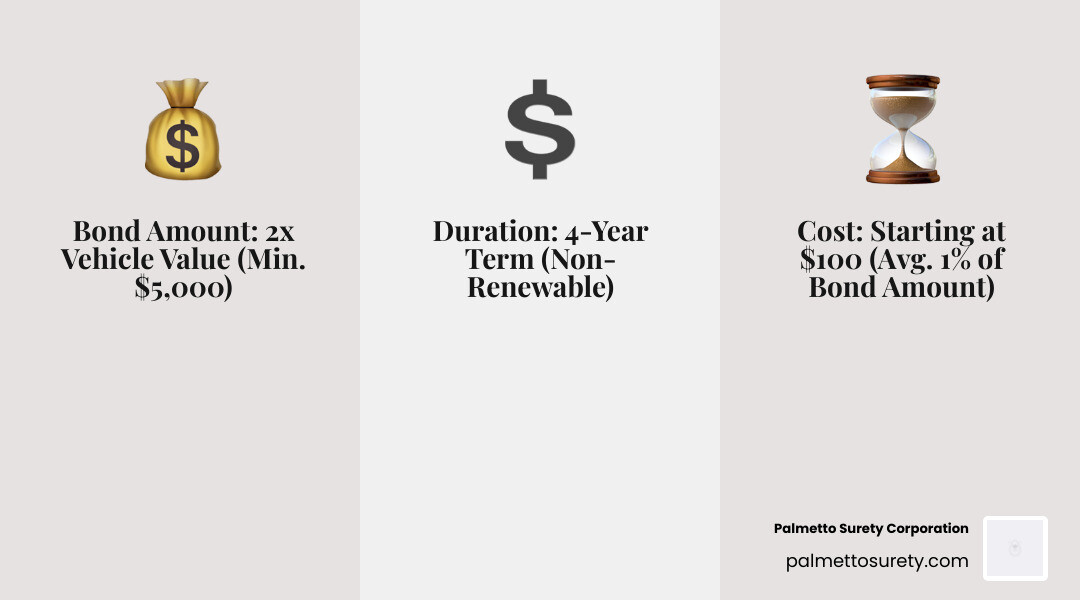
- Bond amount: Two times the vehicle’s retail value (minimum $5,000)
- Cost: Starting at $100, typically 1% of the bond amount
- Eligibility: Georgia residents with vehicles 1986 or newer (not abandoned vehicles)
- Process: Complete forms MV-1, MV-46A, T-22B, get vehicle inspection, submit at County Tag Office
- Duration: 4 years, does not renew
The Georgia bonded title process involves three parties: you (the principal), the Georgia Department of Revenue (the obligee), and the surety company (the guarantor). If someone later proves they have a valid claim to your vehicle, they can file against the bond. The surety company pays valid claims up to the bond amount, then seeks reimbursement from you.
Common situations requiring a title bond include purchasing a vehicle without receiving the title, inheriting a car without proper documentation, or having your original title stolen before transfer. The bond essentially vouches for your legitimate ownership while protecting others who might have legal claims.
I’m Haiko de Poel Jr., and through my work with Palmetto Surety Corporation, I’ve helped countless Georgia residents steer the Title bond Georgia process to secure proper vehicle ownership. My experience in surety bonds and digital marketing has given me deep insights into the challenges vehicle owners face when dealing with title issues.
What is a Vehicle Title Bond and Why is it Necessary?
Think of a Title bond Georgia as your financial promise to the state – it’s a special type of surety bond that says “I’m the rightful owner of this vehicle, and I’m willing to put money behind that claim.” A surety bond creates a three-party agreement that provides a financial guarantee, ensuring certain obligations will be met. If you’re curious about how these bonds work in general, our guide on what is surety bond insurance explains the bigger picture.
When you can’t produce a valid certificate of title for your vehicle, this bond becomes your lifeline. It allows you to prove ownership so you can legally register, insure, and sell your car – all while protecting others who might have legitimate claims to the vehicle.

A bonded title becomes necessary when life gets complicated. Maybe you bought a car from someone who “lost” the title, or perhaps you inherited a vehicle but can’t find the paperwork anywhere. Sometimes the title you received has errors, missing signatures, or other problems that make it worthless at the DMV.
Without a clear title, you’re essentially driving a ghost car in the eyes of the law. The Title bond Georgia fixes this mess by establishing your legal ownership while giving the Georgia Department of Revenue peace of mind. It’s their way of saying, “Okay, we’ll trust you, but this bond covers everyone just in case.”
Who Needs a Bonded Title in Georgia?
If you’re a Georgia resident staring at a car you own but can’t legally prove it, you probably need a bonded title. The Georgia Department of Revenue Motor Vehicle Division doesn’t just suggest this process – they often require it to keep things legal and above board.

Private vehicle purchases top the list of bonded title needs. You found the perfect car, handed over your cash, but the seller either lost the title or never had it properly transferred to their name. It happens more often than you’d think, and it can leave you in a real pickle.
Inheritance situations create another common headache. Your relative passed away and left you their vehicle, but the title vanished into thin air or was never properly transferred in the first place. Family paperwork has a way of disappearing when you need it most.
Missing ownership documents round out the typical scenarios. Maybe you’ve owned the vehicle for years, but the paperwork got lost in a move, destroyed in a flood, or simply vanished into that mysterious place where important documents go to hide.
This process is specifically for legal Georgia residents dealing with vehicles that require a Georgia title. The state has specific requirements about what qualifies, so it’s worth checking directly with the motor vehicle division if you’re unsure.
How a Title Bond Protects You and the Public
A Title bond Georgia isn’t just bureaucratic red tape – it’s actually a smart system that protects everyone involved in your vehicle’s ownership story. For you, it’s the key that open ups legal ownership and gets your car properly registered. For everyone else, it’s a safety net that prevents fraud and protects legitimate claims.
Financial protection forms the backbone of this system. If someone steps forward during the bond’s four-year term with legitimate proof they own your vehicle, they can file a claim against the bond. The surety company pays valid claims up to the bond amount, then looks to you for reimbursement. It’s not perfect, but it’s fair.
Legitimate ownership verification helps the Georgia Department of Revenue sleep better at night. By requiring you to go through this rigorous process, they ensure you’ve done your homework to prove you rightfully own the vehicle. This extra step helps prevent fraudulent claims and keeps stolen vehicles off the roads.
Fraud prevention protects everyone from bad actors. Without some kind of verification system, anyone could claim ownership of any vehicle without a title. The bond adds a crucial security layer, backed by Georgia Code §40-3-28, which specifically authorizes this surety bond option for clearing questionable titles.
Lienholder and previous owner rights get protected too. If an undisclosed lien surfaces after you get your bonded title, the bond protects that lienholder’s financial interest. Previous owners are also shielded from liability if the vehicle was sold without proper title transfer.
The state benefits because the bond protects the Georgia Department of Revenue from potential lawsuits if they issue a title to the wrong person. Everyone wins: you get your title, and everyone else gets peace of mind knowing the system has safeguards in place.
Navigating the Title Bond Georgia Process: A Step-by-Step Guide
Getting your Title bond Georgia doesn’t have to feel like solving a puzzle with missing pieces. While the process involves several steps and quite a bit of paperwork, we’ll walk you through each stage so you know exactly what to expect. Think of us as your friendly guide through the Georgia Department of Revenue (DOR) maze!
The beauty of this process is that it’s systematic – each step builds on the previous one, creating a clear path to your bonded title. Let’s break it down into four manageable stages that will get you from “paperwork nightmare” to “proud vehicle owner” in no time.

Step 1: Confirm Your Eligibility
Before you dive headfirst into forms and inspections, let’s make sure your situation actually qualifies for a bonded title. Trust us – checking this first will save you hours of work and potential disappointment later.
Georgia has some specific rules about who can get a bonded title. You’ll need to be a legal Georgia resident – this process is designed specifically for folks who call the Peach State home. Your vehicle must also be one that requires a Georgia title, which covers most standard cars, trucks, and motorcycles.
Here’s where things get interesting: your vehicle must be model year 1986 or newer. If you’re trying to get a bonded title for that classic 1970s Camaro or a vintage pickup truck, you’ll need to explore other options. Georgia law simply doesn’t allow the bonded title process for vehicles that are model year 1985 or older.
The vehicle also cannot be classified as abandoned. This process is for vehicles you genuinely own but lack proper documentation for – not for that rusted-out car that’s been sitting in your neighbor’s yard for years.
We strongly recommend that you verify eligibility with the MVD before moving forward. A quick check now can save you a lot of time and energy later in the process.
Step 2: Gather Required Forms and Documents
Now comes the fun part – paperwork! Don’t worry, we’ll guide you through each form so you know exactly what you need and where to find it.
The cornerstone of your application is Form MV-1 Title/Tag Application, which you can find at the Form MV-1 Title/Tag Application page. This is Georgia’s standard application for a Certificate of Title, so take your time filling it out accurately.
Next up is Form MV-46A Certificate of Title Bond Affidavit, available at Form MV-46A Certificate of Title Bond Affidavit. This affidavit needs to be completed in the same name as shown on your bond and requires notarization. It’s where you’ll detail your efforts to obtain the original title – basically, you’re explaining to Georgia why you need this bond in the first place.
Don’t forget to gather any ownership evidence you have. This might include a bill of sale, receipt, canceled check, or any other document that shows you purchased or acquired the vehicle. The more evidence you can provide, the smoother your application process will be.
Step 3: Complete the Vehicle Inspection and History Report
This step involves getting your vehicle physically inspected and running a comprehensive background check on its title history. Think of it as a thorough investigation to make sure everything checks out.
A law enforcement officer will need to complete Form T-22B Certification of Inspection, which you can find at Form T-22B Certification of Inspection. During this inspection, the officer will verify your vehicle’s VIN and ensure it matches your paperwork. Importantly, they must also verify the vehicle information and status in the Georgia Crime Information Center (GCIC) database – without this verification, the form is invalid.
You’ll also need a report from the National Motor Vehicle Title Information System (NMVTIS), which you can obtain through the National Motor Vehicle Title Information System (NMVTIS) report. This report provides crucial information about your vehicle’s title history and helps determine where the current title of record is located.
If the NMVTIS report shows that the title of record is from another state, you’ll need to obtain a certified title history from that state. And here’s something important: if either the NMVTIS report or certified title history shows a lien, you must include a completed lien release using Form T-4, which you can find in the system.
Step 4: Secure Your Title Bond and Submit Your Application
You’re in the home stretch! This final step brings everything together as you secure your bond and submit your complete application package.
This is where Palmetto Surety Corporation shines. We can help you obtain your Georgia Certificate of Title Bond quickly and efficiently. When you work with us, you’ll receive a bond that meets all of Georgia’s requirements – it will be properly signed by our representative, sealed with our company seal, and include the necessary Power of Attorney documentation.
Once you have your bond in hand, it’s time to gather all your completed paperwork. Double-check that you have your MV-1 form, MV-46A affidavit, T-22B inspection, NMVTIS report, any certified title history, lien release (if needed), and all your ownership evidence.

Your next stop is your local County Tag Office, which you can locate using the Find your local County Tag Office tool. Here’s a crucial timing detail: your surety bond must be filed no more than six months from its date of issue, so don’t let it sit around gathering dust!
When you submit your application, you’ll also need to pay the title fee payment of eighteen dollars. Once the County Tag Office reviews and approves your application, you’ll receive your bonded title. Congratulations – you’ve successfully steerd the Title bond Georgia process and can finally legally register, insure, and drive your vehicle with confidence!
Costs, Validity, and Claims for Your Georgia Title Bond
Understanding the financial aspects, how long the bond is valid, and what happens if a claim is filed is crucial. A Title bond Georgia is an investment in securing your vehicle’s legal status. To learn more about the general costs of surety bonds, read our detailed guide on The Cost of Surety Bonds.
How is the Bond Amount Determined?
The bond amount for a Georgia title bond isn’t arbitrary; it’s precisely calculated to provide adequate protection.

- Two Times Retail Value: The bond amount must be two times the current market value of your vehicle.
- Minimum $5,000 Bond: Regardless of the vehicle’s value, the minimum bond amount in Georgia is $5,000. So, even if your vehicle’s retail value is, say, $2,000, your bond would still need to be $5,000 (because 2 x $2,000 = $4,000, which is less than the minimum).
- Georgia Department of Revenue Valuation: The current retail value of your vehicle is determined by the Georgia Department of Revenue, often based on their State of Georgia Motor Vehicle Assessment Manuals. You can contact the Georgia Department of Revenue directly to verify the exact amount needed for your bond.
How Much Does a Title Bond Georgia Cost?
The cost you pay for your Title bond Georgia is known as the bond premium, and it’s only a small percentage of the total bond amount.
- Starting at $100: Georgia title bonds often cost as low as $100 for smaller bond amounts.
- Percentage of Bond Amount: For many applicants, the cost is typically around 1% of the bond amount if purchased online. For example, a $10,000 bond might cost you $100.
- Tiered Pricing: For bond amounts from $5,000 to $50,000, the cost might be around $15 for every $1,000 of coverage, starting at the minimum premium.
- Underwriter Review for Large Bonds: If your bond amount is more than $50,000, it generally requires review by an underwriter for pricing, with costs potentially starting around $750.
- No Credit Check Options: For bond amounts of $50,000 and less, many surety providers offer options that do not require a credit check, making the process more accessible.
Bond Validity and Claims
Understanding the bond’s lifespan and how claims are handled is crucial for peace of mind.
- Four-Year Term: A Georgia title bond must remain in effect for a period of four years from its effective date.
- Non-Renewable: Unlike some other types of bonds, Georgia title surety bonds do not renew. After the four-year period, if no claims have been made, the bond simply expires.
- Claim Process: If a previous owner or lienholder comes forward during the four-year term with valid evidence of ownership or a security interest, they can file a claim against the bond. The surety company (us!) will investigate the claim. If it is found to be valid, the surety company will pay the claimant up to the bond amount to compensate them for their loss.
- Reimbursement to Surety: This is a critical point: as the principal (the one who purchased the bond), you are legally obligated to reimburse the surety company for any valid claims paid out on your behalf. The bond is a guarantee from the surety to the obligee (the state) on your behalf, not an insurance policy for you.
- Clearing the Title: Once the four-year period has passed without any valid claims, the “bonded” status is typically removed from your vehicle’s title, and you will have a standard, clear title.
Frequently Asked Questions about Georgia Title Bonds
We know you might have more questions, so we’ve compiled some of the most common ones we hear about the Title bond Georgia process. Over our 20+ years in the surety bond business, these are the concerns that come up time and time again.
What happens after the four-year bond period expires?
This is probably the most exciting part of the whole process! After four years with no valid claims filed against your bond, the bond simply expires and disappears into the sunset. The “bonded” brand that appeared on your vehicle title gets removed, leaving you with a standard, clear title that’s as good as any other.
Think of it like a probationary period where you’ve proven your legitimate ownership. Once those four years pass without anyone stepping forward with a valid claim, Georgia essentially says, “Okay, we’re convinced – this vehicle is definitely yours.” You’ll no longer need the bond, and your ownership is fully established without that extra layer of protection hanging over your head.
Can I get a title bond for a vehicle older than 1986?
Unfortunately, this is where we have to deliver some disappointing news. Georgia law is crystal clear – you cannot get a title bond for any vehicle that’s model year 1985 or earlier. This isn’t a suggestion or a guideline; it’s a hard rule written into the state regulations.
If you’re hoping to title that classic 1970s muscle car or vintage truck through the bonded title process, you’ll need to explore other options. The state doesn’t offer alternatives through the title bond route, so you might need to work with a title service company or explore other legal avenues for establishing ownership of older vehicles.
What if the vehicle history report shows a lien?
Don’t panic if your NMVTIS report or certified title history reveals an outstanding lien – this is actually more common than you might think, and there’s a clear path forward. You’ll need to take care of that lien before you can proceed with your bonded title application.
The solution involves completing Form T-4 Notice of Satisfaction of Security Interest or Lien Holder Affidavit, which you can find at Form T-4 Notice of Satisfaction of Security Interest or Lien Holder Affidavit. This form serves as proof that the lien has been properly satisfied and released.
Sometimes the lien might have been paid off years ago, but the paperwork never made it into the system. Other times, you might need to contact the original lender to get a proper release. Either way, including the completed T-4 form with your application ensures that your new bonded title will be issued free and clear of any encumbrances.
The key is being thorough with this step – Georgia won’t issue a bonded title if there are unresolved liens, so taking care of this upfront saves you time and potential headaches later in the process.
Conclusion
Dealing with a missing or defective vehicle title can feel overwhelming, but the Title bond Georgia process offers a reliable solution that thousands of Georgia residents have successfully used. Throughout this guide, we’ve walked you through every aspect of securing a bonded title, from understanding the basic requirements to submitting your final application at the County Tag Office.
The journey might seem complex at first glance, but when you break it down into manageable steps, it becomes much more approachable. You’re not alone in this process – the Georgia Department of Revenue has created this system specifically to help people in situations just like yours.
What makes this process particularly valuable is how it balances your need for clear vehicle ownership with protection for previous owners and lienholders. The four-year bond period provides that crucial safety net, and once it expires without any claims, you’ll have a standard, clear title that opens all doors for registration, insurance, and future sales.
At Palmetto Surety Corporation, we’ve been helping folks steer the surety bond world for over 20 years. We understand that getting your vehicle properly titled isn’t just about paperwork – it’s about peace of mind and getting back on the road legally. Our team in Charleston has streamlined the bond application process so most applications get approved within hours, not days or weeks.
The investment you make in a Title bond Georgia – typically starting around $100 – is small compared to the value it provides. Think of it as the key that opens the legal ownership of your vehicle. Without it, you’re essentially stuck with an expensive piece of metal that you can’t legally drive, insure, or sell.
Whether you’re dealing with a private purchase gone wrong, an inherited vehicle without proper documentation, or simply a lost title, the bonded title process gives you a clear path forward. The Georgia Department of Revenue has designed this system to work, and with the right guidance and preparation, it absolutely will work for you.
Ready to get started on securing your vehicle’s legal status? We’re here to make the bond portion of your journey as smooth as possible. For additional surety bond needs beyond vehicle titles, you can get help with your commercial surety bond needs through our comprehensive services.
Don’t let title troubles keep your vehicle parked any longer than necessary. Take that first step toward clear ownership – your future self will thank you for it.


