


Lost Title Bonds: The Ultimate Guide 2025
Why Lost Title Bonds Are Essential for Vehicle Ownership
Lost title bonds are surety bonds required by 36 states when you need to register, insure, or sell a vehicle without a proper title. Here’s what you need to know:
Quick Facts:
- Cost: $100 flat rate for bonds under $6,000; 1-3% of bond amount for higher values
- Bond Amount: Typically 1.5-2x your vehicle’s value (varied by state)
- Duration: 3-5 years depending on your state
- Purpose: Proves legal ownership and protects against fraudulent claims
You might need a lost title bond if you never received the title from a seller, lost the title before transferring it to your name, or received an improperly assigned title. Without a proper title, you cannot legally register, insure, or sell your vehicle.
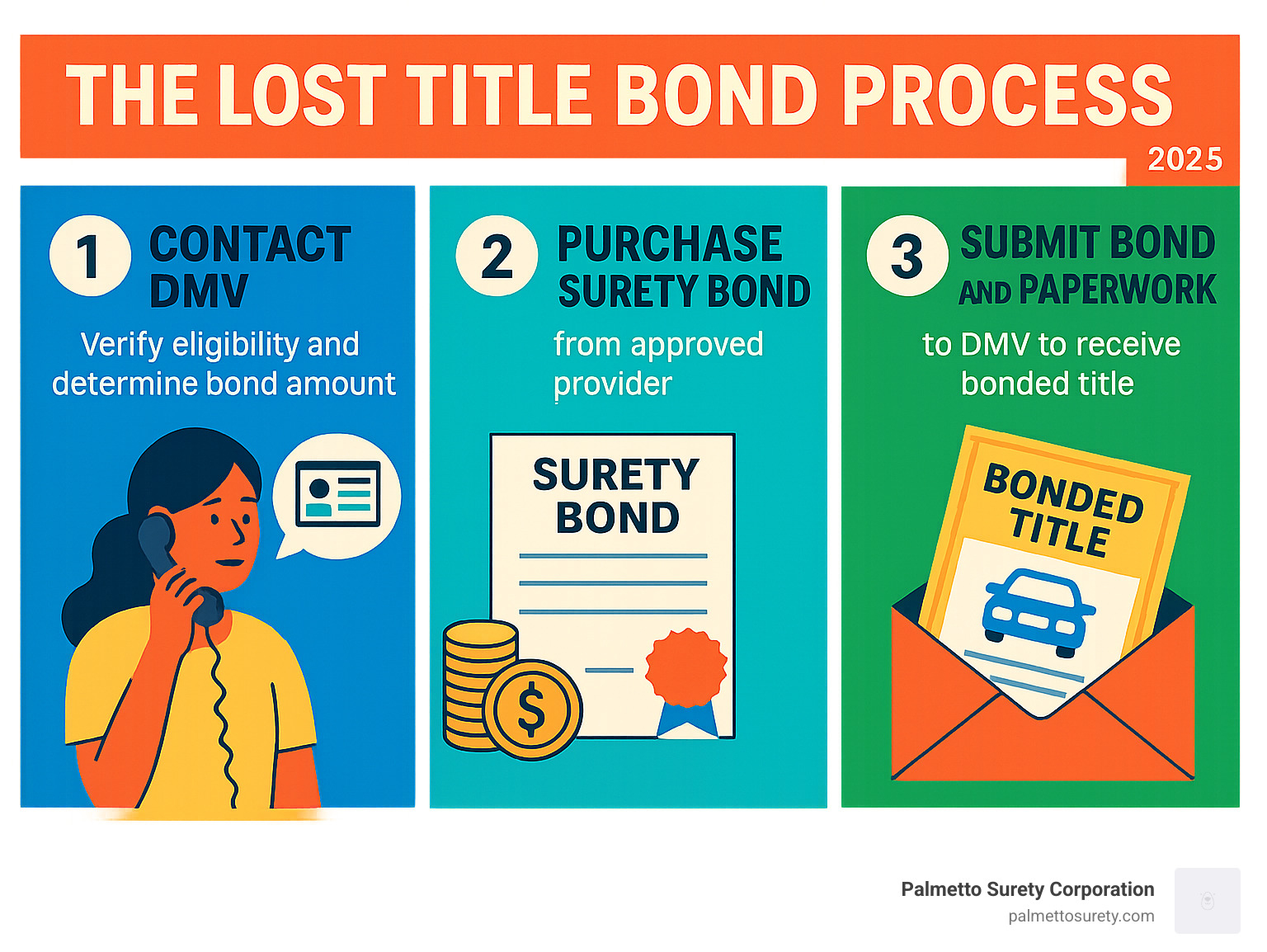
The process is straightforward: contact your DMV to confirm eligibility, purchase the required bond, and submit both to receive your bonded title. After the bond period expires with no claims, you’ll receive a clear title.
I’m Haiko de Poel Jr., and through my work at Palmetto Surety Corporation, I’ve helped redesign and relaunch one of the fastest-growing US surety bond companies, giving me extensive experience with lost title bonds and the challenges vehicle owners face. My goal is to make this complex process simple and accessible for everyone who needs to establish legal vehicle ownership.
What is a Bonded Title and When Do You Need One?

Think of a bonded title as your vehicle’s second chance at legal ownership. When your original title goes missing or becomes unusable, this special document steps in to save the day. It looks just like a regular certificate of title, except it carries a distinctive “bonded” stamp that tells an important story.

The bonded title exists because you purchased what’s called a Certificate of Title Bond or Defective Title Bond. This isn’t just paperwork – it’s your proof of ownership and a financial safety net rolled into one. The bond shows the world that you’re serious about owning this vehicle legally, and it protects everyone involved if someone else later claims they’re the rightful owner.
When life throws you a curveball with vehicle ownership, you’ll likely need lost title bonds. Maybe you bought a car from someone who “totally had the title somewhere” but never found it. Perhaps you carefully tucked that title away for safekeeping and now can’t remember where. Or maybe the seller handed you a bill of sale and promised the title would come later – spoiler alert, it didn’t.
Other common situations include receiving a title that’s been damaged beyond recognition, improperly signed, or missing crucial information. Sometimes the previous owner made an error when signing it over, leaving you with a document that the DMV won’t accept.
Here’s the reality check: without a proper title, your vehicle becomes legally useless. You can’t register it, which means you can’t legally drive it on public roads. Insurance companies won’t cover an unregistered vehicle, leaving you vulnerable and potentially breaking the law. And when you’re ready to sell? Good luck finding a buyer who’s willing to purchase a vehicle without clear ownership documentation.
The financial protection aspect is crucial too. If someone appears months later with a valid claim to your vehicle, the bond provides compensation for their loss. This protects both you and any potential claimants, creating a fair system that encourages honest transactions while giving you peace of mind about your ownership rights.
A bonded title essentially bridges the gap between “I own this car but can’t prove it” and “I have legal documentation of ownership.” It’s your pathway back to normal vehicle ownership, complete with all the rights and responsibilities that come with it.
How Lost Title Bonds Work: The Key Players and Processes
Think of a lost title bond as a three-way promise between you, your state’s DMV, and us here at Palmetto Surety Corporation. It’s actually a specific type of surety bond, which is just a fancy term for a financial agreement that protects everyone involved when there’s uncertainty about vehicle ownership.
Let me break down who does what in this arrangement. You’re the Principal – the person who needs to prove they own a vehicle but doesn’t have the proper paperwork. Your job is straightforward: be honest about your ownership claim and understand that if someone else has a legitimate claim to your vehicle, you’ll need to make things right financially.
Your state’s DMV is the Obligee – they’re the ones requiring this bond in the first place. Think of them as the referee who wants to make sure no one gets hurt if your ownership claim turns out to be wrong. They’re protecting themselves and the public from potential fraud or ownership disputes.
We’re the Surety – Palmetto Surety Corporation acts as the financial guarantee in this equation. When we issue your lost title bond, we’re essentially telling the DMV, “We’ll back this person’s claim up to a certain dollar amount.” But here’s the key thing to understand: we’re not insurance for you. We’re more like a co-signer who expects to be paid back if we have to cover any claims.
The whole system works as a financial guarantee and fraud protection mechanism. Let’s say you get your bonded title and everything seems fine. Then, six months later, someone shows up claiming they’re the real owner of your vehicle, or maybe a bank says there’s still a loan against it that was never paid off.
Here’s what happens during the claims process. First, that prior owner or lienholder files a claim against your bond with the DMV. We then step in to investigate – and trust me, we’re thorough. We’ll look at all the paperwork, talk to everyone involved, and determine whether their claim holds water.
If our surety investigation finds that the claim is valid, we’ll pay the claimant up to your bond’s full value. This covers their loss and resolves the dispute. But – and this is crucial – you have a reimbursement obligation to us. Unlike car insurance that protects you from accidents, a surety bond protects others from your mistakes. If we pay out a claim on your behalf, you owe us every penny back.
This system might sound a bit scary, but it actually works brilliantly. It gives you a path to legal ownership when you’re stuck without proper documentation, while ensuring that anyone with a legitimate claim gets protected. The financial responsibility keeps everyone honest and prevents people from trying to claim ownership of vehicles that aren’t really theirs.
Learn more about the surety bond claim process.
Your Step-by-Step Guide to Obtaining a Bonded Title
Getting a lost title bond doesn’t have to feel overwhelming. Think of it like following a recipe – each step builds on the last, and before you know it, you’ll have that bonded title in hand. Let me walk you through this process in a way that makes sense.
Step 1: Contact Your State’s DMV
Your first stop is always your local Department of Motor Vehicles. I know, I know – nobody loves a trip to the DMV, but this conversation is crucial. Each state has its own personality when it comes to lost title bonds, and you need to understand yours.
During this visit or phone call, you’ll want to confirm your eligibility for a bonded title. While most of the 36 states that allow these bonds are pretty accommodating, some have specific rules about certain vehicles or situations. You’ll also need to understand their exact process – what forms they require, what documentation they need, and how long their approval typically takes.
Most importantly, the DMV will determine your required bond amount. This is usually calculated as 1.5 to 2 times your vehicle’s value, but the exact multiplier varies by state. Don’t guess at this number – you need the official amount from your DMV.
Step 2: Determine Vehicle Value
While your DMV will give you the final bond amount, having a ballpark figure beforehand helps you prepare. Your vehicle’s fair market value is the foundation for everything that follows.
You can get a rough estimate using resources like Kelley Blue Book, but your DMV might use different valuation methods. Some states require professional appraisals, while others accept online estimates. Ask your DMV which approach they prefer during your initial conversation.
Step 3: Complete DMV Paperwork
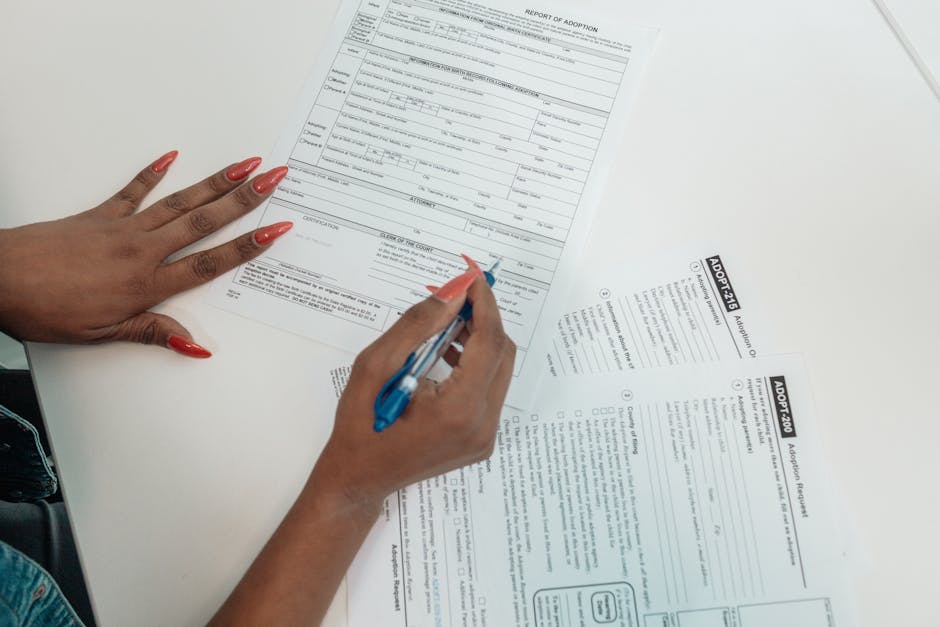
Once you understand your state’s requirements, you’ll receive specific forms to complete. These aren’t just bureaucratic problems – they’re the official documentation that starts your bonded title process.
Take your time with these forms. Accuracy matters here. A simple mistake can delay your entire application, and nobody wants to make extra trips to the DMV. If you’re unsure about anything, ask questions before submitting.
Step 4: Gather Required Information
Before applying for your bond, organize all the essential details. Having everything ready makes the process much smoother and faster.
You’ll need your Vehicle Identification Number (VIN) – that unique 17-character code that identifies your specific vehicle. Locate any bill of sale you have, even if it seems incomplete or problematic. Your personal identification information should match exactly what’s on your driver’s license.
Don’t forget the vehicle details like year, make, and model, plus the exact bond amount your DMV specified. Having all this information at your fingertips when you apply for the bond saves time and prevents back-and-forth communications.
Step 5: Purchase the Bond
This is where we come in to help. At Palmetto Surety Corporation, we understand that when you need a lost title bond, you usually need it quickly. Our streamlined application process means we can approve most applications within hours.
You can typically complete your application online or over the phone. We’ll review your information, process your application, and get your bond issued as fast as possible. No lengthy waits or complicated procedures – just straightforward service when you need it most.
Step 6: Submit Bond and Paperwork to DMV
Once your bond is ready, we’ll provide you with the official bond document. This isn’t just a printout – it’s a formal document with a raised seal and wet signature that meets legal requirements.
Take this original bond document, along with all your completed DMV paperwork, back to your state’s DMV. They’ll process everything and issue your bonded title upon approval.
Here’s where patience becomes important. While getting your bond can happen in hours, the DMV’s approval process typically takes 4-5 weeks, depending on your state. It’s not personal – it’s just how government processes work. But once it’s complete, you’ll have legal ownership documentation that lets you register, insure, and eventually sell your vehicle with confidence.
Understanding the Costs, Duration, and State Rules
When it comes to lost title bonds, understanding the financial commitment, timeline, and your state’s specific rules will help you plan accordingly. Let’s break down what you can expect.
How much do lost title bonds cost?
Here’s some good news: you don’t pay the full bond amount. Many people see a bond requirement of $10,000 and think they need to write a check for ten thousand dollars – but that’s not how it works at all! What you actually pay is a small premium, which is just a percentage of the total bond amount.
Bond Amount Calculation: Your state’s DMV determines the required bond amount based on your vehicle’s fair market value. Most states require the bond to be 1.5 to 2 times the vehicle’s value. So if your car is worth $5,000, you might need a bond for $7,500 or $10,000, depending on your state’s formula. This higher amount provides a financial cushion that covers not just the vehicle’s value, but also potential legal fees or other damages if a claim arises.
Premium Cost: The actual amount you pay – the premium – depends on the bond amount and your credit standing for higher-value bonds. For bonds covering $6,000 or less, which typically covers vehicles valued around $3,000 to $4,000, you’ll pay a flat rate of around $100. It’s that simple.
If your bond amount exceeds $6,000, you can expect to pay 1% to 3% of the required bond amount. A $10,000 bond might cost you between $100 and $300 – still very manageable compared to being unable to register or insure your vehicle.
Credit Score Influence: For higher-value bonds over $20,000, we may need to review your credit as part of our underwriting process. Good credit typically means a lower premium, while challenging credit might result in a slightly higher rate. The good news? Even with less-than-perfect credit, you can often still get approved for a lost title bond.
How long is a bonded title active?

The bond duration typically runs for 3 to 5 years, with three years being the most common timeframe we see. During this period, your title will carry the “bonded” brand, which simply indicates that a surety bond was required to issue it.
This waiting period serves an important purpose – it gives any potential rightful owners or lienholders ample time to come forward with claims. Think of it as a cooling-off period that protects everyone involved.
Obtaining a Clear Title: Here’s the light at the end of the tunnel. If no claims are filed against your bond during this period, the DMV will typically remove the “bonded” brand from your title and issue you a clean, traditional certificate of title. At that point, your ownership is fully established without any conditions or special markings.
Selling a Vehicle with a Bonded Title: If you decide to sell your vehicle before the bond period expires, it’s absolutely possible. However, the “bonded” status typically transfers with the vehicle, and you remain liable for any claims that might arise during the remainder of the bond term. We’ll cover this scenario in more detail in our FAQ section.
Are bonded titles available in every state?
Unfortunately, lost title bonds aren’t available everywhere. While 36 states require surety bonds for vehicles lacking proper titles, that leaves 14 states with different approaches to this problem.
State-by-State Differences: States like Indiana and Ohio typically don’t issue bonded titles at all. Instead, they may require you to go through a court-ordered title process, which involves petitioning a judge to review your case and order the DMV to issue a new title. It’s more complex than the bonded title route, but it can still get you to legal ownership.
Alternatives Through DMV or Legal Process: If you’re in a state that doesn’t offer bonded titles, don’t worry – you still have options. Your local DMV is your best starting point. They can walk you through the specific procedures available in your state, whether that’s a court-ordered title, an affidavit process, or another alternative method to establish ownership.
The key is understanding that while the bonded title process is streamlined and efficient where available, every state has some mechanism to help vehicle owners establish legal ownership when traditional documentation is missing.
Frequently Asked Questions
We get it – lost title bonds can feel overwhelming, and you probably have questions swirling around in your head. Don’t worry, you’re not alone! After helping thousands of vehicle owners through this process, we’ve heard just about every concern imaginable. Let’s tackle the big ones together.
Can I sell a car that has a bonded title?
Absolutely, you can sell a car with a bonded title, though it’s a bit like selling a house with a small asterisk attached – everything’s legitimate, but there are some details both you and your buyer should understand.
The most obvious thing is that “bonded” brand on the title. It’s right there in black and white, and it stays put for the entire bond period (usually 3-5 years). Some buyers might see this and get a little nervous, which is understandable. It’s kind of like seeing “rebuilt” on a car title – it doesn’t mean there’s anything wrong, but it tells a story about the vehicle’s history.
Here’s where things get interesting: even after you sell the car and hand over the keys, you remain liable as the original bondholder. Think of it this way – you’re the one who made the original promise to the state when you got that bond. If someone shows up six months later claiming they’re the real owner, and their claim turns out to be valid, you’re still on the hook to repay us if we have to pay out on that claim.
Most state-specific transfer processes are pretty straightforward, but it’s worth checking with your local DMV to make sure you’re crossing all the t’s and dotting all the i’s. The new owner will essentially inherit the bonded status until that 3-5 year period runs out.
What happens if the original owner shows up after I get a bonded title?
This is exactly why lost title bonds exist in the first place! It might sound scary, but the system is actually designed to handle this situation fairly and efficiently.
Let’s say you’ve been driving your car for eight months when suddenly someone knocks on your door claiming it’s actually their vehicle. First, don’t panic. They can’t just take your car based on their word alone. They’ll need to file a formal claim against your bond through the DMV, and they’ll need real proof – not just a story.
Once that claim lands on our desk, we become the detectives. Our team will dig into everything – their documentation, your paperwork, the vehicle’s history, you name it. We’re not just going to take anyone’s word for it. This investigation process is thorough because we understand what’s at stake for everyone involved.
If our investigation shows the claim is legitimate – meaning this person really does have a valid legal right to the vehicle – we’ll pay them up to the full bond amount. This compensates them for their loss and resolves the situation. But here’s the part that sometimes surprises people: you’ll need to reimburse us for whatever we paid out. A surety bond isn’t insurance that protects you from your own mistakes – it’s more like a financial guarantee that you’re good for your word.
The good news? In our experience, frivolous claims are rare. The bond system itself tends to discourage false claims because there are legal consequences for filing bogus paperwork with the state.
Can I get a lost title bond with bad credit?
Here’s some good news for folks who’ve had financial bumps along the way: yes, you can often still get a lost title bond with less-than-perfect credit. We’ve been in this business for over 20 years, and we understand that life happens. Credit scores don’t tell the whole story of who you are or whether you deserve to legally own your vehicle.
That said, let’s be honest about what to expect. If your credit needs some work, you’ll likely pay a higher premium. It’s not personal – it’s just how risk assessment works in the bonding world. The surety company (that’s us) needs to account for the possibility that if we have to pay out a claim, getting reimbursed might be more challenging.
For larger bond amounts – typically anything over $20,000 – we might need to take a deeper look through our underwriting process. This means we’ll want to understand your overall financial picture a bit better. Don’t worry, though. We’re not looking to pry into your personal business or judge your past financial decisions. We’re just trying to figure out how to make the bond work for everyone involved.
At Palmetto Surety Corporation, we pride ourselves on finding creative solutions. We’ve helped people with all kinds of credit situations get the bonds they need. Our philosophy is simple: if you need legal ownership of your vehicle, we want to help you get there. Sometimes that means working a little harder or thinking outside the box, but that’s what we’re here for.
Conclusion: Secure Your Vehicle’s Ownership with Confidence
Getting stuck without a proper vehicle title doesn’t have to be a nightmare. While it might feel overwhelming at first, lost title bonds offer a clear, reliable solution that transforms a frustrating situation into a manageable process. These bonds do more than just satisfy DMV requirements – they give you genuine peace of mind and the legal protection you need to move forward with confidence.
Think about it: with a bonded title in hand, you can finally register your vehicle, get insurance, and yes, even sell it when the time comes. You’re no longer stuck with an expensive piece of metal sitting in your driveway. Instead, you have a legally recognized vehicle that you can use, enjoy, and treat like any other titled vehicle.
The beauty of lost title bonds lies in their simplicity once you understand the process. Contact your DMV, determine your vehicle’s value, purchase the bond, and submit your paperwork. Within a few weeks, you’ll have that bonded title, and after the bond period expires without any claims, you’ll receive a completely clear title. It’s a straightforward path from confusion to clarity.
At Palmetto Surety Corporation, we’ve spent over 20 years helping people steer exactly these kinds of challenges. Based in Charleston, SC, we’ve built our reputation on making the complex simple and the stressful manageable. We understand that when you need a lost title bond, you usually need it quickly – that’s why we can approve most applications within hours, not days.
Whether you’re dealing with a classic car restoration project, a vehicle purchase gone sideways, or simply a title that disappeared at the worst possible moment, we’re here to help. Our team knows the ins and outs of surety bonds, and more importantly, we know how to explain them in plain English.
Your vehicle represents freedom, utility, and often a significant investment. Don’t let a missing title keep you from enjoying what’s rightfully yours. With the right lost title bond and a trusted partner like Palmetto Surety Corporation, you can secure your vehicle’s ownership and get back to what matters most – actually using it.
Find the right commercial surety bond for your needs.


