


brokerage bond requirements: 7 Powerful Tips for 2025 Success
Understanding the $75,000 Rule: Brokerage Bond Requirements Simplified
If you’re looking for quick information about brokerage bond requirements, here’s what you need to know:
| Key Requirement | Details |
|---|---|
| Bond Amount | $75,000 for freight brokers/forwarders |
| Bond Types | BMC-84 (surety bond) or BMC-85 (trust fund) |
| Regulatory Body | Federal Motor Carrier Safety Administration (FMCSA) |
| Annual Cost | $938-$9,000 depending on credit and experience |
| Purpose | Protects shippers and carriers if broker fails to pay |
| Required For | All property brokers and household goods brokers |
| Renewal | Annual (must maintain continuous coverage) |
Brokerage bond requirements are critical financial safeguards that protect the transportation industry. If you’re a freight broker or forwarder, securing a $75,000 bond isn’t just a regulatory box to check—it’s the financial foundation of your business credibility.
Since the MAP-21 Act increased the bond amount from $10,000 to $75,000 in 2013, this requirement has become a significant consideration for anyone entering or operating in the freight brokerage industry.
Unlike insurance that protects you, these bonds protect others from you. They guarantee that if you fail to fulfill your financial obligations to carriers or shippers, there’s a financial safety net in place.
“Failure to maintain an active $75,000 bond or trust fund can result in immediate suspension of a broker’s operating authority by the FMCSA.”
The choice between a BMC-84 surety bond and a BMC-85 trust fund is one of the most important decisions you’ll make. While both satisfy regulatory requirements, they have vastly different impacts on your cash flow and operations.
I’m Haiko de Poel Jr, and through my work with Palmetto Surety Corporation, I’ve helped countless freight brokers steer the complex world of brokerage bond requirements, ensuring they maintain compliance while optimizing their working capital.
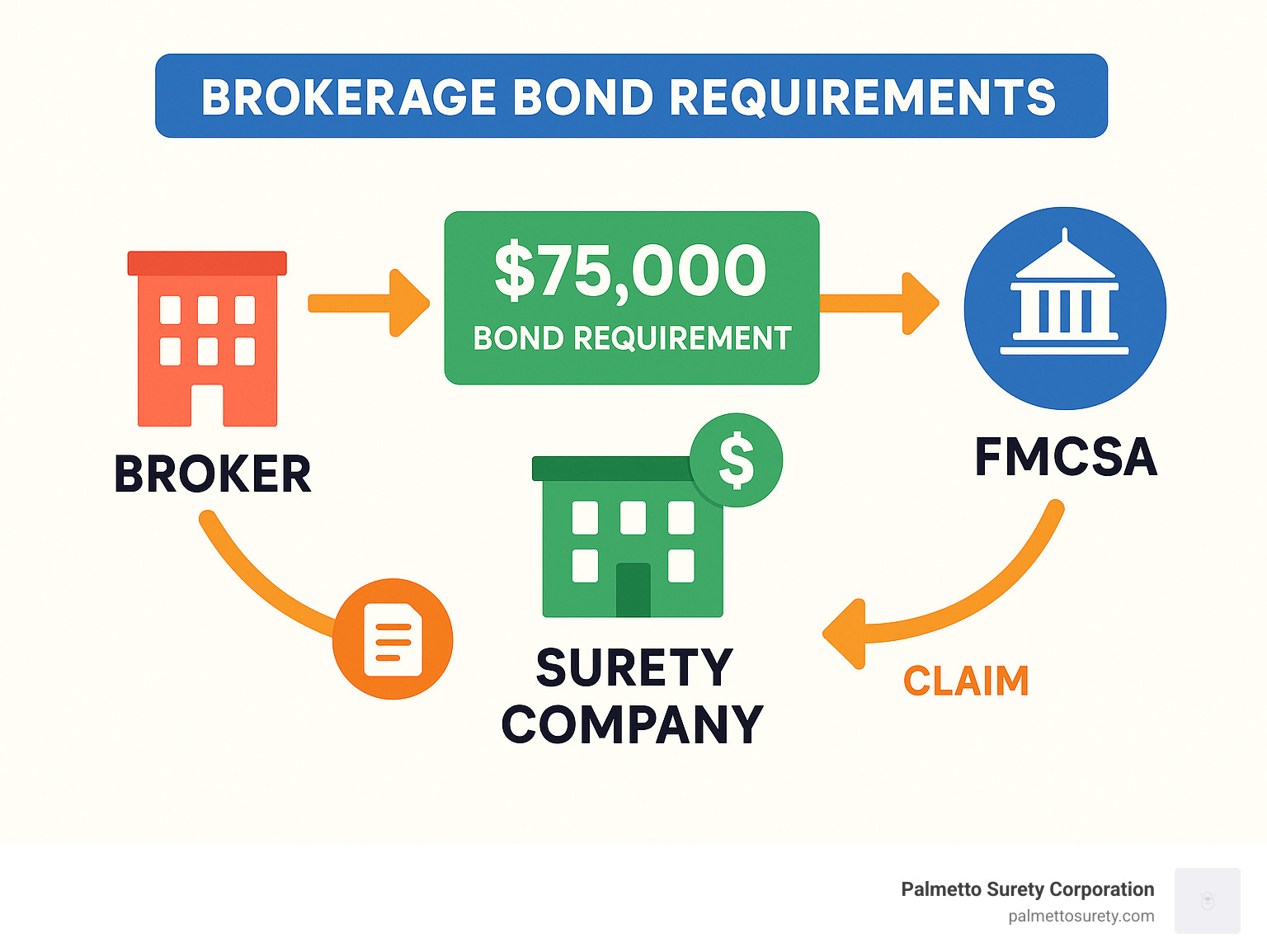

Brokerage Bond Requirements Explained
Let’s break down what brokerage bond requirements really mean in plain English. These aren’t just boring legal requirements – they’re actually the backbone of trust in the freight industry.
Under Title 49 U.S.C. §13904, every freight broker needs financial backup in the form of a $75,000 bond or trust fund. Think of it as a promise with teeth – if you don’t pay carriers or shippers what you owe them, this money ensures they don’t get left high and dry.
What makes these bonds unique is their three-way relationship:
- You (the broker) promise to follow the rules and pay what you owe
- The FMCSA (the government) requires this guarantee to grant your operating authority
- A surety company (like Palmetto Surety) stands behind your promise
“I tell new brokers to think of their bond as their business reputation in financial form,” says a veteran freight broker with 15 years in the industry. “It’s not just paperwork – it’s your word.”
The FMCSA doesn’t mess around with enforcement either. If your bond gets canceled or drops below $75,000, they can suspend your operating authority faster than you can say “logistics.” Often, brokers find out the hard way when they suddenly can’t book loads.
What Is a Brokerage Bond?
A brokerage bond is essentially a financial safety net that protects carriers and shippers when working with you. To satisfy brokerage bond requirements, you have two main options:
BMC-84 Surety Bond: This works like a financial guarantee where you pay a premium (typically between 1.25% and 10% of the $75,000) to a surety company annually. The surety company then guarantees the full $75,000 to the FMCSA. Most brokers choose this option since it preserves working capital.
BMC-85 Trust Fund: This requires you to deposit the full $75,000 with a financial institution that holds it in trust. While this doesn’t require credit approval, it ties up a significant amount of cash that could otherwise be used in your business.

Why Are Brokerage Bonds Required?
The government didn’t create brokerage bond requirements just to make life harder for brokers. These bonds serve some important purposes:
Financial Responsibility: They ensure you have skin in the game. When carriers haul freight for you, they need assurance they’ll get paid even if something goes wrong.
Consumer Protection: Without bonds, shippers and carriers might have no way to recover their losses if a broker disappears or refuses to pay.
Fraud Prevention: The financial consequences of bond claims discourage fly-by-night operations and shady business practices.
When the MAP-21 Act raised the bond amount from $10,000 to $75,000 in 2013, many smaller brokers complained. But the data showed the previous amount simply wasn’t enough to cover multiple claims when brokers failed.
Who Must Obtain One?
If you fall into any of these categories, you need to meet the $75,000 brokerage bond requirements:
Freight Brokers: Anyone arranging for cargo transportation by motor carriers needs a bond – even if you only broker a few loads a month.
Freight Forwarders: Companies that consolidate smaller shipments into larger ones must maintain bond coverage.
Household Goods Brokers: If you specialize in arranging residential moves, you’re required to have the same level of bonding.
It’s worth noting that even motor carriers who occasionally broker out loads must obtain separate broker authority and satisfy these bonding requirements. The FMCSA doesn’t offer any “part-time broker” exceptions.
Beyond federal requirements, many states have their own brokerage bond requirements for various industries, which we’ll cover in more detail later in this guide.
FMCSA Freight Broker Bond Requirements (BMC-84/BMC-85)
The Federal Motor Carrier Safety Administration (FMCSA) has established clear brokerage bond requirements that all freight brokers and forwarders must meet. Before you can receive your operating authority, you’ll need to file either a BMC-84 surety bond or a BMC-85 trust fund agreement for $75,000.

When deciding between these two options, it helps to understand their key differences:
| Feature | BMC-84 Surety Bond | BMC-85 Trust Fund |
|---|---|---|
| Upfront Cost | Annual premium only (1.25%-10% of $75,000) | Full $75,000 deposit required |
| Working Capital Impact | Minimal – preserves cash flow | Significant – ties up $75,000 |
| Collateral Required | Typically none | 100% ($75,000) |
| Claims Process | Surety handles initially | Trust administrator processes |
| Renewal | Annual premium payment | Maintain trust fund balance |
| Cancellation | 30-day notice required | 30-day notice required |
Most brokers choose the BMC-84 option because it preserves their working capital. Instead of tying up $75,000 in a trust fund, you can pay a much smaller annual premium and keep your cash flowing through your business.
Current $75,000 Security Rule
The $75,000 brokerage bond requirement we have today came from the Moving Ahead for Progress in the 21st Century Act (MAP-21). When this law took effect on October 1, 2013, it dramatically increased the bond amount from $10,000 to $75,000.
This wasn’t just a random increase. The higher amount provides better protection for carriers who might otherwise be left unpaid if a broker fails to meet their financial obligations.
If you opt for a BMC-85 trust fund, the FMCSA requires your assets to be convertible to cash within seven calendar days. You can’t just park the money in long-term investments. Acceptable assets include:
- Cash
- Irrevocable letters of credit from federally insured institutions
- Treasury bonds
Here’s something many brokers learn the hard way: if your bond or trust fund drops below $75,000 for any reason, you must report it to the FMCSA within two business days. One broker shared his painful experience with me: “After a $5,000 claim against my trust fund, my balance fell to $70,000. I didn’t know I needed to report it, and the FMCSA suspended my authority without warning. I lost two weeks of business while fixing it.”
Step-by-Step FMCSA Filing Process
Getting your broker bond filed correctly involves several steps, but don’t worry – it’s manageable with the right guidance:
First, you’ll need to register with the Unified Registration System (URS) by creating an account on the FMCSA website and completing their online application for broker authority.
Next, submit your OP-1 Form and pay the $300 fee. This fee is non-refundable, and you should expect 4-6 weeks for processing.
Then comes the crucial step: obtain your bond or trust fund. For a BMC-84, you’ll apply with a surety company like Palmetto Surety. If you prefer a BMC-85, you’ll establish a trust agreement with a financial institution.
Don’t forget to file Form BOC-3 (Process Agent), which designates a process agent in each state where you operate. Many brokers serve as their own agent where permitted by state law.
Your surety provider will handle the electronic bond submission to the FMCSA. This is one less thing for you to worry about – no physical paperwork is required for the bond filing.
Finally, verify your status online through the FMCSA License and Carrier Search tool. Look for “YES” under the “Insurance on File” field to confirm everything is in order.
The entire process typically takes 4-6 weeks from application to approval. However, the bond itself can often be secured within 1-2 business days through experienced providers like Palmetto Surety Corporation.
While waiting for your authority to be granted, use this time wisely to set up other aspects of your business. The bond is just one piece of the puzzle, but it’s a critical one that demonstrates your financial responsibility to the industry.
Cost & Underwriting: What Determines Your Bond Premium?
Let’s talk about your wallet for a moment. If you choose the BMC-84 surety bond option (and most brokers do), you won’t need to tie up the full $75,000. Instead, you’ll pay an annual premium that typically ranges from 1.25% to 10% of the bond amount. In real dollars, that’s about $938 to $7,500 per year for most freight brokers.

Key Cost Drivers for Brokerage Bond Requirements
So what makes the difference between paying $938 versus $7,500? It comes down to how the surety company views your risk profile. Think of it like this: they’re essentially betting that you won’t have claims against your bond. The safer that bet seems, the lower your premium.
Your credit score plays a huge role here. Brokers with excellent scores (700+) often qualify for those enviable 1.25%-3% rates, while those with scores below 600 might face premiums at the higher end of the spectrum, around 7%-10%.
Your business financials matter just as much. Strong working capital and a positive net worth tell underwriters you’re financially stable. I’ve seen brokers cut their premiums in half simply by cleaning up their balance sheets and demonstrating consistent profitability.
Experience counts too. Established brokers with 3+ years in the business typically qualify for the lowest rates, while newcomers pay more initially. As one underwriter told me over coffee last month, “Experience isn’t just about time – it’s about proving you understand how to avoid the pitfalls that lead to claims.”
Perhaps most important is your claims history. Previous claims against your bond will drive up future premiums faster than anything else. As the saying goes in the surety world: “The best predictor of future claims is past claims.”
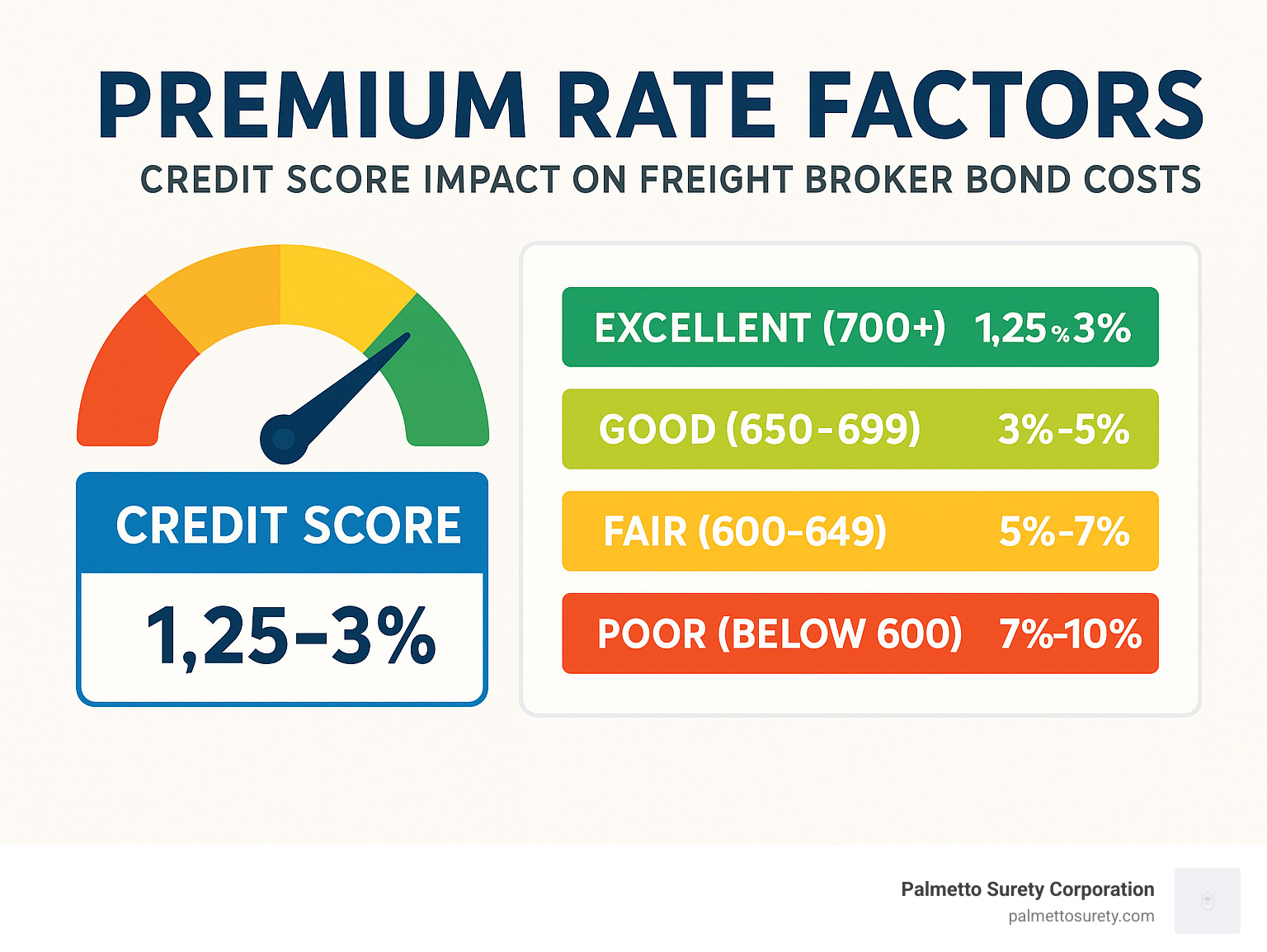
Tips to Reduce Your Annual Premium
Want to pay less for your brokerage bond requirements? Here’s what works:
First, improve your credit score. This isn’t just good bond advice – it’s good life advice. Pay down those credit cards, resolve any collections, and maintain on-time payments. Every 20-point improvement can potentially save you hundreds on your bond premium.
Next, strengthen your financials. Keep detailed books that clearly show your assets, liabilities, and monthly income. Build up your working capital reserves – even a modest cash cushion sends a positive signal to underwriters. And please, keep your business and personal finances separate (mixing them is a red flag).
Don’t discount the value of documenting your experience. Even if you’re new to brokering, highlighting relevant transportation background can help. I remember one client who included reference letters from carriers they’d worked with in a previous job – it knocked nearly 2% off their initial rate.
Sometimes it’s about managing cash flow. Many brokers benefit from premium financing options that let you spread payments throughout the year rather than paying the full premium upfront. Just be sure any financing arrangement doesn’t risk coverage lapses.
At Palmetto Surety Corporation, we’ve worked with hundreds of freight brokers on their brokerage bond requirements, and I’ve personally seen dramatic improvements in premium rates over time. One standout client started at a painful 7% rate ($5,250 annually) but improved to 2.5% ($1,875) within two years by focusing on credit improvement and financial management.
Your bond premium isn’t set in stone. With some focused effort on these factors, you can significantly reduce this operating expense year after year. For more information about freight broker bond requirements, check out this helpful resource.
How to Obtain, Renew, or Replace a Brokerage Bond
Getting your freight broker bond doesn’t have to feel like solving a puzzle. Whether you’re applying for the first time or looking to renew, the process can be straightforward when you know what to expect.
Fast-Track Application Checklist
Ready to secure your bond quickly? Having these items at your fingertips will save you time and headaches:
Your MC number is like your business’s fingerprint in the transportation world. Along with your company’s legal name, address, and tax ID, it forms the foundation of your application. Be prepared to share personal information too – the names and Social Security numbers of owners are necessary for the credit checks that determine your rate.
“The difference between a smooth bond application and a frustrating one often comes down to preparation,” notes one experienced broker. “Having all your documentation ready can cut the process time in half.”
While not always required, financial documentation like bank statements and business financials can significantly improve your rates. Think of these as your business’s resume – they show the surety company you’re a good risk.
The indemnity agreement is where the rubber meets the road. This document makes you personally responsible for claims against your bond. It’s a serious commitment, but it’s also standard practice in the industry.

At Palmetto Surety Corporation, we’ve streamlined the application process to five simple steps:
- Complete our online application for a free, no-pressure quote
- Review your premium rates and agreement terms
- Submit payment through your preferred method
- Relax while we electronically file your BMC-84 with the FMCSA
- Receive confirmation of your active bond status (usually within 1-2 business days)
Renewal & Cancellation Timelines
The FMCSA takes brokerage bond requirements seriously, and maintaining continuous coverage is non-negotiable if you want to keep your authority active.
Your bond is typically valid for one calendar year. About 30-60 days before it expires, you’ll receive a renewal notice from your surety provider. This isn’t just paperwork to file away – it’s your cue to take action.
Your renewal premium might change from year to year. Improvements in your credit score or business financials can lower your rate, while claims against your bond will likely increase it. The key is making your payment before the expiration date to maintain uninterrupted coverage.
If you need to cancel your bond, you’ll need to file Form BMC-36 with the FMCSA and provide at least 30 days’ written notice. Even after cancellation, the bond remains in effect for 60 days for any claims arising from that coverage period.
One broker learned this lesson the hard way: “I thought I had a grace period between bonds when switching providers. The FMCSA suspended my authority immediately, and I lost nearly three weeks of business while getting reinstated. That mistake cost me over $15,000 in lost revenue.”
The smart approach when switching providers is to secure your new bond first, then cancel the old one. At Palmetto Surety, we can coordinate with your current provider to ensure a smooth transition without any risky gaps in coverage that could threaten your operating authority.
Think of your bond like the foundation of your brokerage business – it needs to be solid and continuous for everything above it to remain stable.
Common Claims, Compliance Pitfalls & How to Avoid Them
Let’s face it – nobody likes thinking about claims against their bond. But understanding what can go wrong is your best defense against costly mistakes that could threaten your business.
What Happens When a Claim Hits Your Bond?
When a carrier or shipper feels they haven’t been paid properly, they don’t just get upset – they can take action. Here’s how the process typically unfolds:
First, the aggrieved party files a claim either with the FMCSA or directly with your surety company. You’ll then receive notification about this claim – which might feel a bit like getting called to the principal’s office, but it’s actually your opportunity to address the situation.
Your surety company will investigate the claim thoroughly. This is where good recordkeeping becomes your best friend. During this phase, you have options: you can pay the claimant directly to resolve the issue (often the cleanest solution), provide evidence disputing the claim if you believe it’s invalid, or if the claim is valid and you can’t pay, the surety will step in to cover it up to your bond limit.
Here’s the important part: If your surety pays a claim, you’re legally obligated to reimburse them in full. This isn’t optional – it’s a contractual requirement.
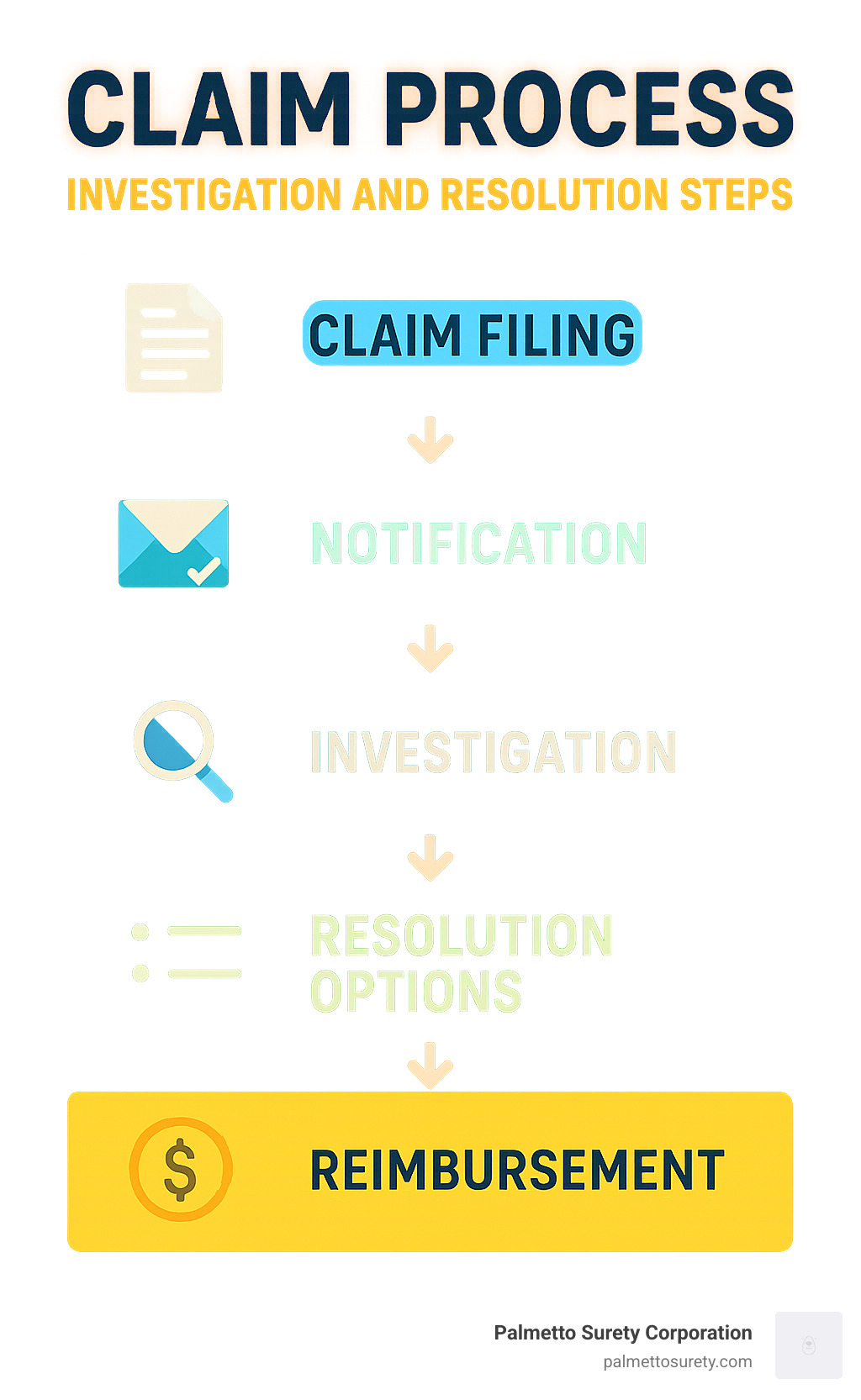
The most common claims we see involve straightforward issues: non-payment to carriers tops the list, followed by double-brokering problems, misrepresentation about loads or payments, and various contract violations. None of these are particularly exotic – they’re the everyday risks of running a brokerage business.
I remember working with a small freight broker in Georgia who hit a cash flow crunch when several customers delayed their payments. Instead of picking up the phone and explaining the situation to his carriers, he avoided their calls – a natural human reaction, but a terrible business strategy. Three carriers filed bond claims totaling $27,000. After investigation, the surety paid the carriers, and our broker friend had to reimburse every penny or face legal action and permanent damage to his bonding capability.
The moral of the story? Communication can prevent many claims before they happen.
Some key brokerage bond requirements compliance pitfalls to watch for include:
- Operating without enough working capital to cover carrier payments when shippers are slow to pay
- Sloppy recordkeeping that leaves you vulnerable during claim investigations
- Avoiding difficult conversations when payment issues arise
- Missing bond renewal deadlines and allowing coverage to lapse
- Failing to notify the FMCSA within two business days if your bond falls below $75,000
To protect yourself, maintain sufficient cash reserves, implement clear payment terms, thoroughly vet shippers before extending credit, address issues immediately rather than avoiding them, maintain detailed records, and set up automatic bond renewal payments.
One of our clients at Palmetto Surety Corporation shared a valuable lesson: “When I had a cash flow problem, I immediately called both the carrier and my bond agent. Together, we worked out a payment plan that avoided a formal claim and preserved my relationship with the carrier.”
That proactive approach makes all the difference. In my experience working with hundreds of brokers, the ones who communicate openly when problems arise almost always find solutions that keep claims off their record. Think of your surety provider as a partner in your business success – we want to help you avoid claims just as much as you do.
Brokerage Bonds Beyond Freight: Real Estate, Mortgage & Insurance
While we’ve focused on freight broker bonds throughout this guide, brokerage bond requirements actually extend across numerous industries. From real estate to insurance, these financial guarantees serve the same core purpose—protecting consumers and ensuring professionals play by the rules—though the specifics vary quite a bit.
Key Differences in Brokerage Bond Requirements Across Industries
When you step away from the trucking world, you’ll find bonds working in similar ways but with different amounts and regulations custom to each profession’s unique risks.
Real estate brokers typically need bonds ranging from $5,000 to $25,000, depending on the state. These bonds protect home buyers and sellers from potentially costly mistakes or misconduct. In California, for instance, real estate professionals must secure a $10,000 bond before they can help clients buy their dream homes or sell their properties.
“The bond amounts might seem small compared to freight,” notes a veteran real estate broker, “but they’re sized appropriately for the transactions we typically handle and the specific risks in our industry.”

Mortgage broker bonds show even more variation, ranging from $10,000 all the way up to $100,000 depending on the state and loan volume. The premiums typically run between 1-3% of the total bond amount, making them somewhat less expensive than freight broker bonds on a percentage basis. These bonds specifically protect borrowers from predatory lending practices—a crucial safeguard in an industry where consumers make some of the largest financial commitments of their lives.
In New York, for example, mortgage brokers need bonds ranging from $10,000 to $100,000 based on their annual loan volume—a sliding scale that acknowledges how risk increases with the size of the operation.
The insurance brokerage world has its own set of brokerage bond requirements, usually in the $10,000-$20,000 range. With premiums hovering around 1% for those with good credit, these bonds ensure that if an insurance broker misrepresents policies or mishandles premiums, consumers have financial recourse. Washington state takes a particularly nuanced approach, requiring bonds between $2,500 and $100,000 based on the broker’s premium volume.
For those in the securities industry, FINRA Rule 4360 establishes bonding requirements tied directly to a firm’s net capital. These bonds primarily protect against employee dishonesty and fraud—crucial in an industry handling massive investment portfolios. A mid-sized firm with $250,000-$300,000 in net capital, for instance, needs at least $600,000 in bond coverage.
What makes managing these various brokerage bond requirements challenging is that each industry operates under different regulatory frameworks—sometimes federal, sometimes state, sometimes a combination of both. For professionals who wear multiple hats (perhaps as both insurance and real estate brokers), this can mean juggling several bonds with different renewal dates and requirements.
At Palmetto Surety Corporation, we’ve seen how confusing this patchwork of requirements can be. We help professionals across industries steer their specific bonding needs, often finding ways to streamline coverage and reduce overall costs. With over 20 years in the surety business, we’ve developed expertise across these various brokerage fields—not just freight—to help professionals stay compliant without breaking the bank.
Whether you’re hauling freight or helping families find homes, the right bond partner can make all the difference in managing your brokerage bond requirements efficiently and affordably.
Frequently Asked Questions About Brokerage Bond Requirements
What is the difference between a BMC-84 surety bond and a BMC-85 trust fund?
When it comes to satisfying the FMCSA’s brokerage bond requirements, you have two distinct options that serve the same purpose but work quite differently in practice.
With a BMC-84 surety bond, you’re essentially paying for a guarantee rather than putting up the full amount. You’ll pay an annual premium—typically between 1.25% and 10% of the $75,000 requirement—and the surety company stands behind you for the full amount. The beauty of this option is that you keep your working capital flowing through your business instead of having it tied up. If a claim comes in, the surety company handles the initial payment (though you’ll need to reimburse them later).
In contrast, a BMC-85 trust fund requires you to deposit the entire $75,000 into a trust account upfront. While this might seem like the “pay once and forget it” option, it comes with significant drawbacks. Your assets must remain liquid enough to convert to cash within 7 days, and most importantly, you’ve now taken $75,000 out of your operational funds.
I spoke with a broker in Tennessee last month who shared: “Starting out, I thought the BMC-85 made more sense financially. But having that $75,000 sitting idle instead of working for my business was like driving with the parking brake on. Switching to a BMC-84 freed up my capital and helped me double my operation within a year.”
How much does a freight broker bond cost per year?
The annual cost of your freight broker bond isn’t one-size-fits-all—it’s more like a custom suit custom to your specific business profile. Several key factors determine what you’ll pay:
Your credit score typically has the biggest impact on your rate. A strong personal credit history signals to surety companies that you’re financially responsible.
Your experience in the industry matters too. Established brokers with years of successful operation present less risk than newcomers.
Your financial strength as a business can help lower premiums. Healthy balance sheets and positive cash flow demonstrate stability.
And of course, your claims history will affect future rates. A clean record keeps costs down, while previous claims can drive prices up significantly.
Based on these factors, here’s what you might expect to pay annually:
| Credit/Experience Profile | Typical Rate Range | Annual Premium |
|---|---|---|
| Excellent credit, established broker | 1.25%-3% | $938-$2,250 |
| Good credit, some experience | 3%-5% | $2,250-$3,750 |
| Fair credit or new broker | 5%-7% | $3,750-$5,250 |
| Poor credit | 7%-10% | $5,250-$7,500 |
| Severe credit issues | 10%+ | $7,500+ |
At Palmetto Surety Corporation, we’ve developed specialized programs to help brokers across the entire credit spectrum. We’ve helped hundreds of transportation professionals with less-than-perfect credit secure the bonds they need to operate legally and grow their businesses.
What are the consequences of not maintaining the required bond amount?
Letting your bond coverage lapse or fall below the required $75,000 threshold is like skydiving without a parachute—the landing won’t be pretty.
The most immediate consequence is that the FMCSA can suspend your operating authority without warning. One day you’re brokering loads, the next day you’re legally unable to operate. This isn’t a slap on the wrist—it’s an immediate business shutdown.
During this suspension, you’ll face immediate revenue loss since you can’t legally broker loads. For most brokers, even a week of suspension can mean thousands in lost revenue that you’ll never recover.
Your professional reputation takes a hit too. Carriers and shippers may receive notification of your suspension, raising red flags about your reliability. As one broker told me, “It took me six months to rebuild the trust I lost during just two weeks of suspension.”
Even after you secure a new bond, reinstatement isn’t instant. The FMCSA processes these requests in the order received, meaning you could face days or weeks of continued downtime.
Operating while suspended opens you up to significant legal penalties that go beyond just the lost revenue.
And to add insult to injury, future bond costs often increase after a suspension or cancellation, as these events signal higher risk to surety providers.
The regulations are crystal clear: if your bond or trust fund drops below $75,000 due to claims or other issues, you must notify the FMCSA within two business days. Missing this deadline can trigger an automatic suspension.
A freight broker from Florida shared this cautionary tale: “After a $12,000 claim hit my trust fund, I thought I had plenty of time to top it back up. I was wrong. The FMCSA suspended my authority, and it took 18 days to get reinstated. That mistake cost me nearly $30,000 in lost business and damaged relationships with three of my best customers.”
At Palmetto Surety Corporation, we emphasize proactive bond management to help our clients avoid these costly pitfalls. We send early renewal reminders and offer guidance when claims arise to ensure continuous, compliant coverage.
Conclusion
Navigating brokerage bond requirements might seem like climbing a mountain at first, but once you understand the basics, you’ll find it’s more like a gentle hill. Whether you’re just starting your freight brokerage journey or you’re a seasoned pro looking to optimize your coverage, a few fundamental principles will serve you well.
The $75,000 bond requirement isn’t just a regulatory hurdle—it’s the foundation of trust in our industry. When carriers haul freight for you, they need assurance they’ll be paid, even if something goes wrong. Your bond provides that peace of mind.
Always maintain continuous coverage. This bears repeating because it’s where many brokers stumble. Even a single day without proper bonding can trigger an immediate suspension of your operating authority. The FMCSA doesn’t send warning letters or give grace periods—they simply shut down your ability to broker loads, often with devastating consequences to your business.
Choose wisely between BMC-84 and BMC-85. This decision affects your daily operations more than you might think. While the BMC-85 trust fund might seem appealing because you’re “paying yourself,” having $75,000 tied up can severely limit your growth potential. Most established brokers find that the BMC-84 surety bond, despite its annual premium, frees up crucial working capital.
Your credit score and financial management directly impact what you’ll pay for bonding. Taking steps to improve your credit, maintain clean financial records, and build working capital reserves can dramatically reduce your premium costs over time. We’ve seen brokers cut their bond costs in half through focused financial improvement.
Understanding how claims work before you face one can save your business. The best approach is prevention—maintaining open communication with carriers, addressing payment issues promptly, and keeping meticulous records. But if a claim does arise, knowing the process helps you steer it with minimal disruption.
The transportation industry never stands still, and neither do its regulations. Staying informed about regulatory changes puts you ahead of the curve rather than scrambling to catch up when new requirements take effect.
At Palmetto Surety Corporation, we’ve spent over two decades helping transportation professionals steer the complexities of brokerage bond requirements. We’ve seen the industry evolve through regulatory changes, economic ups and downs, and technological changes. Through it all, our commitment remains the same: providing freight brokers with reliable bonding solutions that support rather than hinder their business growth.
We understand that your bond isn’t just a piece of paper—it’s a vital component of your business infrastructure. That’s why we focus on quick approvals, competitive rates, and ongoing support to ensure your bonding needs align with your business goals.
For more information about our surety bond services or to get a quote for your freight broker bond, visit our website. Our team of surety experts is ready to help you secure the bond you need with the personal service you deserve.
The right bond provider doesn’t just process your application—they become a trusted advisor in your business journey, helping you steer the road ahead with confidence.


