


Licensed Bonded Contractor Check: 5 Surefire Methods
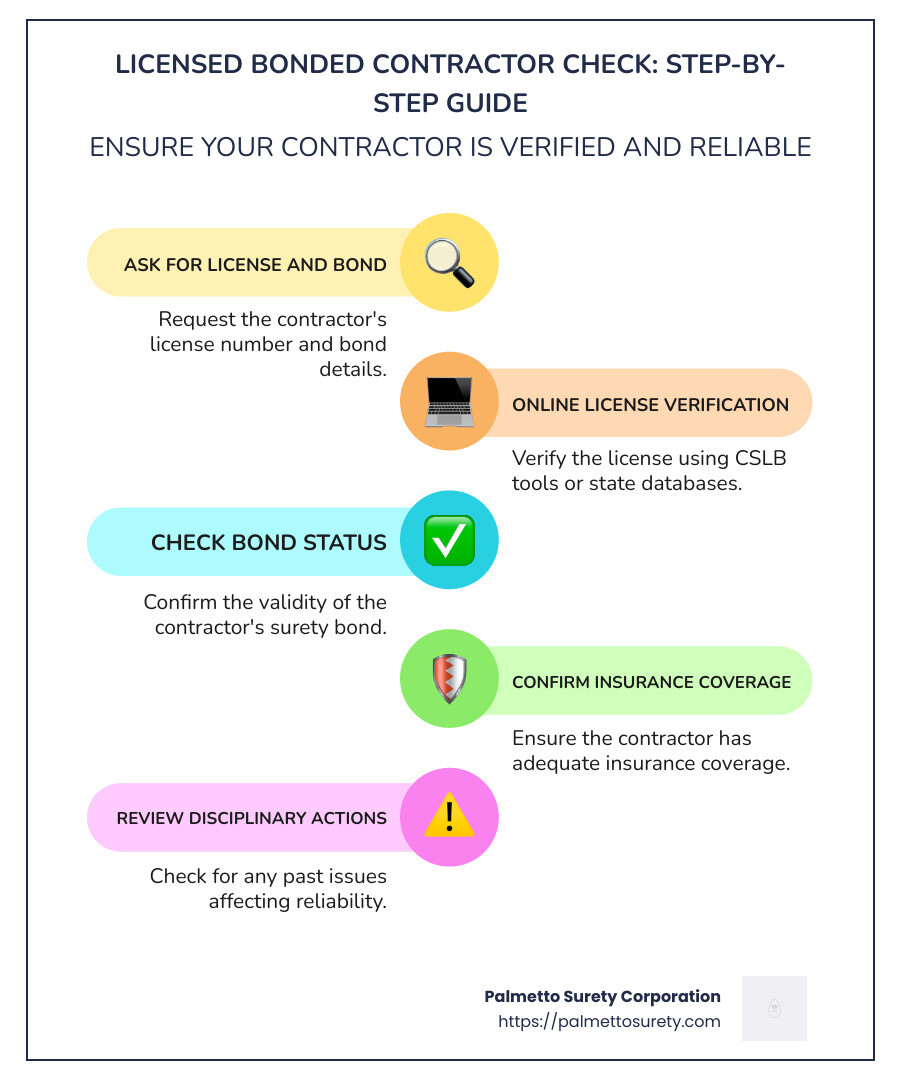
Ensuring you hire a Licensed Bonded Contractor is essential for any project. This process confirms that you’re engaging with professionals who adhere to legal standards and demonstrate financial responsibility. Here’s a streamlined checklist for verifying a licensed bonded contractor:
- Request the contractor’s license number – This information should be easily accessible on their business card or website.
- Verify the license online – Utilize resources like the Contractor State License Board (CSLB) to confirm the validity of licenses.
- Examine their bond status – A valid surety bond provides financial protection if the contractor fails to meet contractual obligations.
- Verify insurance coverage – This shields you from potential liabilities or accidents during the project.
- Investigate any disciplinary actions – This reveals any past issues that could impact the contractor’s reliability.
Contractor verification is more than a checklist—it’s a critical safeguard. Licensed contractors meet specific professional standards, ensuring they are skilled and accountable for their work. Additionally, surety bonds offer peace of mind by guaranteeing that the project will proceed smoothly, or compensating you if it doesn’t go as planned.
I’m Haiko de Poel Jr., an expert in contractor credential verification at Palmetto Surety Corporation. My dedication to Licensed Bonded Contractor Check has assisted numerous businesses and individuals in securing dependable contractors for their projects. Let’s explore the importance of contractor verification in greater detail.
Easy Licensed Bonded Contractor Check word list:
– how to check if a company is licensed and bonded
– how to check if someone is licensed and bonded
Understanding Licensing and Bonding
When hiring a contractor, knowing they are licensed and bonded is key to ensuring a successful project. Let’s break down what these terms mean and why they matter.
Contractor Licensing
A contractor’s license is a legal credential that verifies the contractor has met certain professional standards. These standards often include passing exams, gaining experience, and adhering to local regulations. Licensing ensures that contractors have the necessary skills and knowledge to perform their work safely and effectively.
In California, for example, any contractor working on a project valued at $500 or more must be licensed by the Contractors State License Board (CSLB). This requirement helps maintain a level of professionalism and expertise across the industry.
Surety Bond Definition
A surety bond is a financial agreement that involves three parties: the obligee (the party requiring the bond), the principal (the contractor), and the surety (the company that backs the bond). The bond acts as a safety net, protecting the obligee if the principal fails to meet their contractual obligations.

Why is this important? If a contractor doesn’t complete the job or fails to meet the contract specifications, the surety bond can provide financial compensation to the project owner. This ensures that the project is either completed or the financial loss is minimized.
Construction Bond
A construction bond is a specific type of surety bond used in the construction industry. It’s a guarantee that the contractor will fulfill the terms of the contract. Construction bonds include various types, such as bid bonds, performance bonds, and payment bonds.
- Bid Bond: Ensures that a contractor will honor their bid and sign the contract if selected.
- Performance Bond: Guarantees the completion of the project according to the contract terms.
- Payment Bond: Ensures subcontractors and suppliers are paid, preventing liens on the property.
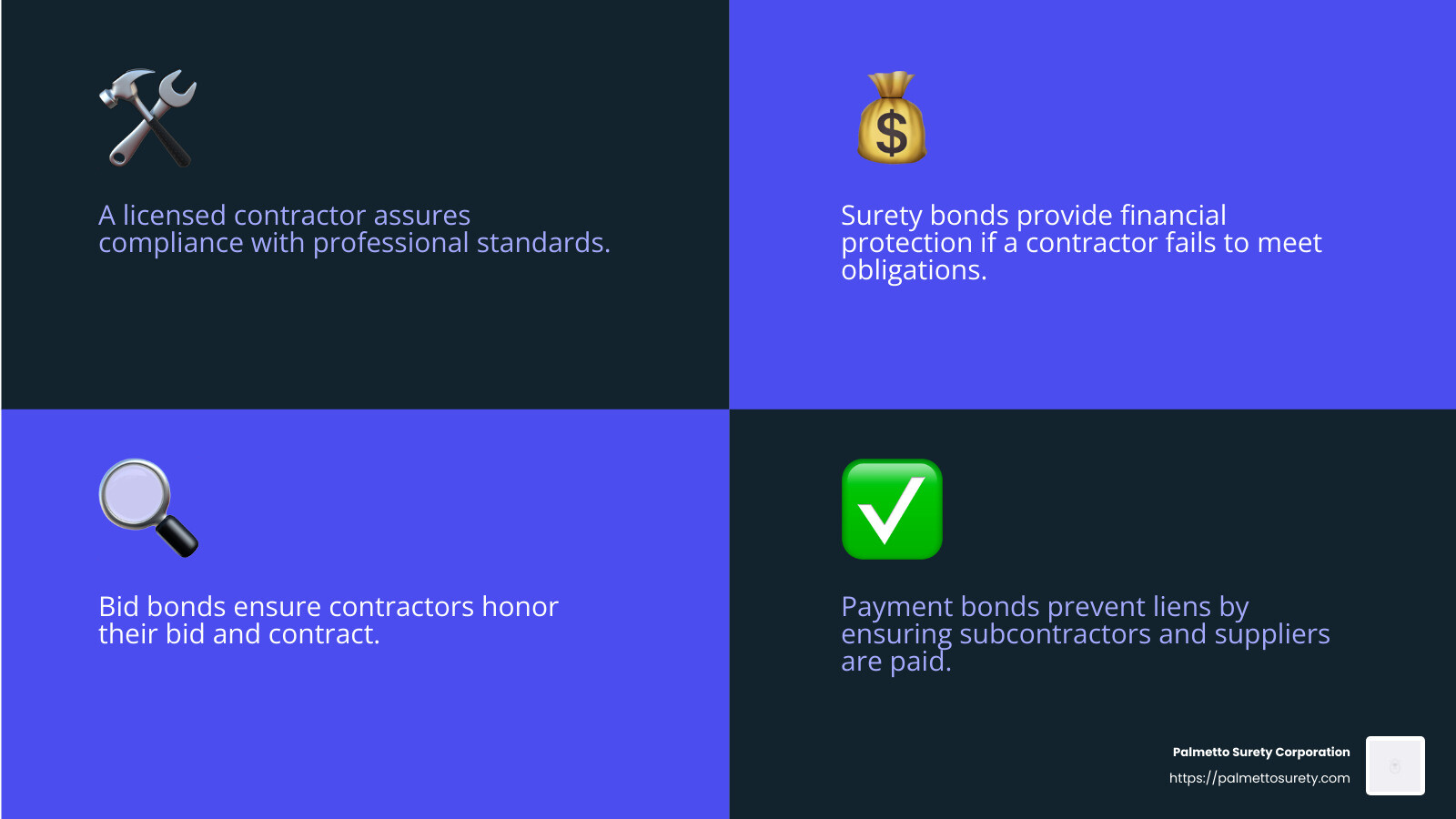
Understanding these aspects of contractor licensing and bonding can save you from potential headaches and financial losses. It sets the stage for a successful partnership with your contractor, ensuring they are both qualified and accountable.
Licensed Bonded Contractor Check: Step-by-Step Guide
Hiring a contractor who is both licensed and bonded can save you from future headaches and financial losses. Here’s a simple guide to ensure you’re making the right choice.
Step 1: Ask for License and Bond Information
Start by requesting the contractor’s license number and surety bond details. A reputable contractor will readily provide this information. The license number is crucial because it confirms the contractor’s legal eligibility to perform the work. The surety bond details will assure you that there is a financial safeguard in place if the contractor fails to meet their obligations.
Step 2: Use Online Verification Tools
Once you have the contractor’s license number, head to the CSLB online License Check tool. This tool is invaluable for verifying the validity of a contractor’s license in California. Simply enter the license number to check if it is active and if there are any disciplinary actions against the contractor.
For contractors outside California, use your state contractor database to verify their credentials. Most states have online systems where you can confirm a contractor’s licensing status.
Step 3: Confirm Insurance Coverage
Insurance is another layer of protection. Always ask for a certificate of insurance from the contractor. This document is proof that the contractor has the necessary insurance coverage to protect against property damage and injuries that might occur during the project.
Make sure the insurance is current and covers the scope of work you’re hiring them for. An insured contractor provides peace of mind, knowing that any accidents or damages won’t come out of your pocket.
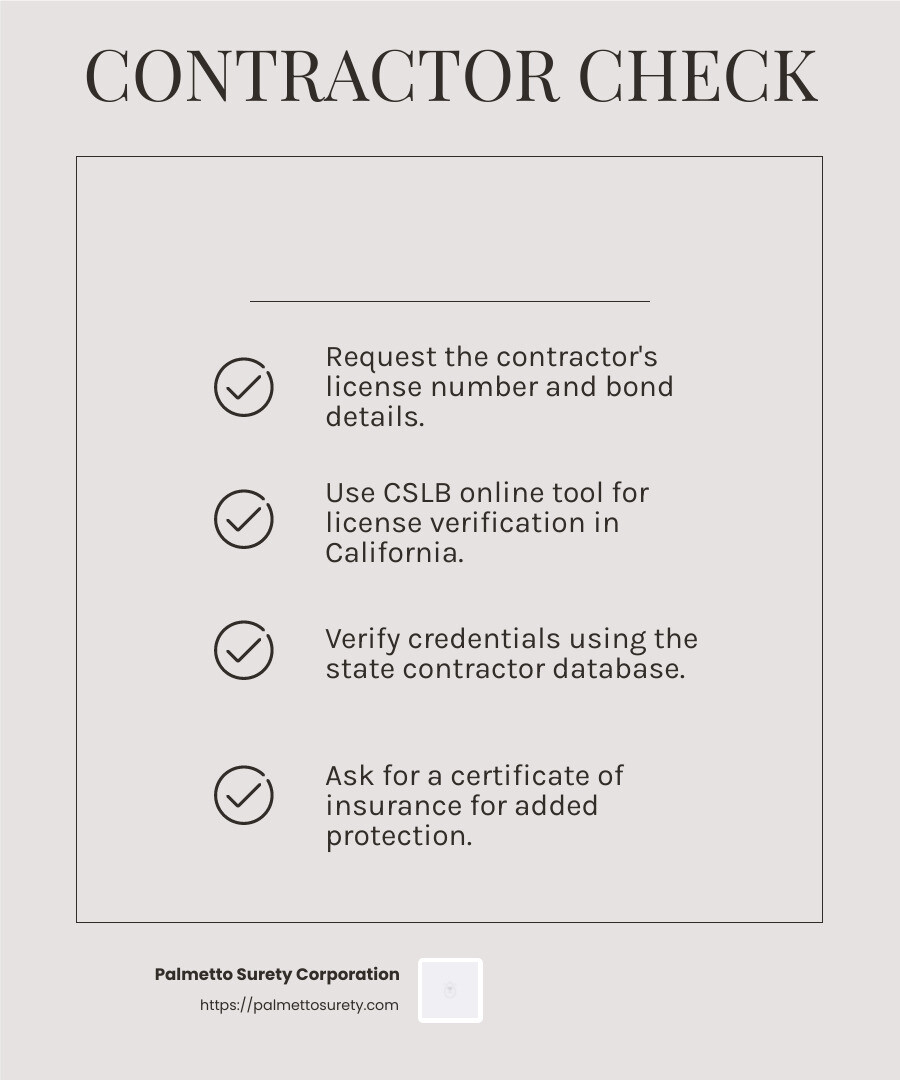
Following these steps ensures that your contractor is both qualified and accountable, setting the foundation for a successful project.
Why Hiring Licensed and Bonded Contractors Matters
Hiring a licensed and bonded contractor is not just a smart choice—it’s essential for several reasons. Let’s break down why this matters for your project.
Legal Compliance
First and foremost, hiring a licensed contractor ensures legal compliance. In many states, like California, it’s required by law for contractors working on projects valued at $500 or more to be licensed. This licensing process ensures that the contractor has met certain standards of professionalism and expertise, reducing the risk of shoddy workmanship. A licensed contractor is also more likely to be aware of local building codes and regulations, ensuring your project meets all legal requirements.
Financial Protection
When a contractor is bonded, it means they have a surety bond. This bond acts as a safety net for you, the client. If the contractor fails to complete the job, doesn’t adhere to the contract terms, or doesn’t pay for permits, the bond can be used to cover your financial losses. As of 2023, California requires contractors to have a $25,000 surety bond, offering significant protection. This financial assurance is crucial, as it provides peace of mind that you’re covered if things don’t go as planned.
Project Quality
Quality is another major reason to hire licensed and bonded contractors. These contractors are held to higher standards, and their work is often subject to inspections and reviews. A licensed contractor has demonstrated a certain level of skill and knowledge, ensuring that your project is completed to a high standard. Bonded contractors are also motivated to maintain a good reputation to avoid claims against their bond, which can affect their business. This means they are more likely to deliver quality work and meet your expectations.
By ensuring your contractor is both licensed and bonded, you’re not just protecting yourself legally and financially—you’re also investing in the quality and success of your project. This step is vital for avoiding headaches and ensuring a smooth project from start to finish.
In the next section, we’ll answer some frequently asked questions about licensed and bonded contractors to further clarify their importance.
Frequently Asked Questions about Licensed Bonded Contractors
What does bonding do for a contractor?
A construction bond acts as a financial safety net. It protects both the contractor and the client. When a contractor is bonded, it means a surety company has provided a guarantee that the contractor will fulfill their contractual obligations. If the contractor fails to complete the project or violates the contract terms, the bond can be used to cover the financial losses. This ensures that the client is not left out of pocket and the contractor maintains a reputation for reliability. The bond reflects the contractor’s commitment to quality and accountability, which is crucial for building trust with clients.
Can a general contractor do electrical work?
In many states, there are specialty regulations that limit what a general contractor can do. While a general contractor can oversee a wide range of construction tasks, they cannot perform specialized work like electrical installations unless they hold the necessary specialty licenses. This ensures that only qualified professionals handle tasks that require specific expertise, maintaining safety and compliance with state regulations. If you’re hiring a contractor for electrical work, make sure they have the appropriate certification to avoid potential legal issues and ensure the work is done safely and correctly.
How to file a complaint against a contractor?
If you encounter issues with a contractor, you have options for recourse. Start by checking the contractor’s registration status using your state’s contractor database. This will confirm if they are licensed and bonded. If you believe the contractor has violated the terms of your agreement or performed subpar work, you can file a complaint through your state’s Department of Labor & Industries or equivalent agency. They often have a report-a-fraud line where you can report any fraudulent activity or misconduct. This process helps protect other consumers and holds contractors accountable for their actions.
By understanding these aspects of contractor bonding and licensing, you can make informed decisions and protect your interests when hiring for your next project.
Conclusion
In conclusion, verifying a contractor’s license and bonding status is not just a formality—it’s a crucial step to ensure your project’s success and your peace of mind. At Palmetto Surety Corporation, we understand the complexities involved in contractor verification and are committed to providing you with the resources you need to make informed decisions.
Why Verification Matters
Verifying that your contractor is both licensed and bonded protects you legally and financially. A licensed contractor has met specific state requirements, ensuring they possess the necessary skills and knowledge. A bonded contractor, on the other hand, offers a financial guarantee that the job will be completed as agreed, or you’ll be compensated for any losses. This dual layer of protection is essential for maintaining the quality and integrity of your project.
Peace of Mind
When you hire a licensed and bonded contractor, you gain more than just a service provider. You gain peace of mind knowing the contractor is held to high standards of accountability and professionalism. Should anything go wrong, you have a financial safety net and legal recourse. This assurance allows you to focus on other aspects of your project, confident that you’re in capable hands.
At Palmetto Surety Corporation, we specialize in providing surety bonds custom to various industries, ensuring quick and efficient service. Whether you’re in construction, manufacturing, transportation, or healthcare, our expertise in surety bonds helps you steer the complexities of contractor verification with ease.
By partnering with us, you ensure that your contractor meets all necessary requirements, providing you with the peace of mind to proceed with confidence. A little due diligence upfront can save you from significant headaches down the line. Choose wisely, verify thoroughly, and let us support you every step of the way.


