


What is a Court Cash Bond: Top 5 Crucial Facts 2025
What is a court cash bond? A court cash bond is a financial guarantee provided to the court to secure the release of an accused individual from jail while awaiting trial. By paying the full bail amount in cash directly to the court, the defendant assures their return for the scheduled court date. If the defendant appears as required, the cash is typically returned, minus any applicable court fees.
In essence, a court cash bond is a commitment to return for trial, supporting the legal principle of being innocent until proven guilty. This allows individuals to continue their daily lives while awaiting trial. However, failing to appear in court can result in the forfeiture of the entire cash amount.
I’m Haiko de Poel Jr, and I specialize in explaining complex topics like what is a court cash bond. My experience in strategic digital marketing for businesses such as Palmetto Surety Corporation enables me to clarify nuanced subjects, ensuring you understand how court cash bonds work. Next, we’ll explore the specifics of this crucial aspect of the bail process.
What is a Court Cash Bond?
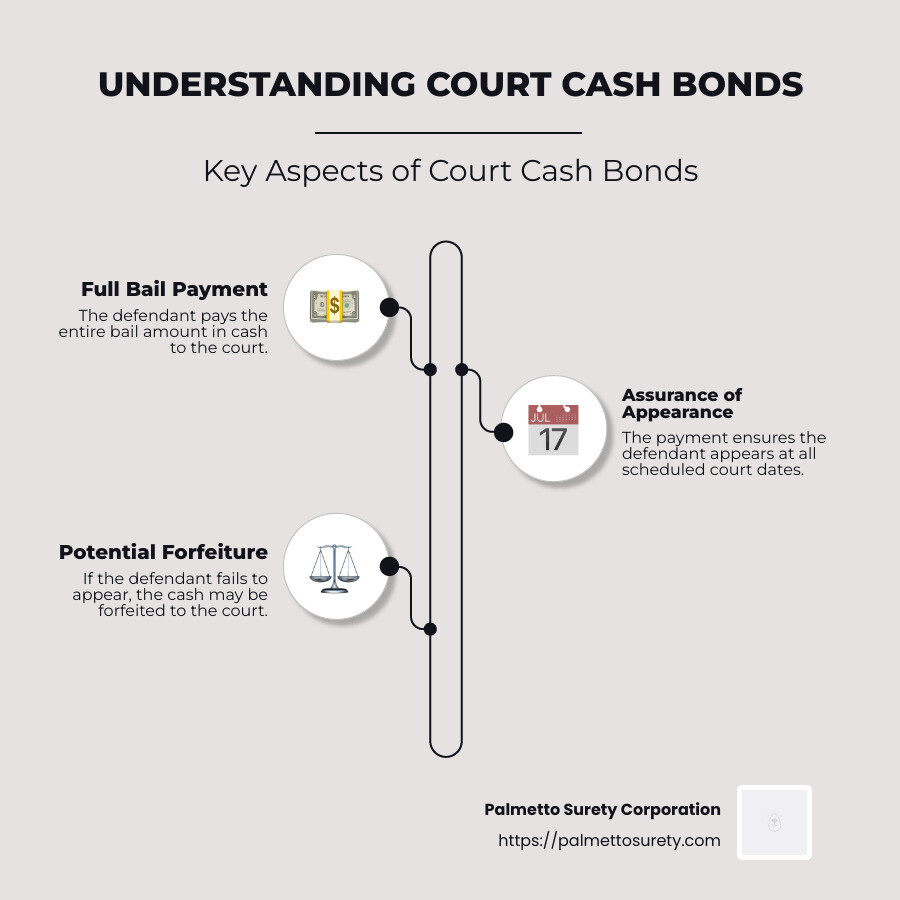
A court cash bond is a financial guarantee used in the bail process. It ensures that a defendant will return for their court appearances. When a person is arrested, a judge sets a bail amount based on the severity of the crime and other factors. To secure release from jail, the full bail amount must be paid in cash directly to the court.
How Does a Cash Bond Work?
When paying a cash bond, the entire bail amount is given to the court. This payment acts as collateral, assuring the court that the defendant will attend all required hearings. If the defendant complies with all court appearances, the full amount is refunded at the end of the trial, minus any court fees or fines.
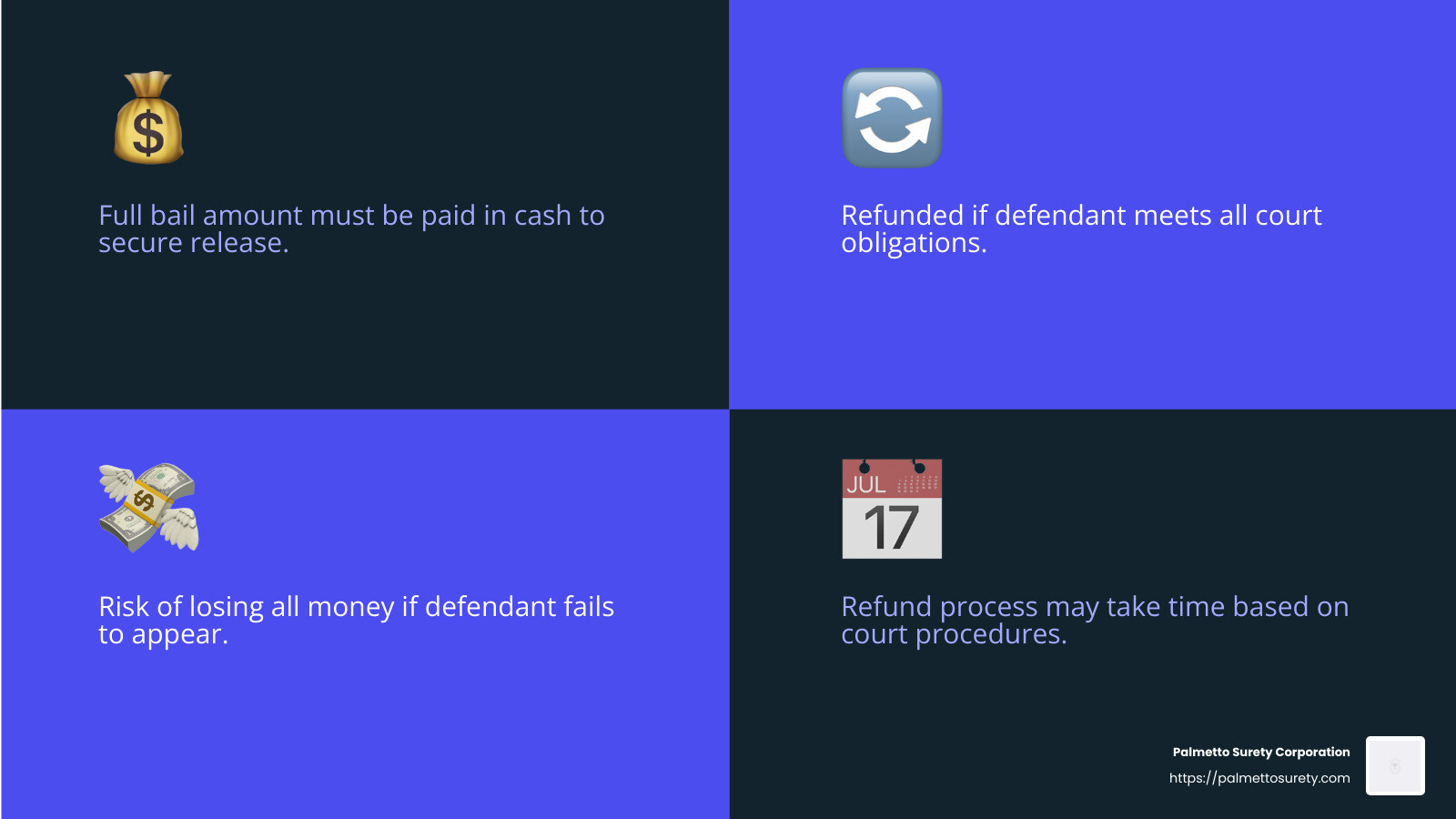
Payment Methods: Cash bonds require immediate payment. This can be done using cash, certified checks, or money orders.
Court Refund: After the trial concludes, and if the defendant has met all obligations, the court will refund the bond amount. This refund process can take some time, depending on the court’s procedures.

Financial Risk: If the defendant fails to appear in court, the entire bond amount is forfeited. This means losing all the money paid upfront, making it a risky option if there’s any doubt about the defendant’s ability to attend court.
Advantages and Disadvantages of Cash Bonds
Advantages:
-
Immediate Release: Cash bonds allow for quick release from jail once the full amount is paid. This can be crucial for defendants needing to resume work or family responsibilities.
-
Refundable: If all court requirements are met, the bail amount is refunded, making it a financially viable option for those with the necessary resources.
Disadvantages:
-
Financial Outlay: Paying the full bail amount can be a significant financial burden. Not everyone has access to large sums of money, which can strain personal finances or require borrowing from family or friends.
-
Risk of Forfeiture: If the defendant does not appear in court, the cash is forfeited. This results in a complete financial loss for the person who posted the bond.
Understanding the dynamics of a cash bond can help you make informed decisions if you or a loved one faces the bail process. Up next, we’ll explore the differences between cash bonds and surety bonds, helping you choose the best option for your situation.
Cash Bond vs. Surety Bond
When deciding between a cash bond and a surety bond, it’s important to understand the key differences in their structure, parties involved, and risk distribution.
Key Differences
Payment Structure:
-
Cash Bond: Requires the full bail amount to be paid upfront to the court. This payment acts as a guarantee that the defendant will appear for their court dates. If the defendant fulfills all court obligations, the full amount is refunded after the trial, minus any court fees.
-
Surety Bond: Involves paying a non-refundable fee, usually around 10% of the bail amount, to a bail bond agency. This fee is for the agency’s service to post the full bail amount on behalf of the defendant.
Parties Involved:
-
Cash Bond: Involves two parties—the defendant (or a representative) and the court.
-
Surety Bond: Involves three parties—the defendant, the court, and the bail bond agency. The agency acts as a guarantor, ensuring the defendant’s appearance in court.
Risk Distribution:
-
Cash Bond: The person who pays the bond bears the entire financial risk. If the defendant fails to appear in court, the full bail amount is forfeited.
-
Surety Bond: The bail bond agency assumes the financial risk. However, they may require collateral to cover potential losses if the defendant does not appear in court.
Collateral Requirements:
-
Cash Bond: No collateral is needed beyond the cash payment itself.
-
Surety Bond: May require collateral, such as property or other valuable assets, to secure the bond. This collateral can be seized if the defendant fails to appear in court.
When to Choose a Cash Bond
Choosing a cash bond can be advantageous in certain situations:
-
Financial Resources: If you have the financial means to pay the full bail amount upfront, a cash bond can be a straightforward option. It avoids the additional fees associated with surety bonds.
-
Simplicity: The cash bond process is simple and direct, involving only the court and the payer. This can be preferable for those who want to avoid the extra paperwork and conditions imposed by bail bond agencies.
-
Urgency: For those who need an immediate release from jail, paying a cash bond can expedite the process. It eliminates the need for third-party involvement, which can sometimes delay release.
Understanding these factors can help you decide whether a cash bond or surety bond best suits your needs. Up next, we’ll dive deeper into frequently asked questions about cash bonds, clarifying their purpose and implications in the bail process.
Frequently Asked Questions about Cash Bonds
What is the purpose of a cash bond?
A cash bond serves as a financial guarantee to the court. It’s like saying, “I’ll show up for my court date, and if I don’t, you can keep my money.” This bond allows for the temporary release of a defendant from jail while ensuring they return for all required court appearances. Once the case concludes, and if the defendant has complied with all court requirements, the full bond amount is refunded, minus any court fees or fines.
Is cash bond the same as bail?
While the terms are often used interchangeably, there is a distinction. Bail is the broader term that refers to the process of securing a defendant’s release from custody. It can involve cash, property, or a surety bond. A cash bond, specifically, is one method of posting bail where the full bail amount is paid in cash directly to the court. This makes a cash bond a type of bail, but not all bail involves cash bonds.
What happens if the defendant fails to appear in court?
If a defendant does not show up for their court date, the consequences can be severe. In the case of a cash bond, the entire amount paid to the court is forfeited. This means the person who posted the bond loses all the money they put up as a guarantee. This financial loss serves as a deterrent, encouraging defendants to comply with their court obligations. Additionally, failing to appear can lead to further legal penalties, including arrest warrants and additional charges.
Understanding these aspects of cash bonds can help you steer the bail process more effectively.
Conclusion
Navigating the bail process can be overwhelming, but understanding your options is crucial for making an informed decision. Whether you’re considering a cash bond or exploring other bail options, the key is to assess your financial resources and the urgency of the situation.
Palmetto Surety Corporation is here to assist you through this challenging time. With over 20 years of experience in the bail bond industry, we specialize in providing quick and efficient service to ensure a smoother path forward. Our team is dedicated to helping you understand the intricacies of court cash bonds and other bail solutions, so you can make the best choice for your circumstances.
By choosing Palmetto Surety Corporation, you gain a trusted partner in navigating the complexities of the bail process. We offer expertise in both cash and surety bonds, ensuring you have access to the right information and support when you need it most.
For more information on how we can assist you, visit our Palmetto Surety Corporation service page. Let us help you make an informed decision and guide you through the bail process with confidence.


