


License and Bond Insurance: Top Steps to Get Licensed 2024
If you’re looking to understand license and bond insurance, you’ve come to the right place. Let’s break it down quickly:
- Licensed: Your business has the legal right to operate, often after meeting certain criteria, like passing exams or paying fees.
- Bonded: You’ve purchased a surety bond to protect clients from financial losses if you fail to fulfill your obligations.
License and bond insurance isn’t just industry jargon. It’s essential for ensuring trust and compliance in numerous sectors like construction, manufacturing, transportation, and healthcare. Here’s why:
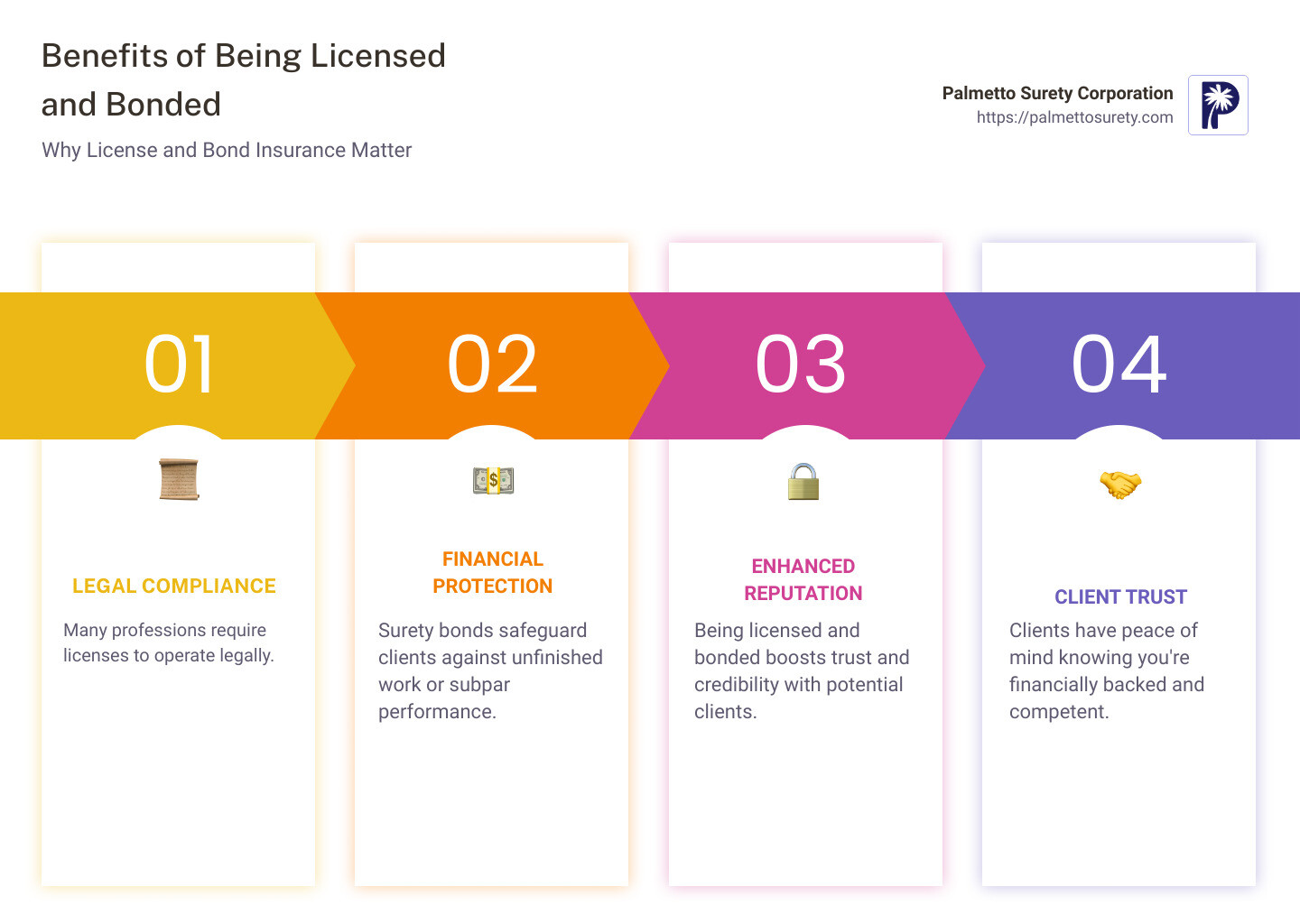
- Legal Compliance: Many professions require licenses to operate legally.
- Financial Protection: Surety bonds safeguard clients against unfinished work or subpar performance.
- Improved Reputation: Being licensed and bonded boosts trust and credibility with potential clients.
I’m Haiko de Poel Jr., a marketing and digital change expert. My journey includes streamlining and branding processes for companies like Palmetto Surety Corporation, ensuring businesses like yours can steer the complexities of license and bond insurance with ease.
What Does It Mean to Be Licensed?
Steps to Obtain a License
Being licensed means that your contractor has the legal authority to operate in their field. This is crucial for ensuring that they meet a basic level of competence, knowledge, and financial stability. Here’s a quick guide on the steps involved:
-
Study and Pass Required Exams: Contractors must pass state licensing exams that test their knowledge of the construction field. These exams ensure that they are competent and understand the regulations and standards in their industry.
-
Submit Financial Records: The state licensing board requires contractors to provide financial documents, such as bank statements and tax records. This ensures that they are financially stable and capable of managing a business.
-
Pay Application Fees: There is usually an application fee that contractors must pay to the state licensing board as part of the process.
-
Background Check: Contractors must undergo a background check to ensure they have no criminal history that would disqualify them from holding a license.

-
Proof of Insurance: Contractors need to show proof of insurance. This typically includes general liability insurance, which protects against accidents and damages that may occur during their work.
-
Proof of Surety Bond: Contractors must also provide proof of a surety bond. This bond acts as a financial guarantee that the contractor will fulfill their obligations.
-
Additional Required Licenses: Depending on the type of work, contractors may need additional licenses. For example, plumbers and electricians often require specialized licenses.
Key Requirements for Licensing:
- Competence: Confirmed through passing exams.
- Financial Stability: Verified through submitting financial records.
- Legal Compliance: Ensured by undergoing background checks and showing proof of insurance and bonds.

By following these steps, contractors can become licensed, demonstrating their competence and reliability. This is the first essential step in ensuring that a contractor is trustworthy and capable of completing your project to the required standards.
Next, we’ll dig into what it means to be bonded and how it provides financial protection for clients.
Understanding Bond Insurance
Types of Surety Bonds
A surety bond is a crucial financial tool that provides protection and assurance in various business scenarios. It involves a three-party agreement between the principal (the business or contractor), the obligee (the party requiring the bond, often a client or government agency), and the surety (the insurance company backing the bond). This bond ensures that the principal will fulfill their contractual obligations, or the surety will step in to cover the financial loss.
There are several types of surety bonds, each designed to cater to different needs and industries. Let’s break them down:
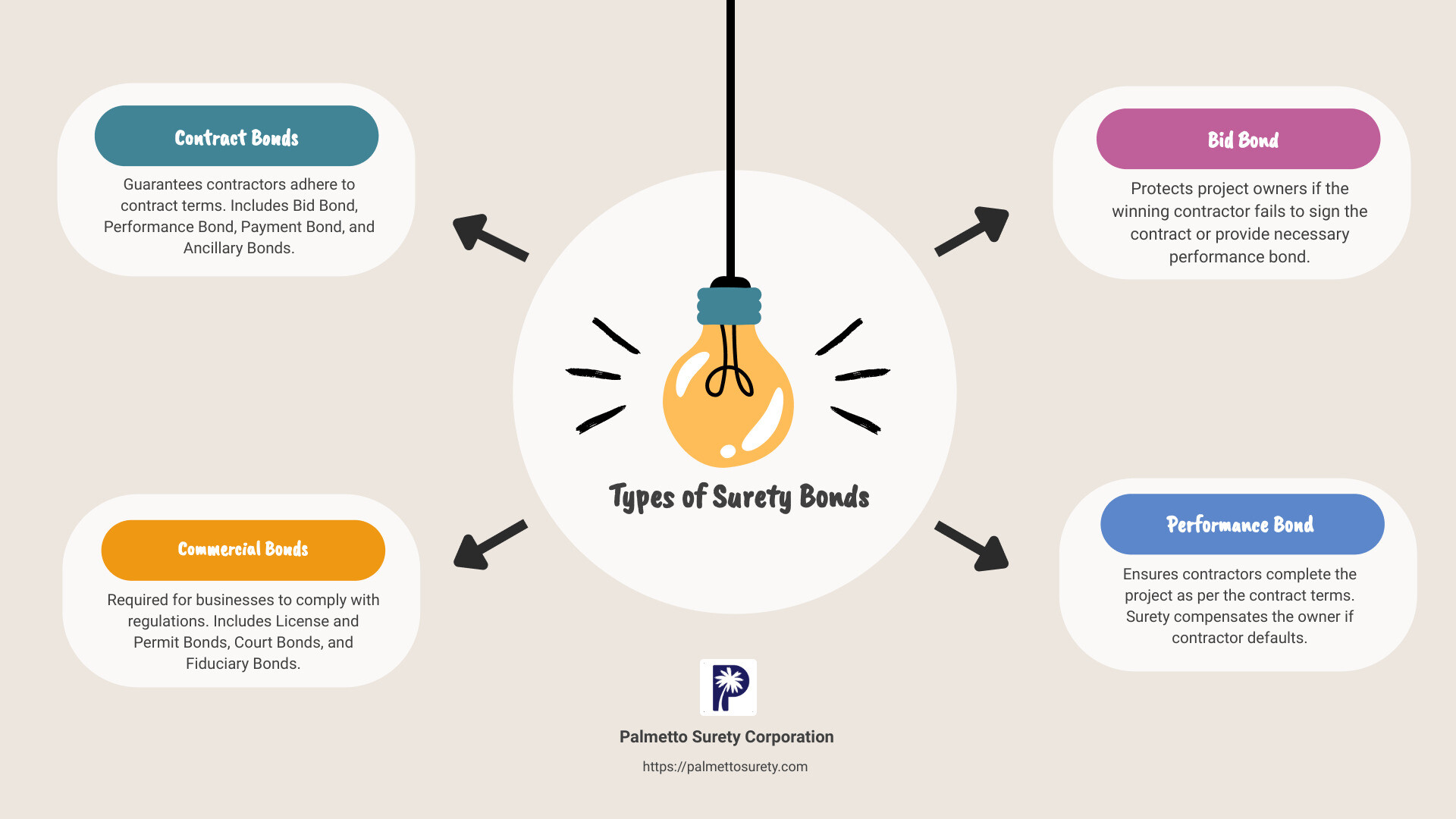
Contract Bonds
Contract bonds are predominantly used in the construction industry and serve as a guarantee that contractors will adhere to the terms of their contracts. Here are some common types of contract bonds:
-
Bid Bond: This bond protects the project owner if the winning contractor fails to sign the contract or provide the required performance bond. It ensures that the bidding process is fair and that contractors are serious about their bids.
-
Performance Bond: This bond guarantees that the contractor will complete the project as per the terms and conditions of the contract. If the contractor defaults, the surety steps in to either complete the project or compensate the project owner.
-
Payment Bond: This bond ensures that subcontractors, suppliers, and laborers are paid for their work and materials. It protects against liens or claims against the project owner due to non-payment by the contractor.
-
Ancillary Bonds: These bonds cover additional obligations that may not be directly related to the performance of the work but are still required for the contract. For example, a maintenance bond ensures that any defects found after project completion are repaired.
Commercial Bonds
Commercial bonds cater to businesses that need to comply with state or federal regulations. These bonds are often required for obtaining licenses or permits. Common types include:
-
License and Permit Bonds: These bonds ensure that businesses comply with local laws and regulations. They are often required for contractors, auto dealers, and other regulated industries.
-
Court Bonds: These bonds are required in legal proceedings to ensure compliance with court orders. Examples include appeal bonds and probate bonds.
-
Fiduciary Bonds: These bonds are required for individuals who manage another person’s assets, such as estate administrators or guardians. They ensure that the fiduciary acts in the best interest of the person they are representing.
Financial Protection
Surety bonds provide a layer of financial protection for the obligee. If the principal fails to fulfill their obligations, the surety investigates the claim. If the claim is valid, the surety compensates the obligee. The principal is then responsible for reimbursing the surety for the amount paid out.
This system ensures that clients and project owners are protected from financial losses due to contractor defaults or non-compliance with regulations.
By understanding the different types of surety bonds and how they function, businesses can steer their license and bond insurance requirements more effectively. This not only helps in securing projects but also in building trust with clients and regulatory bodies.
The Role of Insurance in Business
Insurance plays a crucial role in protecting businesses from financial losses due to unexpected events. For contractors, having the right insurance policies is essential to manage risks and ensure smooth operations.
Common Insurance Policies for Contractors
Risk Transfer
Insurance helps transfer the financial risk from your business to the insurance company. This means if something goes wrong, the insurance company will cover the costs, allowing your business to continue operating without severe financial strain.
Liability Coverage
Liability coverage protects your business from claims of third-party bodily injury or property damage. For example, if someone slips and falls at your job site, your general liability insurance would cover the medical expenses and any legal fees.
Property Damage
Property damage insurance covers the cost of repairing or replacing your business property if it’s damaged by events like fire, theft, or vandalism. This includes your office, equipment, and inventory.
Worker’s Compensation
Worker’s compensation insurance is mandatory in most states if you have employees. It covers medical expenses and lost wages for employees who get injured or sick while on the job. This not only protects your employees but also shields your business from potential lawsuits.
Vehicle Liability
Vehicle liability insurance covers injuries or property damage caused by your company’s vehicles. If one of your work trucks is involved in an accident, this policy will cover the costs associated with the damage and any legal claims that arise.
Pollution Liability
Pollution liability insurance protects your business from claims related to environmental damage caused by your operations. This is especially important for contractors working with hazardous materials. If a spill or contamination occurs, this policy covers the cleanup costs and any legal fees.
General Liability Insurance
General liability insurance is a must-have for contractors. It covers a wide range of risks, including:
- Bodily injury
- Property damage
- Legal defense costs
- Medical expenses
This policy is often required to secure contracts and licenses, making it an essential part of your license and bond insurance package.
Worker’s Compensation Insurance
Worker’s compensation insurance ensures that your employees are taken care of if they get injured on the job. It covers:
- Medical bills
- Rehabilitation costs
- Lost wages
- Death benefits
Having this insurance not only complies with state laws but also boosts employee morale and trust.
Vehicle Liability Insurance
Vehicle liability insurance is crucial if your business uses vehicles for work. It covers:
- Damage to other vehicles
- Medical expenses for injuries
- Legal fees
This policy ensures that accidents involving your company vehicles don’t financially cripple your business.
Pollution Liability Insurance
Pollution liability insurance is vital for businesses dealing with hazardous materials. It covers:
- Cleanup costs
- Legal defense fees
- Third-party claims
This policy protects your business from the high costs associated with environmental damage, ensuring you can continue operations without severe financial impact.
By understanding and implementing these common insurance policies, contractors can effectively manage risks and protect their businesses. Next, we’ll dig into the differences between licenses, bonds, and insurance to provide a clearer picture of how each component contributes to your business’s stability.
Differences Between License, Bond, and Insurance
Understanding the differences between a license, bond, and insurance is crucial for running a secure and reputable business. Each serves a unique purpose and offers different forms of protection and assurance.
License vs. Bond
Competence Proof
A license demonstrates that your business has met the required standards and regulations set by the state or local government. It often involves passing exams and meeting specific criteria, ensuring you are qualified to perform the work.
Financial Stability
A bond, on the other hand, is a financial guarantee. When your business is bonded, it means you have purchased a surety bond to protect clients against losses from incomplete or substandard work. This shows financial stability and a commitment to fulfilling contractual obligations.
Legal Obligations
Licenses are mandatory for operating legally in many industries. They ensure that businesses comply with local laws and regulations. Bonds are often required to obtain these licenses, especially in high-risk industries like construction.
Bond vs. Insurance
Client Protection
A bond primarily protects the client. If your business fails to complete a job or violates the terms of a contract, the client can file a claim against the bond. The surety company will cover the losses, but your business will need to reimburse the surety.
Business Protection
Insurance protects your business from various risks. For example, general liability insurance covers third-party claims of bodily injury or property damage. Worker’s compensation insurance covers employees’ medical expenses and lost wages if they get injured on the job.
Claim Process
The claim process for bonds and insurance differs significantly. For bonds, the client files a claim with the surety company, which investigates and pays if the claim is valid. Your business then reimburses the surety. For insurance, the policyholder (your business) files a claim, and the insurance company directly handles the payment and legal costs.
Reimbursement
With bonds, your business is responsible for reimbursing the surety company for any claims paid out. This ensures that the surety company does not incur a loss. With insurance, the insurance company expects to pay out claims and does not require reimbursement from the insured business.
Financial Protection
Both bonds and insurance provide financial protection but in different ways. A bond ensures that the client is compensated for any financial loss due to the business’s failure to meet contractual obligations. Insurance mitigates financial risks to the business itself from accidents, damages, or legal claims.
Client Assurance
Being licensed, bonded, and insured gives clients confidence in your business. It assures them that you are competent, financially stable, and prepared to handle any issues that may arise during a project. This can be a deciding factor when clients choose between you and a competitor.
Business Protection and Risk Management
Combining licenses, bonds, and insurance creates a robust risk management strategy. Licenses ensure legal compliance, bonds provide financial guarantees to clients, and insurance covers unexpected events that could otherwise cripple your business financially.
By understanding these differences, you can better steer the requirements and protections needed to run a successful and trustworthy business. Next, we’ll explore the specific steps to get licensed and bonded in Illinois.
How to Get Licensed and Bonded in Illinois
Getting licensed and bonded in Illinois involves a few key steps. It’s essential to follow these steps carefully to ensure compliance with state regulations and to protect your business and clients.
Application Process
-
Determine the Requirements: Different industries have different licensing requirements. Check the specific requirements for your business on the Illinois Department of Financial and Professional Regulation (IDFPR) website.
-
Complete the Application: Fill out the necessary forms. This often includes providing personal details, business information, and proof of qualifications. You may also need to pass an exam, depending on your industry.
-
Submit Financial Records: Some licenses require you to submit financial records to prove your business’s financial stability. This might include bank statements, tax returns, and other financial documents.
-
Pay the Application Fee: Licensing usually involves a fee. The amount can vary based on the type of license and your industry. Make sure to check the specific fee requirements and pay them on time.
-
Undergo a Background Check: Many licenses require a background check to ensure you have no criminal record that could disqualify you from obtaining a license.
Surety Company
To get bonded, you’ll need to work with a surety company. Here’s how to go about it:
-
Choose a Surety Company: Look for a reputable surety company that offers the type of bond you need. Palmetto Surety Corporation is a reliable option with experience in various industries.
-
Request a Quote: Provide the surety company with basic business and financial information to get a quote. This usually includes your business’s credit score, financial records, and the bond amount required.
-
Underwriting Process: The surety company will evaluate your risk level. They look at your credit history, financial stability, and business track record to determine the bond premium.
-
Receive the Bond: Once approved, you’ll receive the bond paperwork. You’ll need to sign it and keep it on hand as proof of bonding.
Bond Premium
The cost of your bond premium depends on several factors:
-
Credit Score: Businesses with good credit scores can expect lower premiums, typically between 1-5% of the bond amount. Those with poor credit scores might pay up to 20%.
-
Financial Stability: A stable financial history can lower your premium. The surety company assesses your financial records during the underwriting process.
-
Bond Amount: Higher bond amounts generally result in higher premiums. The specific amount required depends on your industry and the type of work you do.
Credit Details
Your credit score plays a significant role in the bonding process. Here’s why:
-
Risk Assessment: Surety companies use your credit score to assess the risk of bonding your business. A higher score indicates lower risk and can result in a lower premium.
-
Financial History: A clean financial history can improve your chances of getting bonded at a lower cost. Make sure to maintain good financial practices and address any outstanding debts.
-
Improving Your Score: If your credit score is not ideal, consider steps to improve it before applying for a bond. This can include paying off debts, correcting errors on your credit report, and managing your finances responsibly.
By following these steps, you can steer the process of getting licensed and bonded in Illinois smoothly. This not only ensures compliance with state regulations but also builds trust with your clients, showing them that your business is both competent and financially stable.
Next, we’ll answer some frequently asked questions about license and bond insurance.
Frequently Asked Questions about License and Bond Insurance
What does insurance and bond mean?
Insurance and bond are terms used to describe different types of financial protection for businesses.
-
Insurance: This means your business has purchased an insurance policy to cover potential risks like property damage, liability claims, or worker injuries. For example, general liability insurance can pay for claims related to bodily injury or property damage caused by your business.
-
Bond: Being bonded means your business has obtained a surety bond. A surety bond is a three-party agreement involving the principal (your business), the obligee (the client or entity requiring the bond), and the surety (the company that issues the bond). It guarantees that your business will fulfill its contractual obligations. If you fail to do so, the surety company compensates the obligee, and you must repay the surety.
What is the difference between bonded and licensed?
Bonded and licensed are terms that refer to different aspects of business credibility and compliance.
-
Licensed: This means your business has met the requirements set by a state or local licensing board to perform specific types of work. Licensing often involves passing exams, proving qualifications, and paying fees. It shows that your business is competent and legally allowed to operate in your industry.
-
Bonded: This means your business has obtained a surety bond, providing a financial guarantee that you will meet your contractual obligations. It assures clients that they will be compensated if you do not complete a job as agreed.
In summary, being licensed proves your professional qualifications and legal compliance, while being bonded provides financial protection to your clients.
Why would a person need to be bonded?
Being bonded offers several benefits and is often required in certain situations:
-
Client Trust: Clients are more likely to hire a bonded business because it provides financial protection. They know they can file a claim against the bond if the business fails to meet its obligations.
-
Legal Requirements: Many industries and government contracts require businesses to be bonded. For example, construction projects often require performance bonds to ensure the job will be completed according to the contract.
-
Financial Stability: Obtaining a bond demonstrates that your business is financially stable and trustworthy. Surety companies perform a thorough evaluation of your financial history before issuing a bond.
-
Reputation: Being bonded can improve your business’s reputation, showing that you take your responsibilities seriously and are committed to fulfilling your obligations.
Being bonded can help secure more contracts, build client trust, and ensure compliance with legal requirements.
Next, let’s dig into the differences between license, bond, and insurance to understand how each plays a unique role in protecting your business and clients.
Conclusion
Navigating license and bond insurance can seem complex, but the benefits are clear and significant.
Benefits
Being licensed, bonded, and insured offers numerous advantages for your business. First, it demonstrates your competence and compliance with industry standards. This can set you apart from competitors who may not have these credentials.
Financial Protection: Surety bonds protect your clients by guaranteeing that you will fulfill your contractual obligations. If you fail to do so, the client can file a claim, and the surety company will compensate them. This financial safety net is invaluable for both parties.
Risk Management: Insurance policies, such as general liability and worker’s compensation, protect your business from various risks. They cover costs related to property damage, bodily injury, and employee injuries, ensuring that your business remains stable even in unforeseen circumstances.
Client Trust
Clients are more likely to hire businesses that are licensed, bonded, and insured because it provides them with peace of mind. They know that:
- You are legally authorized to perform the work.
- You have financial backing to cover any potential damages or incomplete work.
- Their interests are protected, which builds trust and long-term relationships.
Business Stability
Being licensed, bonded, and insured not only boosts client trust but also improves your business’s stability. It shows that you are serious about your operations and committed to maintaining high standards. This can lead to more contracts, better client relationships, and overall business growth.
Palmetto Surety Corporation
At Palmetto Surety Corporation, we understand the complexities of obtaining the right bonds and insurance for your business. Our streamlined process and expert support make it easy for you to get the coverage you need, ensuring compliance and building trust with your clients.
Get started with Palmetto Surety Corporation today and experience the benefits of being licensed, bonded, and insured. Your business’s stability and client trust are just a click away.
By understanding and leveraging license and bond insurance, you can secure your business’s future, protect your clients, and stand out in your industry. Contact us to learn more and take the next step in safeguarding your business.


