


Insurance Adjuster Bond: Top 5 Essential Facts in 2024
Understanding Insurance Adjuster Bonds
If you’re looking to quickly grasp the concept of an insurance adjuster bond, here’s what you need to know right away:
- An insurance adjuster bond is a type of surety bond required for licensing in many states.
- It protects the public against illegal and unethical practices by ensuring adjusters follow industry laws.
- Typically, these bonds cost around 1% of the total bond amount and can often be purchased without a credit check.
Now, let’s dive a bit deeper.
An insurance adjuster bond is a legally binding agreement that involves three key parties: the principal (you, the adjuster), the obligee (the state agency), and the guarantor (the surety company). These bonds are essential for public and independent adjusters operating across different states, serving as a safeguard for individuals filing insurance claims.
Without these bonds, there’s a risk of financial harm due to misconduct or unethical behavior by adjusters. Therefore, obtaining this bond is a critical step in becoming a licensed insurance adjuster and staying compliant with state regulations.
My name is Haiko de Poel Jr., and with my background in marketing and digital change, including work with companies such as Palmetto Surety Corporation, I understand the importance of simplifying complex processes like securing an insurance adjuster bond. Let’s explore the details together.
Insurance adjuster bond terms simplified:
– contractors insurance and bond
– license and bond insurance
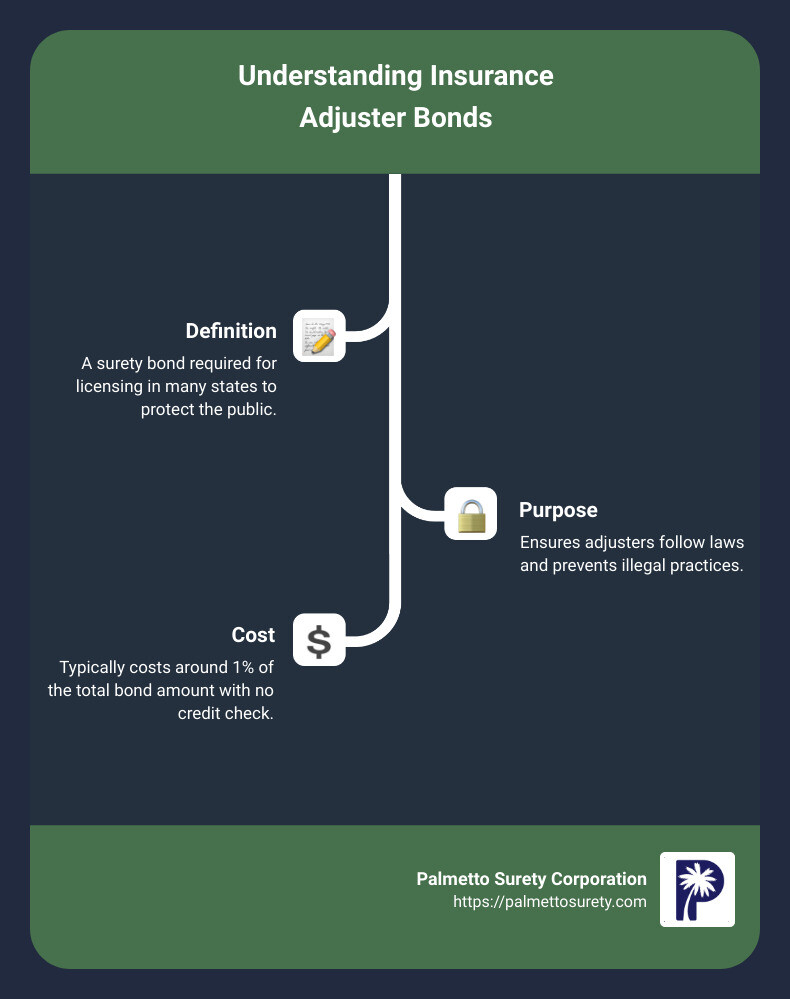
An insurance adjuster bond is a type of surety bond required for insurance adjusters to get licensed in many states. It acts as a financial guarantee that the adjuster will adhere to state laws and industry regulations. This bond is not for the adjuster’s protection but for the protection of the public and the state.
Purpose
The main purpose of an insurance adjuster bond is to ensure that adjusters conduct their business ethically and legally. This bond protects the public from fraudulent or unethical practices by the adjuster. If an adjuster fails to comply with the rules, a claim can be made against the bond.

Financial Protection
Financial protection is a key aspect of an insurance adjuster bond. If an adjuster engages in misconduct, the bond provides financial compensation to the affected parties. This helps cover any financial losses incurred due to the adjuster’s actions.
Fraud Prevention
Fraud prevention is another critical function of an insurance adjuster bond. By holding adjusters accountable, these bonds deter fraudulent activities. Knowing that they could face financial penalties encourages adjusters to follow the rules and maintain high ethical standards.
Key Points
- Definition: A surety bond required for licensing insurance adjusters.
- Purpose: Ensures ethical and legal conduct.
- Financial Protection: Compensates for financial losses due to adjuster misconduct.
- Fraud Prevention: Deters fraudulent activities by holding adjusters accountable.
Now that you understand what an insurance adjuster bond is, let’s move on to the different types of these bonds and how they apply to public and independent adjusters.
Types of Insurance Adjuster Bonds
Insurance adjuster bonds come in various forms, depending on the type of adjuster and the state requirements. Understanding these differences is crucial for compliance and ensuring you’re adequately bonded.
Public Adjuster Bond
A public adjuster bond is required for adjusters who work on behalf of the claimant. Public adjusters are hired by individuals or businesses to help them get the best possible settlement from an insurance company. Since they directly represent the claimant, these adjusters must adhere to strict ethical standards. The bond ensures they do so, protecting the claimant from any fraudulent or unethical behavior.
Independent Adjuster Bond
An independent adjuster bond applies to adjusters who work independently of insurance companies but are hired by them to handle claims. These adjusters do not represent the claimant but the insurance company. The bond ensures that independent adjusters follow state regulations and industry standards, protecting both the insurance company and the claimant from any misconduct.
State-Specific Bonds
Some states have specific requirements for insurance adjuster bonds. These requirements can vary significantly, so understand the rules in your state.
For example:
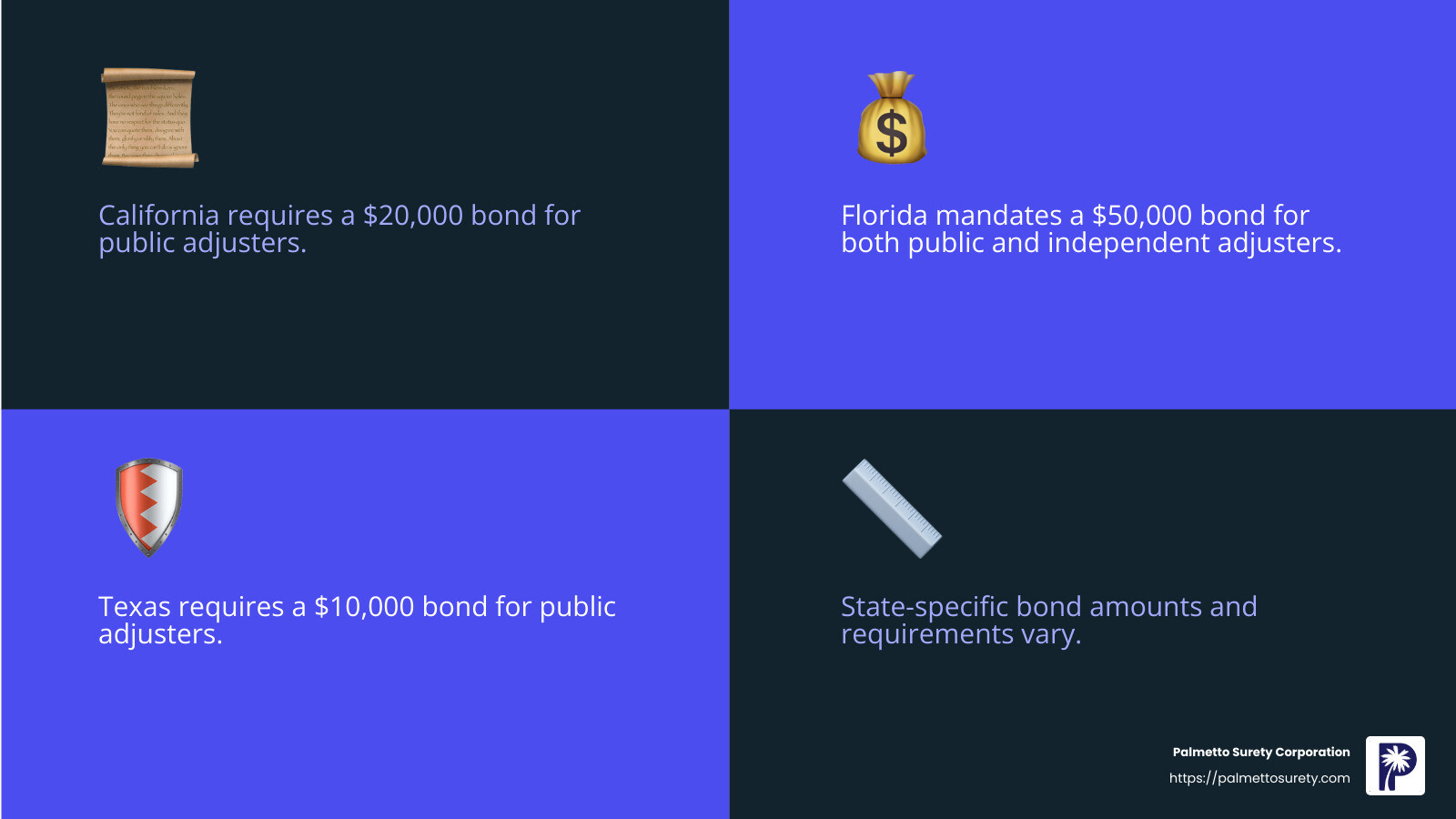
- California requires a $20,000 bond for public adjusters.
- Florida mandates a $50,000 bond for both public and independent adjusters.
- Texas requires a $10,000 bond for public adjusters.
In states like Georgia and New York, the bond amounts and requirements may differ, making it crucial to check state-specific regulations.
Key Points
- Public Adjuster Bond: For adjusters representing the claimant, ensuring ethical conduct.
- Independent Adjuster Bond: For adjusters hired by insurance companies, ensuring compliance with standards.
- State-Specific Bonds: Requirements vary by state, so always check local regulations.
Understanding the different types of insurance adjuster bonds helps you steer the licensing process more effectively. Next, we’ll look at how to obtain these bonds and the steps involved.
How to Obtain an Insurance Adjuster Bond
Getting an insurance adjuster bond is a straightforward process, especially when you know what to expect. Here’s a step-by-step guide to help you through it.
Application Process
- Start by filling out an online application with your basic information. This usually takes only a few minutes.
Receive an instant online Quote
- Once you submit your application, you’ll get a price quote instantly, This quote is based on the bond amount required by your state.
Payment
- You can pay immediatelyonline anytime, 24/7.
Issuance
- After your payment is processed, your bond will be issued immediately. You’ll receive a digital PDF copy of your bond right away via email.
Cost
The cost of an insurance adjuster bond varies depending on the bond amount set by your state. Generally, the premium is about 1% of the total bond amount. For example:
- If your state requires a $5,000 bond, you might pay around $50.
- For a $50,000 bond, the cost could be approximately $500.
No Credit Check
Most insurance adjuster bonds are considered low risk, so they do not require a credit check. This means:
- Faster approval times
- Less hassle for you
- More accessible for people with varying credit scores
Instant Issue
One of the best features of obtaining an insurance adjuster bond is the instant issue process. This means:
- You can get bonded quickly, often the same day you apply.
- No waiting for lengthy approval processes.
- Immediate digital delivery of your bond.
By following these simple steps, you can secure your insurance adjuster bond quickly and efficiently. This ensures you meet state requirements and can start or continue your work as an insurance adjuster without delay.
Next, let’s explore the state-specific requirements for insurance adjuster bonds to ensure you’re compliant wherever you operate.
State-Specific Requirements for Insurance Adjuster Bonds
Understanding the state-specific requirements for insurance adjuster bonds is crucial for compliance. Here’s a quick overview of the requirements in some of the key states:
California Public Adjuster Bond
California mandates an Insurance Adjuster Bond for all licensed insurance adjusters. The bond amount is typically set at $2,000. This bond acts as a financial guarantee that the adjuster will comply with state laws and regulations. Unlike Georgia, California does not specify a provider, so adjusters can obtain their bond from any surety company.
Florida Public Adjuster Bond
In Florida, public adjusters must secure a $50,000 Public Adjuster Bond. This bond provides protection to policyholders against fraudulent or unethical practices by the adjuster. The state requires the bond to be renewed annually. Florida also mandates continuing education for licensed adjusters to maintain their bond and license.
Georgia Public Adjuster bond
In Georgia, the Office of the Commissioner of Insurance and Safety Fire requires a $5,000 Public Adjuster Bond. This bond ensures that public adjusters adhere to state regulations and ethical practices. Once purchased, the bond must be filed with the Commissioner’s Office via Sircon.com.
Louisiana Public Adjuster Bond
A Louisiana Public Adjuster Bond, required by the Louisiana Department of Insurance, is a $50,000 financial guarantee that ensures public adjusters adhere to state regulations and ethical standards while representing policyholders. This bond protects consumers from potential fraud, negligence, or misconduct by the adjuster during the claims process.
Mississippi Public Adjuster Bond
A Mississippi Public Adjuster Bond, required by the Mississippi Insurance Department, is a $50,000 financial guarantee that ensures public adjusters comply with state regulations and ethical standards while representing policyholders. This bond protects consumers from potential fraud, negligence, or misconduct by the adjuster during the claims process.
Texas Public Adjuster Bond
Texas requires a $10,000 Public Insurance Adjuster Bond. This bond ensures that public adjusters operate within the legal framework set by the Texas Department of Insurance. Like Georgia, Texas does not require a credit check for the bond, making it accessible for most applicants.
Tennessee Public Adjuster Bond
New York Adjuster Bond
New York’s requirement for public adjusters includes a $1,000 Public Adjuster Bond. This bond is relatively low compared to other states but serves the same purpose of ensuring ethical and legal compliance. The bond must be filed with the New York Department of Financial Services.
Each state has specific requirements, so check with your state‘s insurance department or equivalent agency to ensure compliance.
Next, we’ll look at the benefits of having an insurance adjuster bond and how it can help you in your professional journey.
Benefits of Having an Insurance Adjuster Bond
Having an insurance adjuster bond offers several key benefits that can significantly improve your career and professional reputation. Let’s break down these benefits:
Compliance
First and foremost, an insurance adjuster bond ensures compliance with state regulations. Each state has its own requirements for licensing and bonding insurance adjusters. By securing the necessary bond, you demonstrate that you are committed to following all legal and ethical guidelines. This compliance is crucial for obtaining and maintaining your license.
Trust
An insurance adjuster bond builds trust with your clients. When policyholders see that you are bonded, they know you are a legitimate, trustworthy professional. This bond acts as a safety net for them, ensuring that they are protected against any unethical or fraudulent practices.
“Trust is the foundation of any successful relationship, and having an insurance adjuster bond helps establish that trust with your clients.” – Palmetto Surety Corporation
Financial Security
Another significant benefit of having an insurance adjuster bond is financial security. The bond acts as a financial guarantee that any claims of unethical or illegal behavior will be covered. This protection is not just for the clients but also for you. Knowing that you have this financial backing can give you peace of mind and allow you to focus on your job.
Legal Protection
Finally, an insurance adjuster bond provides legal protection. If a claim is made against you, the bond guarantees that there will be financial resources available to cover any damages. This protection can save you from significant out-of-pocket expenses and potential legal issues.
By securing an insurance adjuster bond, you not only comply with state requirements but also improve your professional credibility, provide financial security, and ensure legal protection.
Next, we’ll address some frequently asked questions about insurance adjuster bonds.
Frequently Asked Questions about Insurance Adjuster Bonds
What is an insurance bond used for?
An insurance bond is primarily used for financial loss protection. It ensures that insurance adjusters adhere to industry laws and ethical standards. If an adjuster engages in fraud or unethical behavior, the bond provides compensation to the affected parties.
Contractual obligation is another key use. The bond acts as a legal contract between the adjuster, the state agency, and the surety provider. This contract ensures that the adjuster will perform their duties responsibly.
Why do insurance companies hold bonds?
Insurance companies hold bonds to ensure stability and to make safe investments. Bonds provide a secure way to guarantee that insurance adjusters will fulfill their obligations. This reduces the risk of financial loss due to unethical or illegal actions by the adjusters.
Additionally, government-issued bonds are often considered low-risk investments. By holding these bonds, insurance companies can maintain a stable financial foundation.
What is a payment bond in insurance?
A payment bond is a type of financial guarantee. It ensures that subcontractors and suppliers will be paid for their work, even if the primary contractor fails to do so. This type of bond is crucial in industries like construction, where multiple parties are involved in a project.
Payment bonds protect subcontractors and suppliers from financial loss, ensuring they receive payment for their services and materials. This helps maintain trust and reliability within the industry.
For more information on how to secure your insurance adjuster bond, contact Palmetto Surety Corporation. Our team is here to help you through the process, ensuring you meet all state-specific requirements and maintain compliance with industry standards.
Conclusion
At Palmetto Surety Corporation, we specialize in providing insurance adjuster bonds with quick approval and efficient service. Based in Charleston, SC, our team is dedicated to helping you steer the complexities of obtaining and maintaining your bond.
We understand that securing an insurance adjuster bond can be daunting. That’s why we make the process as seamless as possible. With our instant issue bonds, there are no lengthy applications or credit checks. Simply provide your contact details and payment information, and you’ll be on your way to compliance in no time.
Our expert support team is available 24/7 to answer any questions you may have. Whether you’re a new applicant or renewing your bond, we’re here to ensure you meet all state-specific requirements and adhere to industry standards.
Ready to get started? Contact Palmetto Surety Corporation today for a hassle-free bonding experience. Let us help you stay compliant and protect your financial interests with ease.


