


Bail Bond Job 2025: Ultimate Rewarding Career
Why Bail Bond Jobs Are a Unique Career Path in America’s Justice System
A bail bond job offers a unique career at the intersection of financial services, criminal justice, and community support. If you’re considering this profession, here’s a quick overview.
Quick Answer: How to Get a Bail Bond Job
- Meet Basic Requirements: Be 18-21+ (varies by state) with a high school diploma and a clean criminal record.
- Complete Training: Take a state-approved pre-licensing course (typically 8-20 hours).
- Pass the State Exam: Score 70% or higher on the licensing test.
- Find a Sponsor: Partner with a surety insurance provider or an established bail bond company.
- Get Licensed: Submit your application, background check, and fingerprints to the state.
- Start Earning: Most agents earn $50,000-$80,000 annually on commission.
The reality of a bail bond job is far from the TV stereotype of kicking down doors. It’s a profession built on trust, risk management, and helping families steer a stressful crisis. While the hours can be irregular, the career offers independence, solid earning potential, and the satisfaction of making a difference. It requires a surprising mix of skills: financial analysis, negotiation, compassion, and persistence.
I’m Haiko de Poel Jr., and at Palmetto Surety Corporation, I’ve helped many professionals build successful careers as bail agents across the southeastern United States. My experience has given me deep insight into what it takes to thrive in the bail bond job market.
What is a Bail Bondsman and What Do They Do?
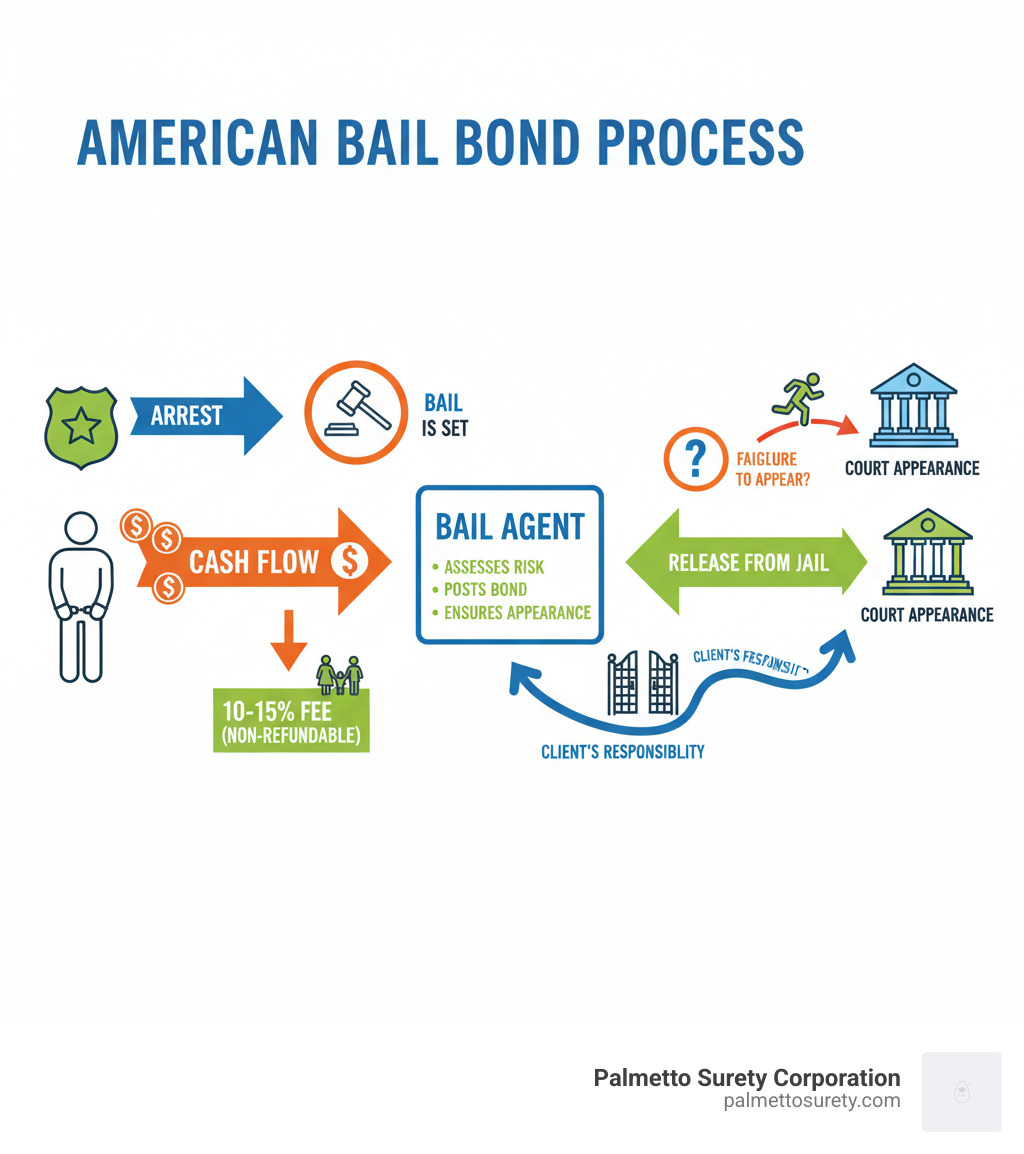
In a bail bond job, you act as a surety—pledging money or property on behalf of a defendant to secure their release from jail. Your primary mission is to ensure that person shows up for their court dates. You are a crucial liaison between the courts, law enforcement, and defendants, providing a financial guarantee for their release.
This role requires a blend of business savvy, legal knowledge, and people skills. You’ll assess a client’s risk, understand contract and criminal law, and sometimes engage in fugitive recovery (skip tracing) if a client fails to appear. The concept of suretyship itself is ancient, with roots going back thousands of years. You can learn more in “The History and Economics of Suretyship”.
Primary Responsibilities of a Bail Bondsman


A bail agent’s work is a mix of financial management, legal expertise, and interpersonal connection. Key duties include:
- Client Interviews and Risk Assessment: You’ll interview potential clients to assess their background, community ties, and likelihood of appearing in court. This is the foundation of managing your financial risk.
- Paperwork and Legal Processing: Accuracy is critical when preparing bail bond agreements and other legal documents. Mistakes can delay a client’s release.
- Court Date Tracking and Communication: After release, you must monitor court schedules and maintain communication with clients to ensure they attend their hearings.
- Collateral Management: You may require collateral (like property) to secure a bond. This involves managing the asset and returning it once all court obligations are met.
- Fugitive Apprehension: If a defendant skips bail, you are responsible for locating them. This process, called skip tracing, may involve working with bail enforcement agents (bounty hunters) and law enforcement.
A Day in the Life
There is no typical day in a bail bond job. The profession demands 24/7 availability, as arrests happen at all hours. Your day might include:
- Early Mornings: Reviewing arrest reports to find potential clients.
- Jail and Courthouse Visits: Meeting with defendants, posting bonds, and addressing court matters.
- Office Administration: Filing paperwork, conducting background checks, and managing payment plans.
- Client Meetings: Occurring in your office, at a coffee shop, or even at a client’s home.
The unpredictable schedule and high-stakes environment are challenging but also part of the appeal. You are helping people through a crisis, which can be incredibly meaningful. For more on the operational side, see “More info about bail bonds”.
How to Get a Bail Bond Job: Requirements and Skills
A bail bond job is a heavily regulated profession, and the path to licensing varies by state. The journey starts with understanding your state’s specific rulebook. For example, California’s requirements, detailed at the “Bail Agent license requirements in California” page, differ from those in New York.
However, most states follow a similar process:
- Pre-Licensing Course: Complete an 8- to 20-hour course covering state laws, ethics, and legal frameworks.
- State Licensing Exam: Pass a test (usually ~100 questions) with a score of 70% or higher.
- Background Check: Undergo a thorough FBI background check. A clean criminal record is essential, as felonies or certain misdemeanors will likely disqualify you.
- Surety Sponsorship: Secure sponsorship from a surety insurance company. This is mandatory, as they back the bonds you write. This step is time-sensitive in many states.
- Continuing Education: Once licensed, you must complete annual courses to stay current on legal changes and maintain your license.
Educational Requirements and Necessary Skills
A high school diploma is the baseline educational requirement. While degrees in Criminal Justice, Finance, or Business are advantageous, your personal skills are more critical for success in a bail bond job.
Essential skills include:
- Strong Communication: You must communicate clearly and compassionately with families in crisis, court officials, and clients.
- Negotiation: You’ll often work out payment plans that help families while protecting your business.
- Analytical Thinking: Assessing a client’s risk is a financial bet. Your ability to analyze their background and community ties is crucial.
- Empathy and Patience: Your clients are scared and stressed. A calm, supportive demeanor builds the trust needed for them to meet their obligations.
- Sound Judgment: You’ll make constant decisions with financial and legal weight. Good judgment develops with experience.
- Organizational Skills: Juggling multiple cases, court dates, and detailed paperwork requires excellent organization.
Finding Your First Bail Bond Job
After licensing, focus on landing your first role.
- Internships/Apprenticeships: Gain invaluable hands-on experience with an established agency.
- Networking: Start building relationships with local agencies and bondsmen even before you’re licensed.
- Apply to Established Companies: Look for reputable firms, especially those partnered with solid surety providers like Palmetto Surety Corporation, which often provide training.
- Find a Sponsor: If you plan to be independent, connect with surety companies early. Many states require you to secure a sponsor quickly after passing your exam.
Professionalism is key from day one. Treat every interaction as a business opportunity and ask intelligent questions. Your reputation starts building the moment you enter the industry. To get started, you can “Search for surety bond information” and access helpful resources.
The Financials and Outlook of a Bail Bond Job
A bail bond job is a commission-based career, meaning your income is directly tied to your effort and skill. You earn a non-refundable premium—typically 10% of the bail amount for state charges and 15% for federal cases. For a $10,000 bond, the premium is $1,000.
Typical Salary and Earning Potential

Most bail agents earn between $50,000 and $80,000 annually. Newer agents might start around $49,590, while top earners in busy markets can exceed $112,140.
- Working for an Agency: You’ll typically split the commission 50/50 with the company, which provides infrastructure, surety backing, and clients.
- Owning Your Agency: You keep the full premium (minus fees paid to your surety company). This is where driven agents can reach six-figure incomes.
Your income depends on the volume and size of the bonds you write and your ability to assess risk accurately. Minimizing forfeitures is key to profitability. To understand the broader surety market, you can “Learn about commercial surety bond rates”.
The Salary and Outlook for a Bail Bond Job
The career outlook is stable. The profession is projected to grow at an above-average rate of 4.9%, with steady demand driven by high jail populations and the structure of the U.S. criminal justice system. As long as cash bail exists, bail agents will be essential for securing pretrial release, a topic covered in these “Pretrial release statistics from the BJS”.
A bail bond job offers a long-term career with a clear path to ownership. Many agents start by working for a company, learning the business, and eventually opening their own agency for greater income and autonomy. Your reputation for integrity and hard work is the foundation of long-term success.
The Reality of the Profession: Pros, Cons, and Misconceptions
A bail bond job is not what you see on reality TV. It’s a profession centered on helping people manage a crisis while navigating significant financial risk. The satisfaction comes from explaining a confusing process, answering a desperate 2 AM phone call, and helping get someone home to their family.
However, the work involves dealing with people accused of crimes and managing the financial liability if they don’t keep their promises. The stress of a potential forfeiture—where you’re on the hook for the full bail amount—is very real.
Advantages and Disadvantages

A bail bond job has rewarding highs and challenging lows.
Pros:
- Autonomy and Flexibility: You can often set your own schedule.
- High Earning Potential: Commission-based pay rewards your effort, with six-figure potential for agency owners.
- Meaningful Work: You help people secure their freedom and prepare for court from home.
- Job Security & Ownership Path: Demand is stable, and there’s a clear path to starting your own business.
Cons:
- Irregular Hours: You must be on call 24/7, as arrests don’t keep business hours.
- High Stress and Financial Risk: You are financially liable if a defendant skips court.
- Difficult Clients and Personal Risk: You may deal with uncooperative clients and face personal risk during fugitive recovery.
- Negative Public Perception: Misconceptions about the profession can be frustrating.
Common Misconceptions about the Profession
The biggest misconception is the “Dog the Bounty Hunter” stereotype. In reality, most work is administrative and conversational, not kicking down doors. Trust and rapport are our most important tools. Building a good relationship is more effective than intimidation. As one bondsman noted, “If you’re a hard-ass to them, chances are they’re not going to want to go to court.” Professionalism, not aggression, builds a successful business.
The industry itself is almost uniquely American, as most countries have banned commercial bail, a topic discussed in this New York Times article. While the system has critics, we provide a service that allows people to keep their jobs and prepare their defense from outside a jail cell. We are licensed professionals providing a vital service during a difficult time.
Frequently Asked Questions about Bail Bond Careers
Here are answers to common questions about pursuing a bail bond job.
Do I need a criminal justice degree to become a bail bondsman?
No, a degree is not required. The typical requirements are a high school diploma/GED, a state-approved pre-licensing course (8-20 hours), and passing the state licensing exam. While a degree in a related field like criminal justice or finance is helpful, skills like communication, negotiation, and sound judgment are far more critical for success. Experience in fields like law enforcement or insurance can also be very valuable.
How much does it cost to start my own bail bond agency?
Starting your own agency requires significant capital. Basic startup costs for an office, marketing, and licensing can run $10,000 to $15,000. The largest expense is securing backing from a surety company, which typically requires $50,000 to $250,000 in collateral. You will also pay the surety a portion of each premium and contribute to a Build Up Fund (BUF) to cover potential forfeitures. Because of this, many agents start by working for an established company to gain experience and capital.
Is being a bail bondsman dangerous?
A bail bond job has inherent risks, particularly during fugitive recovery (skip tracing). However, the dramatic confrontations seen on TV are rare. Most of the job is administrative and client-facing, taking place in offices and courthouses. Risk is managed through careful client assessment before writing a bond. When fugitive recovery is necessary, agents often work with specialized bail enforcement professionals and coordinate with law enforcement. Professionalism and good judgment are the best tools for ensuring safety.
Conclusion
A bail bond job is a challenging but rewarding career for the right person, offering the chance to build a business while helping people in crisis. Success requires navigating state licensing, developing a mix of financial and interpersonal skills, and understanding the commission-based structure.
Success in this field comes from being trustworthy and professional. Your reputation is your most valuable asset. The financial rewards can be substantial, but the deep satisfaction comes from making a real difference in people’s lives.
At Palmetto Surety Corporation, we have over 20 years of experience supporting bail agents across the southeastern United States, including Georgia, Florida, Louisiana, Mississippi, South Carolina, Tennessee, and Texas. We know what it takes to succeed, and our commitment to quick approvals and modern technology is designed to help you thrive.
If you are an aspiring agent ready to take the next step, get licensed and develop a solid business plan. Once you have laid the groundwork, we invite you to partner with us. Register Your Company with a Trusted Surety Partner and let’s build your career in this essential profession together.


