


Bail bondsman how does it work: 2025 Easy Blueprint
Why Understanding Bail Bonds Is Critical for Your Freedom
If you’re asking bail bondsman how does it work, you’re likely in a stressful situation. Understanding the process is key to securing a loved one’s release from jail, allowing them to return home and prepare their defense instead of waiting in custody.
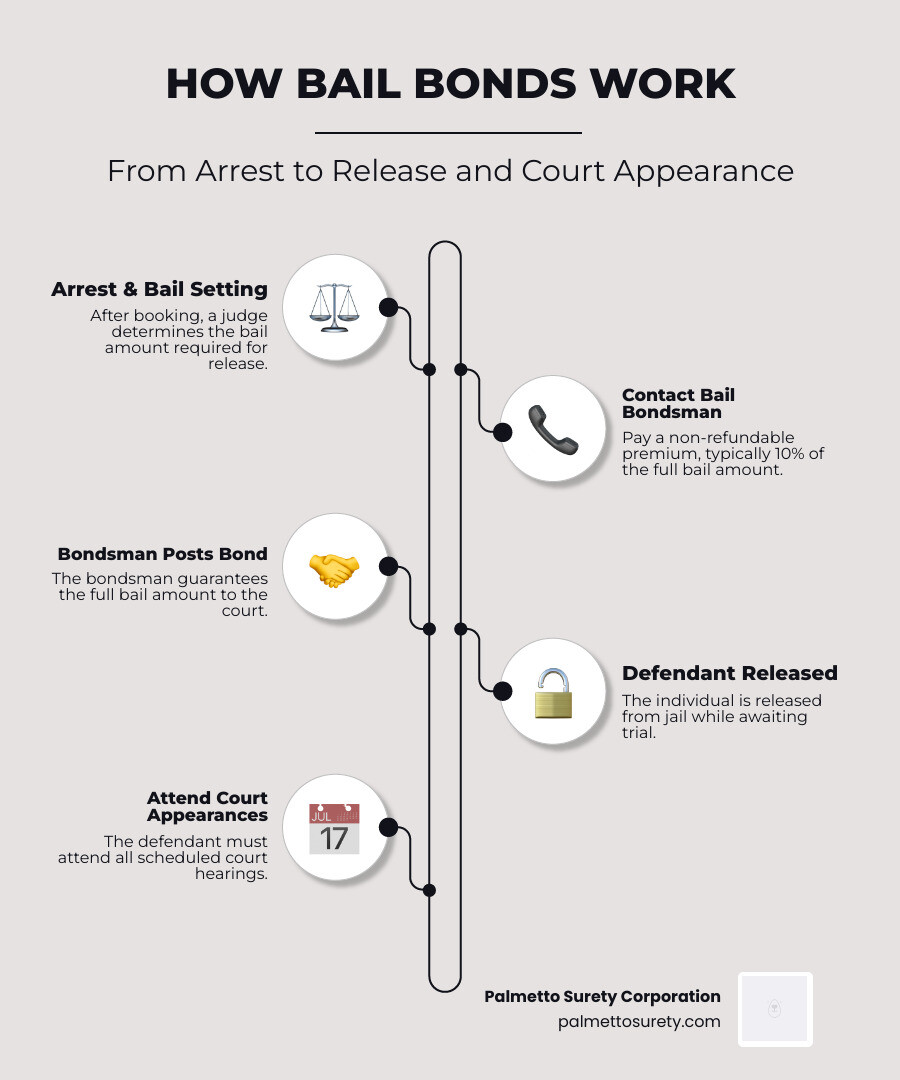
Here’s how a bail bondsman works in simple terms:
- Court sets bail – A judge determines the amount needed for release
- Contact bondsman – You pay typically 10% of the total bail amount
- Bondsman posts bond – They guarantee the full bail amount to the court
- Defendant released – Person gets out of jail while awaiting trial
- Court appearances required – Must attend all scheduled hearings
A bail bondsman acts as your financial partner when you can’t afford the full bail amount. They charge a non-refundable fee (usually 10%) and may require collateral. In return, they post a surety bond with the court, guaranteeing the defendant will appear for all court dates. This system allows defendants to maintain their jobs, care for their families, and work with attorneys.
I’m Haiko de Poel Jr, and through my work at Palmetto Surety Corporation and National Pretrial, I’ve helped countless individuals steer the bail bond process. My experience has shown me how a proper understanding of bail bonds can dramatically impact defendants and their families.
What is a Bail Bondsman and Their Role in the Justice System?
When someone asks “bail bondsman how does it work,” they’re asking about a crucial role in our justice system. A bail bondsman (or bail agent) is a financial lifeline when you can’t afford the full bail amount. They act as a financial guarantor for the defendant, pledging the full bail amount to the court to ensure the defendant appears at all future hearings. If the person fails to appear, the bondsman is responsible for paying the court thousands of dollars.

This service is vital for keeping the justice system running. By helping defendants secure release, bail bondsmen reduce jail overcrowding, a major problem that costs taxpayers billions. The system benefits everyone: defendants regain their freedom, courts get assurance of future appearances, and taxpayers save on incarceration costs. For more information on related court instruments, you can learn about court bonds.

The Bail Bondsman as a Surety Agent
Understanding bail bondsman how does it work means grasping the concept of a surety bond. A surety bond is a three-party agreement: The principal (the defendant), the obligee (the court), and the surety (the bail bondsman and their backing company, like Palmetto Surety Corporation).
The bondsman creates a surety bond agreement, putting their financial backing on the line to guarantee the defendant’s court appearances. This is why bondsmen charge fees and require collateral—they are taking on serious financial risk. At Palmetto Surety Corporation, we’ve provided this backing to bail agents for over 20 years, allowing them to confidently help families in need.
How Bail Bondsmen Help Defendants
The true value of a bail bondsman is turning an impossible financial hurdle into a manageable one. Most people don’t have thousands of dollars available for bail.
- Affordability: Instead of the full bail, you pay a 10% fee. A $20,000 bail becomes a more achievable $2,000 payment.
- Pre-trial Freedom: Defendants can continue their lives, keeping their jobs and caring for their families while awaiting trial.
- Stronger Defense: Being free allows defendants to work closely with lawyers, gather evidence, and find witnesses—tasks that are nearly impossible from jail.
- Maintained Employment: A bail bond can prevent job loss, which can be financially devastating for a family.
- Family Support: The defendant can remain with their family, providing and receiving support during a difficult time.
- System Navigation: Experienced bondsmen guide families through the complex and often overwhelming legal process.
Bail Bondsman How Does It Work: A Step-by-Step Guide
Understanding the bail bondsman how does it work process is easier when broken into steps. While state laws vary slightly, the core process is consistent across the U.S. Here’s a walkthrough from arrest to release.

Step 1: Arrest and Bail Setting
The process begins with an arrest, followed by booking at a local jail. This involves recording personal information, taking a mugshot, and fingerprinting.
Next is the bail hearing, usually within 48 hours, where a judge sets the bail amount. The judge considers several factors, including the severity of the alleged crime, the defendant’s criminal history, their ties to the community (which indicates flight risk), and any potential danger to public safety. Once the judge sets bail, the family can begin the process of securing release.
Step 2: Contacting a Bail Bondsman
When you can’t afford the full bail amount, a bail bondsman is your next call. To speed up the process, have the following information ready:
- Defendant’s full legal name
- Booking number
- Jail location
- Bail amount and the specific charges
A co-signer (or indemnitor) is usually required. This person, often a family member or friend, signs a legally binding agreement to be financially responsible if the defendant fails to appear in court. Being a co-signer is a serious commitment, so ensure you understand the responsibilities.
Step 3: The Bail Bond Agreement and Payment
Next, you’ll finalize the agreement. The bail bond premium is the bondsman’s non-refundable fee, typically 10% of the total bail. For a $5,000 bail, the premium would be $500. This fee is for the service provided and is not returned, even if charges are dropped.
Collateral—such as a house, car, or other valuables—may be required to secure the remaining 90% of the bond. This protects the bondsman if the defendant disappears. Many bondsmen offer payment plans for the premium. After finalizing the details, you’ll sign a contract outlining all responsibilities. For more details on costs, you can explore the cost of surety bonds.
Step 4: Posting the Bond and Securing Release
Once the paperwork is signed and the premium is paid, the agent posts the bond at the jail or courthouse. This action guarantees to the court that the defendant will attend all future hearings.
The jail then begins the release process. The timeframe for release can vary from a few hours to a full day, depending on the facility’s workload. This freedom is crucial, allowing the defendant to return to their life and prepare their defense. For more details on this step, check out the release process explained.
The Financials: Understanding Bail Bond Costs and Conditions
When you’re wondering bail bondsman how does it work financially, you have two main paths: paying the full cash bail to the court or using a bail bondsman. Here’s a comparison:
| Feature | Paying Full Cash Bail | Using a Bail Bond |
|---|---|---|
| Upfront Cost | 100% of the bail amount | Typically 10-15% of the bail amount (non-refundable fee) |
| Refundable? | Yes, if all court appearances are met | No, the fee is never refunded |
| Collateral | Not typically required, your cash acts as collateral | Often required for the remaining 90% of the bail |
| Risk | Direct financial risk of the full bail amount if FTA | Financial risk limited to the fee and collateral pledged |
| Who Pays Back? | You get your money back from the court | Bondsman gets their money back from the court |
Most families don’t have thousands of dollars readily available, which is why a bail bondsman is so valuable, turning a large financial burden into a manageable one.
How is the Bail Amount Determined?
Judges consider several key factors when setting bail:
- Severity of the crime: A felony charge will have a much higher bail than a misdemeanor.
- Defendant’s record: A clean history may lead to lower bail, while prior arrests or failures to appear will increase it.
- Ties to the community: A steady job, local family, and property ownership suggest a defendant is less likely to flee and can result in lower bail.
- Flight risk assessment: The judge assesses the likelihood that the defendant will try to evade prosecution.
- Public safety: If the defendant is considered a threat to the community, bail may be set very high or denied altogether.
The Bail Bond Premium: What You Pay and Why It’s Non-Refundable
The bail bond premium is the fee paid to the bondsman, typically a standard fee of 10% of the total bail. This fee is non-refundable because it is payment for the service and significant risk the bondsman assumes.
The bondsman guarantees the full bail amount to the court. If the defendant fails to appear, the bondsman must pay that entire sum. The premium covers this risk assumption, as well as the agent’s work (paperwork, coordination, 24/7 availability) and operational costs (licensing, insurance, office expenses). Premium rates can have state variations but are generally regulated. For more information, you can learn about the cost of surety bonds.
What happens if you can’t pay? How does a bail bondsman work with financing?
If the 10% premium is still a challenge, bondsmen have solutions.
Collateral is often used when cash is limited. Valuable property like real estate (home deeds), vehicles (car titles), jewelry, or stocks can be pledged as security. The collateral is returned once the case is over and all court dates have been met.
Co-signer liability is another key component. A co-signer is legally responsible for repaying the bondsman if the defendant skips bail and the collateral doesn’t cover the full amount.
Many agencies also offer payment plans, breaking the premium into smaller, manageable installments. Honest communication with your bondsman is key to finding a workable solution. Our expertise in large bond underwriting allows us to handle even complex financial situations.
After Release: Responsibilities, Consequences, and State Rules
Getting out of jail is a relief, but it’s not the end of the process. Once released on a bail bond, the defendant has a new set of critical responsibilities.

The Defendant’s Obligations
The defendant must fulfill all legal requirements, including:
- Attending All Court Dates: This is the most important obligation.
- Adhering to Release Conditions: This can include no-contact orders, staying away from certain places, or refraining from drug and alcohol use.
- No New Arrests: Any new criminal activity will likely result in the bond being revoked.
- Travel Restrictions: The defendant may be forbidden from leaving the county or state without court permission.
- Regular Check-ins: Many bondsmen require regular contact to confirm compliance.
What Happens if a Defendant Skips Bail?
Missing a court date, or Failure to Appear (FTA), has severe consequences:
- Bench Warrant: The court issues a warrant for the defendant’s immediate re-arrest.
- Bond Forfeiture: The court demands the full bail amount from the bondsman.
- Co-signer Responsibility: The bondsman will use the collateral and pursue the co-signer to recover the forfeited amount.
- Bounty Hunter Involvement: The bondsman may hire a bounty hunter (bail recovery agent) to find and return the defendant to custody. These agents have broad legal authority to pursue fugitives across state lines. You can learn more about the role of bounty hunters.
State Regulations and Industry Controversies
The bail bond industry is governed by a patchwork of state regulations. Some states, like California, have robust licensing requirements, while a few others have banned commercial bail bonding entirely.
The industry faces criticisms, with some arguing that it unfairly penalizes low-income individuals and that a for-profit model is at odds with justice. Despite these debates, commercial bail bonding remains an essential service for securing pre-trial release in most states. We operate diligently within these regulatory frameworks, offering services like Florida surety bonds to meet local requirements.
Frequently Asked Questions about How Bail Bonds Work
Here are answers to some of the most common inquiries we receive.
What are the different types of bail bonds available?
While there are several types, the most common is the surety bond. This is what we specialize in at Palmetto Surety Corporation, where a bail bondsman guarantees the full bail amount for a non-refundable fee. Other types include:
- Cash Bonds: Paying the full bail amount in cash directly to the court.
- Property Bonds: Using real estate as collateral directly with the court.
- Federal Bonds: For federal charges, which are often more complex and have higher bail amounts.
- Recognizance Bail: Release on a written promise to appear, with no money required (for low-risk defendants).
How does a bail bondsman work to secure a release?
This is the core of bail bondsman how does it work. A bail bondsman acts as a surety, posting a bond with the court for the full bail amount. You or a co-signer pays the bondsman a non-refundable fee (typically 10%) and may pledge collateral. We then guarantee the full amount to the court, allowing the defendant’s release from jail.
This system makes pre-trial freedom affordable. Instead of needing $50,000 in cash, you might only need a $5,000 fee and collateral. We handle the paperwork and coordination with the jail. Our role continues after release, as we are invested in ensuring the defendant appears for all court dates. At Palmetto Surety Corporation, our streamlined process means we can approve most applications within hours, getting your loved one home faster.
Conclusion
When you first asked “bail bondsman how does it work”, you were likely facing a stressful time. Now, you understand how this vital system works. The bail bond process is a lifeline, allowing a defendant to return home, keep their job, and prepare a strong defense.
A bail bondsman acts as your financial partner, making an unaffordable bail amount manageable. The 10% premium is a non-refundable fee for this service and the significant risk the bondsman assumes.
Once released, attending every court date is critical. Failing to appear has serious consequences for the defendant and anyone who co-signed the bond. We’ve seen families lose their homes over a defendant’s poor choice to flee.

At Palmetto Surety Corporation, we have helped families steer these situations for over 20 years. Our network of experienced bail bondsmen across the southeastern United States is ready to help you quickly and professionally. While the system has its critics, it provides an essential service that keeps families together.
For reliable and fast bail bond services, explore your bail surety bond options. We’re here to help you get back to what matters most—your freedom and your family.


