


How to pay bail: 5 Quick, Affordable Steps
The First Steps After an Arrest
How to pay bail can feel overwhelming when you’re dealing with the arrest of a loved one. The stress and confusion of this situation often leaves families searching for quick answers about their options.
Quick Answer: How to Pay Bail
- Cash Bond: Pay the full bail amount directly to the court (refundable)
- Surety Bond: Pay 10-15% to a bail agent who posts the full amount
- Property Bond: Use real estate as collateral
- Own Recognizance: Released on promise to appear (no payment required)
When someone gets arrested, the court system allows them to post bail as a way to ensure they return for their court date. This system protects the presumption of innocence – allowing people to remain free while awaiting trial rather than sitting in jail for months.
The bail process involves several payment methods, each with different costs, requirements, and timelines. Understanding these options helps you make the best decision for your situation and budget.
Most families choose to work with a bail bondsman because it requires much less money upfront than paying the full cash amount. A bail bond typically costs 10-15% of the total bail amount, making it the most affordable option for immediate release.
I’m Haiko de Poel Jr., and through my work with Palmetto Surety Corporation and other companies in the bail bond industry, I’ve helped thousands of families steer how to pay bail during some of their most stressful moments. This guide will walk you through each payment method and the step-by-step process to secure a fast release.
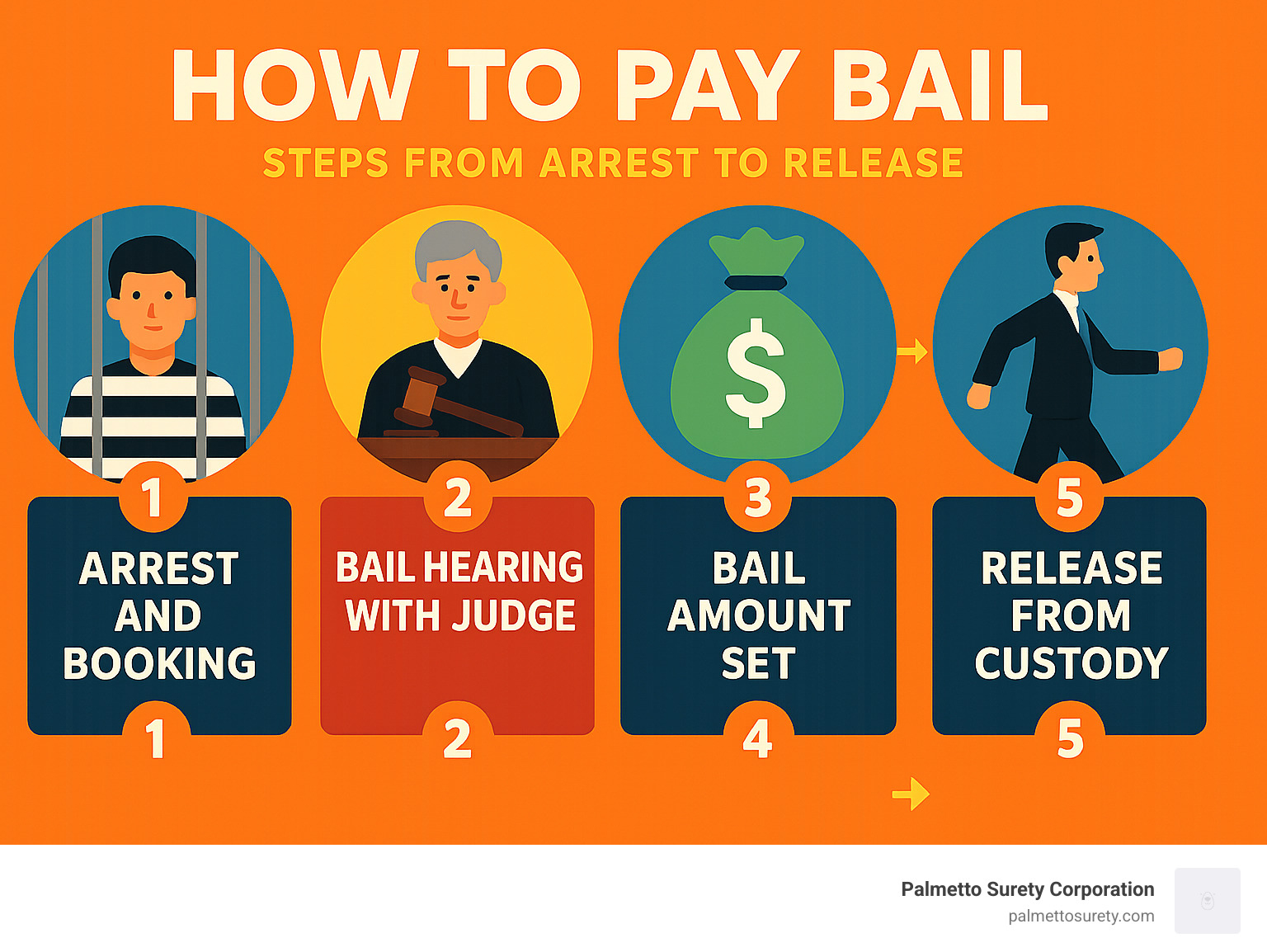
Understanding the Bail Process and Your Options
Getting arrested can be a jarring experience, but understanding what happens next can help reduce some of the anxiety. After someone is arrested, they go through a booking process that includes fingerprinting, taking mugshots, and recording personal information along with the charges. This isn’t just paperwork – it’s the official entry into the legal system.

The next major step is the bail hearing, sometimes called a “show cause hearing.” This is where a judge decides whether the person can be released while waiting for their case to be resolved. Think of it as the court’s way of saying, “We trust you’ll come back, but we need some assurance.”
During this hearing, the judge considers several important factors before setting a bail amount. Flight risk is a big one – will this person actually show up for court? The judge looks at things like job stability, family ties in the community, and whether they’ve skipped court dates before.
Public safety is equally important. If someone is charged with a violent crime or poses a threat to witnesses, the judge might set a higher bail amount or deny bail altogether. The severity of the crime and the person’s criminal record also play major roles in this decision.
Your financial situation matters too, though this can be tricky. The judge should set bail at an amount that encourages you to return to court without being so high that it’s impossible to pay. The Eighth Amendment right to reasonable bail protects against excessive bail amounts, ensuring the system stays fair.

What Are My Options for How to Pay Bail?
Once the judge sets the bail amount, you have several ways to secure release. Understanding these options is crucial when figuring out how to pay bail in your specific situation.
A Cash Bond means paying the full bail amount directly to the court. If your loved one shows up for all their court dates, you’ll get most of this money back when the case ends (the court may keep some fees). This sounds simple, but when bail is set at $10,000 or $50,000, most families don’t have that kind of cash sitting around.
The Surety Bond is where most people turn when the full cash amount feels impossible. You work with a licensed bail agent who essentially vouches for the defendant. You pay the bail agent a premium – typically 10-15% of the total bail amount – and they post a bond for the full amount. This premium isn’t refundable, but it makes large bail amounts manageable. For a $10,000 bail, you’d pay around $1,000-$1,500 instead of the full amount. You can learn more about this process on our bail bonds page.
A Property Bond lets you use real estate as collateral. You’re essentially telling the court, “If they don’t show up, you can take my house.” The property needs to have equity equal to or greater than the bail amount. This option involves appraisals and lots of paperwork, making it slower than other methods.
Release on Own Recognizance (ROR) is the best-case scenario. For minor charges or defendants with strong community ties, a judge might release them on just a promise to appear. No money changes hands – just a signature on a promise to return to court.
Here’s how the two most common options compare:
| Feature | Cash Bail | Surety Bond |
|---|---|---|
| Upfront Cost | 100% of bail amount | 10-15% of bail amount (non-refundable premium) |
| Refundability | Full amount (minus fees) is refundable | Premium is not refundable |
| Speed | Can be fast if funds are immediately available | Fast, as bail agent handles paperwork promptly |
| Collateral | No additional collateral needed | Often requires collateral for the remaining 85-90% |
Most families choose the surety bond route because it’s simply more affordable upfront. While you won’t get that premium back, it allows you to get your loved one home without emptying your savings account.
How to Pay Bail: A Step-by-Step Guide
For most families facing high bail amounts, using a surety bond through a licensed bail agent is the most practical path forward. This approach makes how to pay bail much more affordable since you only need to pay a fraction of the total amount upfront. Working with an experienced bail agent also means you have someone who understands the legal system and can guide you through the process quickly.
The surety bond method is popular because it offers the perfect balance of affordability and speed. Instead of coming up with the full bail amount, you pay just 10-15% to a bail agent who then takes responsibility for the entire bond. This role of a bail agent extends beyond just posting money – they become your advocate in navigating jail procedures and court requirements.

Step 1: Gather Key Information
Before you make that first phone call to a bail agent, take a moment to collect the essential details. Having this information ready will speed up the entire process and help avoid delays.
You’ll need the defendant’s full name exactly as it appears on their identification. The date of birth is equally important for proper identification in the jail system. Make sure you know the jail location – both the facility name and the city where they’re being held.
The booking number (sometimes called an “SO#”) is like a tracking number that the jail assigns during processing. If you don’t have it yet, don’t worry – a good bail agent can help locate your loved one using the other information you provide.
Finally, you’ll need to know the bail amount set by the judge. This number determines how much you’ll pay in premium fees and helps the agent understand what type of bond arrangement will work best for your situation.
Step 2: Find and Hire a Licensed Bail Agent
Choosing a reputable agent can make all the difference in how smoothly this process goes. At Palmetto Surety Corporation, we’ve been helping families since 1974, so we understand the urgency and stress you’re feeling right now.
Licensing verification should be your first priority. Every legitimate bail agent must be licensed in their state, and they should readily provide their license number when asked. Our network of agents across the Southeast are all fully licensed and regularly vetted.
When asking about fees, most states regulate premium rates at 10-15% of the total bail amount. If someone quotes you a rate that seems too good to be true or unusually high, proceed with caution.
Many families worry about coming up with even the premium amount all at once. That’s where payment plans become crucial. We work with agents who understand financial constraints and often offer flexible arrangements – sometimes requiring as little as 3% down to get the process started.
Collateral requirements vary depending on the bail amount and perceived risk. For larger bonds, the agent may ask for additional security like a car title, jewelry, or real estate. This collateral is returned to you once the case concludes and all court appearances are met. For more details about working with reliable providers, visit our bail bond insurance provider info page.
Step 3: Complete the Application and Pay the Premium
Once you’ve chosen your bail agent, it’s time to handle the paperwork. The bail bond application gathers basic information about both the defendant and whoever is signing as the cosigner.
The indemnity agreement is the most important document you’ll sign. As the cosigner, you’re promising that the defendant will show up to court and accepting financial responsibility if they don’t. This isn’t something to take lightly – make sure you understand exactly what you’re agreeing to.
Paying the non-refundable premium is your final step in this phase. This fee compensates the bail agent for taking on the financial risk of your loved one’s bond. Most agents accept multiple common payment methods including cash, credit cards, personal checks, and even online payments for your convenience.
The premium is non-refundable regardless of how the case turns out or how quickly it’s resolved. Think of it as the cost of getting immediate help when you need it most.
Step 4: The Agent Posts the Bond to Secure Release
After your paperwork is complete and payment processed, your bail agent springs into action. They’ll file paperwork with the court or jail to officially guarantee your loved one’s appearance in court.
The release process begins once the jail receives and processes the bond paperwork. Typical wait times can range from a few hours to up to 24 hours, depending on how busy the facility is and their internal procedures.
I know this waiting period feels endless when you’re worried about someone you care about. While the bail agent has done their part to initiate release, jails operate on their own timeline for processing people out of the system. Rest assured that once the bond is posted, your loved one is in the queue for release.
Your Responsibilities as a Cosigner (Indemnitor)
Becoming a cosigner on a bail bond is a significant responsibility. As the indemnitor, you are making a financial commitment to the bail agent, guaranteeing the defendant’s appearance in court. This means:
- Financial Liability: You are financially responsible for the full bail amount if the defendant fails to appear. This is why collateral is often required for larger bonds.
- Ensuring Defendant’s Court Appearances: Your primary responsibility is to ensure the defendant attends all scheduled court dates. This often means reminding them, providing transportation if needed, and staying in communication with them.
- Communicating with the Bail Agent: Keep the bail agent informed of any changes in the defendant’s contact information or if you believe they might miss a court date. Open communication can help prevent bigger problems down the line.
What Happens if the Defendant Skips Bail?
If a defendant released on a bail bond fails to appear (FTA) for a scheduled court date, serious consequences follow:
- Bond Forfeiture: The court will issue a bond forfeiture, meaning the bail agent is liable for the full bail amount.
- Arrest Warrant Issued: A bench warrant will be issued for the defendant’s arrest.
- Loss of Collateral: The bail agent will then have the right to seize and liquidate any collateral you provided to cover the forfeited bond amount.
- Responsibility for Full Bail Amount: If the collateral isn’t enough to cover the forfeited amount, you, as the indemnitor, are legally responsible for paying the remaining balance to the bail agent.
This is a scenario we all want to avoid, which is why active participation from the cosigner is so important.

Getting Your Collateral and Money Back
Once the defendant’s case is concluded, and they have attended all their court appearances, the bail bond will be “exonerated” by the court. This means the court releases the bail agent from their obligation.
- Return of Collateral: At this point, the bail agent will return any collateral you provided. This process usually happens promptly after the bond is exonerated.
- Premiums Paid: The premium you paid to the bail agent (the 10-15% fee) is their service charge and is non-refundable. You will not get this money back.
- How Cash Bail is Refunded by the Court: If you paid the full cash bail directly to the court, the process is slightly different. The court will refund the full amount, minus any administrative fees or fines, once the case is closed and all conditions are met. This refund process is handled by the court system itself, not a bail agent. For more information on various court-related bonds, you can visit our More info about court bonds page.
Frequently Asked Questions About Bail Payments
When you’re trying to figure out how to pay bail, you’re bound to have questions. After helping thousands of families through this process over the past two decades, we’ve heard just about every concern you can imagine. Here are the answers to the questions we hear most often.
How much does a bail bond cost?
The cost of a bail bond is typically 10-15% of the total bail amount, and this percentage is usually set by state law. So if bail is set at $10,000, you’d pay between $1,000 and $1,500 to a bail agent. This premium is non-refundable – it’s the fee for the bail agent’s service, kind of like paying for insurance.
Now, I know what you’re thinking: “Wait, I don’t get that money back?” That’s right, the premium stays with the bail agent regardless of what happens with the case. Even if charges are dropped or your loved one is found not guilty, that fee covers the agent’s work and the risk they took on your behalf.
This might seem frustrating at first, but consider the alternative. Paying the full cash bail to the court means coming up with the entire amount upfront – that $10,000 instead of $1,000. You’d get most of it back eventually (minus court fees), but most families simply don’t have that kind of money sitting around. The bail bond premium makes release possible when it otherwise wouldn’t be. You can learn more about the financial details on our page about The cost of surety bonds.
What happens if I can’t afford to pay bail?
Even the 10-15% premium can feel overwhelming when you’re already dealing with the stress of an arrest. The good news is that most reputable bail agents understand this reality and want to help you find a solution.
Many bail agents offer payment plans that let you spread the cost over time. Some companies even offer programs where you can get started with just a small down payment – sometimes as little as 3% of the total bail amount. This means you could potentially get your loved one released while you arrange to pay the rest over several weeks or months.
Financing options are another possibility. Some bail agencies have partnerships with financing companies that can help bridge the gap when money is tight.
Here’s the most important thing: be honest about your financial situation when you talk to a bail agent. They’ve seen it all, and there’s no shame in needing help. A good agent will work with you to find a solution that fits your budget.
The alternative – leaving your loved one in jail until trial – can be devastating. People can lose their jobs, fall behind on bills, or even lose their housing while waiting months for their case to be resolved. That’s why it’s worth exploring every option to secure their release.
How long does the bail process take?
The timeline for how to pay bail and secure release involves several moving parts, and honestly, it can feel like forever when you’re waiting.
From arrest to bail hearing typically takes 24 to 48 hours, though it can happen faster during regular court hours. If someone gets arrested on a Friday night, they might have to wait until Monday for a judge to set bail – which feels like an eternity for everyone involved.
Once bail is set and you’ve secured a bond, the actual release usually happens within a few hours. The bail agent files the paperwork with the court or jail, and then it’s a matter of the facility processing the release. Most of the time, this goes smoothly and quickly.
Several factors can cause delays, though. Weekend and holiday arrests almost always take longer because courts aren’t in session. Busy jails with lots of arrests might be backed up with paperwork. If you don’t have all the necessary information when you call a bail agent – things like the defendant’s full name, booking number, and exact charges – that can slow things down too.
Complex or serious charges sometimes require more detailed hearings, which can extend the timeline. And unfortunately, sometimes jails are just slow with their internal processes, especially during shift changes or busy periods.
The key is being prepared with all the information you need and working with an experienced bail agent who knows how to move things along efficiently. At Palmetto Surety Corporation, we’ve been doing this for over 20 years, and we know which jails are fast and which ones require a bit more patience. We’ll keep you updated throughout the process so you know what to expect.
Conclusion: Securing a Fast and Affordable Release
When you’re facing the stress of a loved one’s arrest, knowing how to pay bail can make all the difference between a quick resolution and weeks of uncertainty. While the process might seem overwhelming at first, you now have a clear roadmap to follow.
Cash bonds offer the advantage of being fully refundable, but they require paying the entire bail amount upfront. Property bonds use real estate as collateral but involve lengthy paperwork and appraisals. Release on own recognizance costs nothing but isn’t available for most cases.
For most families, working with a bail bondsman provides the perfect balance of affordability and speed. By paying just 10-15% of the total bail amount, you can secure your loved one’s release without draining your savings account. Yes, this premium isn’t refundable, but it’s a small price to pay for freedom and the ability to prepare a defense from home rather than jail.
Understanding your responsibilities as a cosigner is crucial for a smooth process. Keep track of court dates, stay in communication with both the defendant and your bail agent, and remember that you’re financially responsible if things go wrong. The good news? Most cases proceed without any complications when everyone stays informed and committed.
At Palmetto Surety Corporation, we’ve been helping families steer these challenging situations for over 20 years. Our network of licensed bail agents across Georgia, Florida, Louisiana, Mississippi, South Carolina, and Tennessee understands that every minute matters when someone you care about is in custody.
We pride ourselves on approving most applications within hours because we know that speed matters just as much as affordability. Our agents work around the clock to ensure your paperwork gets processed quickly and your loved one gets home as soon as possible.
Whether you’re dealing with a first-time arrest or need guidance on a complex case, we’re here to walk you through every step. From gathering the initial information to understanding your payment options, we make sure you never feel lost in the legal system.
Ready to get started? Our experienced team is standing by to help you secure a fast and affordable release today.
Learn more about Bail Surety Bonds


