


Surety Bond for Construction: Secure Your 2025 Success
Why Construction Projects Need Financial Protection
A surety bond for construction is a three-party financial guarantee that protects project owners, subcontractors, and suppliers from contractor default or non-performance. Here’s what you need to know:
Key Types of Construction Bonds:
- Bid Bonds – Guarantee the winning bidder will enter the contract
- Performance Bonds – Ensure project completion per contract terms
- Payment Bonds – Guarantee payment to subcontractors and suppliers
- Warranty Bonds – Cover defects for 1-2 years after completion
Legal Requirements:
- Federal projects over $100,000 require performance bonds (Miller Act)
- Most states have “Little Miller Acts” for public works
- Many private projects also require bonding
Typical Costs: 0.5% to 3% of the contract amount
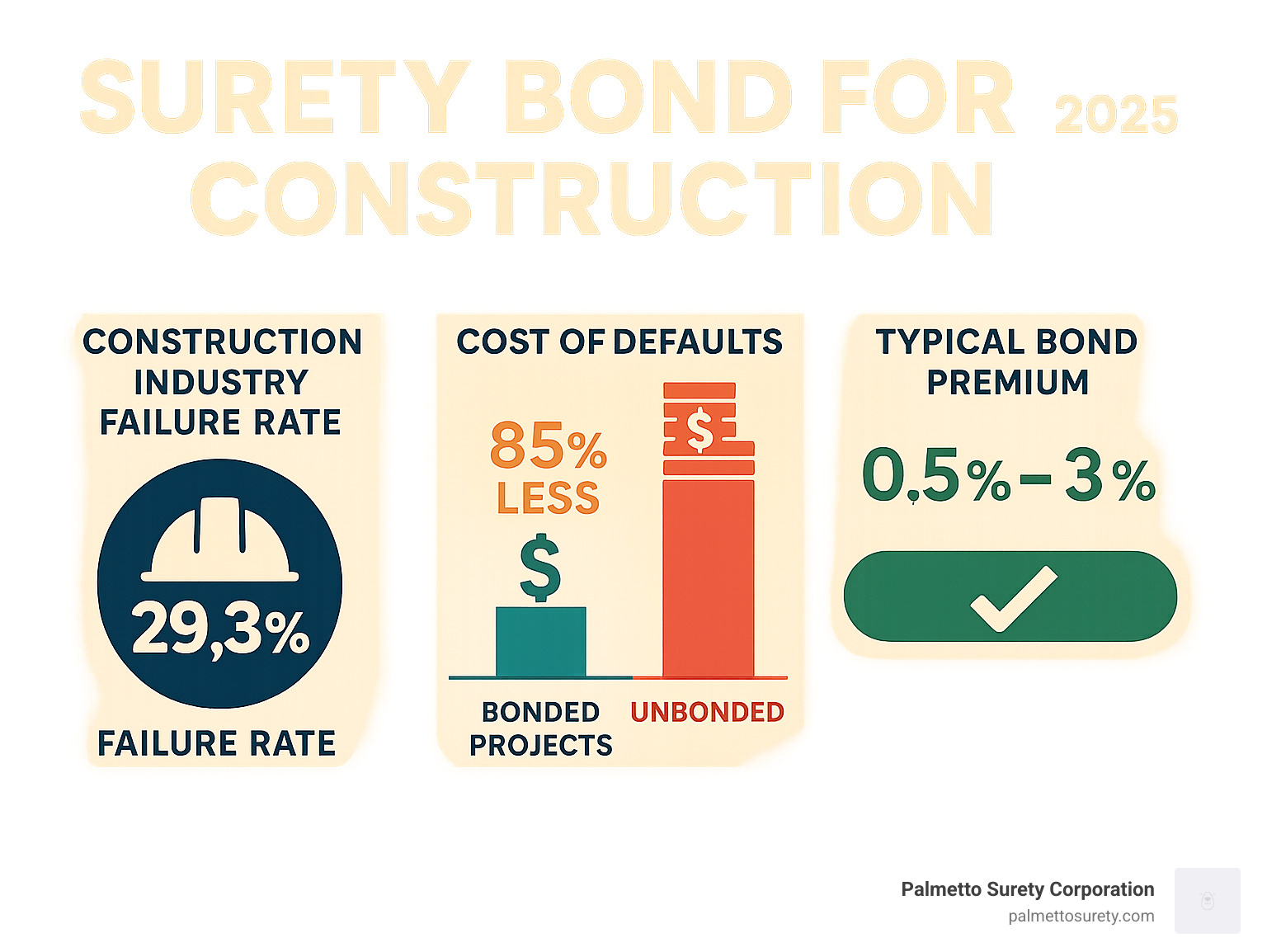
Construction is inherently risky. With contractor failure rates reaching 29.3% between 2014-2016, and unbonded projects costing 85% more to complete when contractors default, surety bonds have become essential risk management tools. They protect everyone involved – from the property owner investing millions in a new facility to the small supplier delivering materials.
The construction industry has relied on surety bonds for over a century, dating back to the first federal bonding requirements in 1894. Today, these financial guarantees are woven into the fabric of American construction, ensuring projects get completed and workers get paid.
I’m Haiko de Poel Jr., and I’ve spent years helping contractors steer the complexities of construction bonding at Palmetto Surety Corporation, one of the fastest-growing surety companies in America. My experience with surety bond for construction applications has shown me that understanding these financial tools is crucial for any successful construction business.
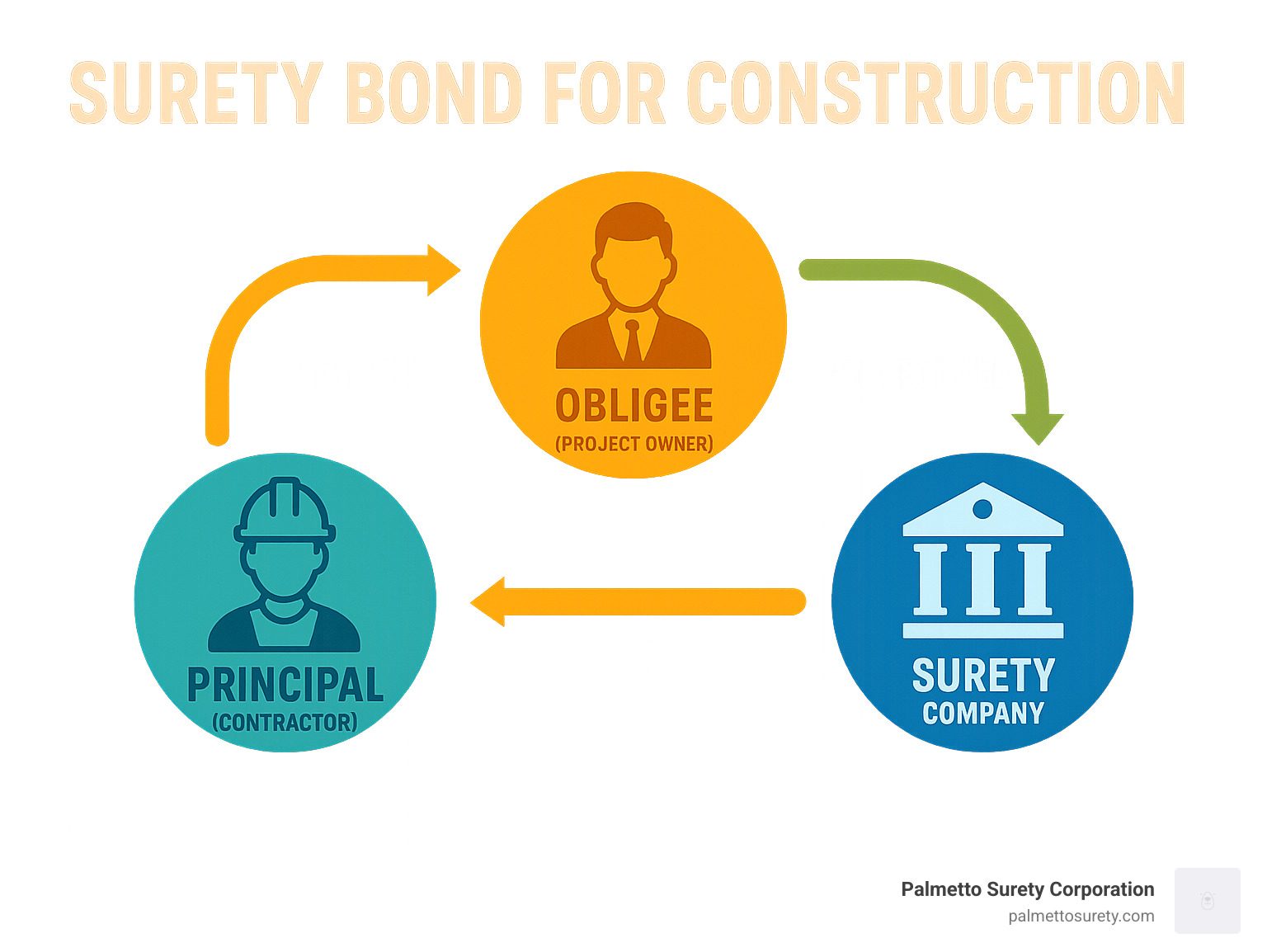

Surety bond for construction terms simplified:
What is a Surety Bond and Why is it Crucial for Construction?
Think of a surety bond for construction as a financial safety net that’s been protecting builders and project owners for over a century. The concept isn’t new—it actually dates back to ancient times when merchants needed guarantees for their trade agreements. Today’s construction bonds work on the same basic principle: one party promises to back up another’s performance.
Here’s the reality of construction: it’s a risky business. Between 2014 and 2016, nearly 29.3% of construction companies failed. That’s almost one in three contractors who didn’t make it through just a two-year period. When you’re investing hundreds of thousands or millions in a construction project, those aren’t odds you want to gamble with.
The financial impact of contractor failure is staggering. Research shows that unbonded construction projects cost 85% more to complete when the original contractor defaults. On a $1 million project, that means you could face an additional $850,000 just to finish what someone else started. This is where surety bonds become absolutely crucial.
A surety bond for construction does more than just provide financial protection—it acts as a rigorous prequalification system. Before issuing a bond, surety companies dig deep into a contractor’s finances, credit history, and track record. This vetting process alone prevents many potential disasters by keeping unqualified contractors out of the bidding process.
The Miller Act and various Little Miller Acts across states recognize this importance by requiring bonds on public works projects. These laws exist to protect taxpayer money and ensure that government construction projects are completed by qualified contractors.
For more detailed information about how these financial guarantees work, you can explore our comprehensive guide on commercial surety bonds and learn more about what surety bond insurance is.
The Three Parties Involved in Every Bond
Every construction surety bond creates a three-party agreement that’s different from regular insurance. Understanding these roles is key to grasping how bonds work.
The Principal (Contractor) is the party being bonded—the construction company that needs to prove they can handle the job. They apply for the bond, pay the premium, and remain ultimately responsible for the work. If something goes wrong and the bond pays out, the contractor must reimburse the surety company for every dollar spent, plus interest and fees.
The Obligee (Project Owner) is the party being protected. This could be a government agency, private developer, or general contractor. They’re the ones who can file a claim if the contractor fails to meet their contractual obligations. The bond gives them a financial guarantee that the work will get done right.
The Surety Company provides the financial muscle behind the guarantee. We evaluate contractors, issue bonds, and step in when things go wrong. Unlike insurance companies that expect to pay claims, surety companies expect to be paid back by the contractor for any money spent on claims.
This three-party structure is what makes surety bonds unique. You’re not transferring risk permanently like with insurance—you’re getting a guarantee that comes with continued responsibility.
Are Surety Bonds Legally Required?

The short answer is: it depends on the project, but increasingly, yes. The legal requirements for construction bonding create a patchwork of rules that vary by project type and location.
Federal projects have the clearest requirements thanks to the Miller Act of 1935. Any federal construction project over $100,000 must have a performance bond, while projects over $25,000 need payment bonds. This law protects taxpayer investments and ensures qualified contractors handle government work.
State and local governments have followed suit with their own Little Miller Acts. Almost every state requires bonds on public works projects, typically starting at thresholds between $25,000 and $100,000. These laws recognize that public contracts deserve the same protection as federal projects.
Private projects don’t have legal bonding requirements, but smart property owners increasingly demand them as a contractual requirement. Large commercial developers, hospitals, universities, and other sophisticated clients understand that the small cost of bonding (typically 0.5% to 3% of the contract value) is nothing compared to the potential losses from contractor default.
The trend is clear: bonding requirements are expanding because they work. When you’re dealing with the complexities of modern construction, there’s simply no substitute for the financial security and contractor vetting that surety bonds provide.
The Main Types of Construction Surety Bonds Explained

Think of construction bonds as a safety net that follows your project from start to finish. Just like you wouldn’t use the same tool for every job, different phases of construction require different types of protection. Each surety bond for construction serves a specific purpose, creating layers of security that protect everyone involved.
The construction journey typically starts with bid bonds that protect you during the selection process. Once work begins, performance bonds guarantee the project gets completed according to your specifications. Payment bonds ensure that subcontractors and suppliers get paid, while warranty bonds cover you after the work is done. You might also encounter supply bonds for material delivery and subdivision bonds for development projects.
Understanding these different bond types isn’t just academic—it’s practical knowledge that can save you significant money and headaches. Each bond addresses specific risks that occur at different stages of construction, creating a comprehensive protection system that has evolved over decades of industry experience.
Bid Bonds
Here’s a scenario every project owner dreads: You receive five bids for your construction project, and one contractor comes in significantly lower than the rest. You award them the contract, only to have them disappear or demand more money before signing. Without a bid bond, you’re stuck paying the difference to the next lowest bidder.
Bid bonds solve this problem by guaranteeing that winning bidders will actually enter into the contract and provide the required performance and payment bonds. It’s like a good faith deposit that costs the contractor nothing upfront but creates real accountability.
When a contractor submits a bid with a bid bond attached, they’re essentially saying, “We’re serious about this project, and we’ll honor our commitment if selected.” If they back out, the bid bond covers the difference between their bid and the next lowest qualified bidder—typically up to 10% of the bid amount.
This protection filters out unqualified contractors who might submit unrealistic bids just to win work. It’s a simple but effective way to ensure that only financially capable contractors participate in your bidding process.
Performance Bonds
If bid bonds are the appetizer, performance bonds are the main course. These bonds guarantee that your contractor will complete the project according to the contract specifications, on time, and within the agreed scope of work. When you consider that unbonded projects cost 85% more to complete when contractors default, performance bonds become essential protection.
The beauty of a performance bond lies in the surety company’s flexibility when problems arise. They don’t just write a check and walk away—they actively work to get your project completed. The surety might provide additional financing to help the struggling contractor finish the work, bring in a replacement contractor, or even take over the project directly.
This hands-on approach means that performance bonds often resolve contractor default situations without the massive disruptions and cost overruns that occur on unbonded projects. The surety company has a vested interest in completing your project efficiently because they’re financially responsible for the outcome.
For contractors, performance bonds serve as a powerful marketing tool. Having the ability to provide performance bonds demonstrates financial stability and professional competence—qualities that help win more projects and build stronger client relationships.
Payment Bonds
Nobody likes dealing with angry subcontractors or suppliers who haven’t been paid. Payment bonds eliminate this problem by guaranteeing that everyone who contributes to your project gets compensated, even if the general contractor runs into financial trouble.
This protection is particularly crucial because unpaid subcontractors and suppliers can file mechanics’ liens against your property. On public projects, where liens can’t be filed against government property, payment bonds provide the only protection for these essential project participants.
Payment bonds create a direct relationship between the surety company and your project’s subcontractors and suppliers. If the general contractor fails to pay these parties, they can file claims directly against the payment bond. This prevents work stoppages due to payment disputes and protects you from costly legal complications.
The Miller Act requires payment bonds on federal projects over $25,000, and most states have similar requirements for public works. Even on private projects, payment bonds provide valuable protection against the complications and costs associated with unpaid project participants.
For more detailed information about different bond types and their specific requirements, you can explore our comprehensive guide on surety bond definitions.
Warranty & Maintenance Bonds
Construction problems don’t always show up immediately. Sometimes defects in materials or workmanship become apparent weeks or months after project completion. Warranty and maintenance bonds extend your protection into this post-completion period, typically covering defects for one to two years after the work is finished.
These bonds are particularly valuable for complex projects involving mechanical systems, specialized materials, or innovative construction techniques. If your new building’s HVAC system fails during the warranty period, or if structural issues develop after occupancy, the warranty bond ensures these problems get fixed at no additional cost to you.
The extended coverage provided by warranty bonds gives building owners peace of mind that their investment is protected well beyond the construction completion date. For contractors, offering warranty bonds demonstrates confidence in their work quality and helps build long-term client relationships.
Most warranty bonds are included as part of the overall bonding package at minimal additional cost, making them an affordable way to extend your project protection. This small investment can save thousands of dollars in repair costs and provides valuable leverage if post-construction issues arise.
The Mechanics of a Surety Bond for Construction: From Application to Claims

Obtaining a surety bond for construction is a lot like applying for a business line of credit: you supply financial information, the surety evaluates your capacity, and a0you receive a limit that lets you bid and build with confidence. Below is a streamlined look at the process fminus the lengthy paperwork breakdown.
How to Obtain a Surety Bond
- Choose a surety agent. Your agent gathers paperwork and presents your company to the underwriter.
- Submit key documents. Current financial statements, tax returns, project details, and a brief work history tell your story. For most small to midsize bonds, wellorganized financials speed approval to just hours.
- Underwriting review. Sureties focus on the “3 C’s”: Capital, Capacity, and Character. Strong scores and solid liquidity earn the best rates.
- Issuance & capacity. Once approved, you receive a singlejob limit and an aggregate program limitnumbers you can grow by completing bonded work successfully.
What Does It Cost?
- Typical premium: 0.5%% of the bond amount.
- Lower rates go to companies with clean financials, positive cash flow, and proven experience.
- The SBA Surety Bond Guarantee Program can reduce premiums for qualified small contractors.
More details: the cost of surety bonds.
If a Contractor Defaults
- Owner declares default per the contract.
- Claim filed with the suretydocumentation is key.
- Surety investigates to verify the claim.
- Surety responds with the most economical fix:
- Finance the original contractor,
- Bring in a completion contractor, or
- Pay the owner up to the bond amount.
The original contractor must reimburse the surety for any loss under the signed indemnity agreement.
Common Challenges (and Quick Tips)
- Financial scrutiny: Keep CPA statements currentit speeds approvals.
- Personal indemnity: Understand younot the suretyultimately pay for losses.
- Capacity limits: Plan project starts so total bonded work never exceeds your aggregate program.
- Premium budgeting: Add the bond cost into every bid.
Need the deep dive? See our guide on large bond underwriting.
The Dual Benefits of Bonding for Owners and Contractors

Surety bonds create a win-win situation in construction, providing distinct advantages to both project owners and contractors. Understanding these mutual benefits helps explain why bonding has become so prevalent in modern construction.
Benefits for Project Owners
Risk Mitigation: The primary benefit for project owners is comprehensive risk transfer. With a performance bond in place, the owner’s risk of contractor default is transferred to a financially strong surety company. This protection is especially valuable given the 29.3% contractor failure rate observed in recent years.
Financial Security: Performance bonds guarantee project completion up to the full bond amount. If a contractor defaults on a $2 million project, the performance bond ensures the owner won’t bear the full cost of completion. Research shows that bonded projects that experience defaults cost 85% less to complete than unbonded projects.
Vetted Contractors: The bonding process serves as a rigorous prequalification system. Contractors who can obtain bonds have demonstrated financial stability, technical competence, and professional integrity. This screening process helps owners select more reliable contractors.
Lien Protection: Payment bonds protect owners from mechanics’ liens filed by unpaid subcontractors and suppliers. This is particularly important on public projects where liens can complicate property ownership and create legal complications.
Project Completion Guarantee: Performance bonds ensure that projects will be completed according to specifications, on time, and within budget. If the original contractor cannot finish the work, the surety company will arrange for completion.
Peace of Mind: Perhaps most importantly, bonding provides peace of mind. Owners can focus on their core business activities knowing that their construction investment is protected by professional guarantees.
Benefits for Contractors
Increased Credibility: Bonded contractors enjoy improved credibility in the marketplace. The ability to obtain surety bonds demonstrates financial strength and professional competence, making contractors more attractive to potential clients.
Access to Larger Projects: Many large projects require bonding, so contractors without bonding capacity are automatically excluded from these opportunities. Bonding opens doors to higher-value projects that can significantly grow a contractor’s business.
Public Works Eligibility: Federal, state, and local public works projects typically require bonding. These projects often provide steady work and reliable payment, making them attractive to contractors who can qualify for the required bonds.
Competitive Advantage: In competitive bidding situations, bonded contractors have a significant advantage over unbonded competitors. Owners prefer the security that bonding provides, even when it’s not legally required.
Improved Cash Flow: Some bond types, such as retention bonds, can improve contractor cash flow by releasing funds that would otherwise be held by the owner until project completion.
Professional Development: The bonding process encourages contractors to maintain strong financial practices, accurate record-keeping, and professional project management. These disciplines benefit the contractor’s overall business operations.
Legal Compliance: Bonding ensures contractors can bid on and complete projects that legally require bonds, keeping them in compliance with federal, state, and local regulations.
The mutual benefits of bonding create a positive cycle in the construction industry. Owners get better protection and more reliable contractors, while contractors gain access to more opportunities and improved credibility. This symbiotic relationship has made bonding an integral part of modern construction practice.
Frequently Asked Questions about Construction Bonds
What is the difference between a surety bond and traditional insurance?
A surety bond for construction is a threeparty guarantee (contractor, owner, surety). If the surety pays a claim, the contractor must reimburse every dollarthats why sureties vet applicants so closely. Insurance is a twoparty transfer of risk; the insurer pays covered losses and does not expect repayment. More detail: what surety bond insurance is.
How long does it take to get a construction bond?
- License/permit bonds: often minutes.
- Small performance bonds (<$100k): 13 business days.
- Large or complex bonds: several days to a few weeks, depending on the completeness of your financial package.
Preparationcurrent financials, good credit, and a clear project scopeis the biggest timesaver.
Can a contractor get bonded with bad credit?
Yes. Options include the SBA Surety Bond Guarantee Program, collateralbacked bonds, or adding stronger indemnitors. Expect higher premiums (3%10%) and tighter limits at first, then work toward standard rates by successfully completing projects.
Conclusion
After two decades of helping contractors steer the bonding process, I’ve witnessed how surety bonds for construction transform businesses and protect investments. These aren’t just pieces of paper—they’re the bedrock of trust that allows billion-dollar construction projects to break ground with confidence.
The numbers tell a compelling story. When nearly one in three contractors fails within a few years, and unbonded project defaults cost 85% more to complete, construction bonds aren’t luxuries—they’re necessities. They create a safety net that protects everyone from the small subcontractor delivering materials to the property owner investing millions in a new facility.
What makes construction bonding so powerful is its three-party structure. The surety bond for construction doesn’t just transfer risk—it creates accountability. When contractors know they’ll be held responsible for any claims through their indemnity agreement, they approach projects with greater care and professionalism. When project owners know they’re protected by financially strong surety companies, they can focus on their core business instead of worrying about contractor defaults.
The bonding process itself serves as a rigorous quality filter. Contractors who can obtain bonds have demonstrated financial stability, technical competence, and professional integrity. This prequalification system benefits the entire industry by raising standards and weeding out unqualified players before they can cause damage.
At Palmetto Surety Corporation, we’ve streamlined this traditionally complex process. Our ability to approve most applications within hours means contractors can respond quickly to opportunities while maintaining the thorough evaluation that makes bonding effective. After serving the southeastern United States for over 20 years, we understand that speed and reliability aren’t just conveniences—they’re competitive advantages.
The future of construction depends on maintaining trust in an industry where handshake deals have given way to complex contracts and massive financial commitments. Surety bonds for construction provide that trust, ensuring that ambitious projects can move forward with confidence and that everyone involved gets paid and protected.
Whether you’re a contractor looking to expand into larger projects or a property owner seeking protection for your investment, understanding construction bonding opens doors to opportunities and peace of mind. In construction, trust isn’t just valuable—it’s the foundation everything else is built upon.
Ready to experience the difference that quick, reliable bonding can make for your construction business? Our agent services connect you with experienced professionals who understand both the technical requirements and the human side of construction bonding.


