


80c Infrastructure Bonds: 7 Powerful Tax-Saving Benefits 2025
Tax-Saving with Infrastructure Bonds: The Complete Guide
80C infrastructure bonds offer tax-saving benefits to Indian taxpayers. Here’s what you need to know:
- What they are: Bonds issued to fund infrastructure projects like roads, ports, and power plants
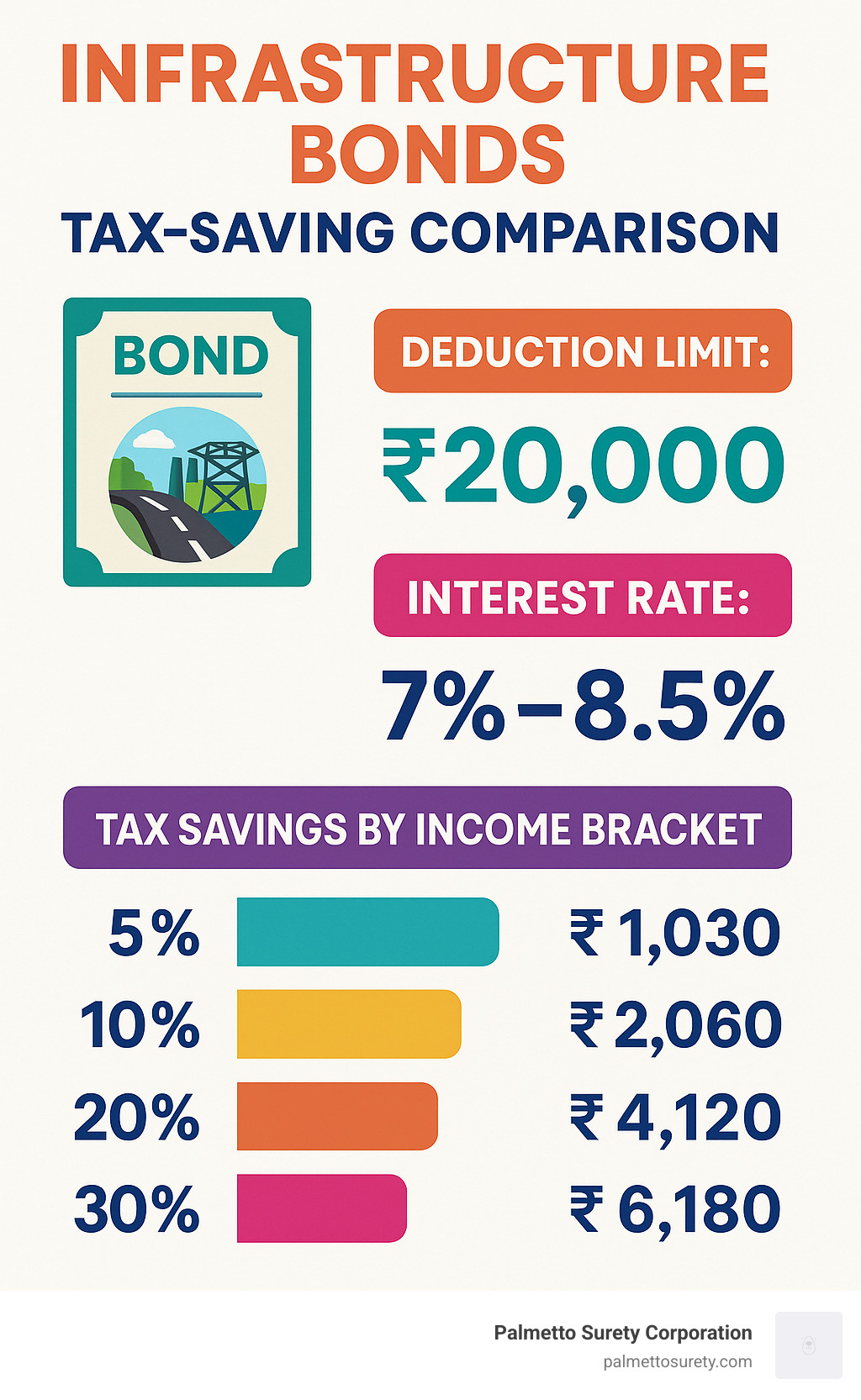
- Tax benefit: Additional deduction of up to ₹20,000 under Section 80CCF (over and above the ₹1.5 lakh limit of Section 80C)
- Eligibility: Indian residents and Hindu Undivided Families (HUFs)
- Lock-in period: Minimum 5 years
- Current status: Section 80CCF deduction was discontinued after FY 2012-13, though infrastructure bonds continue to be issued
Infrastructure bonds were introduced to encourage investment in India’s growing infrastructure needs while providing tax benefits to investors. These bonds typically offered interest rates between 7% and 8.5%, with tenures of 10 years or more.
The concept was simple: invest in bonds issued by authorized institutions like LIC, IFCI, or government-approved NBFCs, and claim an additional tax deduction beyond your standard Section 80C limit.
For investors in the highest tax bracket (30%), utilizing the full ₹20,000 deduction could save up to ₹6,180 in taxes annually. While the Section 80CCF benefit is no longer available, understanding how these bonds worked remains relevant for tax planning.
My name is Haiko de Poel Jr, and as a fractional CMO with experience in financial marketing, I’ve helped numerous clients steer tax-efficient investment strategies including 80C infrastructure bonds during their availability period.
Easy 80c infrastructure bonds glossary:
– govt tax saving bonds
– bond tax
– high interest bonds 2025
Understanding 80C Infrastructure Bonds


80C infrastructure bonds were a special category of fixed-income securities designed with two main purposes: to fund critical infrastructure projects across India and to provide tax benefits to individual investors. These bonds represented a win-win situation where investors could earn stable returns while contributing to the nation’s development.
Infrastructure bonds were issued by authorized institutions including the Life Insurance Corporation of India (LIC), Industrial Finance Corporation of India (IFCI), Infrastructure Development Finance Company (IDFC), and State Bank of India (SBI). These bonds typically offered interest rates between 7% and 8.5%, making them attractive not just for their tax benefits but also for their competitive returns.
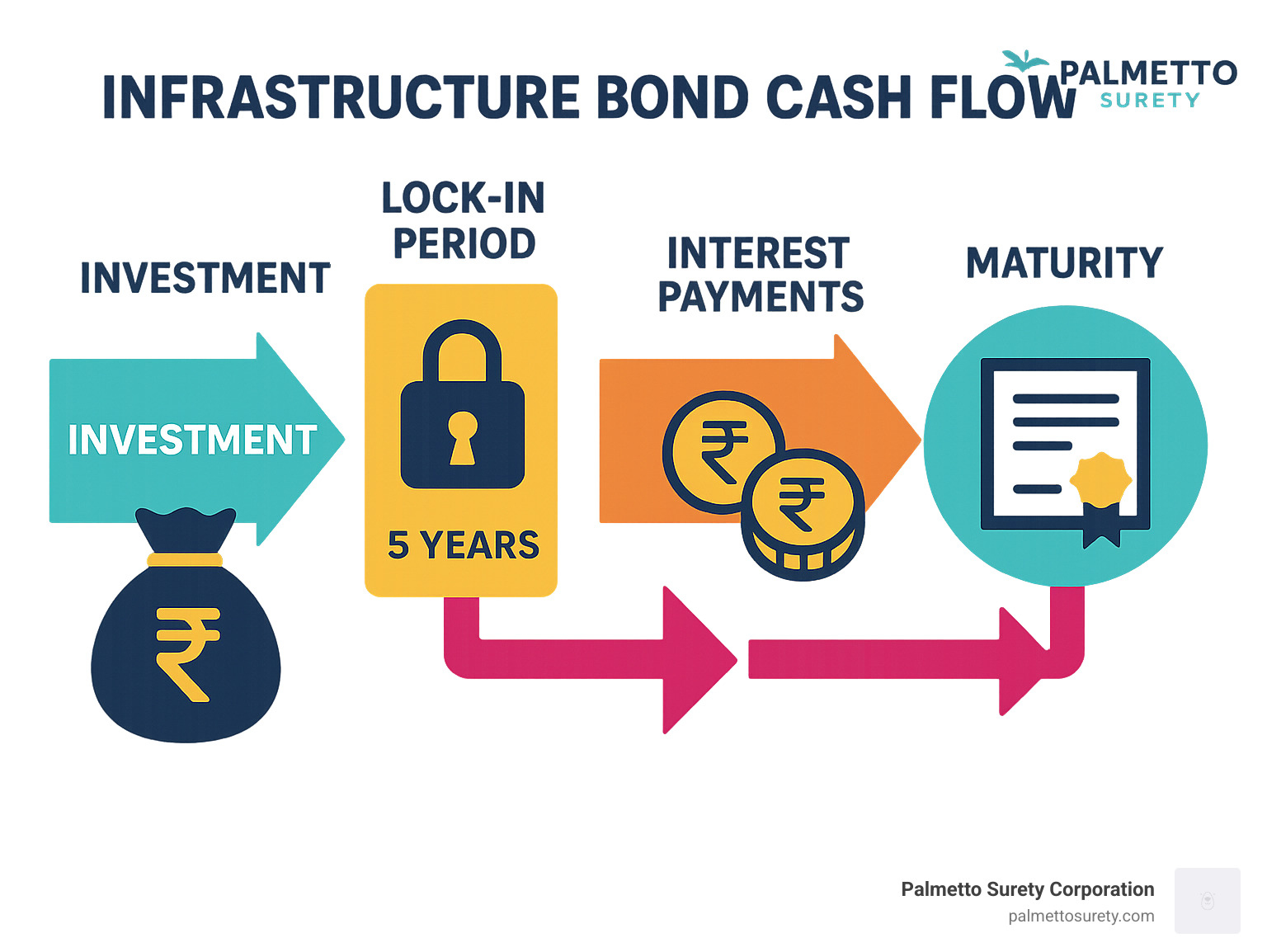
The standard tenure for these bonds was 10 years or more, with a mandatory lock-in period of 5 years. During this lock-in period, investors could not sell or transfer their bonds, ensuring long-term capital for infrastructure projects.
What Are Infrastructure Bonds?
Infrastructure bonds are debt instruments issued to raise funds specifically for public infrastructure projects. These could include highways, bridges, airports, railways, power plants, water supply systems, and telecommunications networks. By investing in these bonds, individuals essentially loan money to the issuing entity, which uses the funds to finance these large-scale projects.
These bonds are typically secured debentures, meaning they’re backed by the assets of the issuing organization. Investors could purchase them in either physical form (actual certificates) or demat form (electronic entries in a depository account), with the latter becoming increasingly common for ease of management and security.
Credit ratings played a crucial role in infrastructure bonds, with most qualified bonds carrying high ratings (typically AAA) from recognized rating agencies. This high rating indicated the issuer’s strong ability to repay the principal and interest, making these bonds relatively low-risk investments.
How 80C and 80CCF Created the Tax Perk
The tax benefits associated with infrastructure bonds stemmed from two key sections of the Income Tax Act of India: Section 80C and Section 80CCF.
Section 80C of the Income Tax Act allows taxpayers to claim deductions of up to ₹1.5 lakh (previously ₹1 lakh until 2014) on specific investments and expenses. This section covers a wide range of investments including life insurance premiums, Public Provident Fund (PPF), Equity-Linked Savings Schemes (ELSS), and National Savings Certificates (NSC).
Section 80CCF was specifically introduced in the 2010 Union Budget and implemented in 2011 to encourage investment in infrastructure. This section provided an additional deduction of up to ₹20,000 for investments in notified long-term infrastructure bonds. The key advantage was that this deduction was over and above the ₹1.5 lakh limit under Section 80C, effectively increasing the total tax deduction available to taxpayers.
For example, if an investor had already used the full ₹1.5 lakh deduction under Section 80C through various investments, they could still invest up to ₹20,000 in infrastructure bonds and claim an additional deduction under Section 80CCF.
However, it’s important to note that the Section 80CCF deduction was available only for investments made in government-notified infrastructure bonds. These bonds had to meet specific criteria regarding tenure, lock-in period, and issuing authority to qualify for the tax benefit.
Tax Benefits & Limits Under Section 80C and 80CCF
The magic of 80C infrastructure bonds lay in their unique tax advantage – they offered an extra deduction beyond what most tax-saving investments could provide. This created a powerful opportunity for smart taxpayers who had already maxed out their regular Section 80C limits.
During the years these bonds were available, investors could reduce their taxable income by up to ₹20,000 per financial year through these bonds. This reduction translated directly into money staying in your pocket instead of going to the tax department. The actual savings depended on which tax bracket you fell into.
If you were in the 10% tax bracket, investing the full ₹20,000 would save you about ₹2,000 in taxes. Those in the 20% bracket could keep ₹4,000 more of their hard-earned money. For high-income earners in the 30% bracket, the savings jumped to ₹6,000. And when you factor in the additional education cess of 3%, folks in the highest bracket could save up to ₹6,180 annually.
That’s why these bonds were particularly attractive to higher-income individuals looking to squeeze every possible tax benefit from their financial planning.
| Tax Bracket | Section 80C Deduction (₹1.5 lakh) | Section 80CCF Deduction (₹20,000) | Total Tax Saving |
|---|---|---|---|
| 10% | ₹15,000 | ₹2,000 | ₹17,000 |
| 20% | ₹30,000 | ₹4,000 | ₹34,000 |
| 30% | ₹45,000 | ₹6,000 | ₹51,000 |
| 30% + 3% cess | ₹46,350 | ₹6,180 | ₹52,530 |
Eligibility to Claim the Deduction
Not everyone could hop on this tax-saving train. The eligibility criteria were quite specific about who could benefit from these bonds:
Only Indian residents during the relevant financial year could claim this deduction – sorry, NRIs! Hindu Undivided Families (HUFs) were also eligible to invest and claim the deduction, providing an additional planning opportunity for traditional family units.
If you made a joint investment, only the primary applicant could claim the tax benefit. The secondary holder couldn’t claim any tax advantage for the same investment. Companies, partnerships, minors, and other non-individual entities (except HUFs) were excluded from claiming deductions under Section 80CCF.
These targeted criteria ensured the tax benefits reached individual Indian taxpayers who could most benefit from the additional deduction.
Maximum Deduction & Worked Example
The maximum you could deduct under Section 80CCF was ₹20,000 per financial year – and this was completely separate from your regular ₹1.5 lakh Section 80C limit. Let’s see how this worked in practice:
Meet Mr. Dinesh, who earns ₹7 lakh annually. He’s already invested ₹1.5 lakh in various Section 80C instruments like PPF, ELSS, and life insurance. Being tax-savvy, he decides to put ₹50,000 into infrastructure bonds.
Without the Section 80CCF deduction, his tax calculation would look like this:
– Total income: ₹7,00,000
– Section 80C deduction: ₹1,50,000
– Taxable income: ₹5,50,000
With the Section 80CCF deduction:
– Total income: ₹7,00,000
– Section 80C deduction: ₹1,50,000
– Section 80CCF deduction: ₹20,000 (maximum allowed, despite investing ₹50,000)
– Taxable income: ₹5,30,000
The difference? A solid ₹20,000 reduction in taxable income. Since Mr. Dinesh falls in the 30% tax bracket (plus cess), he saves approximately ₹6,180 in taxes through this smart investment choice.
What’s more, even if you decided to use the buyback option after completing the mandatory 5-year lock-in period, you wouldn’t lose the tax benefit you’d already claimed. Once claimed, the tax deduction remained valid regardless of when you redeemed the bonds after the lock-in period.
Investment Mechanics: Lock-in, Tenure, Interest & Redemption

Let’s explore how these 80C infrastructure bonds actually worked—because understanding the nuts and bolts helps you see if they would have fit into your financial roadmap.
Think of infrastructure bonds as a commitment to the long game. You could start with as little as ₹5,000, and add more in ₹5,000 chunks if you wanted. While you could invest as much as your wallet allowed, only ₹20,000 would count toward that special tax break under Section 80CCF.
These bonds typically asked you to stick around for 10-15 years—about as long as it takes to raise a child through elementary school! That’s because infrastructure projects like highways and power plants need patient capital. They’re not built overnight, and neither are the returns.
The most important feature? The 5-year mandatory lock-in period. During these five years, your money was essentially saying, “I’m not going anywhere.” No selling, no transferring, no redeeming—your funds were committed to helping build India’s infrastructure backbone.
After those five years passed, you had some choices to make:
You could use the buyback option after 5 years and a day. Kind of like calling the babysitter to come get your money early—the issuer would take back your bonds at a pre-set price.
Or maybe you’d prefer the secondary market route, trading your bonds on the NSE or BSE. This was like finding another investor to take your place in the infrastructure funding journey.
Of course, you could always hold until maturity—staying the full 10-15 years to collect your principal and any final interest payments. The patient investor’s choice!
When redemption time came, you’d simply submit your request to the issuer or through your demat account provider, depending on whether you held physical certificates or electronic bonds.
Are Interest Earnings on 80C Infrastructure Bonds Taxable?
Here’s where things get interesting—and where some investors got confused. While you got that nice tax break on the money you put in (up to ₹20,000), the interest you earned was fully taxable at your regular income tax rate.
Think of it like getting a discount on the seeds you plant, but still paying full tax on the harvest. The interest had to be declared under “Income from Other Sources” on your tax return—no exceptions.
If your interest payments crossed ₹2,500 annually (which was likely), the issuer would automatically deduct TDS. And if you hadn’t provided your PAN or had an invalid one? The TDS jumped from 10% to a hefty 20%.
Some investors chose the cumulative interest option—letting their earnings compound and collect at maturity. But here’s the catch: even though you wouldn’t see that money until years later, you still had to declare and pay taxes on it each year. The taxman doesn’t like to wait!
80C Infrastructure Bonds vs Other 80C Options
How did 80C infrastructure bonds stack up against other tax-saving options? Let me break it down for you:
| Investment Option | Lock-in Period | Risk Level | Returns (Approx.) | Liquidity Post Lock-in | Taxability of Returns |
|---|---|---|---|---|---|
| Infrastructure Bonds | 5 years | Low | 7-8.5% | Moderate | Fully taxable |
| Public Provident Fund (PPF) | 15 years | Very Low | 7.1% | Partial withdrawals allowed | Tax-free |
| Equity-Linked Savings Scheme (ELSS) | 3 years | High | 10-15% (market-linked) | High | LTCG above ₹1 lakh taxable at 10% |
| 5-Year Tax-Saving FD | 5 years | Low | 6-7% | Low (premature withdrawal penalties) | Fully taxable |
| National Savings Certificate (NSC) | 5 years | Very Low | 6.8-7.7% | Low | Fully taxable |
The standout feature of infrastructure bonds was that extra ₹20,000 deduction beyond your Section 80C limit. Think of it as the dessert after your tax-saving meal—when you’d already consumed your ₹1.5 lakh Section 80C limit, infrastructure bonds let you have a little more.
For those who hadn’t maxed out their Section 80C deductions, options like ELSS might have been more appealing with their potentially higher returns and shorter lock-in periods. But for the tax-efficiency maximizers who had already used up their ₹1.5 lakh limit, infrastructure bonds were like finding an extra ₹20,000 deduction hiding under the couch cushions.
For more information about various bond options available today, you can check out Guidelines for Infrastructure Bond Holders.
Risks, Returns & How They Compare to Alternatives

Let’s talk about what you’re really getting with 80C infrastructure bonds beyond the tax breaks. These investments had their bright spots, but also came with considerations every smart investor should understand.
Back when these bonds were popular, they typically offered returns between 7% and 8.5% annually. That was pretty competitive in the fixed-income world at the time! But here’s the catch – unlike some other tax-saving options, these returns were fully taxable. This meant your actual take-home return could be significantly lower, especially if you were in a higher tax bracket.
When comparing these bonds to other investment options, three key factors really stood out:
First, the real returns after inflation weren’t always impressive. With inflation running around 6-7% during those years, your 8% return might have only been worth 1-2% in actual purchasing power – or sometimes even negative in high-inflation years. That’s something many investors overlooked in their excitement about the tax benefits.
Second, the tax-adjusted returns told a different story than the advertised rate. If you were in the 30% tax bracket, that attractive 8% coupon rate actually translated to about 5.6% after taxes. Not terrible, but not amazing either.
Third, there was a genuine opportunity cost to consider. Locking your money away for 5 years meant you couldn’t pivot to better investments if market conditions changed. That’s a long commitment in the financial world!
Credit & Interest-Rate Risks Explained
Infrastructure bonds weren’t risk-free, though they were generally considered pretty safe. Two main risks deserved attention:
Credit risk was the first concern – the possibility that the issuer might not be able to pay you back. Most 80C infrastructure bonds came from government-backed entities or institutions with AAA ratings, so this risk was relatively small. But as we’ve seen in financial markets, “unlikely” doesn’t mean “impossible.” The stronger the issuer’s financial position, the safer your investment.
The bigger worry was interest rate risk. These bonds had long lifespans of 10-15 years, which made them vulnerable to interest rate changes. If market rates rose after you bought your bonds, the value of your bonds would fall if you needed to sell before maturity. This could lead to unexpected losses for investors who couldn’t hold until the end.
It’s worth noting that these bonds couldn’t offer sky-high returns even if they wanted to. Their yields were capped at whatever government securities of similar maturity were paying, according to guidelines from FIMMDA (the Fixed Income Money Market and Derivatives Association of India). This meant they couldn’t compensate you much extra for any additional risk they might carry.
Choosing Between Bonds, ELSS, PPF & NPS
Deciding between 80C infrastructure bonds and alternatives like ELSS, PPF, or NPS came down to understanding your personal financial situation. Each option had its sweet spots:
Your investment timeline mattered tremendously. Infrastructure bonds locked your money for at least 5 years, with full terms stretching to 10-15 years. This made them best for goals that were several years away. ELSS funds only locked your money for 3 years, making them more flexible. PPF tied up funds for 15 years, while NPS kept your money until retirement.
Your comfort with risk was equally important. If market swings kept you up at night, infrastructure bonds offered steady, predictable returns. If you had the stomach for volatility and wanted growth potential, ELSS funds gave you access to the stock market’s higher potential returns. PPF represented the safest harbor with government backing, while NPS let you customize your risk level through different asset allocations.
The tax picture varied too. Under the old tax regime, all these options offered deductions, but infrastructure bonds gave you that extra ₹20,000 deduction beyond your Section 80C limit – a unique advantage. However, PPF returns were completely tax-free, unlike the fully taxable interest from infrastructure bonds.
Access to your money differed dramatically between options. After the lock-in, ELSS funds could be sold immediately if needed. Infrastructure bonds could be traded in secondary markets or surrendered through buyback options. PPF allowed partial withdrawals after 7 years, while NPS kept most of your money locked away until retirement age.
Many financial advisors recommended spreading investments across these options based on your goals and needs. You might max out your Section 80C limit with a blend of ELSS and PPF, then use infrastructure bonds for that additional ₹20,000 deduction under Section 80CCF.
Just as Palmetto Surety Corporation helps clients find the right surety bond solutions for their specific needs, smart investors found the right mix of tax-saving investments for their unique financial situations.
Step-by-Step Guide to Investing & Claiming Tax Benefits
Investing in 80C infrastructure bonds and claiming the associated tax benefits involved a systematic process. While these bonds are no longer available for tax deduction under Section 80CCF, understanding the process provides valuable insights for similar tax-saving investments.
Here’s a step-by-step guide on how the process worked:
-
Research and Selection: Investors would first identify which infrastructure bonds were eligible for Section 80CCF deduction. Only bonds specifically notified by the government qualified for this deduction.
-
Application Process: Once a suitable bond issue was identified, investors would obtain the application form either online or from designated branches/agents. The minimum investment was typically ₹5,000, with additional investments in multiples of ₹5,000.
-
Documentation: The application required several supporting documents:
- PAN card copy (mandatory)
- Address proof (Aadhaar, passport, voter ID, etc.)
- Bank account details with a cancelled cheque
- Photograph (in some cases)
-
Demat account details (if opting for demat holding)
-
Investment Rule: An important rule was “one PAN, one application.” Multiple applications under the same PAN would be consolidated into a single application, potentially causing processing delays.
-
Payment: Payment could be made through cheque, demand draft, or electronic transfer, depending on the options provided by the issuer.
-
Allotment: Once the application was processed and payment received, bonds would be allotted to the investor. Physical certificates would be sent by mail, or electronic credits would be made to the demat account, as applicable.
-
Tax Deduction Claim: To claim the tax deduction, investors would need to:
- Retain the bond certificate or demat statement as proof of investment
- Include the investment amount (up to ₹20,000) under Section 80CCF in their income tax return
-
Provide details of the investment to their employer for TDS purposes if they were salaried employees
-
Record Keeping: Maintaining proper records was crucial, including the bond certificate, allotment letter, and any interest payment receipts, as these might be required during tax assessment.
Documents & Filing Process
The documentation and filing process for claiming the Section 80CCF deduction involved several key steps:
- Essential Documents: Investors needed to maintain:
- Original bond certificate or demat statement showing the holding
- PAN card copy
- Proof of payment (bank statement or receipt)
-
Form 16 (for salaried individuals) showing the deduction claimed
-
Income Tax Return Filing:
- The deduction would be claimed in the appropriate schedule of the income tax return form
- For salaried individuals, the investment details would first be provided to the employer for inclusion in Form 16
-
Self-employed individuals would directly claim the deduction in their ITR
-
Verification Process: The Income Tax Department could request verification of the deduction claimed, in which case the investor would need to provide the supporting documents.
-
Refund Timeline: If the deduction resulted in excess tax payment, a refund would typically be processed within 3-6 months of filing the return, depending on the verification process.
Redeeming After Lock-in & Secondary Market Options
After the mandatory 5-year lock-in period, investors had several options for redeeming or exiting their infrastructure bond investments:
- Buyback Option:
- Many infrastructure bonds offered a buyback facility after 5 years and 1 day from the date of allotment
- Investors could submit a buyback request to the issuer through their registrar and transfer agent
- The buyback price was typically predetermined and mentioned in the bond prospectus
-
Payment would be made directly to the investor’s bank account within a specified timeframe (usually 7-30 days)
-
Secondary Market Trading:
- Post lock-in, infrastructure bonds could be traded on stock exchanges (NSE/BSE)
- Investors with demat holdings could instruct their broker to sell the bonds at prevailing market prices
- For physical certificate holders, the bonds would first need to be dematerialized before trading
-
The market price could be higher or lower than the face value, depending on prevailing interest rates and the issuer’s credit rating
-
Hold Until Maturity:
- Investors could choose to hold the bonds until the full tenure (10-15 years)
- At maturity, the principal amount would be automatically credited to the registered bank account
- No specific redemption request was required for maturity proceeds
The tax benefit once claimed under Section 80CCF remained valid regardless of when the bonds were redeemed after the lock-in period. There was no requirement to reverse the deduction even if the bonds were sold immediately after the lock-in period ended.
Contribution to National Infrastructure & Recent Issuances

When you invested in 80C infrastructure bonds, you weren’t just saving on taxes – you were helping build the country’s future. These bonds created a win-win situation: tax benefits for you and essential funding for critical infrastructure projects that keep India moving forward.
Think about it – your investment dollars flowed directly into projects that transformed daily life across the nation. The roads you drive on, the power in your home, even the airports you travel through – all potentially funded in part by infrastructure bonds like these.
The funds raised through these bonds targeted five critical areas of development. Your money might have helped construct highways connecting remote villages to economic centers, or perhaps funded modern railway lines that reduced travel time between major cities. Maybe your investment powered renewable energy projects that reduced carbon emissions, or helped build water treatment plants that provided clean drinking water to thousands of families.
While the Section 80CCF tax benefit ended after FY 2012-13, infrastructure bonds continue playing a vital role in India’s development story. Take State Bank of India’s massive June 2024 issuance – they raised a whopping ₹10,000 crore through 15-year infrastructure bonds at a 7.36% interest rate. That’s serious money flowing into serious projects!
Other recent infrastructure bond offerings have been equally impressive. A major private bank raised ₹1,500 crore with 10-year bonds at 7.76%, while government-backed entities like Rural Electrification Corporation (REC) and Indian Railway Finance Corporation (IRFC) secured ₹3,000 crore and ₹1,415 crore respectively, with competitive interest rates around 7%.
The investor profile has shifted over time – these days, it’s mostly institutional investors rather than tax-saving individuals – but the impact remains just as powerful.
How Your Money Builds Roads, Rail & Power
There’s something deeply satisfying about seeing your investment dollars transformed into physical infrastructure you can actually use. When you bought 80C infrastructure bonds, your money didn’t just disappear into financial abstractions – it helped create tangible improvements in people’s lives.
The process works beautifully in its simplicity. Your investment, combined with thousands of others, creates a substantial pool of capital that can tackle major projects no single investor could fund alone. The issuing institutions – whether IDFC, SBI, or others – then channel these pooled resources into carefully selected infrastructure projects.
Many of these projects operate as public-private partnerships, where your bond investment helps bridge funding gaps that might otherwise delay or prevent essential development. This collaboration between government agencies and private companies often delivers infrastructure more efficiently than either sector could manage alone.
The ripple effects extend far beyond the physical structures themselves. When a new highway project breaks ground, it creates jobs for construction workers, engineers, project managers, and countless others. Your investment helps put food on these families’ tables while simultaneously building infrastructure that benefits everyone.
Perhaps most impressive is the economic multiplier effect. A new power plant doesn’t just provide electricity – it enables businesses to operate, schools to function, and hospitals to save lives. Better roads don’t just make for smoother drives – they reduce transportation costs, connect farmers to markets, and help goods move more efficiently throughout the economy.
In this way, 80C infrastructure bonds created a virtuous cycle where your tax savings helped fund projects that ultimately strengthened the entire economic ecosystem.
Recent High-Profile Bond Issues in India
The infrastructure bond market continues to thrive even without the Section 80CCF tax incentives that made these bonds so popular with individual investors. Recent issuances demonstrate that institutional investors recognize the value proposition these bonds offer.
State Bank of India has emerged as a particularly enthusiastic issuer. Beyond their June 2024 issuance of ₹10,000 crore, they raised another ₹10,000 crore through infrastructure bonds in Q2 of FY25. That’s a total of ₹20,000 crore – roughly equivalent to $2.4 billion – dedicated to infrastructure development in a single fiscal year!
What makes these bonds so attractive to issuers? For banks like SBI, infrastructure bonds offer regulatory advantages. The proceeds are exempt from Statutory Liquidity Ratio and Cash Reserve Ratio requirements, meaning banks can deploy every rupee for lending rather than keeping portions in reserve. This efficiency makes infrastructure bonds particularly attractive funding vehicles.
The investor enthusiasm matches the issuer interest. When a major private bank launched its first-ever infrastructure bond offering of ₹1,500 crore at 7.76%, investors oversubscribed the issue. Similarly, REC’s ₹3,000 crore issuance at 7.09% attracted strong interest from institutional investors.
These bonds particularly appeal to pension funds, insurance companies, and mutual funds. The relatively stable returns and long-term maturities help these institutions match their long-term liabilities – perfect for organizations that need predictable income streams to meet future obligations.
While individual investors may no longer get tax breaks for these investments, the infrastructure bond market continues serving its fundamental purpose: channeling capital toward the critical infrastructure projects that support economic growth and improve quality of life for all citizens.
If you’re interested in surety bonds for your business or personal needs, Palmetto Surety Corporation has been a trusted provider of surety solutions for over 20 years, helping clients steer bonding requirements across various industries.
Frequently Asked Questions About 80C Infrastructure Bonds
What is the lock-in period for 80C infrastructure bonds?
If you’ve ever wondered about the commitment required for 80C infrastructure bonds, the lock-in period is an important detail to understand. These bonds came with a mandatory 5-year lock-in period – meaning your money was essentially “parked” for five years without any option to sell or redeem early.
Think of it as a financial time capsule! Your investment remained untouched for those five years, which helped ensure stable funding for infrastructure projects across the country.
The good news? Once you made it through those five years, several doors opened:
Many issuers offered a buyback option (like getting an early exit ticket), you could sell them on stock exchanges if you needed cash, or you could simply continue holding until the full 10-15 year maturity for maximum returns.
Here’s the best part – even if you decided to cash out immediately after the lock-in ended, the tax benefit you claimed remained completely intact. The IRS wouldn’t come knocking to reclaim those tax savings!
Can NRIs invest and claim deductions under 80C infrastructure bonds?
When it comes to NRIs and 80C infrastructure bonds, the answer is straightforward but might disappoint some overseas investors.
No, Non-Resident Indians couldn’t claim the tax deductions under Section 80CCF. The tax benefits were exclusively available to Indian residents and Hindu Undivided Families (HUFs). This restriction wasn’t hidden in fine print – it was clearly stated in the terms and conditions of these bond issuances.
Technically speaking, NRIs could invest in some infrastructure bonds (subject to Foreign Exchange Management Act regulations), but without the tax advantage, these investments lost much of their appeal. The tax deduction was, after all, the main attraction for most individual investors.
This restriction highlights how these bonds were specifically designed to encourage domestic investment in India’s infrastructure while providing tax relief to resident taxpayers.
Are 80C infrastructure bonds still available under the new tax regime?
Looking for 80C infrastructure bonds in today’s tax landscape? I have some disappointing news – they’re no longer available under either the old or new tax regime. This particular tax-saving avenue reached its end after the 2012-13 financial year.
The Section 80CCF deduction – that additional ₹20,000 tax break that made these bonds so attractive – has been discontinued. It’s like a limited-time offer that has expired and hasn’t been renewed.
That said, infrastructure bonds themselves haven’t disappeared. Major institutions like SBI, REC, and IRFC continue to issue them, but they’ve shifted focus toward institutional investors rather than individual taxpayers looking for tax breaks.
For individuals still using the old tax regime and hunting for tax-saving investments, plenty of Section 80C options remain available (up to the ₹1.5 lakh limit). You might consider PPF, ELSS mutual funds, tax-saving fixed deposits, or National Savings Certificates.
If you’ve opted for the new tax regime introduced in 2020, you’re trading most deductions (including Section 80C) for lower tax rates. It’s worth sitting down with your tax numbers to determine which regime works better for your specific situation.
At Palmetto Surety Corporation, we understand the importance of making informed financial decisions. While we specialize in surety bonds rather than tax-saving instruments, we recognize how critical it is to stay updated on changes to tax laws that might affect your financial planning. For more information about surety solutions for your business needs, visit our website.
Conclusion
Remember when you were a kid and your parents told you to put your allowance in a piggy bank? 80C infrastructure bonds were kind of like that piggy bank – but one that helped build bridges and highways while saving you money on taxes. Pretty neat concept, right?
These bonds brilliantly addressed two important needs: funding India’s growing infrastructure and giving tax breaks to everyday investors like you and me. While the Section 80CCF deduction has ridden off into the sunset, the idea shows how smart tax policy can direct our savings toward projects that benefit everyone.
For investors who jumped on this opportunity, these bonds offered a trifecta of benefits:
- A tax deduction above and beyond the standard Section 80C limit (like finding extra space in an already-packed suitcase)
- Safe, predictable returns from highly-rated issuers
- The satisfaction of knowing your money was literally helping build the nation
Though the specific tax perks are gone, infrastructure bonds still play a crucial role in financing major public projects. They’re just aimed more at big institutional investors these days rather than individual taxpayers looking for tax breaks.
When mapping out your tax-saving strategy, balance is key. You’ll want investments that align with your personal goals, how much risk makes you comfortable, and your timeline. While 80C infrastructure bonds with tax benefits have left the building, plenty of other tax-efficient options remain under current tax rules.
At Palmetto Surety Corporation, we’ve spent over two decades helping clients steer complex financial waters. Though our specialty is commercial surety bonds and court surety across the southeastern United States, we appreciate how important it is to understand various financial instruments – including infrastructure bonds – as part of smart financial planning.
We believe good financial decisions start with good information, delivered in a way that makes sense. Whether you’re considering bond investments or need surety solutions for your business, having a knowledgeable partner can make all the difference.
For more information about our surety solutions and how we can help with your bonding needs, visit our website.


